
attraction · Sevilla
Alameda de Hércules
Andalucía 365 · Updated 18 July 2026
Our Verdict
“The Alameda de Hércules trades pristine monuments for unfiltered street life. It is loud, gritty, and heavily used, offering a vital look at modern Sevilla. Skip it if you expect immaculate courtyards, but visit for the excellent food scene, independent atmosphere, and a true sense of the city's contemporary character.”
Last verified: July 2026
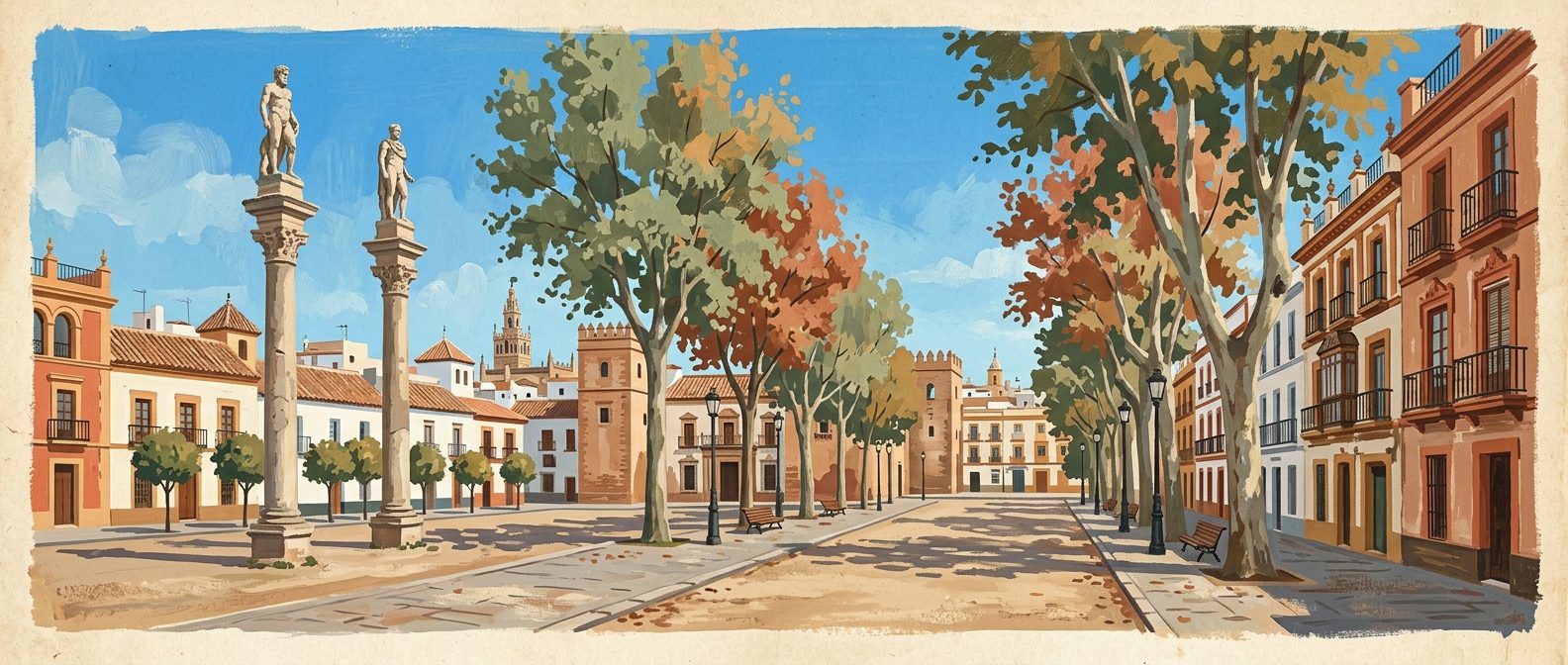
Two monumental Roman columns of Egyptian granite rise from the southern end of a vast rectangular plaza, carrying the weathered stone statues of Hercules and Julius Caesar. Established in 1574 by the Count of Barajas over a drained marshland, the Alameda de Hércules lays claim to being the oldest public garden in Europe. Today, this massive tree-lined promenade acts as the primary social spine for the northern half of Sevilla's historic centre. It presents a lived-in, contemporary counterpart to the formal heritage of the city, trading aristocratic restraint for an unapologetically modern urban street life. The air smells of strong espresso and roasting garlic, while the constant murmur of conversation drifts across the wide paved avenues.
The Roman Columns and Urban Origins
At its southern threshold, the Alameda is defined by its twin Roman columns. These massive pillars were originally part of an ancient temple located on nearby Calle Mármoles. They were relocated here in the sixteenth century to anchor the new public space and remind residents of the city's ancient foundations. The statues crowning them represent Hercules, the mythological founder of Sevilla, and Julius Caesar, its Roman benefactor. At the northern end of the promenade stand two additional eighteenth-century columns topped with lions bearing municipal shields. Walking between these markers reveals a plaza completely transformed from its origins as a stagnant river inlet. Once paved in loose sand, the ground now features durable albero-coloured paving laid during a major 2008 renovation. The space is lined with thick rows of white poplars, or álamos, which gave the promenade its name. For travellers interested in the deep history of Hispania Baetica, this square provides a clear conceptual link to the broader region, making it an excellent starting point before exploring Rome on the Guadalquivir: A Guide to Itálica and Roman Sevilla.
Casa de las Sirenas and the Built Environment
While much of the architecture flanking the square consists of modest residential facades, a few key buildings command attention. The most prominent is the Casa de las Sirenas, a romantic nineteenth-century palace located midway along the promenade. Commissioned in 1861 by the Marquis of Esquivel and completed in 1864, it takes its name from the sphinxes flanking its gates, which locals mistook for mythical sirens. Saved from absolute ruin and acquired by the municipality in 1989, the mansion now functions as a civic centre. Visitors can admire its French-influenced mansard roofs and ornate wrought-iron details, which stand in sharp contrast to the surrounding vernacular structures. The juxtaposition of this palatial residence with modern public drinking fountains and contemporary sculpture highlights the evolving nature of the plaza. It serves as a visual timeline of Sevilla's urban development, showing how aristocratic ambition eventually gave way to public utility.
Café Culture and Contemporary Life
The Alameda is defined by its intense social energy rather than static museum displays. The perimeter is packed with an incredibly dense concentration of independent cafes, alternative bookshops, and modern restaurants. If you want to dive into the modern culinary scene, Beyond the Tourist Menus: An Insider's Guide to Eating in Sevilla will point you toward the inventive kitchens operating here. Unlike traditional deep-fried fish stalls, the kitchens along the Alameda lean heavily into fusion dishes, craft beer, and extensive vegetarian options. Mornings begin slowly with locals gathering at outdoor kiosks for strong coffee, toasted bread, and local olive oil. By late afternoon, the tables fill completely. The vast pedestrianised central strip becomes a chaotic playground for families, skateboarders, and dog walkers. On Sunday mornings, the surrounding streets host informal markets, making the area a focal point for vintage clothes and antique books.
A Candid Assessment
This plaza is loud, heavily used, and completely unpolished. It lacks the immaculate, silent courtyards found in The Heart of Sevilla: A Guide to Barrio Santa Cruz, replacing them with graffiti, busy terraces, and the constant hum of conversation. The space is undeniably gritty in places, yet it offers a vital, unvarnished look at how modern residents actually live in the historic centre. It suits independent travellers who value atmosphere and street life over pristine monuments. Architecture purists might find the modern seating and steel street furniture jarring, but those seeking authentic social immersion will find it an essential stop. It feels like a real neighbourhood rather than a curated tourist backdrop.
Practical Information and Accessibility
The Alameda de Hércules sits in the northern district of the Casco Antiguo. It is accessible on foot, about a fifteen-minute walk north of the Metropol Parasol. Its flat, open layout also makes it an ideal destination if you are following A Guide to Cycling in Sevilla: Two Wheels, No Hills. The central plaza is fully pedestrianised, level, and paved, offering excellent wheelchair and pushchair accessibility. Several municipal bus lines serve the immediate perimeter, though driving is heavily discouraged due to narrow approach streets and limited parking. As a public square, the Alameda serves as a primary pedestrian route. The Casa de las Sirenas and surrounding businesses operate on varied schedules. Always confirm live details on the official Ayuntamiento de Sevilla website before planning a specific visit. Late afternoon is generally the most comfortable time to arrive, as the intense heat fades and the evening crowds begin to gather. For a sensible nearby pairing, explore the adjacent Calle Feria, a narrow thoroughfare packed with independent artisans, historic churches, and the oldest covered food market in the city.
Nearby worth your time
A few well-placed stops for extending the day without turning it into a checklist.
Continue through Sevilla City
Step back into the wider landscape with local guides, nearby places and the province overview.
Things to do · 9 min
The Definitive Guide to Feria de Abril in Sevilla
Discover the cultural nuances, strict dress codes, and insider advice for navigating Sevilla's exclusive spring fair like a seasoned local.
Things to do · 10 min
Golf in Sevilla Province: Courses, Holidays and Local Pro Shops
Swap the crowded coastal fairways for the refined courses of Sevilla province. Discover top layouts designed by golfing legends, local shops, and expert tips for your next trip.
Itinerary · 13 min
One Week in Sevilla: A Complete Seven Days Itinerary
Spending a full week in Sevilla allows you to slow down and adopt the local rhythm. You can explore the monumental centre, wander through neighbourhood markets, and take the train to nearby Andalucían cities without feeling rushed.