
attraction · Sevilla
Alcázar de la Puerta de Sevilla
Andalucía 365 · Updated 18 July 2026
Our Verdict
“A formidable military complex that physically maps the architectural evolution of southern Spain. Its steep towers and layered gates offer a tangible sense of ancient strategic power, though visitors should be prepared for steep climbs and uneven stone steps. The panoramic views alone make the ascent worthwhile.”
Last verified: July 2026
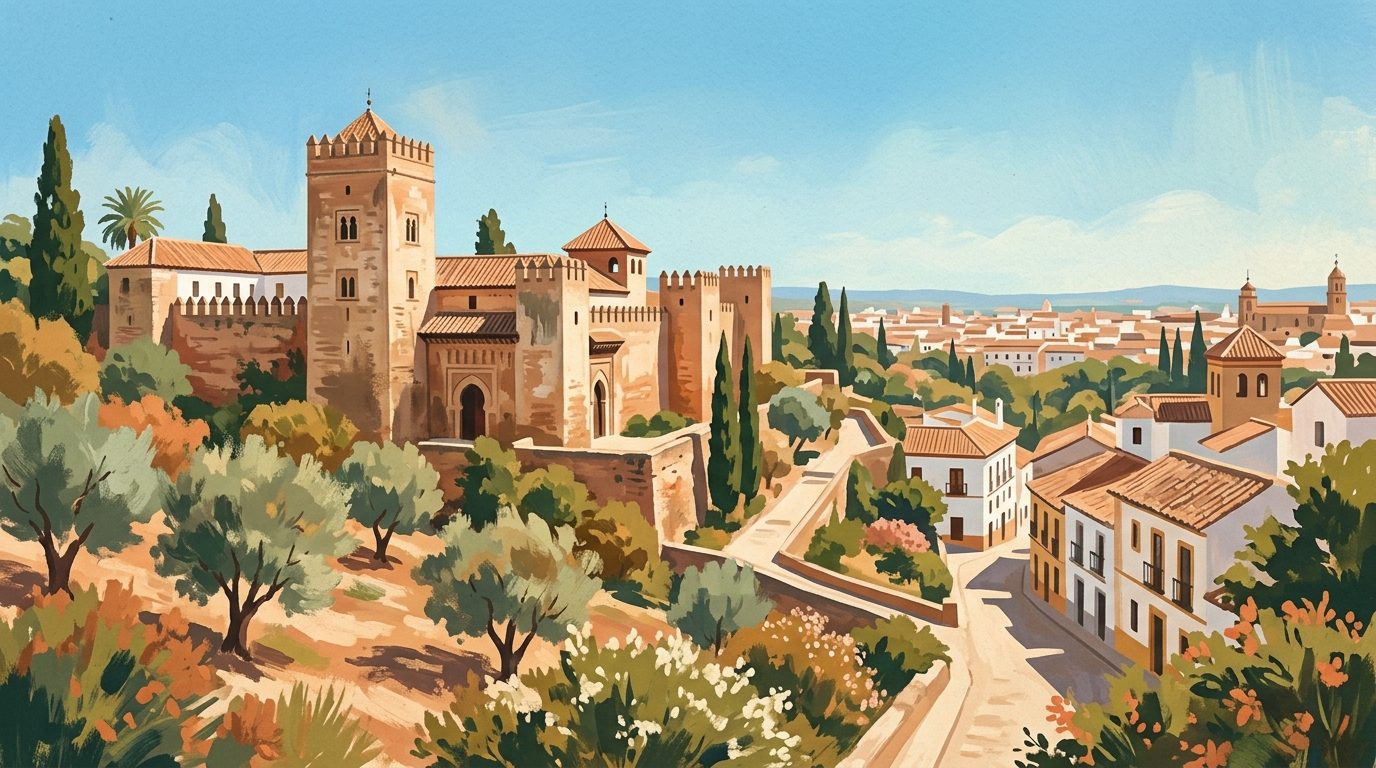
The Alcázar de la Puerta de Sevilla rises abruptly at the western edge of Carmona. It is a massive limestone bastion that has commanded the surrounding plains for over two thousand years. Built upon an outcrop of the Alcores ridge, this fortress functions as a physical timeline of southern Spain. Carthaginian foundations, Roman masonry, Almohad arches and Christian modifications stack upon one another to form an impenetrable defensive complex. Julius Caesar declared Carmona the strongest city in the Baetica province. Standing beneath the sheer walls of the main gate, the Roman general's assessment remains easy to believe. The strategic elevation provided unparalleled surveillance over the vital trade networks linking the Guadalquivir river basin to the interior.
Two Millennia of Stone and Strategy
The fortress is not a single structure but an overlapping series of defensive solutions engineered across centuries. To enter the historic centre of Carmona from the west, attackers and traders alike had to navigate a formidable double gate system that proved virtually impossible to conquer by direct assault. If an invading force managed to breach the first set of heavy doors, they found themselves trapped in a walled killing zone known as the intervallum. From the surrounding walls, defending garrisons could fire projectiles down upon the trapped enemy, rendering the breach useless.
Visitors today enter through these same overlapping gates, tracing the architectural evolution firsthand. The progression shifts from heavy Roman barrel vaults built to withstand battering rams, to elegant Moorish horseshoe arches added during the tenth and twelfth centuries by the Caliphate of Córdoba and the Almohad Empire. The fortress is highly suited to travellers with a strong interest in military history and the layered civilisations of the Andalusian region, offering a clear visual record of shifting power dynamics.
Scaling the Torre del Oro
The highest vantage point within the defensive complex is the Torre del Oro, or Tower of Gold, a name it shares with the famous riverside watchtower in Seville. Climbing to its upper battlements provides a sweeping perspective over the town of Carmona and its dense cluster of Baroque church spires. Turning outward, the view opens up across the vast agricultural expanse of the Campiña sevillana, a fertile plain that has produced wheat, olives and wine since antiquity.
The main keep, known historically as the Torre del Homenaje, preserves its imposing bossed ashlars up to the courtyard level. Walking the stone curtain walls that connect these defensive towers allows visitors to fully appreciate the strategic superiority of the site. It was this geographic dominance that made the fortress a critical stronghold for protecting the wealthy provincial trade routes of Roman Hispania and later medieval Andalucía.
Inside the Fortress: Cisterns and Prisoners Halls
At the very core of the Alcázar lies the Patio de los Aljibes. This central courtyard takes its name from the large underground cistern carved directly into the solid bedrock, an engineering marvel that allowed the garrison to survive prolonged sieges without relying on an external water supply. Six heavy stone skylights pierce the courtyard floor to provide vital access and ventilation to the dark reservoir below, demonstrating the advanced hydraulic knowledge of medieval builders.
Adjacent to the courtyard are the vaulted stone chambers of the Salón de los Presos, divided functionally into upper and lower halls. Originally constructed during the Almohad period and later modified by the Christian King Pedro I in the fourteenth century, these halls were used to hold high ranking political and military captives. Following the conquest of Málaga, the Catholic Monarchs imprisoned the fierce Muslim warden Amet el Zegrí within one of these very towers, bringing an end to his military career.
Practical Advice for Visitors
The Alcázar de la Puerta de Sevilla is situated at Plaza de Blas Infante, roughly thirty kilometres east of Seville via the A4 motorway. Free parking is generally available in the modern town near the Paseo del Estatuto, which requires a brief uphill walk to reach the historic fortress entrance. Those travelling by public transport can catch regular regional buses from Seville, providing an accessible route for day visitors.
Inside the main gate, the fortress also houses the municipal tourist information office. This is an ideal place to collect maps before walking deeper into the labyrinthine old town. The stone steps, uneven ancient masonry and exposed battlements mean visitors must wear sturdy footwear with good grip. Access to the upper towers requires climbing steep, narrow stairs, which may not be suitable for those with limited mobility. Visitors should check the official Turismo de Carmona website for admission details and seasonal access arrangements before planning a journey.
Exploring the Campiña Sevillana
Carmona serves as a logical starting point for exploring the wider agricultural heartland of the province. A visit to the mighty fortress pairs seamlessly with a walk to the nearby Roman Necropolis, located just a short distance away on foot, where wealthy ancient citizens were interred in incredibly elaborate underground mausoleums. To understand the broader economic significance of these enduring ancient settlements, read more about the ancient economy in our feature on Roman Hispania Baetica.
Those looking for further monumental towns can delve into our dedicated area guide covering the Baroque Towers and Golden Plains of the countryside. Alternatively, readers using the capital as a base can find excellent excursions in Beyond the Orange Trees: The Best Day Trips from Sevilla, or consult our comprehensive Guide to Carmona to meticulously plan a full itinerary in the town.
Nearby worth your time
A few well-placed stops for extending the day without turning it into a checklist.
Continue through Lower Guadalquivir & Countryside
Step back into the wider landscape with local guides, nearby places and the province overview.
Things to do · 9 min
The Definitive Guide to Feria de Abril in Sevilla
Discover the cultural nuances, strict dress codes, and insider advice for navigating Sevilla's exclusive spring fair like a seasoned local.
Things to do · 10 min
Golf in Sevilla Province: Courses, Holidays and Local Pro Shops
Swap the crowded coastal fairways for the refined courses of Sevilla province. Discover top layouts designed by golfing legends, local shops, and expert tips for your next trip.
Itinerary · 13 min
One Week in Sevilla: A Complete Seven Days Itinerary
Spending a full week in Sevilla allows you to slow down and adopt the local rhythm. You can explore the monumental centre, wander through neighbourhood markets, and take the train to nearby Andalucían cities without feeling rushed.