
attraction · Sevilla
Alcázar del Rey Don Pedro
Andalucía 365 · Updated 18 July 2026
Our Verdict
“The Alcázar del Rey Don Pedro offers a compelling look at medieval military adaptation. While the original palatial interiors are lost, the monumental defensive walls, the pioneering Cubete artillery fort, and the vast, unhindered views across the plains make this an essential stop for anyone exploring the architectural history of Andalucía.”
Last verified: July 2026
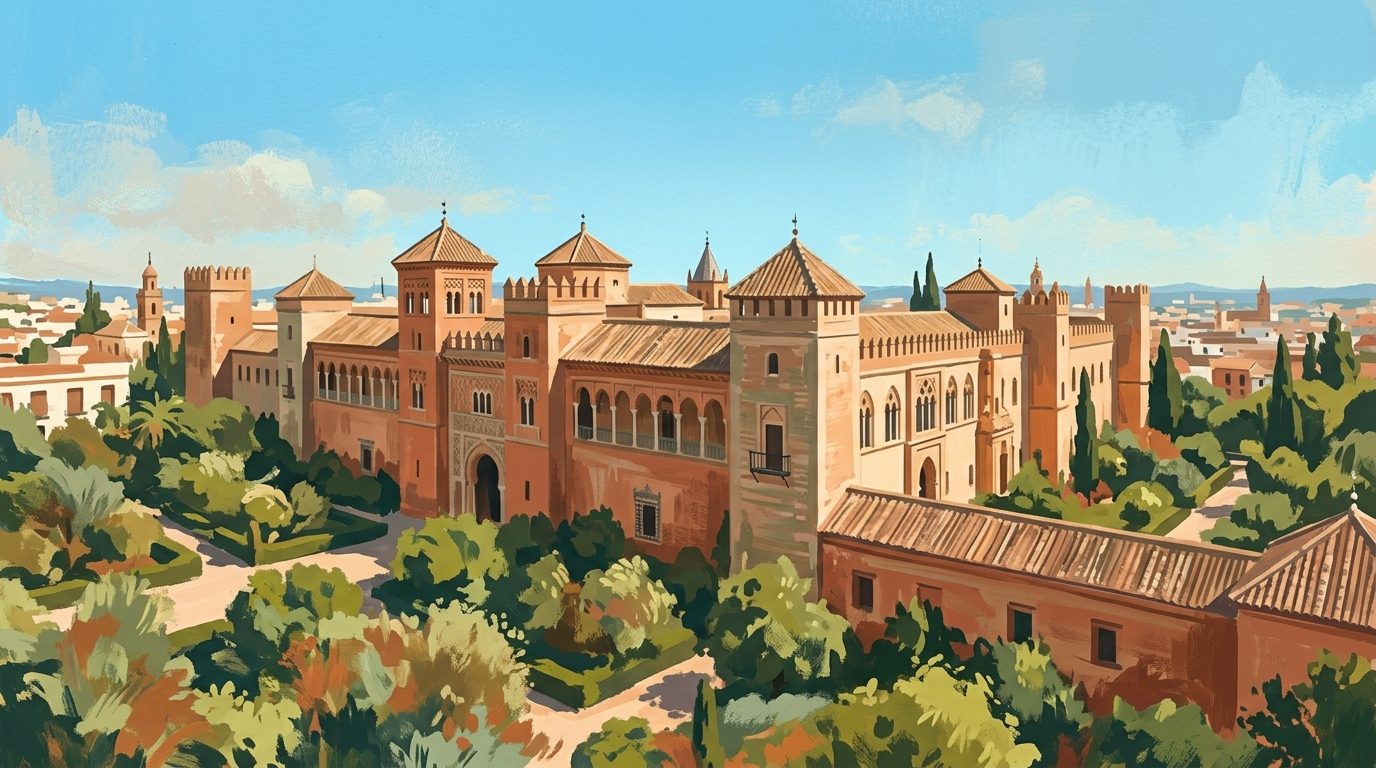
Rising abruptly above the golden plains of the Guadalquivir valley, the Alcázar del Rey Don Pedro occupies the absolute highest point in Carmona and the entire Alcores region. Accessed through a monumental double pointed horseshoe arch, the fortress presents a formidable silhouette against the sky of Andalucía. Originally established as a defensive site and later expanded into a commanding Almohad stronghold, it evolved into a lavish medieval palace under King Pedro I of Castile during the fourteenth century. Today, this sprawling site functions partly as a preserved archaeological zone and partly as a Parador hotel. It offers independent travellers an unvarnished look at the military and architectural evolution of southern Spain, dominating the landscape just as fiercely as it did centuries ago.
A Fortress on the Alcores Escarpment
The strategic value of Carmona has always been dictated by its geography. Situated on the highest elevation of the Alcores plateau, the site of the Alcázar de Arriba, as the upper fortress is also known, has hosted defensive structures since antiquity. Long before the Christian conquest, an Almohad fortification stood here, which was itself built over the remains of a tenth century Moorish defensive enclosure. This elevated redoubt provided an unmatched vantage point over the Vega del Corbones and the broader Guadalquivir basin, allowing its garrison to detect approaching armies from miles away. The steep natural escarpment on the eastern side served as an impenetrable barrier, drastically reducing the need for artificial walls on that flank and heavily influencing the asymmetrical layout of the upper citadel.
Mudéjar Ambition Under King Pedro I
During the fourteenth century, King Pedro I of Castile chose this elevated stronghold as a primary royal residence outside the regional capital. He ordered extensive remodelling of the existing Islamic fortress, introducing the intricate Mudéjar style that defined the architectural ambition of his reign. Visitors who have explored the extensive courtyards of the Real Alcázar de Sevilla will immediately recognise the historical continuity, as the monarch intended the Carmona complex to mimic the grandeur of his main Sevillian residence. Although the devastating Lisbon earthquake of 1755 reduced much of the original palace infrastructure to ruins, the massive perimeter walls and the central Patio de Armas remain intact. The remaining structural footprints demonstrate the immense scale of the medieval royal court, showcasing robust stonework that clearly reveals the transition from Islamic defensive engineering to Christian palatial ambition.
The Puerta de Marchena and Outer Defences
Entry into the principal fortress complex is channelled through the Puerta de Marchena, a formidable gateway that underscores the enduring military function of the site. This entrance features a monumental double pointed horseshoe arch that immediately signals the Mudéjar and Almohad architectural lineage of the structure. Careful observation of the intrados of the archway reveals faint traces of geometric painting, providing a rare glimpse into the decorative elements that once softened the imposing military stonework. Beyond the gate, the defensive perimeter consists of substantial masonry walls punctuated by defensive towers. These remaining fortifications illustrate how the upper citadel operated as a self contained redoubt, capable of defending the royal household even if the lower town of Carmona were to fall to an invading force.
The Pioneering Cubete Artillery Fort
Just outside the main residential walls, running parallel to the dry moat, stands the Cubete. Added by the Catholic Monarchs in the late fifteenth century, this prominent oval shaped fortification represents a pivotal moment in European military history. It is recognised as the very first fort in the Iberian Peninsula designed expressly to withstand and deploy heavy artillery fire. As traditional catapults and siege engines gave way to the destructive power of cannons, medieval square towers became fatally obsolete due to their weak, easily targeted corners. The thick, curved masonry of the Cubete deflected cannonballs and absorbed impact far more effectively, setting a defensive template that rapidly spread across the country. Walking around its base gives a clear, tangible sense of the architectural adaptations required by the dawn of gunpowder warfare.
From Ruin to the Parador de Carmona
Following the catastrophic damage inflicted by the 1755 earthquake, the Alcázar fell into a prolonged state of progressive ruin. However, the site was granted a new lease of life in the twentieth century when the central courtyards were repurposed to house the Parador de Turismo de Carmona. This state run hotel seamlessly integrates modern accommodation within the ancient bailey, adopting traditional architectural forms to ensure the new buildings complement the surviving medieval masonry. Fortunately, access to the most spectacular feature of the site is not restricted to overnight guests. The public terrace offers one of the most commanding panoramic views in the entire region, looking directly over the fertile plains. The late afternoon light here turns the ancient stone to a deep gold, making it a highly rewarding spot for photography over the Sevilla countryside.
Practicalities for Independent Travellers
Carmona is a straightforward and highly rewarding addition to any itinerary focused on day trips from Sevilla, located just thirty kilometres east of the city via the A4 motorway. The walk from the lower town to the Alcázar del Rey Don Pedro involves steep inclines, narrow streets, and uneven cobblestones that demand sturdy footwear. Visitors with reduced mobility should seriously consider driving directly to the summit, where dedicated parking is available near the main entrance. The archaeological area housing the Cubete has specific entry conditions and municipal oversight, while the hotel areas operate independently. Travellers should consult the official Carmona tourism portal to verify current access details, seasonal variations, and the availability of audio guides before planning their journey.
Nearby worth your time
A few well-placed stops for extending the day without turning it into a checklist.
Continue through Lower Guadalquivir & Countryside
Step back into the wider landscape with local guides, nearby places and the province overview.
Things to do · 9 min
The Definitive Guide to Feria de Abril in Sevilla
Discover the cultural nuances, strict dress codes, and insider advice for navigating Sevilla's exclusive spring fair like a seasoned local.
Things to do · 10 min
Golf in Sevilla Province: Courses, Holidays and Local Pro Shops
Swap the crowded coastal fairways for the refined courses of Sevilla province. Discover top layouts designed by golfing legends, local shops, and expert tips for your next trip.
Itinerary · 13 min
One Week in Sevilla: A Complete Seven Days Itinerary
Spending a full week in Sevilla allows you to slow down and adopt the local rhythm. You can explore the monumental centre, wander through neighbourhood markets, and take the train to nearby Andalucían cities without feeling rushed.