
attraction · Sevilla
Setas de Sevilla
Andalucía 365 · Updated 18 July 2026
Our Verdict
“Las Setas is a divisive but undeniably spectacular feat of modern engineering. While traditionalists may balk at its aesthetic, it offers the most comprehensive rooftop view of Sevilla without the need to climb a bell tower. It is an essential stop for architecture enthusiasts and photographers.”
Last verified: July 2026
A Modern Canopy Over Ancient Streets
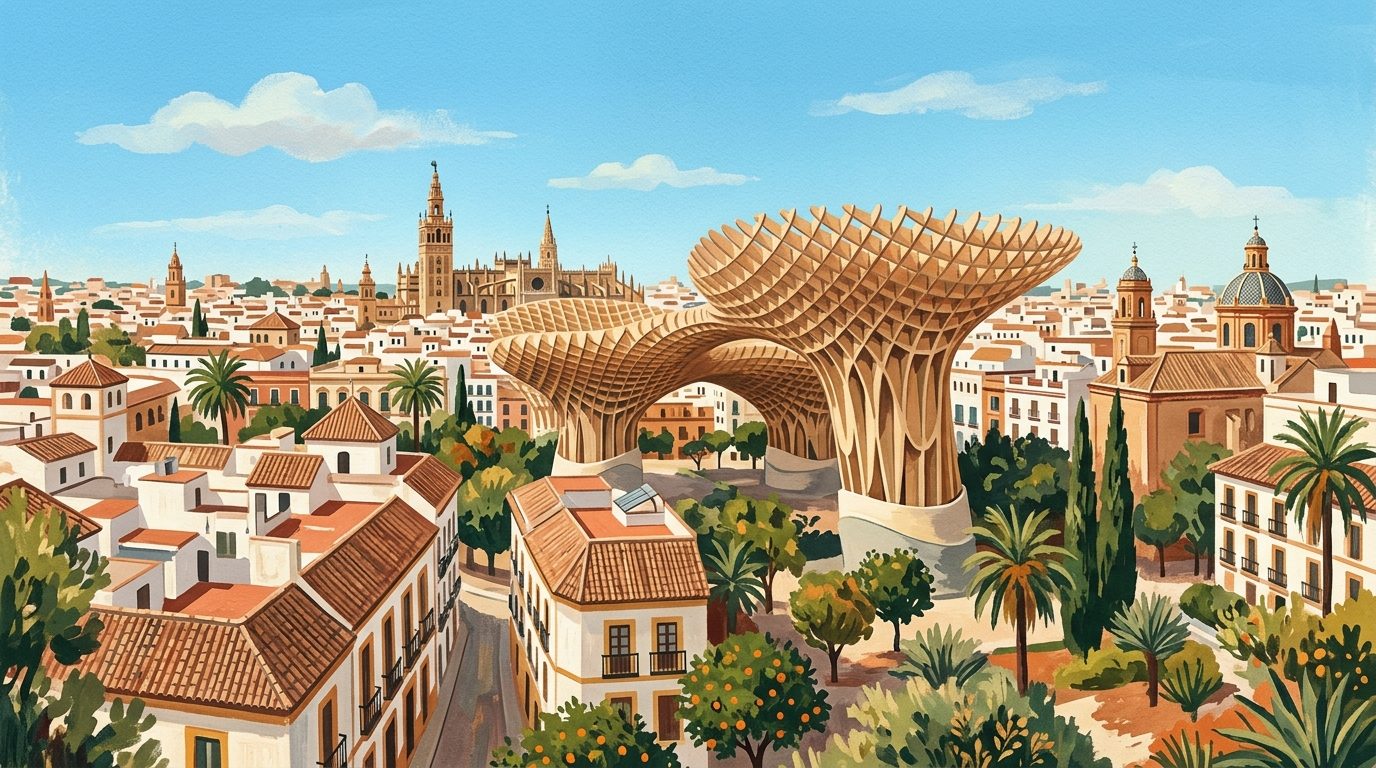
Rising abruptly from the historic centre of Sevilla, the Setas de Sevilla is a massive, undulating structure of micro-laminated Finnish pine. Designed by the German architect Jürgen Mayer H. and completed in 2011, it is frequently cited as one of the largest timber structures in the world. Originally known as Metropol Parasol, locals quickly nicknamed it Las Setas (The Mushrooms) due to its six towering, mushroom-shaped canopies. The structure casts an enormous, honeycomb shadow over the Plaza de la Encarnación, offering a stark, avant-garde contrast to the traditional masonry and narrow alleyways of the Casco Antiguo. For a city steeped in Moorish and Gothic history, Las Setas represents a bold step into 21st-century architectural design, providing shade, commercial space and an elevated promenade all in one sprawling complex.
Ascending the Walkway and Mirador
The primary draw for most visitors is the winding rooftop walkway, a 250-metre wooden path that meanders over the interlocking parasols. Elevators transport guests from the basement level directly to the roof, where a striking panoramic view of the capital of Andalucía unfolds. From this height, the dense, historic core of the city is laid bare. The skyline is punctuated by church towers, and visitors get a clear, elevated perspective of the famous Sevilla Cathedral and the Giralda Tower, contrasting its immense scale against the surrounding rooftops.
Up close, the walkway allows you to inspect the intricate polyurethane-coated timber beams and the heavy steel connectors that hold the massive structure together. The path features gentle inclines and steps, leading eventually to a central Mirador, or viewing platform, which serves as the highest point of the complex.
The Antiquarium and Mercado de la Encarnación
The origins of this futuristic canopy lie deep in the past. During the initial excavation for a subterranean car park, construction was halted when builders unearthed a significant layer of archaeological remains. Today, these discoveries are preserved in the Antiquarium, a subterranean museum situated five metres below street level. Visitors can walk over glass floors to view the remarkably well-preserved Roman mosaics from the 1st to 6th centuries, alongside the foundations of later Almohad-era dwellings. For those interested in the broader Roman history of the region, the ruins offer a fascinating prelude to visiting Itálica just outside the city limits.
At street level, the complex remains rooted in the daily life of the neighbourhood. The Mercado de la Encarnación is a traditional municipal market situated directly beneath the wooden parasols. It houses dozens of stalls selling fresh produce, cured meats and regional cheeses. Arriving in the morning allows you to observe local chefs and residents sourcing ingredients, offering a genuine slice of city life before you seek out a local restaurant using insights from our insider's guide to eating in Sevilla.
The Immersive Additions
In recent years, the management of Setas de Sevilla has introduced multimedia elements to the visitor experience. A standard entry often includes access to Feeling Sevilla, a brief multisensory video experience designed to simulate the sounds, sights and scents of the city. While the production values are high, some independent travellers find it less compelling than the physical architecture itself.
More impressive is the Aurora light show, which activates after sunset. The wooden canopy is illuminated by a dynamic LED lighting system that changes colour and pattern, creating a striking visual spectacle that highlights the curves and grid of the timber frame against the night sky.
Practical Information and Accessibility
Setas de Sevilla is located in Plaza de la Encarnación, approximately a ten-minute walk from the Cathedral. Local TUSSAM bus lines 27 and 32 stop nearby. Given the restricted vehicle access in the historic centre, arriving on foot or by public transport is the most sensible option.
The complex is largely accessible for wheelchair users and those with pushchairs. Lifts connect the basement ticket office to the market, Antiquarium and the rooftop walkway. Approximately 90 per cent of the elevated walkway is accessible via gentle ramps. However, the final ascent to the highest viewing platform requires negotiating several steps. The wooden surfaces on the walkways can also become slightly slippery after unexpected rain, so flat footwear is recommended.
Because access rules and ticket inclusions change throughout the year, you should always verify the latest details on the official Setas de Sevilla website before you arrive. Do not rely on third-party aggregators for closing times, as seasonal shifts dictate when the evening light show begins.
The Verdict and Nearby Pairings
Las Setas is a divisive but undeniably spectacular feat of modern engineering. While traditionalists may balk at its aesthetic, it offers the most comprehensive rooftop view of Sevilla without the need to climb a bell tower. It is an essential stop for architecture enthusiasts and photographers.
For a sensible nearby pairing, spend an hour wandering through the commercial streets of Calle Sierpes and Calle Tetuán, or continue south towards the labyrinthine alleys of the Jewish quarter using our guide to Barrio Santa Cruz to experience the architectural antithesis of this massive wooden structure.
Nearby worth your time
A few well-placed stops for extending the day without turning it into a checklist.
Continue through Sevilla City
Step back into the wider landscape with local guides, nearby places and the province overview.
Things to do · 9 min
The Definitive Guide to Feria de Abril in Sevilla
Discover the cultural nuances, strict dress codes, and insider advice for navigating Sevilla's exclusive spring fair like a seasoned local.
Things to do · 10 min
Golf in Sevilla Province: Courses, Holidays and Local Pro Shops
Swap the crowded coastal fairways for the refined courses of Sevilla province. Discover top layouts designed by golfing legends, local shops, and expert tips for your next trip.
Itinerary · 13 min
One Week in Sevilla: A Complete Seven Days Itinerary
Spending a full week in Sevilla allows you to slow down and adopt the local rhythm. You can explore the monumental centre, wander through neighbourhood markets, and take the train to nearby Andalucían cities without feeling rushed.