
attraction · Málaga
Alameda del Tajo
Andalucía 365 · Updated 18 July 2026
Our Verdict
“The Alameda del Tajo provides Ronda’s most magnificent views without the intense bottleneck of the Puente Nuevo. This 19th-century botanical promenade balances formal garden elegance with terrifying vertical drops at the cliff edge. Highly accessible and fully paved, it remains the city’s finest location for an evening stroll.”
Last verified: July 2026
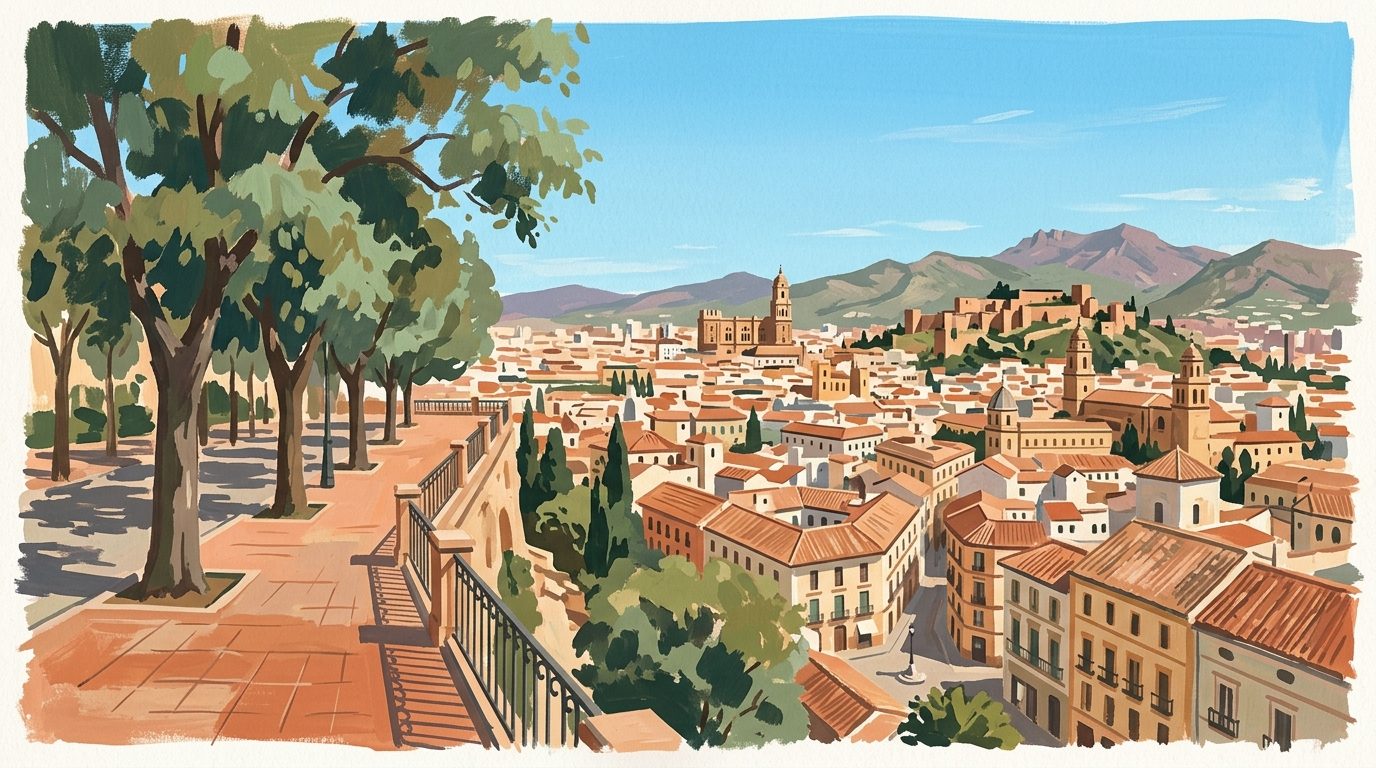
At the very edge of the limestone plateau that supports the city of Ronda, five parallel avenues lined with towering Himalayan cedars abruptly terminate at an iron railing. Beyond this boundary lies a sheer drop of over 100 metres into the Guadalevín river valley. This is the Alameda del Tajo, a 19th-century botanical park that transformed a rugged cliff edge into a sophisticated public promenade. Designed to provide shade and a social gathering space for the townspeople, it remains a masterclass in landscape architecture, blending ordered horticultural grids with the terrifying verticality of the Serranía de Ronda.
A 19th-Century Promenade on the Precipice
The primary draw of the Alameda del Tajo lies in its dual nature. Facing inland, it presents the formal elegance of a classic Spanish public garden. Visitors walking along the paved pathways encounter stone fountains, dedicated monuments to figures like the legendary bullfighter Pedro Romero, and a vintage bandstand that recalls an era of formal evening strolls. Facing outward, the park surrenders to the sheer geological drama of the Tajo gorge. The contrast between the manicured flower beds and the wild agricultural plains stretching out far below provides a visual shock that defines the landscape of inland Málaga.
Unlike the tightly packed mediaeval streets of the old Moorish quarter, the Alameda was built for expansion and air. The layout ensures that visitors are constantly drawn towards the light at the end of the avenues, where the canopy opens up to reveal unobstructed views across the western mountains.
Botanical Heritage and Century-Old Shade
Beyond its function as a viewpoint, the Alameda del Tajo serves as a significant botanical collection. The park dates back to 1806, originally funded in part by municipal fines levied against public misconduct, and has since matured into a densely shaded refuge. Some of the trees here are well over two centuries old.
Walking through the central thoroughfare, you will pass beneath monumental Himalayan cedars, robust stone pines, and broad-canopied acacias. These mature specimens create a deep, continuous microclimate of shade that offers immediate relief during the intense heat of a summer afternoon in Andalucía. Detailed botanical plaques identify many of the rarer species, making the walk an educational experience for those interested in Mediterranean and imported flora.
The Balconies Over the Gorge
The pathways of the Alameda naturally funnel pedestrians towards a series of iron-railed viewing platforms that jut out over the abyss. These balconies provide some of the most expansive panoramas in the region. The most famous of these viewpoints is known colloquially as the 'Balcón del Coño'. The name derives from the visceral exclamation visitors frequently make when they step up to the railing and suddenly comprehend the sheer vertical drop directly beneath their feet.
From these vantage points, the view encompasses the undulating agricultural patchwork of the valley floor, dotted with small white farmhouses and olive groves. On clear days, the distant peaks of the Sierra de Grazalema dominate the western horizon. If you look closely at the cliff faces immediately below, you can often spot kestrels, peregrine falcons, and eagles riding the thermal currents that rise off the sun-baked rock. Binoculars are recommended for observing both the distant mountain ranges and the avian life nesting in the limestone crevices.
A Candid Assessment: Is It Worth It?
The Alameda del Tajo is an absolute requirement for anyone visiting Ronda. While the famous bridges draw the heaviest crowds, this park delivers the same staggering geological scale with significantly more space to appreciate it. It requires no strenuous hiking and immediately rewards visitors with immense vistas.
However, visitors expecting a silent wilderness experience should adjust their expectations. Because of its proximity to the historic bullring and main commercial streets, it serves as the primary thoroughfare for both locals and tourists. It feels like an active urban space rather than a remote nature reserve. That said, its sheer size means it absorbs crowds well, and it remains the best place in the city to find a quiet bench with a monumental view.
Practical Information and Accessibility
The park is located on Calle Virgen de la Paz, adjacent to the Plaza de Toros. Because the terrain is completely flat and features wide, smoothly paved avenues, the Alameda del Tajo is accessible for wheelchair users, visitors with limited mobility, and families with pushchairs. It stands as one of the most easily navigable panoramic viewpoints in Andalucía.
Visitors should wear comfortable shoes, though heavy hiking boots are entirely unnecessary for the paved terrain. Note that the stone paving near the balconies can become slick if there has been recent rain, so a degree of caution is necessary near the railings. To confirm live details regarding opening schedules or any seasonal municipal events, check the Ronda Tourism official website before you arrive. Do not rely on third-party aggregators for specific access information.
Nearby Pairings and Next Steps
The park sits at the heart of Ronda's most significant cultural district. Once you have walked the length of the Alameda, you can easily transition into the Paseo de Blas Infante, which skirts the edge of the bullring and leads directly toward the iconic Puente Nuevo bridge.
For those planning to explore more of the region, the Alameda del Tajo provides a visual introduction to the surrounding natural parks. The distant peaks visible from the balconies belong in part to the protected areas detailed in our guide to Exploring Sierra de las Nieves National Park. To understand how the town fits into the broader geography of the province, read Ronda: The City Defying Gravity Above El Tajo. Finally, if you are using the city as a base for wider exploration, our overview of Limestone Peaks and Ancient Dolmens: Exploring the Hinterland of Málaga provides essential context for the surrounding mountains and historical sites.
Nearby worth your time
A few well-placed stops for extending the day without turning it into a checklist.
Continue through Inland Málaga
Step back into the wider landscape with local guides, nearby places and the province overview.
Place guide · 7 min
Playa de Burriana: A Guide to Nerja's Premier Beach
Discover Playa de Burriana, the most iconic beach in Nerja, known for its wide sands, excellent chiringuitos, and clear waters on the Costa del Sol.
Place guide · 7 min
Playa de Cabopino: Dunes, Pines and Clear Waters near Marbella
A protected enclave of natural dunes and fine sand situated between Marbella and Fuengirola. This coastal stretch offers a rare glimpse of the original Mediterranean landscape.
Itinerary · 13 min
One Week in Ronda: A Seven-Day Itinerary for the Serranía
A seven-day stay in Ronda allows you to experience the deep gorge and ancient streets long after the day-trippers have left. Using the city as a base, you can easily explore the surrounding white villages, hike the Sierra de las Nieves, and settle into the true rhythm of mountain life.