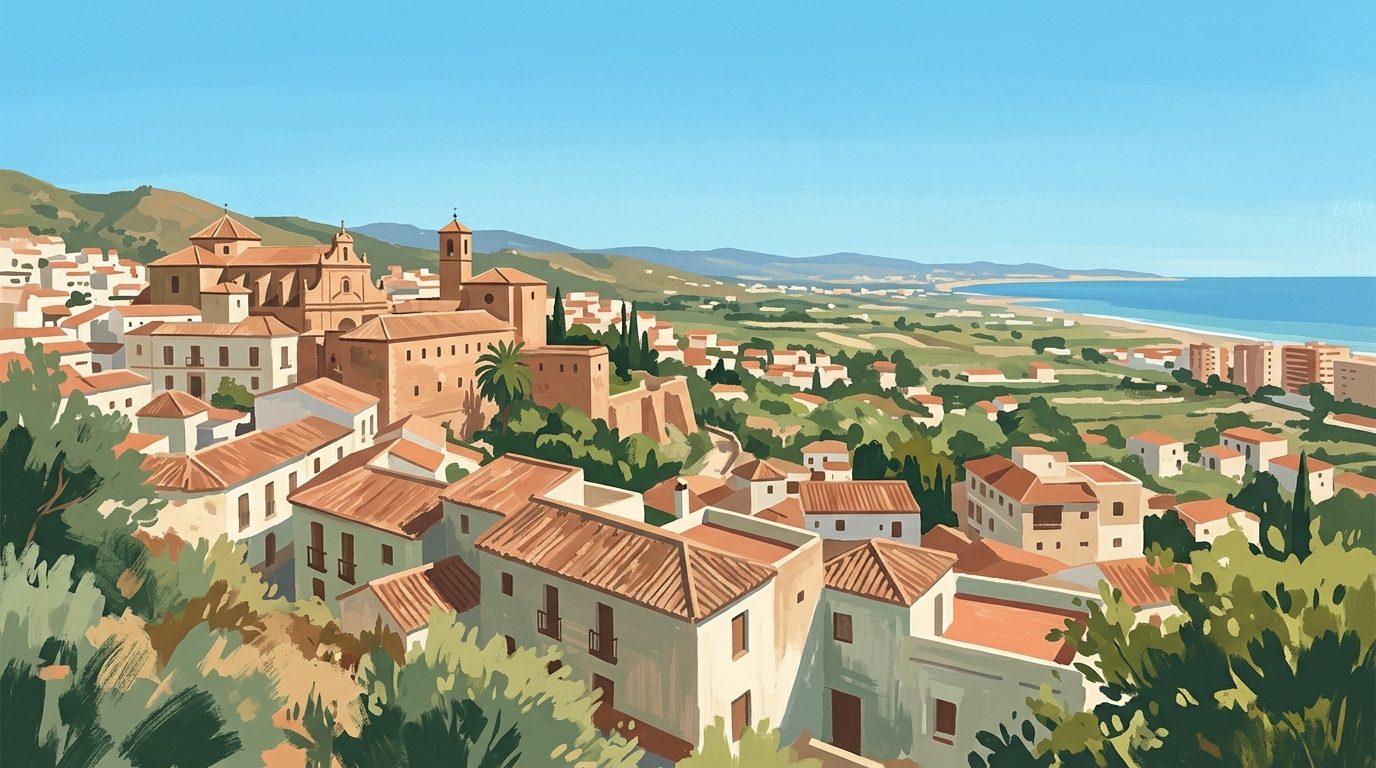
Standing as the gateway to the Axarquía, Vélez-Málaga offers a blend of medieval fortifications and agricultural heritage, while its coastal sibling, Torre del Mar, provides several kilometres of sandy shoreline. This dual destination allows visitors to traverse from the quiet, winding streets of a historic Moorish capital to the Mediterranean promenade within minutes.
Vélez-Málaga serves as the administrative and cultural heart of the Axarquía region. Unlike the white villages scattered across the nearby mountains, this is a working market town where history feels lived-in rather than curated for tourism. The skyline is dominated by the restored walls of its Moorish fortress, while the lower town reveals a wealth of Mudéjar towers and Baroque convents. Just four kilometres south lies Torre del Mar, a seaside resort that managed to retain a sense of space despite the development of the 20th century. Here, the focus shifts from history to leisure, with a vast promenade and a reputation for some of the finest fried fish and grilled sardines on the Costa del Sol. Together, they represent the two faces of Málaga: the fertile, sun-baked interior and the expansive sea.
What to See & Do
The Fortaleza de Vélez-Málaga
Constructed during the 10th century and significantly expanded during the Nasrid period, the Fortaleza sits at the highest point of the town. While much of the original structure was destroyed during the Napoleonic wars, the main keep (Torre del Homenaje) and several sections of the curtain wall have been meticulously restored. The climb to the top provides the clearest perspective of the town's layout, showing how the urban sprawl meets the sea of avocado and mango orchards that define the local economy.
Iglesia de Santa María la Mayor and MVVEL
Built upon the site of the former grand mosque, this 15th-century church is an architectural hybrid of Gothic and Mudéjar styles. Inside, the Muvel (Museo de Vélez-Málaga) houses a significant collection of archaeological finds from across the Axarquía. The exhibits trace human presence from the Phoenician settlements at the mouth of the Río Vélez through to the Roman and Moorish eras. The brickwork of the bell tower, formerly a minaret, is one of the best-preserved examples of its kind in the province.
The María Zambrano Heritage
One of Spain's most significant 20th-century philosophers, María Zambrano, was born here. Her legacy is preserved at the Palacio de Beniel, a grand 17th-century mansion that serves as the headquarters for her foundation. The building itself is worth the visit for its central courtyard and coffered ceilings, even if you are not familiar with her existentialist works.
Torre del Mar Promenade and Lighthouse
Transitioning to the coast, the Paseo Marítimo in Torre del Mar is one of the widest and longest in Andalucía. It is punctuated by three distinct lighthouses, reflecting the town's evolution from a small fishing outpost to a modern maritime centre. The area known as El Copo is the place for socialising, filled with chiringuitos where the local speciality, espetos de sardinas (sardines skewered and grilled over olive wood fires), is prepared in traditional fishing boats converted into charcoal pits.
The Thursday Market
The weekly market in Vélez-Málaga is one of the largest in the region. Held every Thursday morning near the northern entrance of the town, it is an essential experience for those looking to understand the local pace of life. It is less about tourist trinkets and more about the Axarquía's agricultural output: honey from the mountains, raisins from El Borge, and seasonal tropical fruits.
Practical Information
Opening Times & Tickets
Fortaleza de Vélez-Málaga: Open daily from 08:00 to 22:00 (June to September), and 08:00 to 18:00 in winter. Admission is currently free (confirmed June 2026), but we recommend checking the official Vélez-Málaga Town Hall portal for temporary closures or event-related changes.
MVVEL (Museum): Open Tuesday to Saturday from 10:00 to 14:00 and 17:00 to 20:00. Sundays and Public Holidays from 10:00 to 14:00. Closed on Mondays. Entry may require a small fee or be free on specific days (check on the operator's website before travelling).
Iglesia de San Juan Bautista: Generally open during mass times (09:00 and 19:30), but the exterior and the impressive Mudéjar tower can be viewed at any time.
How to Get There
By Car: From Málaga, take the A-7 motorway eastbound towards Motril. Take exit 272 for Torre del Mar/Vélez-Málaga. The journey takes approximately 35 minutes.
By Bus: The ALSA bus service runs frequently (every 30 to 45 minutes) from Málaga's main bus station and Muelle Heredia. The journey to Torre del Mar takes 45 minutes, with the bus continuing to Vélez-Málaga shortly after. Timetables can be verified on the ALSA website.
Parking
In Vélez-Málaga, the underground car park at Plaza del Carmen is central for the historic district. In Torre del Mar, parking is difficult near the front during summer; the large open-air lot near the lighthouse (Faro) is the most reliable option.
Where to Eat Nearby
For a traditional experience in Vélez-Málaga, Restaurante El Convento offers local Axarquía dishes such as ajoblanco (cold almond and garlic soup) in an unpretentious setting. If you are on the coast, Chiringuito El Maruja in Torre del Mar is highly regarded for its fresh seafood and consistent quality of grilled sardines. For something more contemporary, La Sastrería in the centre of Vélez-Málaga provides a modern take on Mediterranean tapas, focusing on seasonal ingredients sourced from the nearby market. The local Muscatel wine from the Axarquía hills is a recommended accompaniment to any meal.
Where to Stay
Accommodation options range from coastal hotels to quiet inland retreats. In Torre del Mar, the BQ Andalucía Beach Hotel offers a prime location directly across from the promenade with views of the Mediterranean. For a more historic atmosphere, Palacio Blanco is a boutique hotel situated within a restored grand house in the heart of Vélez-Málaga, featuring a rooftop terrace and plunge pool. Those seeking a rural setting can find numerous independent guesthouses in the surrounding hillsides amongst the mango groves.