

attraction · Málaga
Alcazaba de Antequera
Andalucía 365 · Updated 18 July 2026
Our Verdict
“The Alcazaba de Antequera offers a highly rewarding climb for sweeping views across the fertile plains and the iconic Peña de los Enamorados. The sheer scale of the Nasrid towers and the heavy defensive architecture provide a tangible lesson in Andalucía’s medieval border conflicts, making it an essential historical visit.”
Last verified: July 2026
Positioned above the whitewashed roofs and baroque spires of Antequera, the Alcazaba is a formidable stronghold that defined the medieval border between Christian territories and the Nasrid Kingdom of Granada. Rising from the foundations of the Roman settlement of Antikaria and earlier Visigothic structures, this limestone fortress dominates the inland landscape of Málaga. Its defensive walls, intricate brick vaults, and massive keeps reveal centuries of strategic conflict. Visitors experience a tangible connection to military architecture, rewarded by unimpeded sightlines across the agricultural plains of northern Málaga. The fortress is particularly rewarding for independent travellers with an interest in medieval history, Moorish engineering, and sweeping landscape photography.
A Strategic Border Fortress
Constructed primarily between the eleventh and thirteenth centuries during the Caliphate, Almohad, and Nasrid periods, the Alcazaba served as a critical defensive bastion to halt the Christian advance from the north. Following centuries of Moorish rule, the Infante Don Fernando captured the fortress for the Christian crown in 1410. This monumental shift marked a turning point in the Reconquista, paving the way for the eventual conquest of Granada eighty years later. Following this victory, the fortress ceased to be a frontline garrison and evolved into a symbol of civic power.
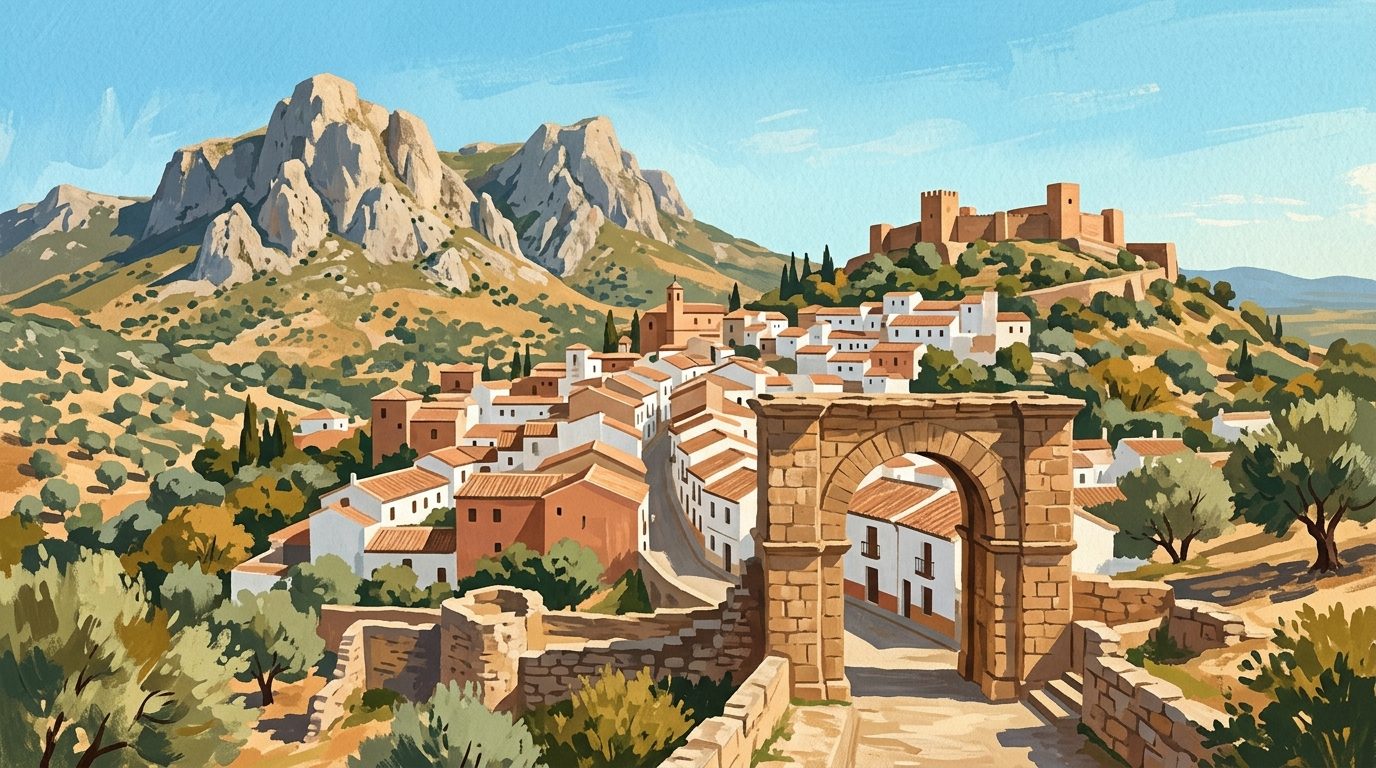
Access to the historic upper enclosure often begins near the Arco de los Gigantes, a monumental archway built in 1585 by municipal initiative. Designed to display Roman statues and inscriptions found in the surrounding terrain, it effectively served as one of the region's earliest open-air museums. Passing through this formidable gateway immediately establishes the scale of the ancient city and sets the tone for exploring the heavy military architecture ahead.
The Main Defensive Towers
The complex is defined by two principal keeps that anchor the remaining fortifications. The Torre del Homenaje is one of the largest defensive towers in Andalucía, presenting an angular, fortified mass that dominates the city skyline. Topped by a distinct Renaissance bell tower added in 1582, the keep was once used to regulate the irrigation cycles for local farmers working in the valley below. Today, the local population affectionately refers to it as the Torre de Papabellotas, a nickname originating from the city having to sell a municipal grove of acorn-bearing trees to fund the bell tower's construction. Its wide base and thick masonry highlight the architectural transition from Islamic fortification to Christian control.
Nearby, the Torre Blanca stands as a slightly smaller but equally imposing structure. Demonstrating exceptional Almohad and Nasrid brickwork, it houses spacious interior chambers connected to the main keep by a solid line of defensive wall. The interiors of the Torre Blanca reflect a sophisticated building technique, displaying arched balconies and precisely engineered brick vaults across its two levels. The ground floor was primarily for military defence with narrow arrow slits, while the upper floor served a noble residential function. Walking between these strongholds provides a clear understanding of the fortress layout, revealing battlements designed to repel invaders.
Ramparts, Gardens, and Panoramic Sightlines
Beyond the heavy stone towers, the interior grounds contain reconstructed gardens, the foundations of an old mosque, and a Nasrid water cistern. Archaeological excavations have also revealed a first-century Roman columbarium, designed to hold the ashes of the deceased, highlighting the site's extensive chronological depth. A walk along the perimeter ramparts remains the definitive highlight of the visit. From these high walls, the strategic necessity of the fortress becomes obvious. The elevated vantage point offers unobstructed views over the Antequera Depression, a vast expanse of olive groves and cereal fields stretching toward the horizon.
To the northeast, the distinctive profile of the Peña de los Enamorados rises sharply from the plains. This limestone mountain resembles a human face looking at the sky and is steeped in local folklore regarding a tragic romance between a Christian and a Moor. Looking directly downwards from the parapets, visitors see the grand Renaissance facade of the Real Colegiata de Santa María la Mayor, while the wider cityscape reveals an ocean of terracotta roof tiles punctuated by numerous church spires and convent domes.
Practicalities and Accessibility
Reaching the Alcazaba requires a steep uphill walk from the lower commercial streets of Antequera. A well-paved route leads up from Plaza de San Sebastián, winding through quiet residential alleys to the historic upper town. Travellers arriving by car can find a small parking area at Plaza de los Escribanos near the main entrance, although spaces fill rapidly on weekends. Alternatively, local taxis provide direct drop-offs at the monumental gates.
Due to the elevated position and steep interior pathways, sturdy footwear is essential. The stone steps inside the towers have been smoothed by centuries of footfall and can be highly uneven. Accessibility for wheelchair users is limited due to the ancient terrain and stepped walls. Furthermore, the fortress grounds offer very little shade. Summer afternoons become intensely hot as the limestone walls radiate heat, making morning visits strongly recommended during the warmer months. For accurate planning, verify the live visitor guidelines and access times via the official Antequera tourism portal.
Extending Your Visit
A sensible pairing for this visit is the adjacent Real Colegiata de Santa María la Mayor. This magnificent early sixteenth-century church sits just outside the fortress walls and is typically explored alongside the fortress. Its grand facade and striking proportions make it one of the earliest Renaissance structures in Andalucía. After exploring both sites, the descent into the town centre provides the perfect excuse to sit at a local tavern and try a traditional cold tomato soup, which you can also make at home using an Authentic Porra Antequerana Recipe.
For visitors planning a broader itinerary, Antequera serves as the ultimate base. Reading Antequera: The Historic Heartland of Inland Málaga reveals how easily you can combine the fortress with the nearby prehistoric dolmens. Those looking to understand the broader regional geography should review Limestone Peaks and Ancient Dolmens: Exploring the Hinterland of Málaga to discover the rugged landscapes surrounding the city. Finally, architecture enthusiasts comparing Moorish fortifications across the province will find A Guide to the Alcazaba and Roman Theatre in Málaga an excellent point of reference.
Nearby worth your time
A few well-placed stops for extending the day without turning it into a checklist.


Continue through Inland Málaga
Step back into the wider landscape with local guides, nearby places and the province overview.
Place guide · 7 min
Playa de Burriana: A Guide to Nerja's Premier Beach
Discover Playa de Burriana, the most iconic beach in Nerja, known for its wide sands, excellent chiringuitos, and clear waters on the Costa del Sol.
Place guide · 7 min
Playa de Cabopino: Dunes, Pines and Clear Waters near Marbella
A protected enclave of natural dunes and fine sand situated between Marbella and Fuengirola. This coastal stretch offers a rare glimpse of the original Mediterranean landscape.
Itinerary · 13 min
One Week in Ronda: A Seven-Day Itinerary for the Serranía
A seven-day stay in Ronda allows you to experience the deep gorge and ancient streets long after the day-trippers have left. Using the city as a base, you can easily explore the surrounding white villages, hike the Sierra de las Nieves, and settle into the true rhythm of mountain life.