
attraction · Málaga
Alcazaba
Andalucía 365 · Updated 18 July 2026
Our Verdict
“A remarkably preserved 11th-century fortress offering an intimate look at Islamic military architecture and palatial design without the crushing crowds of the Alhambra. Be prepared for a demanding uphill walk over polished stone, but the panoramic views over the Mediterranean and intricate Mudéjar ceilings are an essential reward.”
Last verified: July 2026
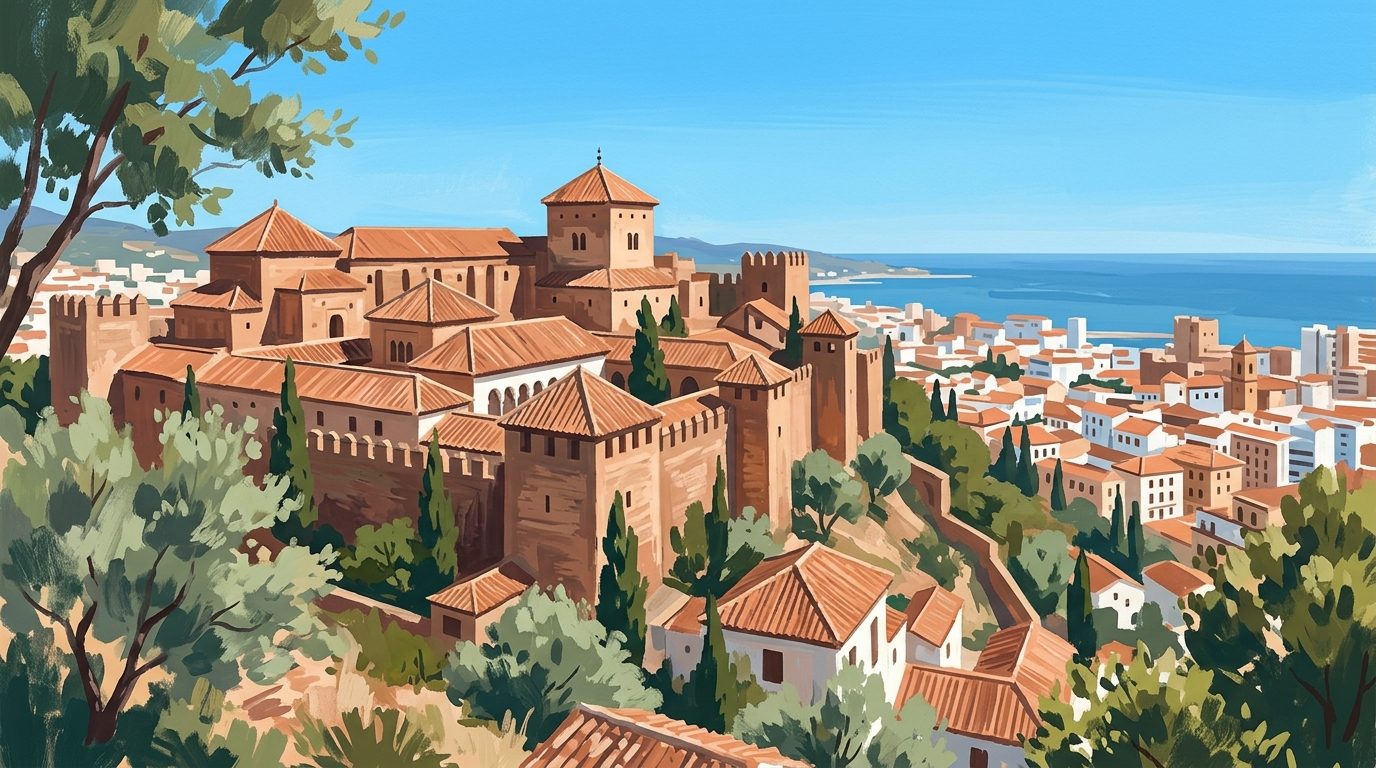
The heavy scent of orange blossoms drifts across the stone courtyards of the Alcazaba, a formidable 11th-century palatial fortress watching over the port of Málaga. Built upon the lower slopes of Mount Gibralfaro by the Hammudid and Zirid dynasties, this complex of double walls, horseshoe arches and trickling irrigation channels represents one of the most sophisticated military structures from the Islamic period in Spain. The fortress was designed to project absolute power. It housed the city's Moorish governors while providing a fearsome deterrent against naval invasions.
For those exploring Málaga City, the Alcazaba acts as a physical timeline of the Mediterranean. Its foundations rest on early settlements, its walls incorporate scavenged Roman columns, and its palaces bridge the architectural transition between the early Taifa kingdoms and the Nasrid dynasty.
The Ingenious Defensive Ascent
Visitors entering from Calle Alcazabilla immediately negotiate a gauntlet of defensive architecture. The fortress features a double-walled layout, designed to trap attackers in a narrow killing zone between the ramparts. Originally, the fortification was linked to the Castillo de Gibralfaro high above by the Coracha, a protected zigzagging stone corridor. To reach the upper levels today, you walk a steep, winding path through fortified gates.
The most notable gate is the Puerta de la Bóveda. Here, the path forces an angled turn beneath a brick vault, a deliberate military tactic known as a bent entrance. This slowed down invading cavalry and prevented battering rams from gaining momentum. Climbing towards the Torre del Cristo, look closely at the masonry. Embedded within the Moorish brickwork are smooth marble columns and carved capitals. These elements were hauled up the hill from the 1st-century Roman Theatre directly below, a pragmatic recycling of antiquity.
The Taifa and Nasrid Palaces
At the summit, the military austerity of the lower walls gives way to the refined Cuartos de Granada. This upper precinct is a sequence of intimate, open-air courtyards and residential rooms that showcase the Moorish mastery of geometry and water.
The Patio de los Surtidores features a central water channel flanked by hedges, establishing a cooling microclimate during the Andalucían summer. Beyond it lies the Patio de los Naranjos, where citrus trees frame views of the city. Inside the rooms, the architecture shifts to delicate lobed arches, carved wooden ceilings, and geometric plasterwork. These elements reflect the transition of power and architectural tastes across the centuries, particularly the heavy influence of the Nasrid kingdom which ruled the region until the late 15th century.
The Archaeological Exhibits
Integrated within the palatial rooms is a small but significant archaeological exhibition. This collection displays ceramics and daily artefacts unearthed during extensive 20th-century restorations. These fragments ground the grand architecture in the daily lives of the soldiers, servants, and governors who once lived here.
Pottery shards, ancient coins, and domestic tools offer a glimpse into the domestic reality of a fortified Moorish settlement. Seeing these pieces within the rooms where they were likely used adds a layer of tangible history that bare walls alone cannot provide. It provides an excellent context for understanding how the Alcazaba functioned not just as a military installation, but as a self-sustaining miniature city.
Assessing the Alcazaba Experience
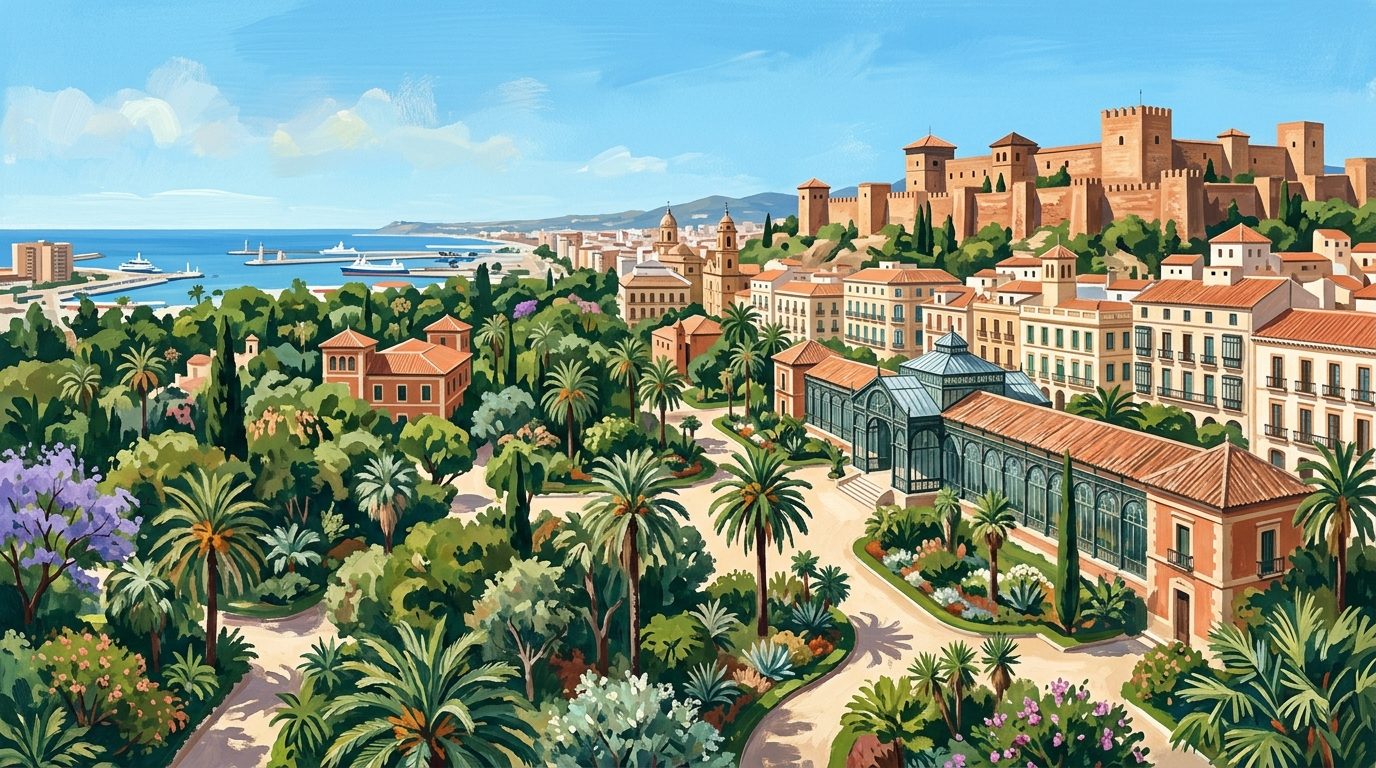
The elevated position provides some of the finest vantage points in Andalucía. The defensive walls offer sweeping panoramas over the Mediterranean Sea, the commercial port, and the canopy of the Parque de Málaga. A candid assessment of the Alcazaba requires comparing it to its more famous counterpart, the Alhambra in Granada. The Málaga fortress is smaller, less ornate, and bears the heavy marks of 20th-century restoration.
However, it lacks the crushing crowds and rigid time-slot pressures of the Alhambra. Visitors find a much more intimate encounter with Moorish design. You can linger in the courtyards, examine the brickwork up close, and enjoy a self-paced exploration. It is a highly rewarding historical site, suiting architectural enthusiasts, military history buffs, and anyone seeking a tangible connection to the Islamic history of the coast.
Navigating the Terrain and Accessibility
The physical reality of the Alcazaba is demanding. The historic pathways are composed of uneven stone and cobblestones. Over centuries of foot traffic, these surfaces have become polished and can be exceedingly slippery, particularly on steep downhill gradients. Sturdy, non-slip footwear is absolutely essential for all visitors.
For visitors with limited mobility, accessibility is restricted but partially manageable. A municipal lift is located on Calle Guillén Sotelo, behind the Málaga City Hall. This elevator ascends directly to the upper palatial area, bypassing the steep lower ramparts. However, visitors must typically possess a valid ticket to use it. Even at the top, the palaces contain internal steps, raised thresholds, and uneven courtyard surfaces, meaning the site remains challenging for wheelchair users.
Practical Advice and Itinerary Pairings
Reaching the monument is straightforward, as it sits immediately adjacent to the historic centre. Rather than attempting to drive into the restricted central zone, use the public parking at Plaza de la Marina. The official Alcazaba y Castillo de Gibralfaro portal provides comprehensive historical resources and visitor guidelines. Always consult these resources to plan your route.
While the Alcazaba and Castillo de Gibralfaro share a common history, there is no direct pedestrian connection between them from within the walls. Visiting both requires exiting the Alcazaba and tackling a steep external hike up the Coracha walkway to the upper castle. A more immediate itinerary pairs the fortress with its foundation. Exploring the Alcazaba and Roman Theatre in Málaga allows you to trace the city's history from the 1st century to the 15th century in a single morning. Afterwards, walk a few minutes south to observe the city's modern maritime identity around Málaga’s Grand Cathedral and the Transformed Waterfront, or head west to explore the galleries covered in our guide to the Picasso Museum and Soho Arts District.
Nearby worth your time
A few well-placed stops for extending the day without turning it into a checklist.

Continue through Málaga City
Step back into the wider landscape with local guides, nearby places and the province overview.
Place guide · 7 min
Playa de Burriana: A Guide to Nerja's Premier Beach
Discover Playa de Burriana, the most iconic beach in Nerja, known for its wide sands, excellent chiringuitos, and clear waters on the Costa del Sol.
Place guide · 7 min
Playa de Cabopino: Dunes, Pines and Clear Waters near Marbella
A protected enclave of natural dunes and fine sand situated between Marbella and Fuengirola. This coastal stretch offers a rare glimpse of the original Mediterranean landscape.
Itinerary · 13 min
One Week in Ronda: A Seven-Day Itinerary for the Serranía
A seven-day stay in Ronda allows you to experience the deep gorge and ancient streets long after the day-trippers have left. Using the city as a base, you can easily explore the surrounding white villages, hike the Sierra de las Nieves, and settle into the true rhythm of mountain life.