
attraction · Málaga
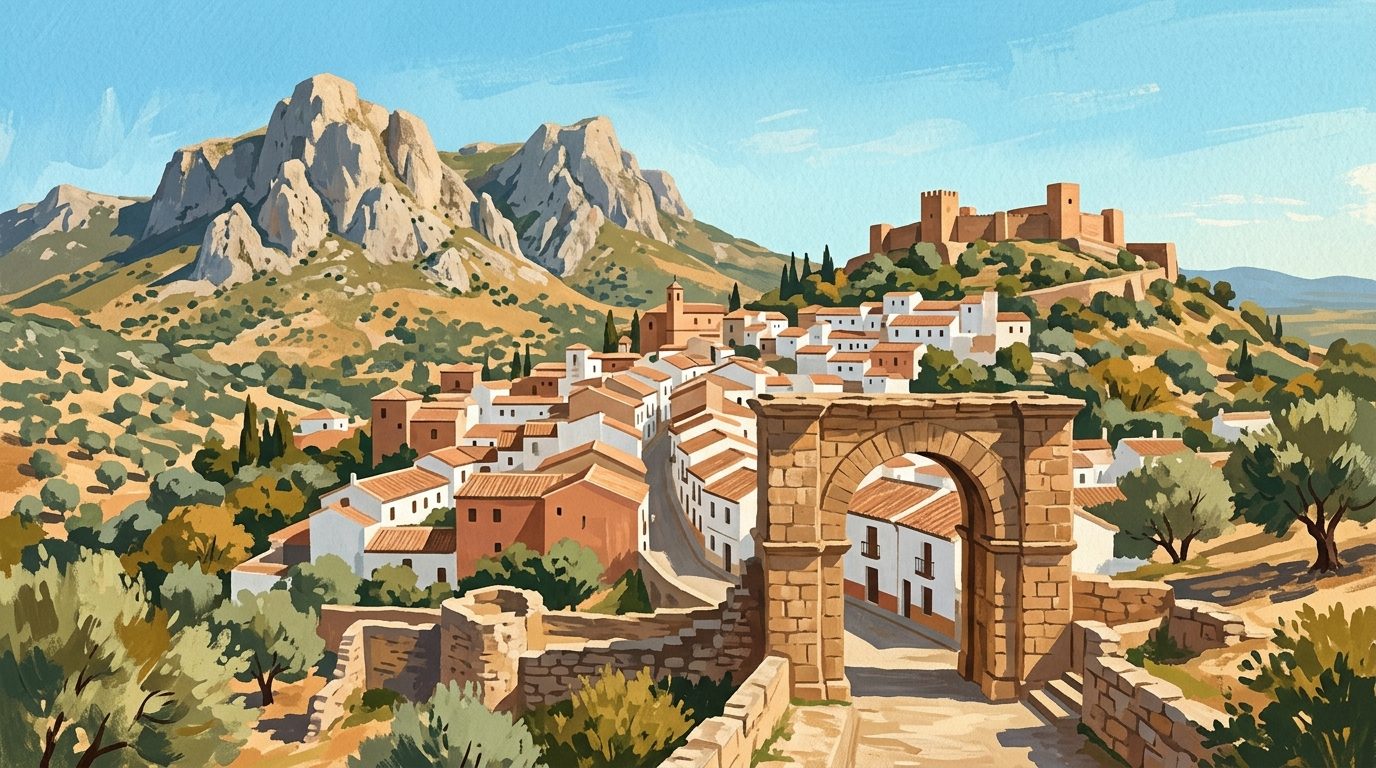
Arco de los Gigantes
Andalucía 365 · Updated 18 July 2026
Our Verdict
“The Arco de los Gigantes is a brief but visually striking stop that bridges the Moorish and Renaissance eras of Antequera. While it takes only minutes to view, its salvaged Roman epigraphy and precise framing of the collegiate church make it an essential, highly photogenic architectural landmark.”
Last verified: July 2026
A Renaissance Monument with Roman Roots
The Arco de los Gigantes stands at the upper crest of Antequera, a seven-metre-high archway constructed from sun-bleached sandstone. Erected in 1585, it was designed by architect Francisco de Azurriola and built by master craftsman Francisco Gutiérrez. It replaced the Moorish Puerta de Estepa, discarding a medieval defensive layout for a bold ideological statement influenced by sixteenth-century Humanism. As you stand beneath the two-metre-thick masonry, you view a late-Renaissance structure built to validate the prestige of the city by embedding its ancient past directly into the walls. The municipal council gathered Roman tombstones, inscribed pedestals, and classical statues from Anticaria itself, as well as nearby abandoned settlements like Singilia Barba, Nescania, and Osqua. The cool touch of the ancient limestone provides a stark contrast to the heat of the sun in Andalucía.
The Epigraphy and Architectural Detail
The face of the arch originally functioned as one of the first permanent, open-air galleries of classical epigraphy in Spain. Rather than relying solely on freshly quarried stone, builders integrated salvaged Latin inscriptions to be read by passers-by. Look closely at the mounted plaques, which include original dedications to King Philip II. These limestone slabs were temporarily removed in the early twentieth century to form a municipal museum collection, but were carefully returned during a major restoration project in 1984. The meticulous carving and the sheer scale of the blocks demonstrate the symbolic strength intended by its creators. While weathering has softened the sandstone, the inscriptions remain a powerful testament to how Renaissance Antequera viewed its classical ancestry.
Heraldry and the Arch of Hercules
The arch is crowned by a striking heraldic and sculptural display that reinforces the civic pride of Antequera. The keystone features a deep relief of a jar of lilies, while a castle and a lion rest on the upper cornice. Together, these elements form the official coat of arms of the city. Historically, the monument was also known as the Arch of Hercules. Its upper section featured a large vaulted niche housing an enormous Roman statue of Hercules, celebrated as the mythological founder of the city. Although the original oversized statue has been lost, accurate replicas on the cornice continue to hint at its former ostentation.
A Candid Assessment
As an isolated attraction, the Arco de los Gigantes takes no more than fifteen minutes to inspect. It is not a sprawling museum, nor does it possess the immersive scale of a complete fortress. Its true value lies in its role as a monumental transitional space bridging the physical gap between the medieval Moorish Alcazaba and the sweeping Renaissance plaza of the Real Colegiata de Santa María la Mayor. For travellers who appreciate classical history, the arch is a fascinating example of how sixteenth-century Spain salvaged and celebrated its Roman lineage. Furthermore, it frames the facade of the collegiate church when viewed from the Plaza de los Escribanos, offering one of the most photographed perspectives in the province. Just behind the arch, visitors will find a spectacular viewing point offering panoramic sights over the tiled roofs of the lower town.
Accessibility and Terrain
Reaching the arch requires navigating the steep topography of the upper town. Visitors approaching from the central squares must walk uphill via the Cuesta de Zapateros or the steep approach of San Judas. The streets and surrounding plazas are paved with traditional cobblestones, which can be uneven and occasionally slippery. Comfortable walking footwear with good grip is absolutely essential. For those using wheelchairs or pushing prams, the incline from the lower town is demanding. However, it is entirely possible to arrive by vehicle or local bus to the upper parking areas located near the Alcazaba. The open plazas immediately around the arch are flat, and recent municipal projects have improved accessibility routes leading directly into the adjacent Alcazaba parade ground.
Practical Advice for Visiting
Because the Arco de los Gigantes forms part of the public streetscape at the entrance to the monumental complex, it is freely accessible at all hours. Early morning or late afternoon provides the most striking light, illuminating the sandstone and casting long shadows across the valley towards the legendary Peña de los Enamorados mountain profile. If you plan to explore the interior of the neighbouring fortress or the collegiate church, you must confirm operating hours, ticket prices, and any temporary closures directly. Check the official Antequera tourism website for the most accurate practical details before you set out to explore the upper town.
Nearby Pairings and Regional Context
The arch serves as the perfect starting point for a broader exploration. It acts as the gateway to the historic heart of the city, detailed in our guide to Antequera: The Historic Heartland of Inland Málaga. After exploring the upper quarter, descend to the town centre to sample local gastronomy. A thick bowl of the region's signature cold tomato cream is highly recommended; learn about its rustic origins in our Authentic Porra Antequerana Recipe. If using Antequera as a base for a wider itinerary, the province offers profound contrasts. Head north to discover the eighteenth-century town planning highlighted in our guide to Archidona: The Octagonal Heart of Inland Málaga. Alternatively, read about the geographical drama in Limestone Peaks and Ancient Dolmens: Exploring the Hinterland of Málaga. The contrast between precise Renaissance stonework and the wild limestone karst formations of the mountains defines the enduring appeal of this territory.
Nearby worth your time
A few well-placed stops for extending the day without turning it into a checklist.
Continue through Inland Málaga
Step back into the wider landscape with local guides, nearby places and the province overview.
Place guide · 7 min
Playa de Burriana: A Guide to Nerja's Premier Beach
Discover Playa de Burriana, the most iconic beach in Nerja, known for its wide sands, excellent chiringuitos, and clear waters on the Costa del Sol.
Place guide · 7 min
Playa de Cabopino: Dunes, Pines and Clear Waters near Marbella
A protected enclave of natural dunes and fine sand situated between Marbella and Fuengirola. This coastal stretch offers a rare glimpse of the original Mediterranean landscape.
Itinerary · 13 min
One Week in Ronda: A Seven-Day Itinerary for the Serranía
A seven-day stay in Ronda allows you to experience the deep gorge and ancient streets long after the day-trippers have left. Using the city as a base, you can easily explore the surrounding white villages, hike the Sierra de las Nieves, and settle into the true rhythm of mountain life.