
attraction · Jaén
Archaeological Museum of Úbeda
Andalucía 365 · Updated 18 July 2026
Our Verdict
“The Archaeological Museum of Úbeda offers a highly focused, chronological journey through the pre-Renaissance history of the Guadalquivir valley. Housed within a rare fourteenth-century Moorish-Christian residence, this compact collection of Iberian bronzes and Roman stonework provides crucial context for understanding the cultural layers of Jaén province.”
Last verified: July 2026
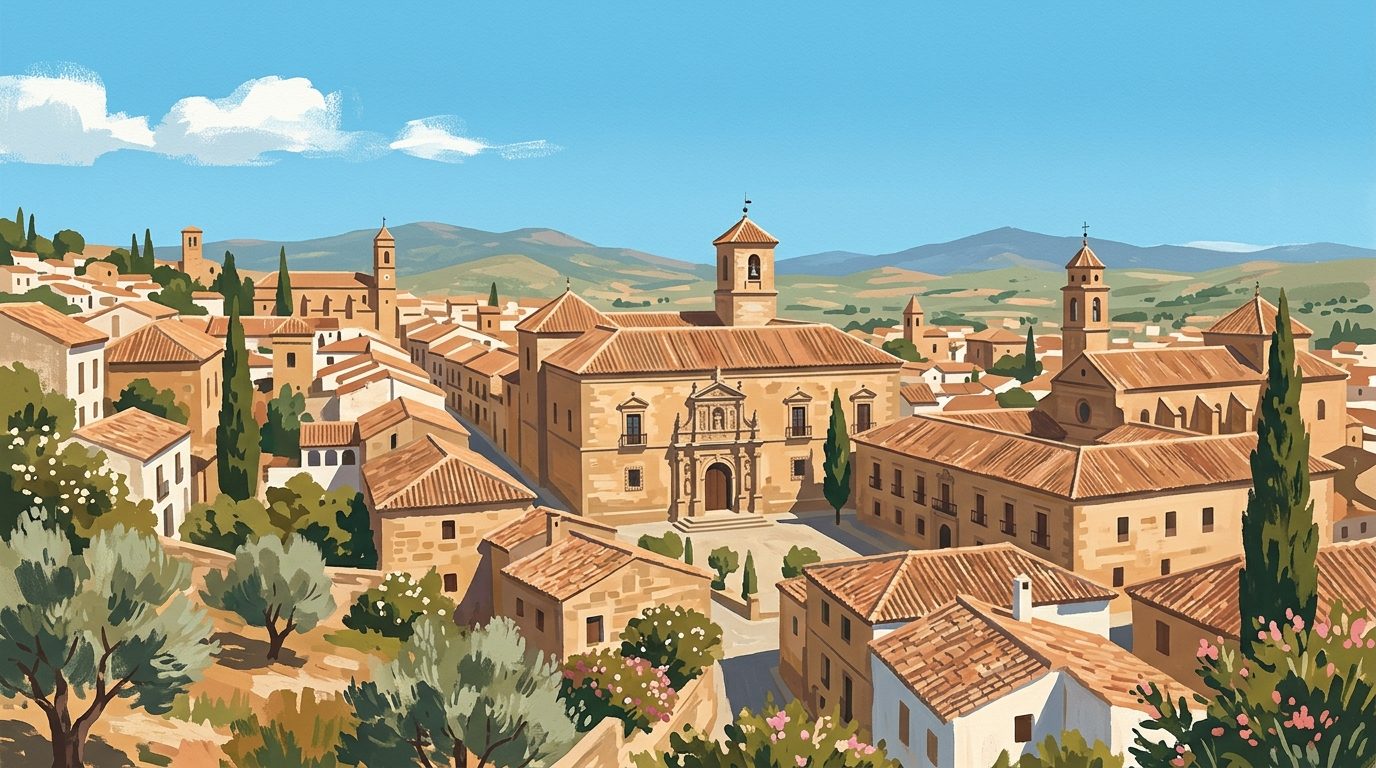
Step off the sunlit stone of Calle Cervantes and into the shaded courtyard of the Casa de los Mudéjar. Before this city became an open-air museum of sixteenth-century Italianate palaces, it was a fiercely contested medieval stronghold. This fourteenth-century residence offers a rare surviving example of Moorish-Christian domestic architecture in a region subsequently overwritten by Renaissance expansion. Today, the Archaeological Museum of Úbeda occupies this historic space, framing thousands of years of the Guadalquivir valley's history within pointed arches and original wooden ceilings.
A Surviving Mudéjar Residence
The building itself commands as much attention as the historical artefacts it holds. Discovered during urban renovations in the 1960s, the Casa de los Mudéjar reveals exactly how local nobility lived before the monumental building boom swept through the province. The architectural structure revolves around a central courtyard, bordered by an open gallery supported by stone columns. The courtyard functions not merely as a transitional space, but as the core around which all domestic and present-day exhibition activities revolve.
If you look up while walking through the interior rooms, you will see the alfarjes. These intricately carved wooden ceilings demonstrate the exceptional carpentry skills of Mudéjar craftsmen, who blended Islamic geometric traditions with Christian structural requirements. The cool, thick stone walls and the quiet open-air patio provide an immediate contrast to the grand, formal monuments found just a few streets away in the Plaza de Vázquez de Molina. The building frames the collection perfectly, anchoring the ancient objects within a tangible piece of the city's medieval past. Rather than modifying the house to fit the displays, the museum adapted its layout to respect the original fourteenth-century floor plan.
Prehistoric and Bronze Age Finds
The museum organises its permanent collection chronologically, tracing the cultural evolution of the region from the Neolithic era through to the late Middle Ages. The earliest galleries on the ground floor feature Paleolithic stone tools and polished ceramics from the El Argar culture. This Bronze Age society, which dominated the southeast of the Iberian Peninsula and reached into the upper Guadalquivir valley, is known for its distinctive dark pottery and complex burial rites.
These objects illustrate the daily survival, early agricultural practices, and technological advancements of the first permanent settlements in Jaén province. Excavations from local sites such as the Alcázar of Úbeda have yielded metal objects from grave goods that provide critical insight into the social stratification of these early communities. The simple but effective stone implements show the gradual shift from nomadic hunting to settled farming.
Iberian and Roman Artefacts
As you move forward in time on the upper floor, the exhibits showcase Iberian ex-votos. These small bronze and terracotta figurines, cast as religious offerings, give a clear picture of the spiritual lives and tribal hierarchies of the pre-Roman populations who inhabited the local hill forts. Sanctuaries such as Collado de los Jardines and Castellar de Santisteban have contributed significantly to this collection.
The Roman section heavily features finds from Salaria, an ancient settlement known today as Úbeda la Vieja. Large stone funerary inscriptions, intricate stonework, and sculpted lions that once guarded tombs reflect the immense agricultural and cultural wealth of the region under Roman rule. These imposing guardian lions stand as a testament to the monumental funerary architecture of the period. Visitors can see how the early inhabitants exploited the same fertile soils that currently support the endless olive groves of the province.
Visigothic and Islamic Eras
The final spaces cover the turbulent transition from late Roman and Visigothic rule to the Islamic period. You will find architectural fragments from Visigothic settlements such as Arroyo de la Dehesa and La Esperilla, illustrating a period of profound political change in the peninsula. These carved stone pieces demonstrate a shift in artistic motifs and structural techniques.
Following this era, the Islamic collection includes everyday ceramics, glassware, and elaborate funerary steles that document the centuries when the city served as a strategic border town in Al-Andalus. One notable piece is an inscribed tenth-century stele featuring Kufic script, marking the grave of a prominent local figure during the Caliphate of Córdoba. These artefacts tell the story of a sophisticated urban culture that thrived right up until the conquest by Christian forces in the thirteenth century.
Candid Assessment
This institution is not a vast, exhaustive national gallery. Instead, it operates as a highly focused, regional collection that adds crucial historical context to a destination entirely dominated by a single architectural era. It strongly suits history enthusiasts and curious visitors who want to understand the deeper roots of the province without committing to a half-day museum marathon. Most people can comfortably view the entire collection in forty-five minutes to an hour. The displays rely on standard glass cases and printed explanatory panels, which can feel somewhat traditional in their presentation, but the atmospheric setting inside a fourteenth-century home easily elevates the entire experience.
Practical Information
The museum sits right in the historic centre at Calle Cervantes, 6, an easy walk from the main thoroughfares. Because the immediate surrounding streets are narrow and largely restricted to pedestrians, drivers should park at the underground facility in Plaza de Andalucía or use the public parking areas near the Redonda de Miradores. The ground floor courtyard offers straightforward access, but the historical layout of the upper galleries involves original staircases, which present significant difficulties for wheelchair users. For live information on specific open days, temporary exhibitions, and entry requirements, consult the official museum website.
Sensible Nearby Pairings
Use this archaeological collection as a historical appetizer before exploring the massive sixteenth-century transformation of the local streets. A very short walk takes you into the heart of Úbeda, where you can admire the sheer scale of the Sacra Capilla del Salvador and the Palacio de las Cadenas. These monuments showcase the wealth and ambition of the local nobility during the Renaissance. Alternatively, pair your morning here with a short drive to its sister city to explore the spectacular golden stone architecture of Baeza, completing your understanding of the Úbeda and Baeza UNESCO World Heritage designation.
Nearby worth your time
A few well-placed stops for extending the day without turning it into a checklist.
Continue through Renaissance Cities
Step back into the wider landscape with local guides, nearby places and the province overview.
Things to do · 12 min
Golf in Jaén Province: A Practical Guide to Courses, Clubs, and Holidays
Discover the reality of playing golf in Jaén. From the 9-hole course at La Garza to local societies and combining rounds with olive oil tourism.
Nature & wildlife · 7 min
Sierra de Cazorla: Spain's Largest Protected Area
Covering over 200,000 hectares of rugged limestone peaks and deep river canyons, the Sierra de Cazorla forms the green heart of the Iberian Peninsula.
Itinerary · 11 min
5 Days in Jaén: Renaissance Cities and Cazorla
A realistic five-day driving itinerary through Jaén province, balancing the monumental Renaissance architecture of Úbeda and Baeza with the rugged mountain wilderness of the Sierra de Cazorla.