
Things to do · Jaén
A Guide to Hiking and Walking in Jaén
Jaén holds the largest expanse of protected forest in Spain, offering everything from riverside strolls to high-altitude mountain challenges. This guide explores the rugged terrain of Cazorla and beyond.
By Dan · Updated 16 July 2026 · 6 min read
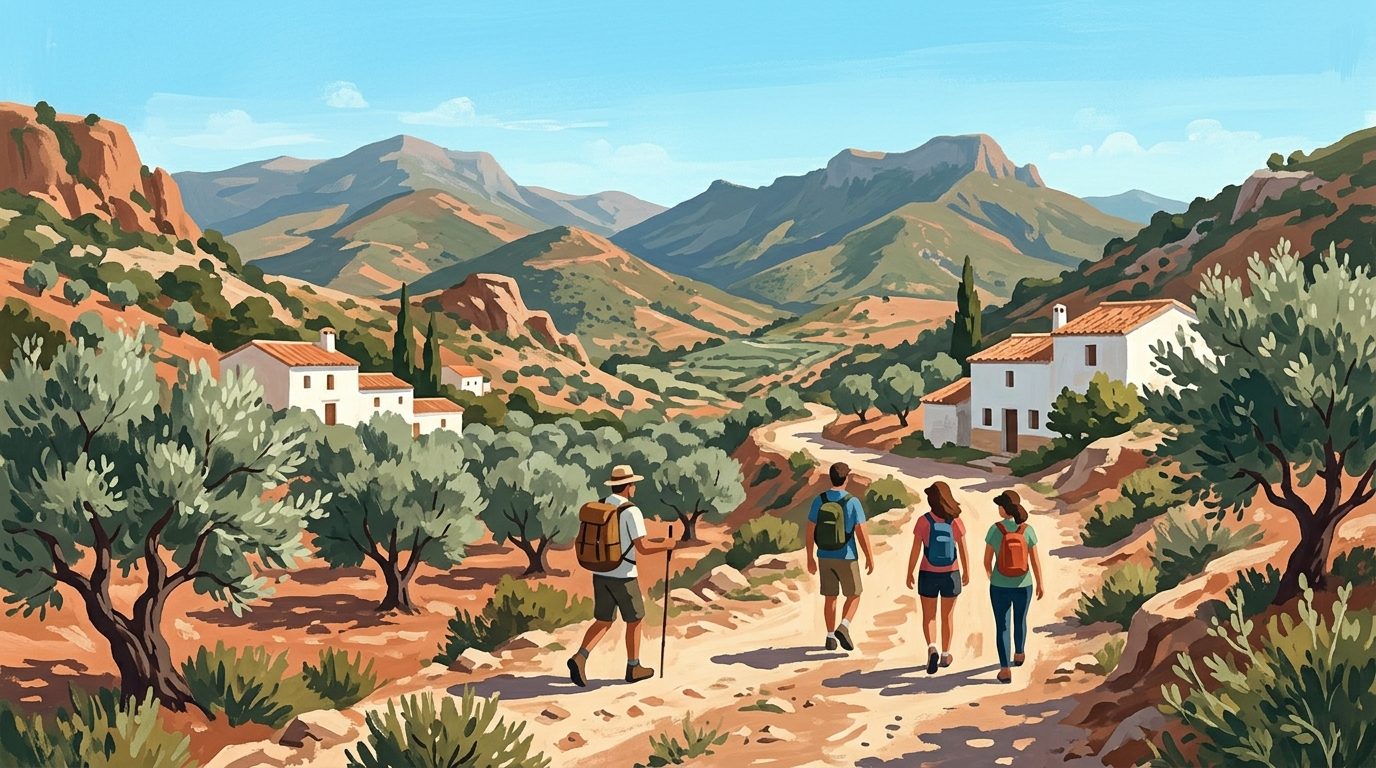
Jaén holds the largest expanse of protected forest in Spain, offering everything from riverside strolls to high-altitude mountain challenges. Explore the rugged terrain of Cazorla, the dramatic Despeñaperros gorge, and the quiet peaks of Sierra Mágina.
When people think of Jaén, they usually picture an endless sea of olive trees. While the province produces more olive oil than anywhere else on earth, its topography offers far more than silver-green groves. Jaén is home to four distinct natural parks, including the Parque Natural de las Sierras de Cazorla, Segura y Las Villas, which happens to be the largest protected area in Spain. For hikers, this means thousands of kilometres of marked trails that range from gentle riverside paths to demanding ascents through limestone crags and thick pine forests.
Walking here feels different from the coastal routes of the Costa del Sol. It is more remote, the air is sharper, and you are far more likely to share the path with a mountain goat or a griffon vulture than a crowd of tourists. Jaén provides a landscape that rewards curiosity and physical effort. The infrastructure for walkers is excellent, with well-signed trails (known as Senderos) and a network of mountain shelters and rural guest houses that cater specifically to those on foot.
Best Places for Hiking in Jaén
Sierra de Cazorla: The Borosa River Trail
The Rio Borosa walk is arguably the most famous route in the province, and for good reason. Starting near the Centro de Visitantes Torre del Vinagre, this 22-kilometre return journey follows the turquoise waters of the Borosa river. The first section is an easy, flat walk along a track, but the scenery quickly shifts as you enter the Cerrada de Elías. Here, a wooden walkway is bolted directly into the rock walls of a narrow canyon, suspended just metres above the rushing water.
Continuing further, the path climbs steeply towards the Salto de los Órganos waterfall. One of the most unusual features of this hike is the series of tunnels carved into the mountain to carry water to a nearby hydroelectric plant. Walking through these dark, damp passages (a torch is essential) leads you out to the mountain lagoons of Valdeazores and Aguas Negras. It is a long day, taking roughly 7 to 8 hours, but the variety of terrain is unmatched. To explore this area with professional support, look for local guides in the village of Cazorla.
The GR-247: Bosques del Sur
For those who want to truly disappear into the wilderness, the GR-247 Bosques del Sur is a circular long-distance path that covers 478 kilometres. It is divided into 21 stages, allowing you to pick a segment that suits your timeframe. The trail loops through the heart of the Cazorla, Segura, and Las Villas Natural Park, taking in high plateaus, deep valleys, and remote villages like Hornos and Segura de la Sierra.
The Segura section is particularly striking, featuring deep pine forests and the source of the Segura river. Unlike the more popular trails near the town of Cazorla, the Segura paths are often empty. You can walk for hours without seeing another soul, though you will certainly spot fallow deer and wild boar. Many of the stages end at Refugios (mountain shelters), some of which are staffed during the peak walking seasons, providing a basic but atmospheric place to rest.
Sierra Mágina: The High Peaks
Located to the south of Jaén city, Sierra Mágina is often overlooked, yet it contains the highest peak in the province, Pico Mágina, at 2,167 metres. This is a landscape of limestone and high-altitude flora. The hike to the summit from the area known as Los Toscanillos is a classic. It is a strenuous climb that requires good fitness and navigation skills, especially if clouds roll in.
What makes Mágina special is its isolation. The park is home to several endemic plant species that survived the last ice age, and the views from the top extend across the olive sea to the snow-capped peaks of the Sierra Nevada in Granada. The villages of Bedmar or Huelma serve as good bases, and the local hiking club, Asociación de Montaña Mágina, often organises group outings if you prefer not to head up alone. This is serious mountain territory; even in late spring, you might find patches of snow in the higher gullies.
Despeñaperros: The Gateway to Andalucía
The Despeñaperros Natural Park is the smallest in Jaén but contains some of its most dramatic geology. This narrow gorge has been the primary route through the Sierra Morena mountains for centuries. The Los Órganos trail is the standout route here. It takes you to a spectacular natural monument where the vertical rock layers resemble the pipes of a giant church organ.
The path starts near the village of Santa Elena and winds through Mediterranean scrubland filled with cork oaks and strawberry trees. It is a moderate hike of about 10 kilometres that offers incredible views over the gorge. Because it sits at a lower altitude than Cazorla or Mágina, it is a great option for winter walking when the higher peaks are covered in snow. Keep an eye out for the Iberian lynx; although they are incredibly elusive, this area is one of their few remaining strongholds.
Vía Verde del Aceite
If you prefer flatter terrain or are walking with a family, the Vía Verde del Aceite (The Greenway of Oil) is an excellent choice. This follows the route of a dismantled railway line that once transported olive oil from Jaén to the port of Málaga. The trail starts in Jaén city and runs for 128 kilometres through the countryside to Puente Genil.
The section between Jaén and Martos is particularly popular. The path is paved or made of fine gravel, making it accessible for everyone. It crosses several impressive 19th-century metal viaducts designed by the school of Gustave Eiffel. Walking here gives you a close-up look at the agricultural heart of the province, and because it follows an old rail line, the gradients are never more than 3%. It is a great way to stretch your legs without the need for heavy hiking boots or specialised gear.
Practical Information
Hiking in Jaén is generally free, as access to the natural parks is open to the public. However, if you plan on staying in the mountain shelters (refugios) along the GR-247, you may need to book in advance through the Ventana del Visitante (Junta de Andalucía) website or the Federation of Mountain Sports. For those wanting a more structured experience, local operators like Turisla or Alma Gaia in Cazorla offer guided day hikes and equipment rental starting from around €30 per person.
The best seasons for walking are spring (March to May) and autumn (October to November). During these months, the temperatures are mild, and the landscapes are at their most colourful. Summer (July and August) should be avoided for serious hiking, as temperatures frequently exceed 40°C, and the risk of forest fires often leads to the closure of certain trails. Always carry at least two litres of water, as mountain springs can dry up in the hotter months. Sturdy hiking boots with good ankle support are recommended for the limestone paths of Cazorla and Mágina.
Local Tips
When you finish a hike in Jaén city, follow the local tradition of heading to the Taberna Casa Pancho or any of the small bars near the cathedral. In Jaén, every drink comes with a substantial free tapa, and there is no better way to recover your calories. If you are staying in the mountains, stop at a local cooperative to buy a tin of 'Early Harvest' (Cosecha Temprana) extra virgin olive oil. It is bright green and has a peppery kick that is far superior to anything you will find in a standard supermarket.
Last reviewed: 21 June 2026 · Editorial policy
Related guides
Exploring the Trails: A Guide to Hiking and Walking in Málaga
Discover the rugged interior of Málaga through its diverse walking trails, from the spectacular Caminito del Rey to the prehistoric limestone peaks of El Torcal.
7 min read
A Guide to Hiking and Walking in Andalucía
Discover the best hiking trails in Andalucía, from the high peaks of the Sierra Nevada to the volcanic coast of Cabo de Gata and the lush forests of Grazalema.
7 min read
Hiking and Walking in Cádiz: From Atlantic Cliffs to Mountain Peaks
Discover the diverse landscapes of Cádiz, from the high-altitude Spanish Fir forests of Grazalema to the dramatic coastal cliffs of Barbate.
6 min read
Hiking and Walking in Granada: From High Peaks to Gorge Trails
From the high-altitude peaks of the Sierra Nevada to the terraced valleys of the Alpujarras, Granada offers some of the most varied walking terrain in southern Spain.
6 min read
Exploring the Trails: A Guide to Hiking and Walking in Sevilla
Sevilla province offers a diverse range of walking landscapes, from the dramatic karst formations of the north to the tranquil riverside paths of the Guadalquivir.
5 min read
Hiking and Walking in Almería: Deserts, Volcanic Coasts and High Sierras
Discover the raw beauty of Almería’s diverse landscapes, from the volcanic cliffs of Cabo de Gata to the rugged badlands of the Tabernas Desert.
6 min read
More from Jaén
Golf in Jaén Province: A Practical Guide to Courses, Clubs, and Holidays
Discover the reality of playing golf in Jaén. From the 9-hole course at La Garza to local societies and combining rounds with olive oil tourism.
12 min read
Exploring Beyond the Olive Groves: The Best Day Trips from Jaén
Discover the best day trips from Jaén, from the Renaissance splendours of Úbeda and Baeza to the rugged peaks of the Sierra de Cazorla and ancient Moorish fortresses.
7 min read

Where to Find the Best Water Sports in Jaén
Discover the unexpected side of Jaén, where mountain reservoirs and limestone gorges offer world-class kayaking, rafting, and canyoning away from the coastal crowds.
6 min read
Cycling in Jaén: From Infinite Olive Groves to Rugged Mountain Peaks
Discover why Jaén is Spain’s best-kept secret for cyclists, from the flat Vía Verde del Aceite to the technical trails of the Sierras de Cazorla.
6 min read
Newsletter
More stories from Andalucía
Weekly notes, seasonal picks, and the next guides worth bookmarking.