

attraction · Jaén
Baeza Cathedral
Andalucía 365 · Updated 18 July 2026
Our Verdict
“Baeza Cathedral is a masterful, scholarly study in architectural transition. Lacking the overwhelming scale of larger Andalucían churches, it rewards visitors with quiet precision, from its Mudéjar doors to Vandelvira’s confident Renaissance vaulting. It is an essential, uncrowded stop for anyone tracing the evolution of sixteenth-century Spanish masonry.”
Last verified: July 2026
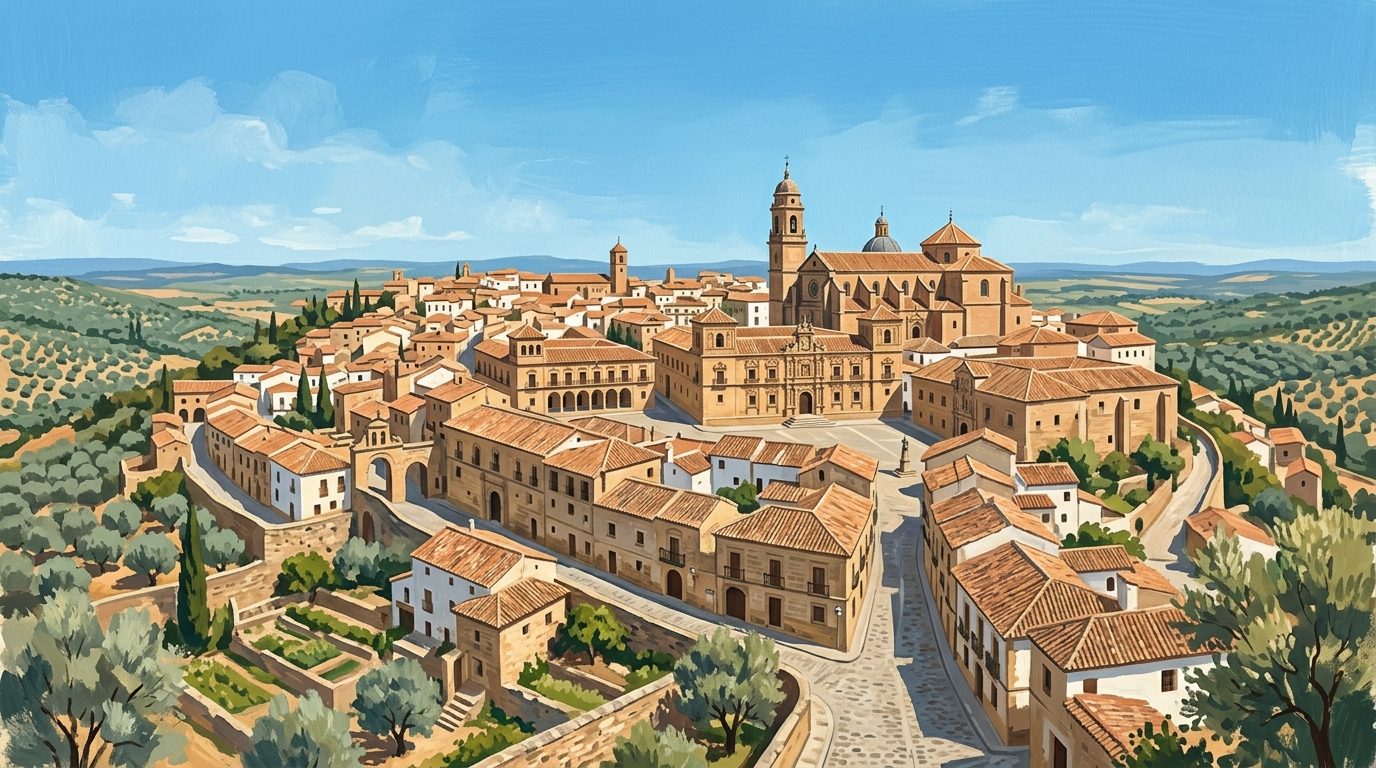
Standing at the highest point of town in the Plaza de Santa María, the Cathedral of the Nativity of Our Lady anchors the architectural legacy of a formidable era. The honey-coloured sandstone glows under the sharp Andalucían sun, projecting the confidence of sixteenth-century Spain. Consecrated for Christian worship in 1227 on the site of a former mosque, the cathedral is a textbook study of evolving power and piety. Today, it remains the spiritual centrepiece of the UNESCO World Heritage designation shared with neighbouring Úbeda, offering an uncrowded, contemplative space that sharply contrasts with the grand, echoing chambers of larger regional capitals.
The Architectural Layers
The exterior of Baeza Cathedral reads like an architectural timeline, capturing centuries of stylistic shifts carved into solid stone. The lower section of the bell tower still features the cubic mass and solid shafts of the eleventh-century minaret belonging to the original mosque, grounding the structure in its Islamic past. As you walk the perimeter, the thirteenth-century Puerta de la Luna reveals a striking Gothic and Mudéjar polylobed horseshoe arch topped by a delicate fourteenth-century rose window, reflecting the immediate aftermath of the Christian conquest.
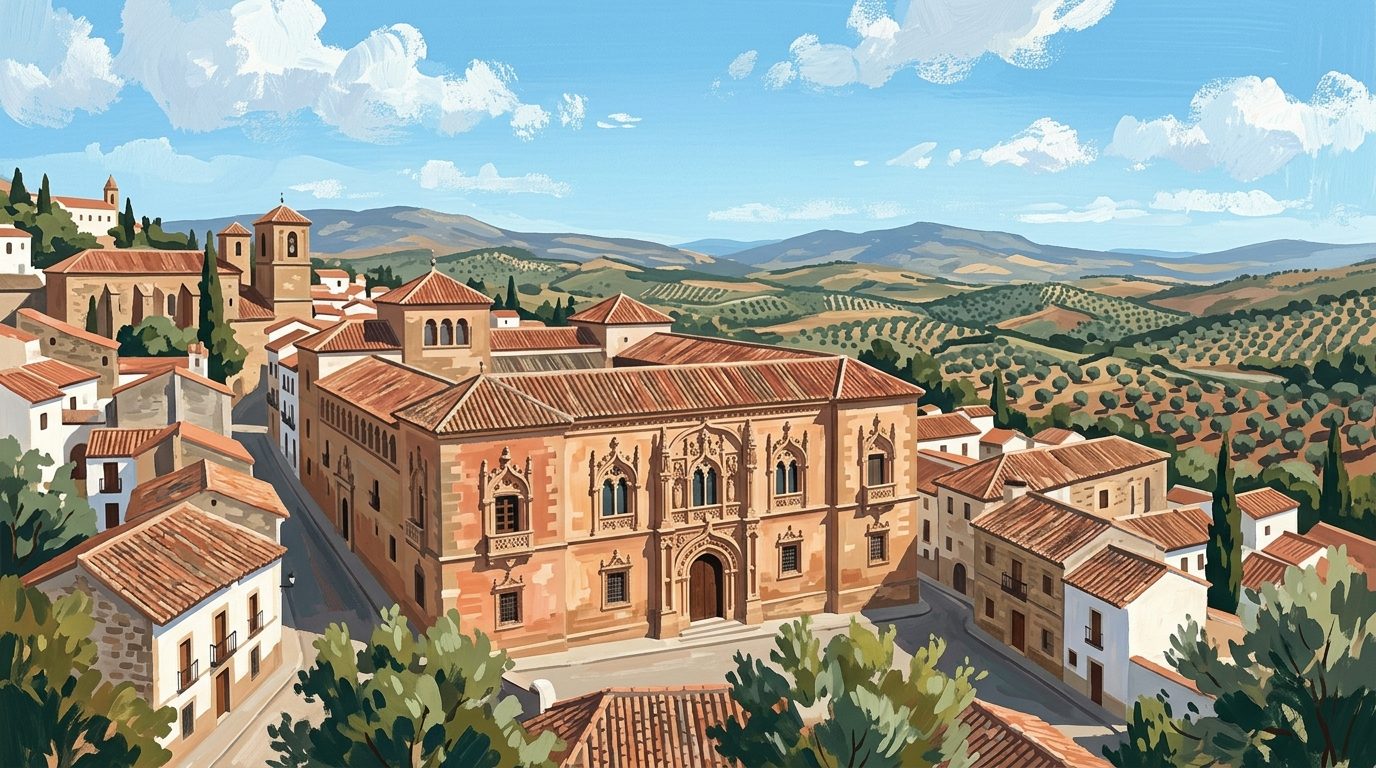
Further along, the northern facade facing the fountain in the Plaza de Santa María presents a very different face. Here, a severe but elegant late sixteenth-century Renaissance entrance designed by Juan Bautista Villalpando dominates the square. It is flanked by classical Corinthian pilasters and crowned with a detailed relief of the Nativity of the Virgin, masterfully carved by the local sculptor Jerónimo del Prado. The southern Puerta del Perdón retains a robust fifteenth-century Gothic austerity, giving access directly into the cloisters.
The Vandelvira Interior
Stepping inside the main nave, the sheer volume of the space commands immediate attention. Following a structural collapse in 1567, the visionary architect Andrés de Vandelvira was brought in to reimagine the interior. He replaced the ruined sections with a confident Renaissance footprint, raising massive circular pillars that support elegant cross vaulting. It is a masterful exercise in proportion, a quiet precursor to his grander work, which you can see when visiting Jaén Cathedral.
The interior chapels provide detailed studies in changing liturgical tastes and architectural patronage. The Capilla Dorada, or Golden Chapel, introduces clear Italian Renaissance influences to the Andalucían heartland, while the Capilla de San José showcases refined detailing and a notable relief of the Annunciation. Towards the main altar, an expansive Baroque retablo completed in the late seventeenth century presides over the sanctuary. Elsewhere in the cathedral, you can admire the original Plateresque wrought-iron grille crafted between 1510 and 1513 by Maestro Bartolomé, a local artisan whose metalwork defined the region's artistic output.
The Treasury and Cloisters
Beyond the main nave, the cathedral museum holds an impressive inventory of religious art, centuries-old tunics, and illuminated manuscripts. The undisputed focal point of the collection is the Custodia Procesional, a magnificent silver monstrance crafted in 1714 and standing over two metres tall. It remains an active piece of liturgical equipment, carried through the streets of Baeza during the annual Corpus Christi processions.
The adjacent Gothic cloisters offer a stark architectural contrast to the grand Renaissance nave. With robust, simple pointed arches and flanking prismatic buttresses, the walkways provide a quiet, contemplative space holding four distinct Mudéjar chapels and one Gothic chapel. These spaces showcase their original brickwork and arched doorways. Recent updates to the visitor experience also include a virtual reality presentation housed within the complex. This 360-degree drone flight provides an aerial perspective of the nave, the vaulting, and the historical urban footprint, effectively bridging the gap between sixteenth-century masonry and modern technology.
A Candid Assessment
Baeza Cathedral is essential for anyone interested in the physical transition from Moorish rule to the Spanish Renaissance. It lacks the overwhelming scale of Seville and the ornate excess of Granada, substituting sheer size for academic architectural precision. It is a quiet, scholarly building that rewards those who take the time to read its stonework. Visitors expecting immediate, flashy spectacle may find it austere, but for architecture enthusiasts, Vandelvira’s interventions and the surviving early Christian elements make it an immensely satisfying visit.
How to Visit
The cathedral sits in the pedestrianised heart of the old town. Because the surrounding streets are narrow and restricted to local traffic, drivers should leave their vehicles in the municipal car parks near the Paseo de la Constitución and walk the ten minutes up to the Plaza de Santa María.
The ground floor of the cathedral is entirely flat, with no steps or ramps in the main nave, making it largely accessible for wheelchair users. A small step leads into the cloister, though a wooden ramp is generally available upon request. As an active place of worship, opening times shift according to seasonal liturgical requirements, and access is restricted during mass or religious festivals. Modest dress covering shoulders and knees is required. Do not rely on third-party sites for schedules; confirm live details directly on the Catedral de Baeza official website.
What to Pair it With
After exploring the cathedral, spend a few minutes at the nearby Fountain of Santa María, built in 1564 to celebrate the arrival of fresh water to the city. From there, it is a short walk down through the historic centre to the Jabalquinto Palace, another architectural masterpiece. If you are using this as a base for exploring Baeza, allocate at least a half-day before heading further afield in this tale of two cities. To fully grasp the architectural ambition of the era, drive fifteen minutes east to compare Vandelvira's work here with the Renaissance splendour of Úbeda.
Nearby worth your time
A few well-placed stops for extending the day without turning it into a checklist.
Continue through Renaissance Cities
Step back into the wider landscape with local guides, nearby places and the province overview.
Things to do · 12 min
Golf in Jaén Province: A Practical Guide to Courses, Clubs, and Holidays
Discover the reality of playing golf in Jaén. From the 9-hole course at La Garza to local societies and combining rounds with olive oil tourism.
Nature & wildlife · 7 min
Sierra de Cazorla: Spain's Largest Protected Area
Covering over 200,000 hectares of rugged limestone peaks and deep river canyons, the Sierra de Cazorla forms the green heart of the Iberian Peninsula.
Itinerary · 11 min
5 Days in Jaén: Renaissance Cities and Cazorla
A realistic five-day driving itinerary through Jaén province, balancing the monumental Renaissance architecture of Úbeda and Baeza with the rugged mountain wilderness of the Sierra de Cazorla.