
attraction · Cádiz
Baluarte de la Candelaria, Cádiz
Andalucía 365 · Updated 18 July 2026
Our Verdict
“The Baluarte de la Candelaria offers a quiet, highly atmospheric counterpoint to the more heavily visited castles in Cádiz. Its transformation from a coastal artillery battery into a cultural venue is fascinating, though the empty interior can feel stark outside of scheduled summer concerts or exhibitions. Go for the sweeping ocean views.”
Last verified: July 2026
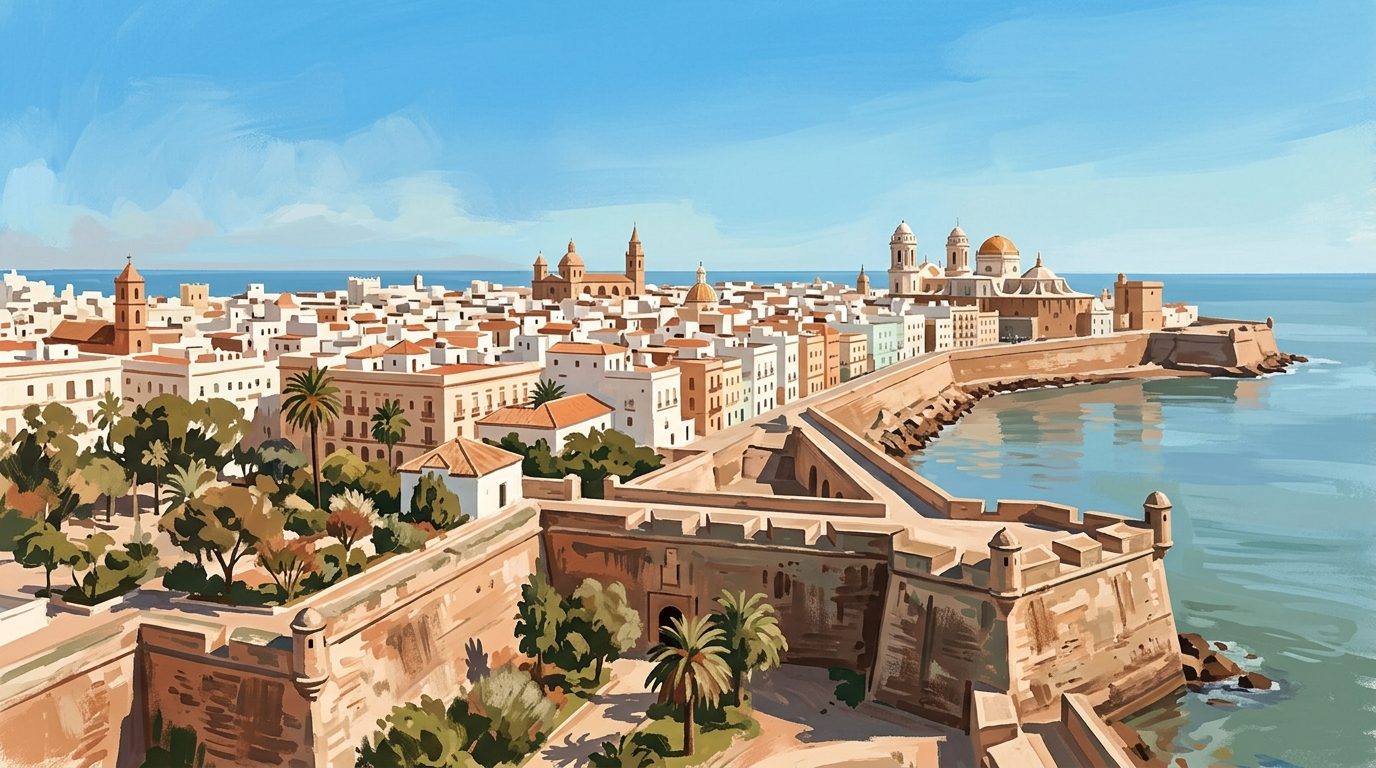
Salt spray from the Atlantic Ocean continuously pits the exposed stone walls of the Baluarte de la Candelaria. Situated on the northwestern edge of the Cádiz peninsula, this prominent 17th-century bastion was built in 1672 under the initiative of Governor Diego Caballero de Illescas. Designed to shield the vital sea approaches to the city harbour, the fortress extends out into the water in a distinct arrowhead formation. Today, this imposing military structure serves a completely different function. Instead of holding off foreign naval fleets, its thick stone walls, which double as a breakwater, and wide internal courtyard provide a stark, historical backdrop for contemporary art exhibitions and summer concerts. For curious travellers, it offers a tangible connection to the martial history of Cádiz and a quiet vantage point over the bay.
The Architectural Strategy of the Bastion
The Baluarte de la Candelaria forms a crucial link in the chain of coastal defences that once encircled the city. Positioned strategically between the San Felipe battery and the fortifications near La Caleta, it closed a significant vulnerability in the western flank of Cádiz. The design was purely functional. Its pointed, seaward-facing geometry provided defenders with an overlapping field of fire against approaching enemy ships. The thick stone parapets were constructed specifically to absorb the impact of heavy artillery bombardment, whilst simultaneously withstanding the relentless pounding of the Atlantic tide.
While the Castillo de Santa Catalina and Castillo de San Sebastián often draw larger crowds, the Baluarte de la Candelaria remains the most ambitious defensive project undertaken in Cádiz during the latter half of the 17th century. The structure is one of the finest surviving examples of its kind in the region. The juxtaposition of these rugged maritime fortifications against the calm horizon of the ocean creates a striking visual contrast.
Exploring the Casemates and Courtyards
Visitors entering the bastion are greeted by a wide central courtyard, originally designed to facilitate the rapid movement of troops and ammunition. Bordering this open space along the outer perimeter walls are the original casemates, which are sturdy vaulted chambers built directly into the defensive structure. In the 17th and 18th centuries, these cool, stone-lined rooms functioned as barracks, engineering workshops, and storage areas for gunpowder and supplies. The site even housed a dovecote for the pigeon fancier service of the army.
The site underwent significant modifications with the addition of two large pavilions in the late 19th century. Further architectural adaptations took place in the late 1980s under the guidance of acclaimed Sevillian architects Antonio Cruz and Antonio Ortiz. Initially intended to transform the fortress into a maritime museum, their project added an elegant portico and covered galleries, marrying modern concrete and white marble with the historic masonry. Today, you can walk along the upper ramparts to inspect the weathered gun emplacements. The elevated position offers expansive, uninterrupted views across the Bay of Cádiz towards the Rota coastline. The sound of waves crashing directly against the base of the outer walls at high tide adds a dramatic auditory element to the visual experience.
Cultural Programme and Exhibitions
The transition from a military installation to a public cultural venue has given the Baluarte de la Candelaria a second life. The former military barracks and casemates now function as permanent and temporary exhibition galleries. These indoor spaces regularly host contemporary art displays, photographic retrospectives, and showcases featuring artists from across Andalucía. Even when no specific exhibition is mounted, the vaulted stone interiors offer a cool retreat from the intense midday heat.
During the summer months, the central courtyard is repurposed as a vast open-air auditorium. It becomes a primary stage for the municipal cultural agenda, hosting theatrical performances, jazz festivals, and flamenco concerts. The bastion is also the traditional venue for the annual Feria del Libro de Cádiz, drawing authors and readers to the seafront. The high stone walls provide excellent natural acoustics, shielding audiences from the coastal winds while creating an intimate atmosphere for evening events.
Practical Advice for Visitors
The Baluarte de la Candelaria is located at the edge of the historic centre, making it highly accessible on foot. It sits at the end of the Alameda Clara Campoamor, formerly known as Alameda Apodaca, and the adjacent Alameda Hermanas Carvia Bernal. If you are driving into the city, the closest large parking facility is the Santa Bárbara underground car park, which is situated immediately next to the Parque Genovés and offers a brief, flat walk to the fortress entrance. Several local bus lines also stop nearby.
Entry policies and access to the ramparts depend heavily on the current cultural programme. Because the schedule relies on the seasonal calendar, opening patterns and ticket requirements fluctuate throughout the year. You should confirm all live details, including access times and exhibition schedules, directly on the official Cádiz tourism website before your visit.
Terrain and Accessibility
The bastion is accessed via a flat entrance from the street level. However, the interior grounds feature a mix of modern paving and traditional, uneven stone surfaces. The ramparts are reached by ramps and stairs, and the upper defensive walls lack modern safety railings in certain sections. Visitors should wear flat, sensible footwear to navigate the historic stones comfortably. The venue has adapted access points for wheelchair users, though negotiating the older courtyard paving can be somewhat bumpy in places.
Recommended Nearby Pairings
A visit to the bastion fits naturally into a broader exploration of the maritime fringes of the city. Just a few metres from the entrance, you can begin a walk through the landscaped gardens of the Alameda Clara Campoamor and Alameda Hermanas Carvia Bernal. This botanical promenade features massive Moreton Bay fig trees, regionalist ceramic details, and tiled benches overlooking the ocean.
To continue exploring the historical fortifications and beaches of the city, head south towards Playa de La Caleta. Here, you can examine the opposing defensive structures that guard the bay. For a broader overview of the urban layout, consult our guide to exploring the historic heart and Atlantic shores of Cádiz, which outlines how the defensive walls, narrow streets, and maritime traditions intersect. You may also want to explore Cádiz Cathedral and Torre Tavira for an elevated perspective over the entire peninsula.
Nearby worth your time
A few well-placed stops for extending the day without turning it into a checklist.


Continue through Cádiz City
Step back into the wider landscape with local guides, nearby places and the province overview.
Place guide · 7 min
Playa de La Caleta: A Guide to the Historic Heart of Cádiz
Playa de La Caleta is a historic urban bay in Cádiz, famous for its calm waters, ancient fortresses, and the stunning white Balneario spa building.
Place guide · 7 min
Playa de los Caños de Meca: A Guide to the Cádiz Coastline
Discover the wild Atlantic beauty of Playa de los Caños de Meca, from its freshwater springs to the historic Cape Trafalgar lighthouse.
Itinerary · 7 min
Three Days in Cadiz: The Ultimate Itinerary for Independent Travellers
Three days allows you to completely sink into the maritime rhythm of Europe's oldest city. You can cover the historic centre, explore the twin seaside fortresses, and still have time for a sherry tasting afternoon across the bay.