
attraction · Málaga
Baños Árabes Yacimiento Arqueológico
Andalucía 365 · Updated 18 July 2026
Our Verdict
“An exceptionally well-preserved archaeological site that highlights Nasrid engineering. While the lack of interpretive exhibits demands a good imagination, the intact horseshoe arches and star-shaped skylights make this an essential, highly atmospheric stop for history and architecture enthusiasts visiting Ronda.”
Last verified: July 2026
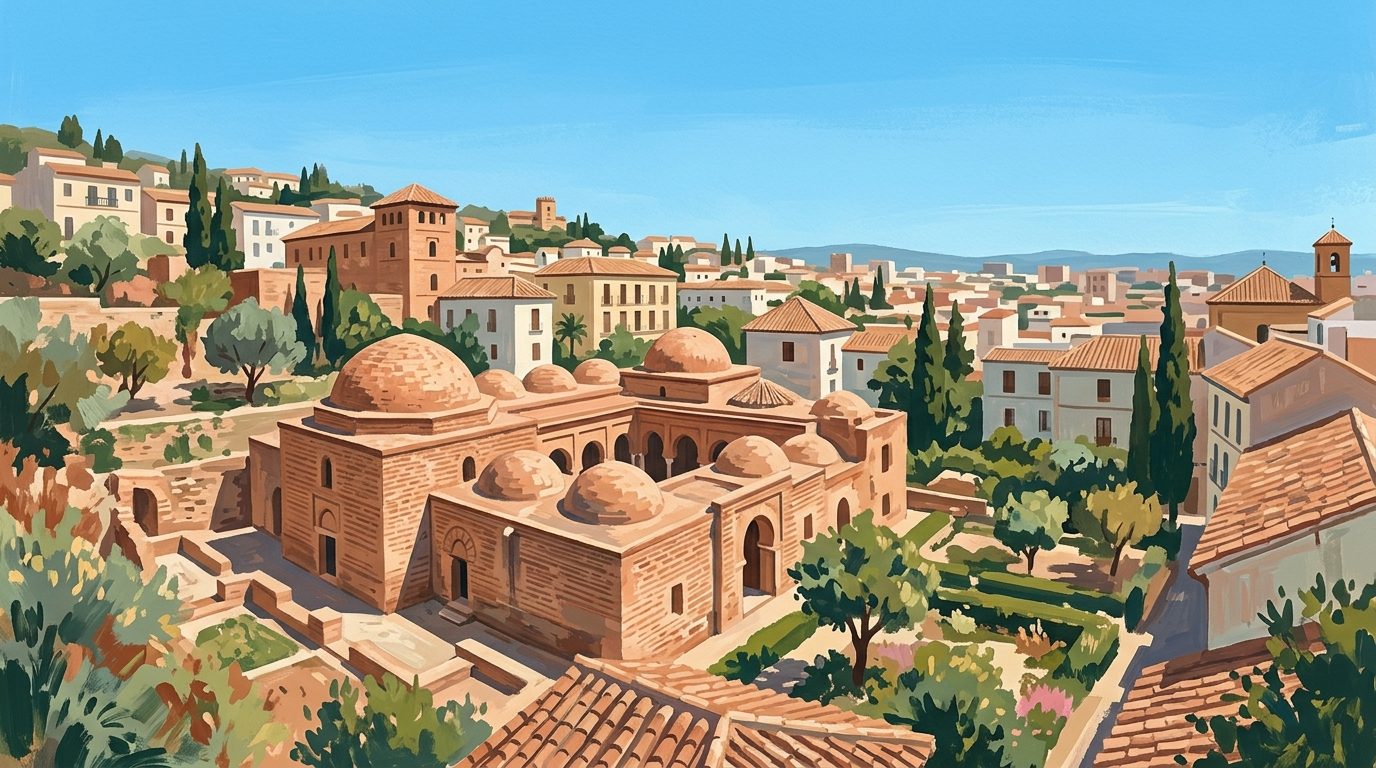
Star-shaped shafts of light pierce the vaulted ceilings of the Baños Árabes in Ronda, illuminating brickwork that has stood since the 13th and 14th centuries. Located in the San Miguel quarter, just beyond the former defensive walls, this archaeological site is one of the best-preserved medieval Islamic bathhouses on the Iberian Peninsula. While the thermal waters have long since drained away, the structure itself survived centuries of Christian repurposing and periodic flooding from the nearby rivers. Today, the complex offers a clear window into Nasrid engineering and the daily social rituals of Al-Andalus, providing a quiet contrast to the dramatic cliff-top monuments of the city above.
The Role of the Hammam in Moorish Ronda
In Islamic medieval society, the hammam served a dual purpose. The baths provided a space for mandatory religious purification before prayer, which was a fundamental requirement for anyone entering the walled city. Consequently, the complex was strategically positioned at the edge of the medina, right next to the Arroyo de las Culebras and the Puente Árabe. Beyond religious duty, the baths functioned as a vital social hub. Travellers and locals alike gathered here to discuss business, exchange news and relax in the steam. The preservation of these spaces allows visitors to understand a lifestyle where civic hygiene and community socialising were deeply intertwined.
Exploring the Bathing Chambers
The internal architecture follows the classic Roman thermal progression, adapted for Islamic customs. Visitors move through three distinct zones: the cold room (al-bayt al-barid), the warm room (al-bayt al-wastani) and the hot room (al-bayt al-sajun). The central warm room is the largest and most architecturally impressive chamber. Here, elegant horseshoe arches constructed from brick and stone support the heavy barrel-vaulted ceilings. Look up to see the star-shaped skylights, known as lumbreras. Builders used these glass-covered openings to regulate steam and temperature while providing atmospheric natural light. Although the pools remain dry today, the layout clearly demonstrates the aesthetic and practical priorities of 13th- and 14th-century Moorish architects.
The Hydraulic Engineering System
Outside the main bathing halls, the archaeological site reveals the sophisticated water management techniques that kept the hammam operational. A traditional water wheel, known as a noria or saqiya, was driven by a donkey or mule to draw fresh water from the adjacent stream. The water then flowed along a small aqueduct into a large storage reservoir. You can inspect the remains of the original furnace (al-forn) and the hypocaust underfloor heating system beneath the hot room. This system circulated hot air through subterranean pillars, warming the stone floors from below without filling the rooms with smoke. Exploring this exterior garden area clarifies how Nasrid engineers harnessed the natural landscape to sustain a constant supply of water and heat.
A Candid Assessment
The Baños Árabes deliver an authentic, highly atmospheric historical experience, far removed from modern spa recreations. The physical preservation of the arches and skylights is genuinely remarkable. However, visitors must rely entirely on their imagination and a short 3D introductory video to picture the complex as a working bathhouse. There are no expansive museum exhibits or interactive displays to guide you. For architecture enthusiasts and history students, the raw stone and intricate brickwork are easily enough to justify the visit. Travellers seeking a highly curated or modernised attraction might find the bare archaeological site slightly austere.
Practical Advice for Visiting
The baths sit at the bottom of the gorge in the San Miguel neighbourhood. To reach the site from the upper town, visitors usually descend the steep pathways leading down to the Puente Árabe. The descent involves uneven cobblestones and sharp inclines, making sensible footwear essential. Travellers with reduced mobility may find the walk back up difficult and should consider taking a local taxi. Parking in the immediate vicinity is heavily restricted, so leave your vehicle in the upper town. When planning your day, remember that opening schedules fluctuate throughout the year. Always check live details, such as admission fees and seasonal hours, on the official Turismo de Ronda website. Arrive early in the morning to avoid the heat of the midday sun and the daily influx of large tour groups.
What to Pair it With
The immediate surroundings of the Arab Baths provide an excellent continuation of Ronda's medieval history. After exploring the archaeological site, walk across the adjacent Puente Árabe and the Puente Viejo to enjoy alternative perspectives of the famous gorge. From here, you can follow the path up towards the Murallas de Ronda to inspect the remaining defensive walls. If you are exploring the wider province, Ronda serves as a brilliant base for exploring the rugged interior of inland Málaga. For more expansive scenery, consider an onward journey into the Sierra de las Nieves National Park to walk among ancient fir forests. Alternatively, drive further north into the hinterland to explore Antequera, home to prehistoric dolmens and striking limestone landscapes.
Nearby worth your time
A few well-placed stops for extending the day without turning it into a checklist.

Continue through Inland Málaga
Step back into the wider landscape with local guides, nearby places and the province overview.
Place guide · 7 min
Playa de Burriana: A Guide to Nerja's Premier Beach
Discover Playa de Burriana, the most iconic beach in Nerja, known for its wide sands, excellent chiringuitos, and clear waters on the Costa del Sol.
Place guide · 7 min
Playa de Cabopino: Dunes, Pines and Clear Waters near Marbella
A protected enclave of natural dunes and fine sand situated between Marbella and Fuengirola. This coastal stretch offers a rare glimpse of the original Mediterranean landscape.
Itinerary · 13 min
One Week in Ronda: A Seven-Day Itinerary for the Serranía
A seven-day stay in Ronda allows you to experience the deep gorge and ancient streets long after the day-trippers have left. Using the city as a base, you can easily explore the surrounding white villages, hike the Sierra de las Nieves, and settle into the true rhythm of mountain life.