
attraction · Jaén
Basilica Minor of San Ildefonso
Andalucía 365 · Updated 18 July 2026
Our Verdict
“San Ildefonso lacks the overwhelming grandeur of the nearby cathedral, but compensates with layers of authentic history. As a working parish church, it rewards those who appreciate architectural evolution and quiet contemplation over multimedia tourist displays. The presence of Vandelvira’s tomb makes it an essential stop for architecture enthusiasts.”
Last verified: July 2026
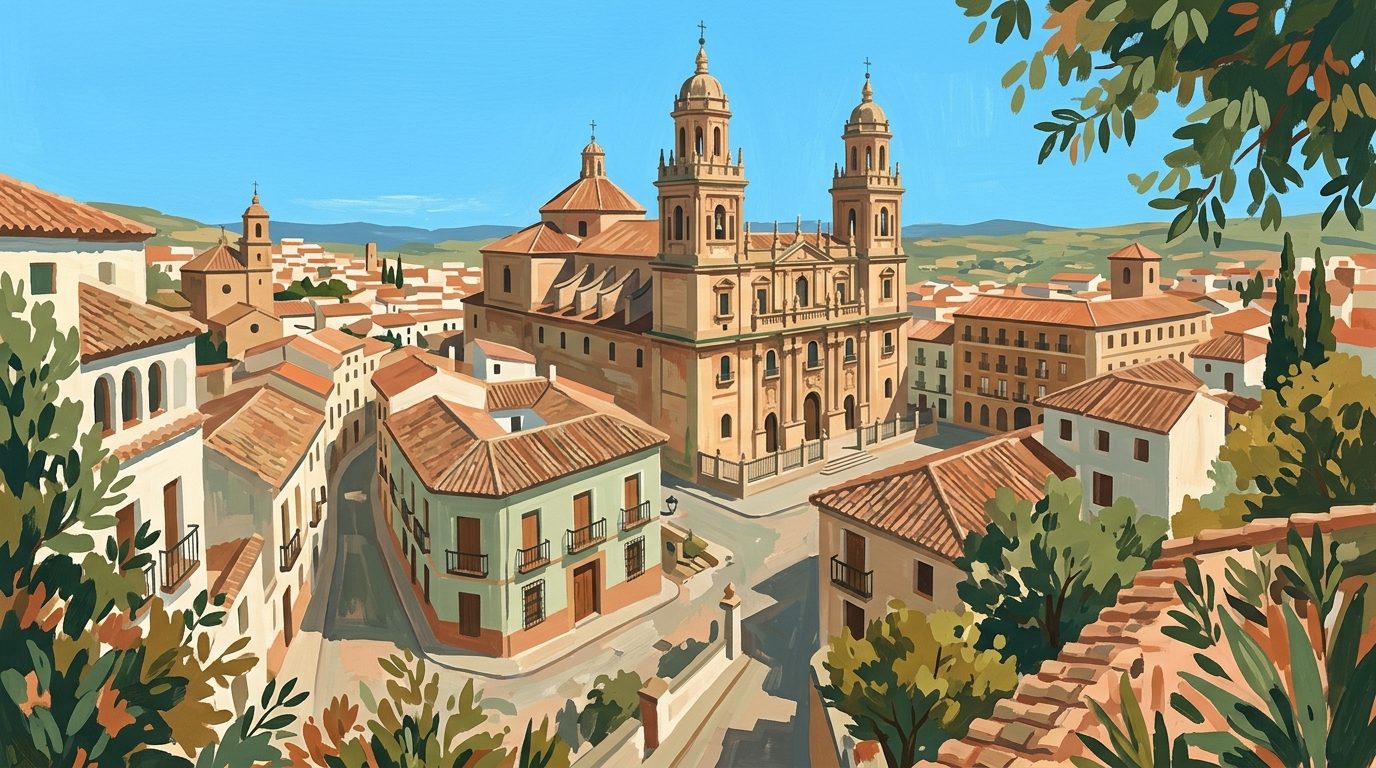
Approaching the Basilica Minor of San Ildefonso from the narrow streets of the old quarter, the immediate impression is one of architectural collision. Heavy medieval defensive walls and massive stone buttresses give way to a rigorous Neoclassical facade framed by severe columns. Founded in 1248 to serve the growing population of a newly conquered Jaén, this church has evolved over centuries into the city’s second most significant religious structure, trailing only the cathedral in historical weight. It stands as the working sanctuary of the Virgen de la Capilla, the patroness of the city, and houses the remains of the region's greatest architectural mind.
The Evolution of the Exterior
The outer walls of San Ildefonso serve as a physical timeline of Andalucían architectural history. The main facade, completed in the late eighteenth century, was designed by the celebrated Neoclassical architect Ventura Rodríguez and executed by Francisco Calvo. It imposes a strict classical order, though it is flanked by asymmetrical towers: a taller, late-sixteenth-century Mannerist tower to the north and a shorter, eighteenth-century addition to the south. Walking around the perimeter reveals the building's older identities.
At the rear of the church, the east facade preserves the oldest portal. This Isabelline Gothic entrance, completed under Bishop Alonso Suárez de la Fuente del Sauce between 1500 and 1520, was later bricked up and now showcases a 1958 mosaic by the Catalan artist Santiago Padrós depicting the Descent of the Virgin. Meanwhile, facing the main square on the north side, the side entrance shifts to a Renaissance design by Francisco del Castillo el Mozo from the mid-sixteenth century, featuring a detailed relief of the imposition of the chasuble on Saint Ildefonso. These older sections, with their defensive, fortress-like walls, are a direct reminder of the church’s original position outside the medieval Muslim fortifications of the city.
The Legend of the Descent
The religious and cultural importance of San Ildefonso was cemented in the early hours of 11 June 1430. According to local historical accounts, the Virgin Mary descended from the sky in a procession of light, accompanied by a heavenly choir, and walked towards the original chapel on this site. This event, known as the Descent of the Virgin, transformed the modest parish church into a major pilgrimage sanctuary.
Today, the Virgen de la Capilla holds the title of patroness of Jaén. A dedicated chapel within the basilica houses her image, and a plaque near the side entrance commemorates the exact location where the miraculous procession is said to have concluded. For those exploring the Renaissance soul of Jaén City, understanding this deep-rooted local devotion provides vital context for the city's cultural identity.
Masterpieces of the Interior
Inside, the basilica is configured as a late-Gothic hall-church (planta de salón) with three spacious naves of similar height, supported by composite pillars that transition into elegant ribbed vaulting. The focal point for art historians is the monumental main altarpiece, the Baroque masterpiece known as the Retablo del Descenso. Designed by the celebrated Sevillian sculptor and architect Pedro Duque Cornejo in 1754, it illustrates the miraculous visitation of the Virgin with dramatic movement and rich gilded details.
The side walls are lined with a collection of historical paintings, while the Chapel of the Virgin displays the ornate silver throne used during annual processions. Below the ground lies another significant piece of cultural heritage. The crypt is the resting place of Andrés de Vandelvira, the visionary sixteenth-century architect. While a later seventeenth-century expansion of the Virgin’s dressing room (camarín) disturbed his original grave, a commemorative plaque now marks where the creator of one of the most influential works in Andalucía's Renaissance architecture is buried, keeping his memory alive in the heart of the city.
Editorial Verdict
San Ildefonso lacks the overwhelming grandeur of the nearby cathedral, but compensates with layers of authentic history. As a working parish church, it rewards those who appreciate architectural evolution and quiet contemplation over multimedia tourist displays. The presence of Vandelvira’s tomb makes it an essential stop for architecture enthusiasts.
Practical Advice for Visitors
The basilica sits in the San Ildefonso district, roughly a ten-minute walk from the cathedral through narrow, often pedestrianised streets. Driving directly to the church is impractical due to traffic restrictions in the old quarter. The most sensible option for drivers is to use the public underground car parks at Plaza de la Constitución or beneath the San Francisco market.
Because this is a functioning place of worship, access is generally tied to liturgical schedules. Entry is free, though dropping a coin in the donation boxes helps fund ongoing maintenance. To confirm current opening hours and mass times, consult the official parish website before finalising your itinerary. Photography is tolerated outside of service times, provided you disable your flash to protect the fragile pigments of the altarpieces. Visitors must dress respectfully, ensuring shoulders and knees are covered.
Timing your visit depends on what you want to experience. Weekday evenings offer a quiet, contemplative atmosphere. Conversely, visiting Jaén in June places you right in the middle of the patronal feast days. Around 11 June, the square fills with large processions, floral offerings, and significant crowds, providing a clear display of local tradition.
What to Pair it With
After exploring the basilica and the immediate San Ildefonso neighbourhood, the logical next step is to follow the legacy of the architect buried in its crypt. Walk back towards the historic centre to study Vandelvira's undisputed masterpiece, the Cathedral of Jaén. From there, you can easily broaden your understanding of his influence by taking a day trip to see the Renaissance splendour of Úbeda, where his civic and religious buildings dominate the skyline.
Nearby worth your time
A few well-placed stops for extending the day without turning it into a checklist.
Continue through Jaén City
Step back into the wider landscape with local guides, nearby places and the province overview.
Things to do · 12 min
Golf in Jaén Province: A Practical Guide to Courses, Clubs, and Holidays
Discover the reality of playing golf in Jaén. From the 9-hole course at La Garza to local societies and combining rounds with olive oil tourism.
Nature & wildlife · 7 min
Sierra de Cazorla: Spain's Largest Protected Area
Covering over 200,000 hectares of rugged limestone peaks and deep river canyons, the Sierra de Cazorla forms the green heart of the Iberian Peninsula.
Itinerary · 11 min
5 Days in Jaén: Renaissance Cities and Cazorla
A realistic five-day driving itinerary through Jaén province, balancing the monumental Renaissance architecture of Úbeda and Baeza with the rugged mountain wilderness of the Sierra de Cazorla.