
attraction · Málaga
Bullring of the Royal Cavalry of Ronda
Andalucía 365 · Updated 18 July 2026
Budget
Our Verdict
“More than just a historic bullring, the Real Maestranza de Caballería de Ronda is a masterclass in Neoclassical architecture and a vital equestrian centre. Even for those deterred by the modern corrida, the sandstone arcades, Royal Saddlery, and working dressage ring offer deep insight into the cultural evolution of Andalucía.”
Last verified: July 2026
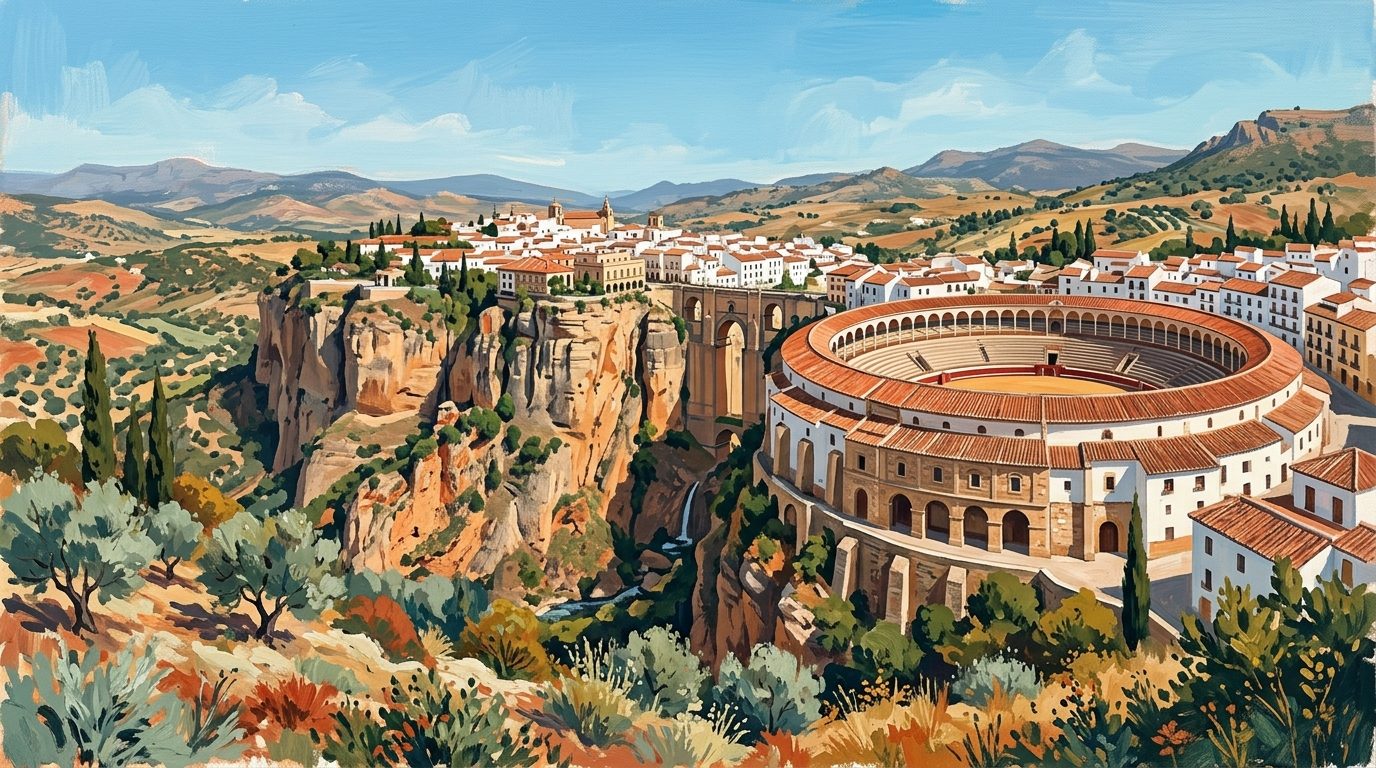
The Plaza de Toros de la Real Maestranza de Caballería de Ronda rises from the cliff-top city of Ronda not as a mere sports venue, but as a defining monument of 18th-century Neoclassical architecture. Built entirely of locally quarried sandstone and inaugurated in 1785, it avoids the exposed brickwork and mudéjar influences typical of later Spanish arenas. Instead, its spectator galleries are supported by 136 slender Tuscan columns, forming an elegant, uninterrupted double arcade that circles the vast expanse of yellow sand. It is a structure of immense historical gravity, operating simultaneously as a protected heritage monument, a museum complex, and the active headquarters of Spain's oldest surviving order of horsemanship.
An Arena Sculpted in Stone
When stepping out onto the albero, the signature golden-yellow crushed rock covering the arena floor, the formidable scale of the structure becomes immediately apparent. A later addition of a wooden barrier, forming the callejón (the narrow passage between the ring and the stone stands), reduced the diameter of the active ring to 60 metres. Visitors may walk freely across the centre of the arena, offering a vantage point to appreciate the symmetry of the stone arches. The most ornate architectural feature is the Royal Box, distinguished by the coat of arms of King Charles III set into the tympanum above the main gates. Because the venue was constructed prior to the mass popularisation of the spectacle, the seating tiers and original wooden elements reflect a hierarchy of public assembly dating back to the Enlightenment. Unlike modern stadiums, the sandstone construction retains the intimate acoustics of the 18th century.
The Origins of the Modern Corrida
Ronda is widely documented as the cradle of modern, on-foot bullfighting. Prior to the 18th century, facing bulls was primarily an aristocratic pursuit conducted on horseback, functioning as a vital form of combat training for the royal cavalry. It was within this specific arena that the Romero family, particularly the legendary Pedro Romero, and later the Ordóñez dynasty, codified the rules, cape work, and precise techniques of fighting on foot. The sand you walk across is the exact ground where these historical shifts took place, transitioning the practice from a military exercise into the highly ritualised spectacle that exists today. While the ethics of the modern corrida understandably deter many international visitors, the sheer architectural gravity of the structure and the depth of its equestrian history make it a compelling site for understanding the complex cultural fabric of Andalucía.
The Tauromachy and Royal Saddlery Collections
The vaulted spaces beneath the stone seating tiers have been repurposed into a series of comprehensive museum galleries. The Tauromachy exhibition traces the history of the spectacle and its representation in universal culture. Highlights include intricately embroidered trajes de luces (suits of lights) worn by defining figures of the arena, alongside rare historic depictions of the events, such as a prized set of Francisco de Goya's etchings from his Tauromaquia series. Equally compelling is the Royal Saddlery, displaying a preserved collection originating from the Royal House of Orléans. This gallery features complete sets of elaborate leather harnesses, saddlery, and royal livery originally gifted by the French King Louis Philippe to his son, Antoine d'Orléans, the Duke of Montpensier.
The Royal Cavalry and Equestrian Traditions
The arena and its adjoining facilities operate under the continuous stewardship of the Real Maestranza de Caballería de Ronda. This noble confraternity was established in 1573 at the direct request of King Philip II to train local knights for combat, a legacy maintained today with the current King of Spain serving as Honorary President. The Maestranza functions as a non-profit cultural institution dedicated to education, heritage preservation, and the meticulous discipline of classical dressage. Beyond the main arena, visitors exploring the grounds will find the Equestrian Gallery and the working dressage ring. The institution maintains an active riding school, and on many mornings, skilled riders can be observed training purebred Spanish horses in the classical traditions.
Practical Advice for Visitors
The bullring is an active monument and riding school located in the historic centre of Ronda, just a brief walk from the precipice of the Tajo gorge. The terrain within the arena involves loose sand, and the centuries-old stone steps leading up to the seating tiers are uneven. For this reason, flat, closed-toe footwear is recommended. While the modern museum galleries located beneath the stands are generally flat and accessible, navigating the historic upper tiers requires a fair degree of mobility. Because the site is a working equestrian facility, access to certain areas can be temporarily restricted. For official visitor guidance and institutional policies, consult the official website of the Real Maestranza de Caballería de Ronda.
Pairing Your Visit
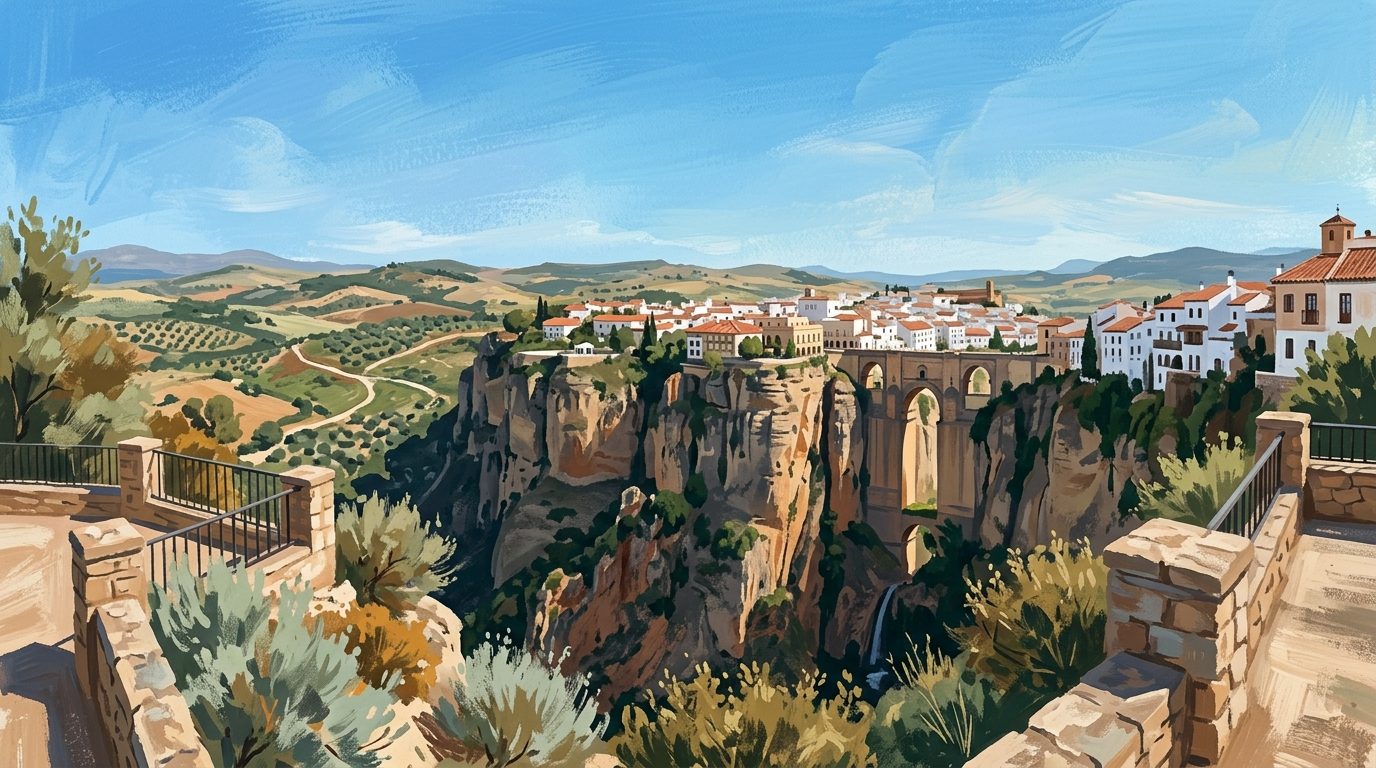
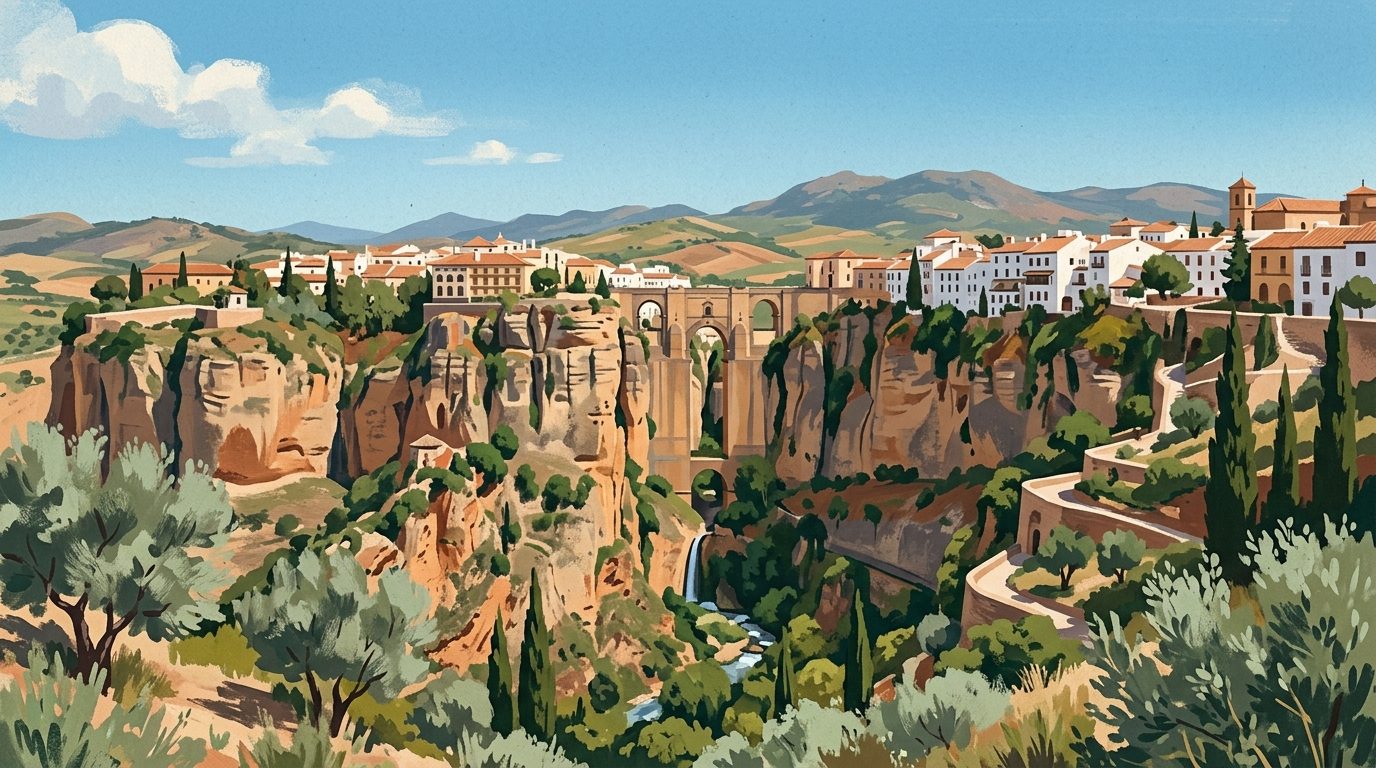
Given its location at the edge of the new town district known as Mercadillo, the bullring serves as an excellent starting point for exploring the wider region. After viewing the arena, walk a few minutes to the Puente Nuevo to witness the city's sheer drop into the gorge below. To understand the broader historical context of the city, read our guide to Ronda: The City Defying Gravity Above El Tajo. For those driving through the rugged hinterland, the journey continues toward the ancient fir forests detailed in our guide to Exploring Sierra de las Nieves National Park, or south toward the coast to discover the stark beauty of Casares: A Guide to the White Village of the Sierra Cristellina.
Nearby worth your time
A few well-placed stops for extending the day without turning it into a checklist.
Continue through Inland Málaga
Step back into the wider landscape with local guides, nearby places and the province overview.
Place guide · 7 min
Playa de Burriana: A Guide to Nerja's Premier Beach
Discover Playa de Burriana, the most iconic beach in Nerja, known for its wide sands, excellent chiringuitos, and clear waters on the Costa del Sol.
Place guide · 7 min
Playa de Cabopino: Dunes, Pines and Clear Waters near Marbella
A protected enclave of natural dunes and fine sand situated between Marbella and Fuengirola. This coastal stretch offers a rare glimpse of the original Mediterranean landscape.
Itinerary · 13 min
One Week in Ronda: A Seven-Day Itinerary for the Serranía
A seven-day stay in Ronda allows you to experience the deep gorge and ancient streets long after the day-trippers have left. Using the city as a base, you can easily explore the surrounding white villages, hike the Sierra de las Nieves, and settle into the true rhythm of mountain life.