
attraction · Jaén
Casa natal de Joaquín Sabina
Andalucía 365 · Updated 18 July 2026
Our Verdict
“Joaquín Sabina’s childhood home offers a fleeting but meaningful stop for fans of the iconic Spanish singer-songwriter. While you can only view the exterior plaque, the real value lies in exploring the surrounding Plaza Primero de Mayo and the broader cultural trail that contextualises his bohemian poetry within this strict Renaissance city.”
Last verified: July 2026
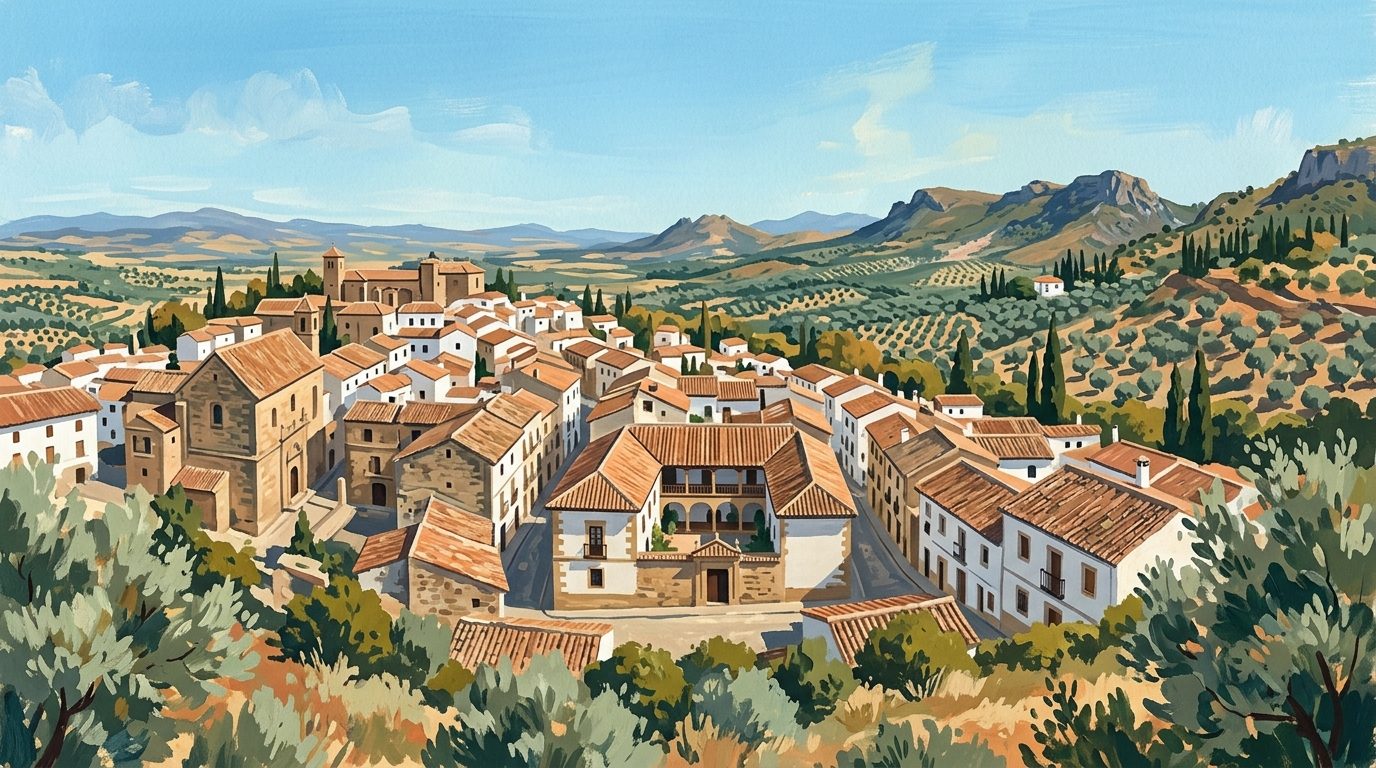
At number 22 on the Plaza Primero de Mayo, a stone facade and wrought-iron balconies overlook one of the oldest squares in Úbeda. This traditional town house in Andalucía, with its whitewashed walls and heavy wooden doors, is the childhood home of Joaquín Sabina. Born here on 12 February 1949, one of Spain's most celebrated contemporary singer-songwriters spent his formative years absorbing the atmosphere of a deeply religious and historic provincial capital. Today, the Casa natal de Joaquín Sabina serves as a secular pilgrimage site for fans of his gravelly voice and literary lyrics. While the interior remains a private residence closed to the public, the building anchors a wider cultural trail through a city heavily referenced in his music. It suits dedicated music enthusiasts, providing a tangible connection to the man often dubbed the poet of the street. Casual sightseers will also appreciate the contrast between this modern bohemian legacy and the surrounding Renaissance architecture.
The House and the Plaque
What visitors actually see at the site is restricted to the exterior. For decades, admirers of Sabina's music wandered the streets of Úbeda searching for his birthplace without any formal marker to guide them. This changed in 2016, when local artisan Alfonso Cobo crafted a commemorative plaque for the facade. The ceramic and iron sign definitively identifies the site, ending years of confusion over historical renumbering that previously pointed visitors to number 20. Standing before the house, you see a classic regional structure that blends seamlessly into the historic fabric of Úbeda. The candid reality is that a visit here takes no more than ten minutes. It is a photo opportunity rather than a museum. However, its position facing the monumental San Pablo Church highlights the stark dichotomy of Sabina's early life: the strict religious orthodoxy of mid-century Spain standing opposite the birthplace of its future chief provocateur.
Exploring Plaza Primero de Mayo
The square outside the house, Plaza Primero de Mayo, was the social epicentre of Sabina's youth. Originally a medieval market square, it remains an active communal space anchored by the statue of San Juan de la Cruz and surrounded by historic porticoes. Visitors exploring Úbeda and Baeza will find this plaza an ideal place to pause. The terrain is flat and accessible for wheelchair users, paved with typical cobblestones and smooth stone slabs. To properly experience the location, take a seat at one of the outdoor café terraces that line the perimeter. Watching the daily life of the city unfold here provides a deeper understanding of the provincial environment that shaped the artist's early poetry and worldview, particularly his reflections on growing up in a conservative post-war society.
The Sabina Cultural Trail
Beyond the birthplace, fans can follow a broader route through the city to spaces associated with the singer's legacy. The most prominent stop is the Taberna Calle Melancolía, located nearby on Calle Real. Named after one of Sabina's famous tracks, this establishment operates as an unofficial museum. The walls are covered in rare photographs, handwritten lyrics, and his signature bowler hats, while his extensive discography plays continuously in the background, creating an immersive atmosphere for admirers. Another vital location is the deconsecrated San Lorenzo Church. Managed by the local cultural foundation Huerta de San Antonio, this restored thirteenth-century space frequently hosts art exhibitions, poetry readings, and musical performances directly linked to Sabina's influence on modern Spanish songwriting.
The Sabina por Aquí Festival
The artist's connection to his hometown peaks annually during the Sabina por Aquí festival. Organised by the local collective Peor para el Sol, the event traditionally runs from late August into the first half of September. The festival programme includes an international singer-songwriter competition, street poetry recitals, and acoustic concerts held inside the San Lorenzo Church. This period transforms the quiet historic centre into a gathering point for musicians and writers from across Spain and Latin America. If you are planning a trip to Jaén province during the late summer, timing your visit to coincide with these cultural days offers the most immersive way to experience Sabina's ongoing impact on the city.
Practical Information and Nearby Pairings
Because the Casa natal is a private residence, there are no tickets, opening hours, or entry fees to consider. The facade is visible at all times, though the best light for photography occurs in the late afternoon when the setting sun illuminates the golden sandstone of the neighbouring buildings. If you want to dive deeper into local events, consult the Peor para el Sol collective for current festival dates, competition rules, and guided walk schedules.
Parking in the historic centre is heavily restricted. The most practical approach is to leave your vehicle at the public car parks near the Hospital de Santiago and walk the ten minutes into the old quarter. After viewing the house, a sensible nearby pairing is the Sacra Capilla del Salvador, located just a five-minute walk away in the Plaza Vázquez de Molina. This monumental chapel offers a profound look at the architectural mastery that defines the region, perfectly balancing the modern musical history of the Sabina house with the sixteenth-century grandeur of the Spanish Renaissance. Those looking to extend their Renaissance exploration can easily combine this with a trip to neighbouring towns by exploring Baeza, located just fifteen minutes away by car.
Nearby worth your time
A few well-placed stops for extending the day without turning it into a checklist.
Continue through Renaissance Cities
Step back into the wider landscape with local guides, nearby places and the province overview.
Things to do · 12 min
Golf in Jaén Province: A Practical Guide to Courses, Clubs, and Holidays
Discover the reality of playing golf in Jaén. From the 9-hole course at La Garza to local societies and combining rounds with olive oil tourism.
Nature & wildlife · 7 min
Sierra de Cazorla: Spain's Largest Protected Area
Covering over 200,000 hectares of rugged limestone peaks and deep river canyons, the Sierra de Cazorla forms the green heart of the Iberian Peninsula.
Itinerary · 11 min
5 Days in Jaén: Renaissance Cities and Cazorla
A realistic five-day driving itinerary through Jaén province, balancing the monumental Renaissance architecture of Úbeda and Baeza with the rugged mountain wilderness of the Sierra de Cazorla.