
attraction · Granada
Catedral de Granada
Andalucía 365 · Updated 18 July 2026
Our Verdict
“A monumental expression of the Spanish Renaissance. While its unfinished 57-metre north tower reflects centuries of funding struggles, the five-nave interior provides an unmissable masterclass in scale. The towering white pillars and circular sanctuary make it one of the most distinctive religious buildings in Andalucía.”
Last verified: July 2026
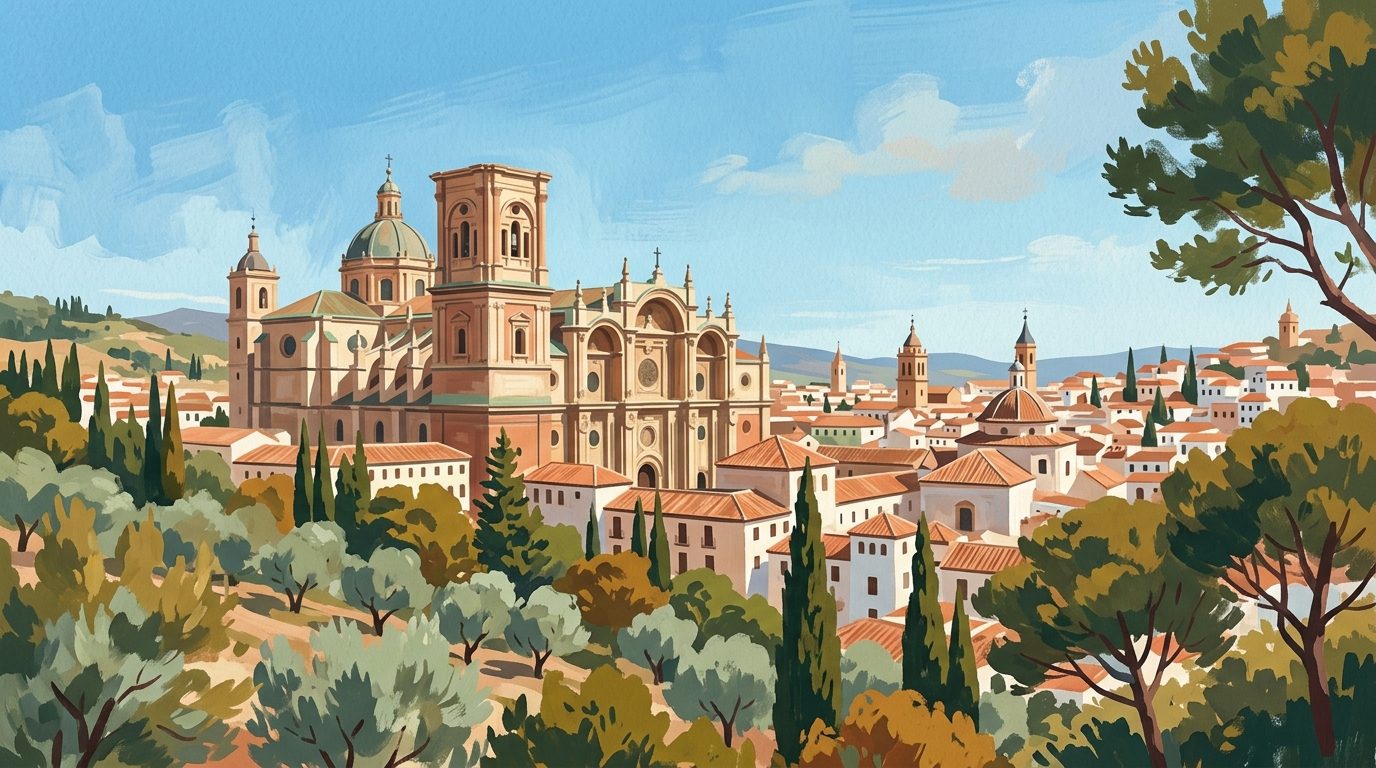
Step off the Plaza de las Pasiegas and the sheer scale of the Catedral de Granada immediately shifts your perspective. Conceived shortly after the 1492 conquest of the Nasrid kingdom, the structure took nearly two centuries to complete. Standing on the footprint of the city's Great Mosque, it represents a definitive architectural pivot from late Gothic traditions to the sweeping geometry of the Spanish Renaissance. Supported by Emperor Charles V, who initially envisioned the site as a grand imperial mausoleum, the cathedral surrounds visitors with brilliant white stone, monumental classical pillars, and an unmistakable sense of light. It stands as a physical declaration of the Reconquista, engineered to dominate the skyline and showcase the power of the new Christian monarchy.
A Masterpiece of the Spanish Renaissance
Construction began in 1523 under the direction of Enrique Egas, who originally planned a traditional Gothic structure akin to the cathedral in Toledo. However, in 1528, the architect Diego de Siloé took over the project and radically altered its trajectory. Siloé introduced rigorous Roman principles, turning the building into a Renaissance triumph. He envisioned a space defined by immense volume and light, utilising white stone to reflect the sun of Andalucía through high clerestory windows. Measuring roughly 115 metres in length and 65 metres in width, this definitive architectural shift cemented the cathedral as a model for subsequent religious buildings across Spain and the Americas. Following Siloé's death, his disciple Juan de Maeda continued the ambitious work.
The Capilla Mayor and the High Altar
The focal point of the interior is the Capilla Mayor, or Main Chapel. Departing from the traditional longitudinal apses of medieval cathedrals, Siloé designed a spectacular circular sanctuary that draws the eye upward. A soaring dome caps the space at 45 metres high, supported by an impressive colonnade of Corinthian columns. A sequence of sixteenth century stained glass windows by Teodoro de Holanda and Juan del Campo illuminates the upper level. Lower down, the walls display seven monumental paintings by the artist Alonso Cano, depicting the life of the Virgin Mary. Visitors will also spot the kneeling statues of the Catholic Monarchs, carved by Pedro de Mena in the 1670s, positioned as perpetual witnesses to the altar alongside twelve golden statues of the apostles. Flanking the choir area are two massive Baroque organs, built by Leonardo Fernández Ávila in the eighteenth century, which remain fully functional today.
The Baroque Façade and Unfinished Towers
The main western entrance offers a stark contrast to the Renaissance interior. Designed by Alonso Cano in 1667, the façade is a masterpiece of Spanish Baroque architecture, defined by three immense arches resembling a Roman triumphal arch. Deeply recessed portals feature highly detailed sculptures and reliefs. The cathedral was originally intended to feature two tall towers framing this grand entrance, each planned to reach 81 metres. However, structural issues and a chronic lack of funding meant only the northern tower was partially built. It reached 57 metres before construction permanently halted. The resulting asymmetry remains a distinct, highly visible feature of the Granada skyline.
Exploring the Naves and Side Chapels
The vast interior spans five distinct naves, separated by clusters of enormous fluted columns. The central nave is notably wider, drawing focus directly toward the main altar. Surrounding the perimeter are 15 individual side chapels, including spaces dedicated to San Miguel, San Cecilio, and Nuestra Señora del Carmen. These smaller sanctuaries house an impressive collection of religious art, including sculptural works by Juan Martínez Montañés, Pedro de Mena, and other masters of the Andalucían Baroque. The chapels are cordoned off by intricate wrought iron grilles, a hallmark of Spanish metalwork from the period. The sheer size of the building requires visitors to look up constantly, taking in the ribbed vaulting, the geometric floor patterns, and the subtle gold leaf details adorning the upper capitals.
Practical Advice for Visiting
The Catedral de Granada remains an active place of worship. Visitors must adhere to a modest dress code, ensuring shoulders and knees are covered. The cathedral operates a digital audio guide accessible via a QR code scanned on arrival. As there is minimal physical signage inside, this digital tool provides essential historical context and explains the artistic significance of the side chapels.
For the most accurate information on visiting protocols, it is essential to check the official Cathedral website before you arrive. Confirm live details regarding religious service schedules on the official page, as these can directly impact visitor access to certain areas.
The main entrance for tourist visits is located on Calle Pie de la Torre. This entrance features a ramp and is accessible for wheelchair users, bypassing the stepped access found on the Gran Vía side. The vast majority of the cathedral interior is on a single level, with only the sacristy requiring navigation of two small steps. Note that there are no public toilets within the building itself, so plan accordingly before entering.
Context and Nearby Pairings
Situated deep within the historic heart of Granada, the cathedral is surrounded by a tight network of pedestrian streets. It pairs naturally with the adjacent Royal Chapel, where Queen Isabella and King Ferdinand are buried. Just steps away lies the Alcaicería, the site of the former Moorish silk market. For a broader perspective on the city's layered history, visitors often contrast the Christian monumentality of the cathedral with the medieval Islamic architecture found in the Albaicín or the intricate palatial complex of the Alhambra and Generalife. After exploring the religious core, a short walk south leads into the historic Jewish quarter of Realejo for traditional tapas.
Nearby worth your time
A few well-placed stops for extending the day without turning it into a checklist.
Continue through Granada City
Step back into the wider landscape with local guides, nearby places and the province overview.
Place guide · 7 min
Playa de Calahonda (Granada) Beach Guide
Playa de Calahonda in Granada offers deep, crystal-clear waters and a dramatic limestone cliff backdrop. This Blue Flag beach is a favourite for snorkelling and authentic Andalucían seafood.
Place guide · 7 min
A Guide to Playa de Salobreña on the Costa Tropical
Playa de Salobreña is a vast stretch of dark sand and clear water on the Costa Tropical, overlooked by a historic Moorish castle and dramatic cliffs.
Itinerary · 10 min
Two Days in Granada: A Step-by-Step Itinerary
Two days in Granada gives you just enough time to explore the Alhambra and lose yourself in the steep alleys of the Albaicín. This itinerary balances major monuments with the city's legendary free tapas culture.