
attraction · Málaga
Centre Pompidou Málaga
Andalucía 365 · Updated 18 July 2026
Our Verdict
“The Centre Pompidou Málaga is not a traditional gallery. If you want classical landscapes, you will be disappointed. However, for those with an open mind, this highly professional operation is an essential stop. The scale is perfect for a two-hour visit, presenting provocative conceptual art without causing gallery fatigue.”
Last verified: July 2026
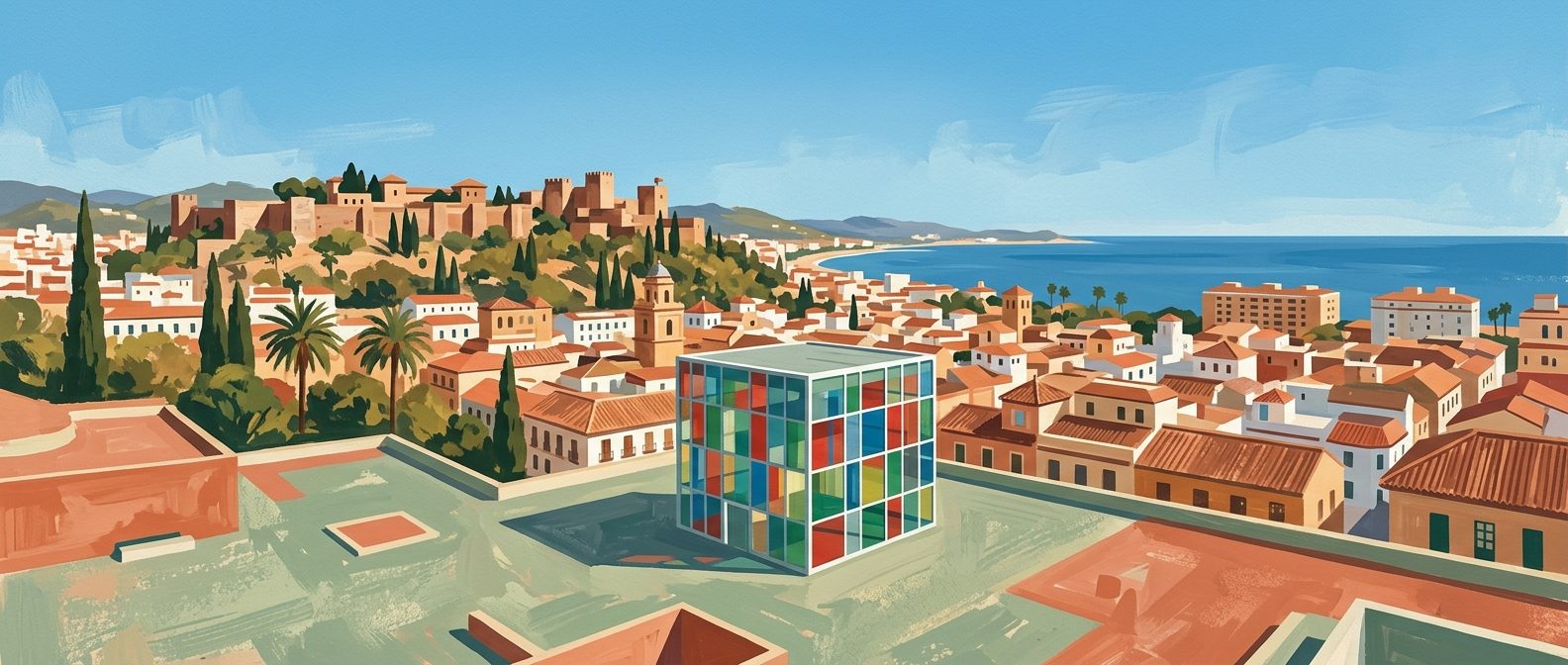
The smooth, white promenade of Málaga's Muelle Uno is punctuated by a glass structure resembling a giant, multicoloured Rubik’s Cube. This is 'El Cubo', the surface-level marker for the Centre Pompidou Málaga. While the cube itself was conceived by municipal architects Javier Pérez de la Fuente and Juan Antonio Marín Malavé, French artist Daniel Buren designed the primary-coloured films covering its transparent panels. These cast shifting, geometric shadows into the subterranean galleries below as the Mediterranean sun moves across the sky. This striking entrance sets the tone for an institution that firmly anchored the city's reputation as a serious cultural destination.
Opened in 2015, this was the first international outpost of the Parisian modern art museum. Initially planned as a five-year experiment, its success led to a renewed commitment, extending the partnership until at least 2034. It brings the immense inventory of France's Musée National d'Art Moderne to the south of Spain, offering highly curated, thematic slices of 20th and 21st-century art. Instead of overwhelming visitors with the sheer volume found in Paris, the Málaga branch distils contemporary art into digestible, thought-provoking journeys.
Beneath the Coloured Glass
The actual museum is completely subterranean. Visitors descend from the waterfront into a 6,000-square-metre minimalist space of polished concrete and white walls. The central atrium sits directly beneath the glass cube, where natural light filters down in reds, blues, yellows and greens. This central void often showcases large-scale installations, offering a striking vertical perspective from the underground floor. The temperature-controlled environment provides a stark, quiet contrast to the heat above.
Navigating the Semi-Permanent Collection
Unlike traditional museums that arrange collections chronologically, the Centre Pompidou Málaga organises its main exhibition thematically. This core display is overhauled every couple of years. Past iterations explored concepts like the fragmented body, modern utopias and physical territory in a post-industrial society. The curation draws heavily on the parent institution's vast archives, presenting a continuous dialogue between painting, sculpture, video art and digital media.
Walking through the spacious layout, you will encounter works by heavyweight figures from the last hundred years of artistic innovation. Depending on the theme, visitors might see pieces by Francis Bacon, Frida Kahlo, René Magritte, Joan Miró or Málaga's own Pablo Picasso. The curation explicitly mixes distinct disciplines. A single room might juxtapose a Cubist painting with 1970s performance art or architectural sketches. This thematic grouping encourages you to look at connections between different artistic movements, rather than simply walking past a timeline of famous names.
Temporary Exhibitions
Beyond the primary journey, the museum hosts two or three temporary exhibitions each year. These smaller, highly focused displays dive deeply into specific niches, architectural movements or individual creators. The temporary galleries often spotlight younger, experimental artists whose work challenges contemporary political and social norms. There is also a deliberate effort to include prominent Spanish artists in these changing programmes, grounding the international perspective in local culture. For repeat visitors, the temporary rooms ensure there is always something fresh to analyse.
A Candid Assessment
The Centre Pompidou Málaga is not a traditional fine art gallery. If you are looking for classical landscapes of Andalucía or straightforward historical portraiture, you will be disappointed. The art here is conceptual, frequently provocative and sometimes deliberately confusing. It challenges visitors to think critically rather than passively admire beautiful objects. For those with an open mind or an existing interest in modernism, it is an essential stop. The scale is perfect for a two-hour visit, allowing you to absorb the ideas without succumbing to gallery fatigue. It is a sleek, professional operation.
Practicalities and Accessibility
The museum operates a strict bag policy, requiring visitors to store large items in the lockers near the ticket desk. The museum shop is superb, offering an excellent range of art books, unique gifts and high-quality prints. Photography is generally permitted without flash, although specific temporary loans sometimes carry restrictions, clearly signposted at the gallery entrances.
The facility is exceptionally well adapted for visitors with reduced mobility. The transition from street level down to the galleries is handled via wide lifts. Inside, the single-level subterranean floor plan is completely flat, with wide corridors, ample turning space and fully adapted restrooms. The adjacent Muelle Uno precinct is similarly flat and paved, making the waterfront zone easily navigable for wheelchair users and families with pushchairs.
Before planning your itinerary, visit the official Centre Pompidou Málaga website to confirm live details, current exhibition themes and entry conditions. Do not rely on third-party guides for admission rules, as the museum periodically updates its free entry periods and combined ticket options.
What to See Nearby
The museum's location at the corner of the port makes it easy to combine with other highlights. A short walk along the palm-lined promenade leads to the historic centre. Here, you can transition from contemporary art to ancient history by exploring the layers of the Alcazaba and Roman Theatre in Málaga. Alternatively, if you want to continue your cultural exploration of the city's modern evolution, walk west to discover the large-scale street murals detailed in our guide to the Soho Arts District. For a complete change of pace, step outside the cube and walk east for five minutes to reach the dark sands of Playa de La Malagueta, an ideal spot for a traditional sardine skewer on the beach.
Nearby worth your time
A few well-placed stops for extending the day without turning it into a checklist.
Continue through Málaga City
Step back into the wider landscape with local guides, nearby places and the province overview.
Place guide · 7 min
Playa de Burriana: A Guide to Nerja's Premier Beach
Discover Playa de Burriana, the most iconic beach in Nerja, known for its wide sands, excellent chiringuitos, and clear waters on the Costa del Sol.
Place guide · 7 min
Playa de Cabopino: Dunes, Pines and Clear Waters near Marbella
A protected enclave of natural dunes and fine sand situated between Marbella and Fuengirola. This coastal stretch offers a rare glimpse of the original Mediterranean landscape.
Itinerary · 13 min
One Week in Ronda: A Seven-Day Itinerary for the Serranía
A seven-day stay in Ronda allows you to experience the deep gorge and ancient streets long after the day-trippers have left. Using the city as a base, you can easily explore the surrounding white villages, hike the Sierra de las Nieves, and settle into the true rhythm of mountain life.