
attraction · Jaén
Church of San Pablo
Andalucía 365 · Updated 18 July 2026
Our Verdict
“While lacking the unified perfection of Úbeda's purely Renaissance monuments, San Pablo is fascinating precisely because of its architectural friction. The juxtaposition of a Romanesque door, a Gothic nave, and a Plateresque tower allows curious visitors to read the evolving history of the city directly from its stones.”
Last verified: July 2026
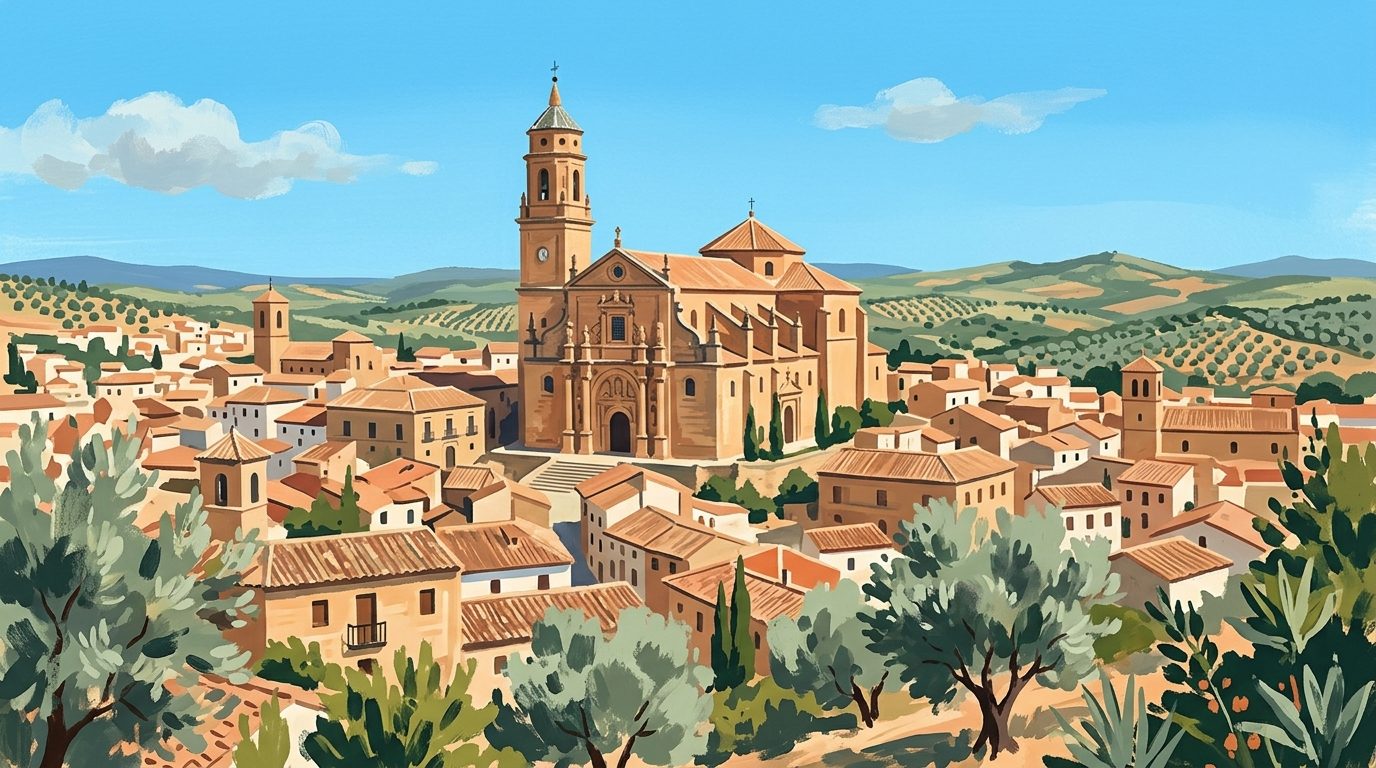
Set in the commercial and historical heart of the Plaza Primero de Mayo, the Church of San Pablo reveals its evolution through a patchwork of stonework. Originally built as a thirteenth-century Romanesque basilica over an earlier mosque, the structure was heavily damaged by fire in 1368 during a bitter succession war. The assault, led by Pedro Gil y Zatico under the orders of King Pedro I, destroyed the original archives kept inside. The church was later rebuilt with soaring Gothic vaults and further enhanced with Renaissance embellishments. For visitors, the building operates as a timeline of religious and civic power in Úbeda. Before the construction of a dedicated town hall, the city council and local nobility held their assemblies within these walls, making San Pablo the undisputed civic and spiritual centre of early modern Úbeda.
The Portals and the Tabladillo
A walk around the exterior shows exactly how architectural fashions evolved in this region of Andalucía. At the western foot of the church, the Portada de los Carpinteros features the rounded arches, lobed details, and austere stone carving typical of late Romanesque design. Moving to the main southern entrance, the aesthetic shifts dramatically to Isabelline Gothic. Commissioned in the early sixteenth century, this portal features a prominent conopial arch and a tympanum displaying the Coronation of the Virgin.
Attached to the southern flank is the Tabladillo, a sixteenth-century Renaissance balcony. From this raised gallery, local authorities read municipal edicts and ecclesiastical decrees to the crowds gathered in the square below. The plaza itself served as the primary gathering space for markets, livestock fairs, and public executions, directly linking the church to the daily lives of the citizens.
The Plateresque Tower and Renaissance Fountain
The church exterior is anchored by a robust Plateresque tower, notable for an octagonal bell section and a distinctive two-colour ceramic roof. At the eastern end, integrated into the exterior wall of the apse, visitors find the Fuente de San Pablo. Completed in 1591 by stonemasons Alonso de Alarcos and Diego Gil, this Renaissance public fountain was part of a major initiative to improve municipal water supplies.
The structure features classical tiers flanked by Ionic pilasters, adorned with the coats of arms of the Habsburgs, the city of Úbeda, and the local magistrate Juan de Gaviria. This monument reflects the drive to elevate public utilities into displays of civic pride. Documentary evidence confirming Alarcos and Gil as the creators successfully corrected older assumptions attributing the fountain to the architect Andrés de Vandelvira.
Exploring the Interior
Inside, the space opens into a three-aisled layout dominated by late Gothic ribbed vaults. The original thirteenth-century Romanesque apse survives at the head of the church. Looking closely at the exterior corbels of this section, observers can spot curious carvings of musicians, jugglers, acrobats, and a contorting dancer, adding a surprisingly secular touch to the medieval masonry.
The side chapels reflect the wealth of local aristocratic families, who commissioned elaborate private spaces for worship. The Capilla del Camarero Vago, founded by Francisco Vago, features extraordinary Plateresque iron grilles, a hallmark of the high-status craftsmanship found across the province. Visitors will also see processional statues belonging to the historic religious brotherhoods of the city, connecting the medieval structure to the contemporary Holy Week traditions that shape the local calendar.
Candid Assessment
San Pablo lacks the singular, unified Renaissance perfection of the famous Sacra Capilla del Salvador, but it is precisely this architectural friction that makes it compelling. Visitors looking for a flawless single-period aesthetic might find the interior slightly disjointed. However, for travellers interested in reading a building like a historical text, the juxtaposition of a Romanesque door, a Gothic nave, and a Plateresque tower offers a much richer understanding of how the city actually evolved over four centuries.
Practical Advice for Visitors
The church sits in the pedestrian-friendly historic core of Úbeda. Arriving by car requires parking outside the immediate monumental zone, such as the underground facility at Plaza de Andalucía, followed by a short walk through the old town streets. The area surrounding the church is relatively flat and paved. Access to the main body of the church is manageable for visitors with mobility needs, as a portable wooden ramp is typically deployed to clear the small step at the entrance, though the historic lighting inside can be quite dim.
This attraction is best suited for those interested in architectural history, ecclesiastical art, and medieval transitions. As this is an active parish church, access for tourists is restricted during mass and the frequent weekend weddings. Visitors must dress appropriately, ensuring shoulders and knees are covered. To confirm live arrangements, verify directly with the official Úbeda tourism portal before finalising your itinerary.
Sensible Nearby Pairings
Once you have explored the church, remain in the Plaza Primero de Mayo to view the historic double arcades of the Antiguas Casas Consistoriales and the bronze statue dedicated to San Juan de la Cruz. To grasp the transition of power and architectural ambition in the region, pair your visit with a walk to the nearby Plaza Vázquez de Molina. This short route connects the medieval origins of San Pablo to the sweeping Renaissance splendour of Úbeda. For a wider view of sixteenth-century ambition, consider driving to the plazas of Baeza, continuing your journey through the landscape defined by the golden stone of Úbeda and Baeza.
Nearby worth your time
A few well-placed stops for extending the day without turning it into a checklist.
Continue through Renaissance Cities
Step back into the wider landscape with local guides, nearby places and the province overview.
Things to do · 12 min
Golf in Jaén Province: A Practical Guide to Courses, Clubs, and Holidays
Discover the reality of playing golf in Jaén. From the 9-hole course at La Garza to local societies and combining rounds with olive oil tourism.
Nature & wildlife · 7 min
Sierra de Cazorla: Spain's Largest Protected Area
Covering over 200,000 hectares of rugged limestone peaks and deep river canyons, the Sierra de Cazorla forms the green heart of the Iberian Peninsula.
Itinerary · 11 min
5 Days in Jaén: Renaissance Cities and Cazorla
A realistic five-day driving itinerary through Jaén province, balancing the monumental Renaissance architecture of Úbeda and Baeza with the rugged mountain wilderness of the Sierra de Cazorla.