
attraction · Cádiz
Claustros de Santo Domingo
Andalucía 365 · Updated 18 July 2026
Our Verdict
“The Claustros de Santo Domingo offer a masterclass in architectural restraint and a quiet escape from the busy streets of Jerez. While the complex lacks extensive museum interpretation, the sheer scale of the Gothic ribbed vaulting and the tranquil, uncrowded atmosphere make it an essential stop for architecture enthusiasts.”
Last verified: July 2026
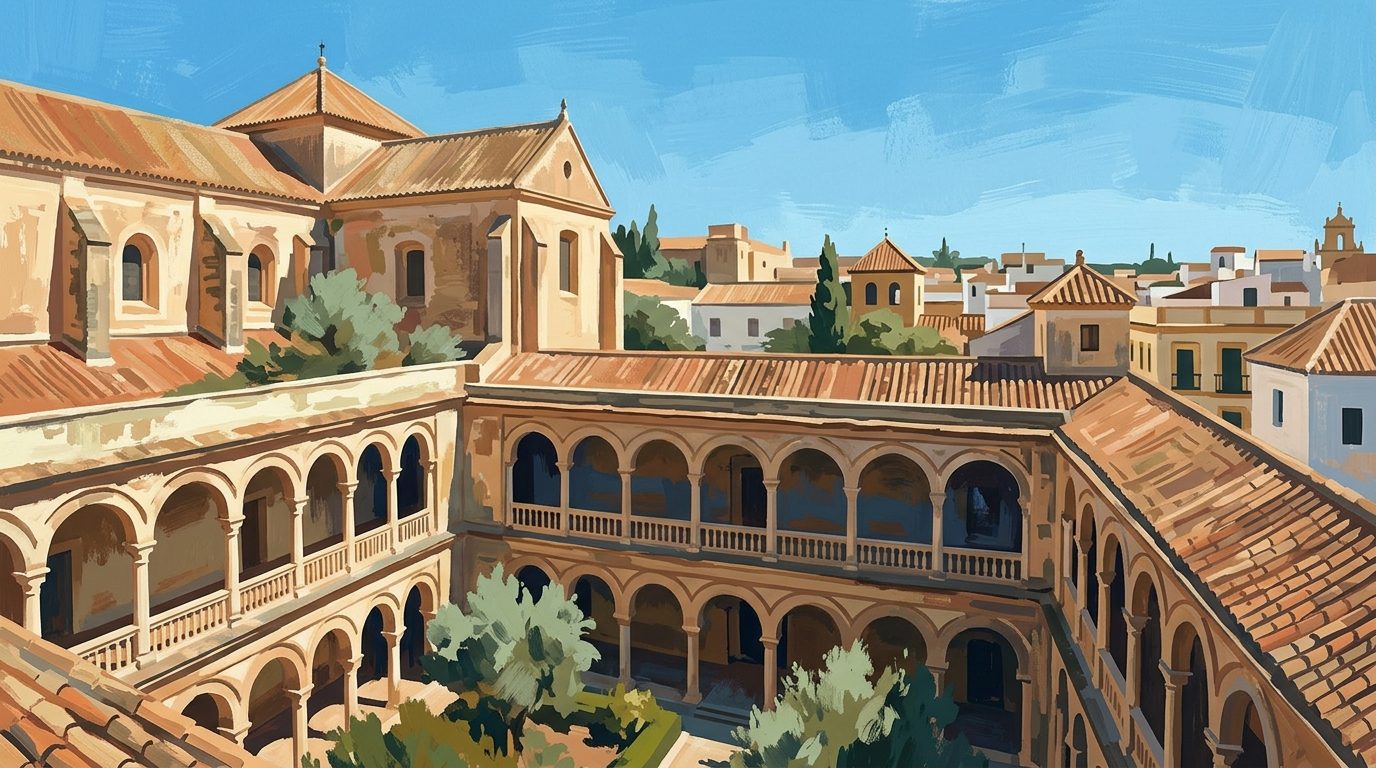
Filtered sunlight traces delicate geometric lines through late Gothic tracery screens, casting intricate shadows across the worn stone floors of the Claustro Grande. The Claustros de Santo Domingo in Jerez de la Frontera offer an immediate transition from the heat, traffic, and noise of the city streets into a stark, silent space shaped by centuries of monastic discipline. The heavy walls provide a natural cooling effect, offering a welcome refuge during the long Andalusian summers. This sprawling complex provides an uncrowded environment for examining one of the most complete late Gothic structures in western Andalucía. While it lacks the extensive multilingual interpretation of larger museums, its stark preservation allows the monumental architecture to speak for itself, rewarding independent travellers who appreciate quiet observation over guided tours.
From Military Fortress to Monastic Stronghold
Following the Reconquista in 1264, King Alfonso X presented the Dominican order with a former Islamic military structure located just outside the old defensive walls of Jerez. The friars transformed this Almohad fortification into a religious complex, though their early years were fraught with danger due to relentless cross-border raids from the neighbouring Nasrid Kingdom of Granada.
Construction on the main cloisters was underway by 1434 and continued for more than a century and a half, resulting in a vast enclosed space that documented the shifting architectural tastes of the era. The long building timeline means the construction transitions subtly from early Mudejar brickwork influences into elaborate late Gothic ribbed vaulting, and finally into early Renaissance decorative details. The complex remained a unified monastic site until 1835. In that year, the liberal confiscations known as the Desamortización de Mendizábal forced the expulsion of the religious orders across Spain, transferring the vast property into civil hands and permanently altering its trajectory.
Exploring the Architectural Complex
Today, the 7,000-square-metre site is dominated by the spectacular Claustro Grande. The perimeter galleries are defined by pointed arches, detailed stonework, and soaring ribbed vaults that reflect the monumental ambition of the medieval builders. Walking these quiet stone corridors provides a clear, unobstructed view of the central courtyard. This minimalist outdoor space, planted simply, emphasises the sheer vertical scale and repetitive rhythm of the surrounding stone galleries.
Beyond the ground floor, visitors can explore the Upper Cloister, which preserves a section of the primitive Islamic battlemented wall and provides an elevated perspective over the courtyard. The old lower dormitory, a long, imposing hall with robust ribbed vaults, reveals the austere communal living conditions of the early Dominican friars. Private oratories, once funded by prominent local figures, are integrated seamlessly into the walkways, adding layers of civic history to the ecclesiastical design.
A Modern Centre for Culture and Tradition
After its confiscation in the nineteenth century, the building endured a varied and sometimes damaging existence. It served variously as a museum of curiosities, a private residence, and even a commercial wine cellar, during which time some structural alterations were made. The cloisters were eventually acquired by the municipal council. Following an exhaustive structural restoration that concluded in 2012, the site now functions as a premier civic and cultural venue.
The bare stone walls of the former refectory and adjoining halls regularly host temporary art installations, classical music recitals, and historic photography exhibitions. The acoustics beneath the vaulted stone ceilings are exceptional, making the site particularly well suited to choral performances, early music festivals, and acoustic flamenco sets, many of which coincide with the major city festivals. During December and January, the cloisters become the focal point for local Christmas traditions, hosting large-scale, highly detailed nativity scenes, or belenes, meticulously created by master craftsmen from across the province of Cádiz.
A Sensible Nearby Pairing
While the cloisters provide a masterclass in quiet Gothic restraint, the surrounding city is defined by its aristocratic palaces and deep-rooted sherry culture. If you are exploring Jerez de la Frontera: A Guide to the City of Sherry and Horses, it makes sense to combine a morning at the monument with a visit to a traditional tabanco. The contrast between the silent, sober monastic architecture and the social, unpretentious atmosphere of a local sherry bar provides a complete, well-rounded picture of the city.
For specific culinary recommendations and advice on navigating the local tapas scene, consult A Local’s Guide to Eating and Drinking in Jerez de la Frontera. Those looking to extend their trip into the mountains can easily drive east to dramatic cliffside towns. Reading Exploring Arcos de la Frontera: The Gateway to the White Villages will help you plan a route that shares a similar timeline of Christian conquest and defensive architecture.
Practical Information and Accessibility
The Claustros de Santo Domingo are located on Alameda Cristina, a broad, tree-lined boulevard within easy walking distance of the main train and bus stations. The historic site is almost entirely on a single level, making the ground floor galleries, central courtyard, and main exhibition spaces highly accessible for wheelchair users, pushchairs, and those with limited mobility. The wide stone pathways are flat, stable, and easy to navigate without assistance.
Because the venue is actively used for municipal programming and temporary exhibitions, access rules can vary significantly from month to month. Visitors should never rely on static published times or third-party travel blogs. Always confirm live details, including current opening times, temporary closures, and admission rules, directly on the official Claustros de Santo Domingo page before making the journey.
Nearby worth your time
A few well-placed stops for extending the day without turning it into a checklist.
Continue through Costa de la Luz
Step back into the wider landscape with local guides, nearby places and the province overview.
Place guide · 7 min
Playa de La Caleta: A Guide to the Historic Heart of Cádiz
Playa de La Caleta is a historic urban bay in Cádiz, famous for its calm waters, ancient fortresses, and the stunning white Balneario spa building.
Place guide · 7 min
Playa de los Caños de Meca: A Guide to the Cádiz Coastline
Discover the wild Atlantic beauty of Playa de los Caños de Meca, from its freshwater springs to the historic Cape Trafalgar lighthouse.
Itinerary · 7 min
Three Days in Cadiz: The Ultimate Itinerary for Independent Travellers
Three days allows you to completely sink into the maritime rhythm of Europe's oldest city. You can cover the historic centre, explore the twin seaside fortresses, and still have time for a sherry tasting afternoon across the bay.