
attraction · Jaén
Iglesia de El Salvador
Andalucía 365 · Updated 18 July 2026
Our Verdict
“Far removed from the polished Renaissance grandeur of central Baeza, El Salvador offers a raw, authentic look at the city’s early medieval history. This humble extramural parish is essential for architecture enthusiasts eager to see original Romanesque stonework and striking Mudéjar carpentry completely stripped of later Baroque pretension.”
Last verified: July 2026
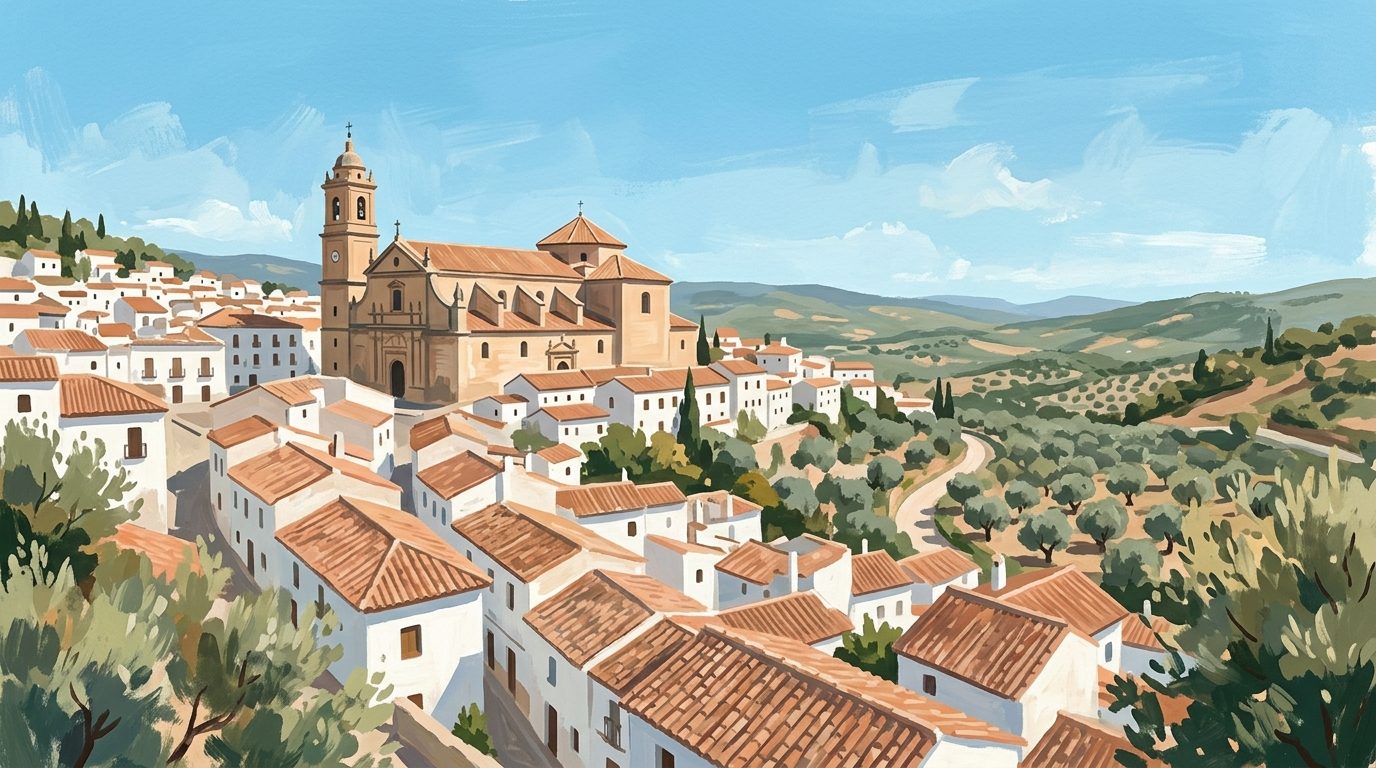
Standing in the traditional northwestern suburb, just outside the medieval walls of Baeza, the Iglesia de El Salvador offers a stark, compelling contrast to the high Renaissance grandeur that defines much of the city. Following the Christian conquest of Baeza by Ferdinand III in 1227, the city underwent a profound architectural transformation. As one of Baeza's oldest surviving parish churches, El Salvador traces a quiet timeline from the thirteenth century through the structural expansions of the fifteenth century. For travellers who appreciate candid architectural history, this church reveals the raw transition from late Romanesque solidity to the geometric precision of Gothic and Mudéjar craftsmanship. It remains entirely unencumbered by the heavy, uniform ornamentation found in the monumental squares of the later imperial era.
The Modest Extramural Parish
While the aristocratic families of Baeza poured their immense agricultural wealth into the monumental core of the city, El Salvador served the humble artisans and labourers of the surrounding area. This sociodemographic reality is written directly into the stones. The church lacks the overwhelming scale of a cathedral or the polished symmetry of a private noble chapel, yet it possesses a deeply grounded authenticity. The exterior skyline is dominated by a sturdy sixteenth-century ashlar tower, commissioned by Bishop Esteban Gabriel Merino to assert the church's presence in the expanding parish. More revealing, however, is the main Romanesque portal facing the street. Framed by three pointed archivolts and decorated with somewhat rudimentary angel heads carved in pale stone, it stands as a rare surviving example of Baeza's earliest Christian architecture. These modest carvings demonstrate the limits of provincial craftsmanship in the immediate aftermath of the conquest, offering a sharp contrast to the masterful Renaissance stonework that would arrive three centuries later.
Inside the Gothic and Mudéjar Nave
Stepping through the heavy wooden doors, the layout shifts into a classic basilica plan divided into three naves. This interior is a masterclass in the fifteenth-century Gothic and Mudéjar style. This architectural movement represents a unique synthesis typical of Andalucía, where Christian structural forms and spatial requirements were executed using Islamic carpentry, brickwork techniques, and decorative geometry. Pointed Gothic arches provide a distinct sense of vertical reach in the central nave, contrasting with the heavier Romanesque stonework visible on the exterior. The proportions of the space force the eye upward, drawing attention to the most significant architectural feature of the building.
Uncovering the Timber Roof
For centuries, the true ceiling of El Salvador was completely hidden from view. It was buried beneath heavy, false barrel vaults installed during a period of sweeping Baroque remodelling that sought to modernise the medieval space. It was not until extensive twentieth-century restorations stripped away these plaster additions that the original Mudéjar timber roof, known as the armadura, was finally revealed to the public. Today, visitors can look up to see this intricate wooden framework in its original state. The timber is decorated with complex geometric interlacing, painted stars, and historical inscriptions. It serves as a powerful reminder of how architectural tastes ebb and flow, and how the purest forms of medieval engineering often outlast later decorative trends.
Sacred Art and Local Devotion
Though the structural architecture is the primary draw for historians, the church houses several highly significant pieces of religious art. The main altar features a striking Baroque retablo that frames the apse, but the darker side chapels hold the true local treasures. Most notable is the highly regarded marble bas-relief of the Virgen de Val de Haro. This eighteenth-century, oval-shaped piece of stone carving merits close inspection for its delicate, italianate style. Furthermore, the church safeguards the venerated wooden statue of the Cristo de la Humildad, a Mannerist carving dating to the late sixteenth or early seventeenth century. This figure commands deep devotion and draws large crowds during Baeza's exceptionally solemn Holy Week processions.
Practicalities for Visitors
Located on Calle Iglesia, El Salvador is easily reached on a short walk from the Plaza del Pópulo. The streets of Baeza's historic quarter are tight, cobbled, and largely pedestrianised, so arriving by car is strongly discouraged. It is best to use the designated municipal car parks on the outskirts of the old town and navigate the final distance on foot.
As an active, working parish church rather than a dedicated museum, access is heavily dependent on the liturgical calendar. Doors are usually unlocked only in the hours immediately surrounding morning and evening mass. Liturgical schedules shift frequently throughout the year, so it is essential to confirm live opening times directly with the Baeza Tourist Information Office before planning your morning around a visit.
A visit of 20 to 30 minutes is usually ample time to examine the timber roof, study the side chapels, and appreciate the Romanesque portals. Ensure your shoulders are covered and dress respectfully. Always remain near the rear of the nave and avoid wandering the aisles if a service is actively taking place.
What to Pair it With
To fully grasp the architectural evolution of the region, follow your visit to El Salvador with a broader exploration of the city's golden sandstone monuments. You can easily spend a full afternoon Exploring Baeza: The Golden Heart of the Spanish Renaissance, where the early medieval structures give way to grand sixteenth-century palaces and university buildings. For a comprehensive look at the region's heritage and an understanding of the intense historical rivalry between neighbouring towns, reading A Tale of Two Cities: The Golden Stone of Úbeda and Baeza provides excellent cultural context. Finally, to see how church architecture in Andalucía ultimately evolved into massive, light-filled spaces designed to project imperial power, consider the short drive south to study The Renaissance Masterpiece of Jaén Cathedral.
Nearby worth your time
A few well-placed stops for extending the day without turning it into a checklist.
Continue through Renaissance Cities
Step back into the wider landscape with local guides, nearby places and the province overview.
Things to do · 12 min
Golf in Jaén Province: A Practical Guide to Courses, Clubs, and Holidays
Discover the reality of playing golf in Jaén. From the 9-hole course at La Garza to local societies and combining rounds with olive oil tourism.
Nature & wildlife · 7 min
Sierra de Cazorla: Spain's Largest Protected Area
Covering over 200,000 hectares of rugged limestone peaks and deep river canyons, the Sierra de Cazorla forms the green heart of the Iberian Peninsula.
Itinerary · 11 min
5 Days in Jaén: Renaissance Cities and Cazorla
A realistic five-day driving itinerary through Jaén province, balancing the monumental Renaissance architecture of Úbeda and Baeza with the rugged mountain wilderness of the Sierra de Cazorla.