
attraction · Jaén
Iglesia de la Magdalena
Andalucía 365 · Updated 18 July 2026
Our Verdict
“A fascinating architectural palimpsest revealing the transition from Islamic mosque to Catholic parish in the oldest quarter of Jaén. While its steep location requires physical effort, the surviving ablutions courtyard and Isabelline Gothic details provide a profound physical link to the layered medieval history of the city.”
Last verified: July 2026
The Origins of Jaén's Oldest Parish
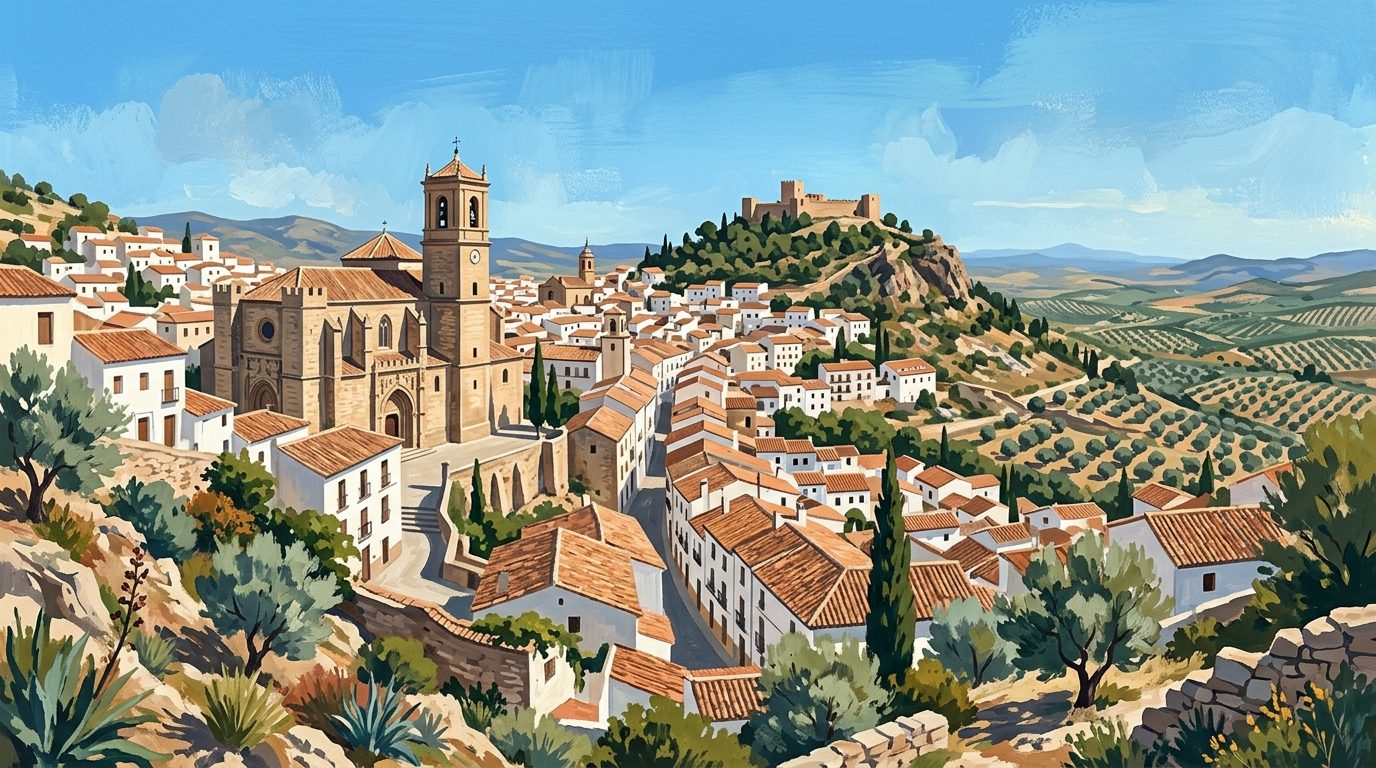
At the base of an octagonal sixteenth-century bell tower in the steep upper quarter of Jaén City, the square masonry of an eighth-century minaret reveals the layered origins of the Iglesia de la Magdalena. Commissioned originally as a mosque by the Umayyad emir Abd ar-Rahman II in 825, this building is the oldest surviving parish church in the provincial capital. It stands as a physical timeline of Andalucían history, mapping the transition from Islamic rule to the Christian conquests of the thirteenth century.
While the grandiose Jaén Cathedral commands the skyline with its Renaissance perfection, the Magdalena offers a quieter, unpolished look at the medieval past of the city. The architecture is a complex blend of Moorish foundations and ornate Gothic additions, skipping the unified set pieces found elsewhere in the province. For visitors interested in the historical transitions of southern Spain, this church is an essential stop. It demands that visitors read the building layer by layer, tracing centuries of successive cultural adaptations.
The Moorish Courtyard
The most evocative area of the complex is the surviving ablutions courtyard, known as the sahn. Before entering the main prayer hall, Muslim worshippers would ritualistically wash at the central rectangular pool, which remains in place today. Shaded by mature citrus trees, the courtyard is framed by a series of low arches, several of which retain their original Islamic horseshoe shape from the Umayyad period.
In a display of practical repurposing, Roman inscriptions and stelae are embedded directly into the thick walls of this courtyard. These ancient fragments point to an even older Roman settlement, known as Auringis, upon which the Islamic and Christian structures were subsequently built. The space offers a rare atmosphere of calm, serving as a tangible link to the early centuries of Al-Andalus. The quiet trickle of water and the shade of the trees create a contemplative environment that feels entirely removed from the modern city below.
Isabelline Gothic Architecture
Following the Christian conquest by Ferdinand III in 1246, the structure underwent centuries of significant alterations, culminating in major reconstructions in the early sixteenth century. The main portal is an excellent example of Isabelline Gothic design, characterised by intricate stone tracery and heraldic shields, though its heavy wooden doors were commissioned later in 1555 by Bishop Diego Tavera.
Inside, the church is divided into four uneven naves by mismatched rectangular pillars, a highly unusual layout dictated by the exact footprint of the original mosque. Exposed arches support complex ribbed and star-patterned vaults overhead. A closer look reveals that the vault ribs are decorated with dozens of carved dragon heads. The sanctuary is dominated by a substantial altarpiece, but the most revered piece of religious art is the Cristo de la Clemencia. Carved by Salvador de Cuéllar in 1593, this striking polychrome wooden sculpture is a masterclass in Andalucían religious expression. Visitors can also spot the distinct hand of Renaissance master architect Andrés de Vandelvira, who topped the former Islamic minaret with the current octagonal belfry.
The Legend of the Raudal
Directly opposite the church entrance lies the Raudal de la Magdalena, an ancient natural spring that supplied fresh water to the city for centuries. This historic water source is famously tied to the defining myth of the city, the legend of the Lizard of Jaén. According to local folklore, a massive reptile inhabited the spring cave, terrorising locals and devouring sheep and residents alike.
The beast was eventually defeated when a local hero, often described in varying accounts as a shepherd or a condemned prisoner, tricked the creature by feeding it a sheepskin packed with gunpowder or hot coals, causing it to explode. A modest monument and pool dedicated to the lizard stand nearby. Taking a moment to view the site adds a layer of entertaining municipal mythology to your historical visit, perfectly echoing the carved dragons hiding on the church ceiling.
Terrain and Accessibility
Reaching the Iglesia de la Magdalena requires considerable physical effort. Situated in the historic upper quarter, the church sits among steep, narrow streets paved with deeply uneven cobblestones. Access for wheelchair users or those with limited mobility is severely restricted by the sharp incline of the neighbourhood and the stepped stone entrances common to historic buildings of this era.
Drivers should avoid entering the medieval quarter entirely. The streets are notoriously difficult to navigate, and public parking is completely non-existent near the parish. The most practical approach is to leave your vehicle in the modern lower town, such as the underground facility near the Plaza de la Constitución, and walk uphill. Alternatively, local buses can take you partway up the hill, though the final, steepest approach must still be completed on foot.
Practical Planning and Nearby Pairings
Tourist access to the church is strictly limited around liturgical services, and dedicated guided visits are often paused during the peak summer months. Visitors should consult the official Jaén tourism office or the parish announcements to confirm live opening hours and entry conditions before attempting the uphill climb.
A thorough visit to the courtyard and nave takes approximately thirty to forty-five minutes, not including the strenuous walk from the commercial centre. It is best to visit in the morning during spring or autumn, avoiding the fierce midday sun of the summer months when the stone streets trap the heat. For a logical and rewarding itinerary, pair the church with the long ascent up to Santa Catalina Castle. The fortress looms on the limestone crag directly above the Magdalena neighbourhood, offering spectacular panoramic views over the endless olive groves that define the provincial landscape.
Nearby worth your time
A few well-placed stops for extending the day without turning it into a checklist.
Continue through Jaén City
Step back into the wider landscape with local guides, nearby places and the province overview.
Things to do · 12 min
Golf in Jaén Province: A Practical Guide to Courses, Clubs, and Holidays
Discover the reality of playing golf in Jaén. From the 9-hole course at La Garza to local societies and combining rounds with olive oil tourism.
Nature & wildlife · 7 min
Sierra de Cazorla: Spain's Largest Protected Area
Covering over 200,000 hectares of rugged limestone peaks and deep river canyons, the Sierra de Cazorla forms the green heart of the Iberian Peninsula.
Itinerary · 11 min
5 Days in Jaén: Renaissance Cities and Cazorla
A realistic five-day driving itinerary through Jaén province, balancing the monumental Renaissance architecture of Úbeda and Baeza with the rugged mountain wilderness of the Sierra de Cazorla.