
attraction · Jaén
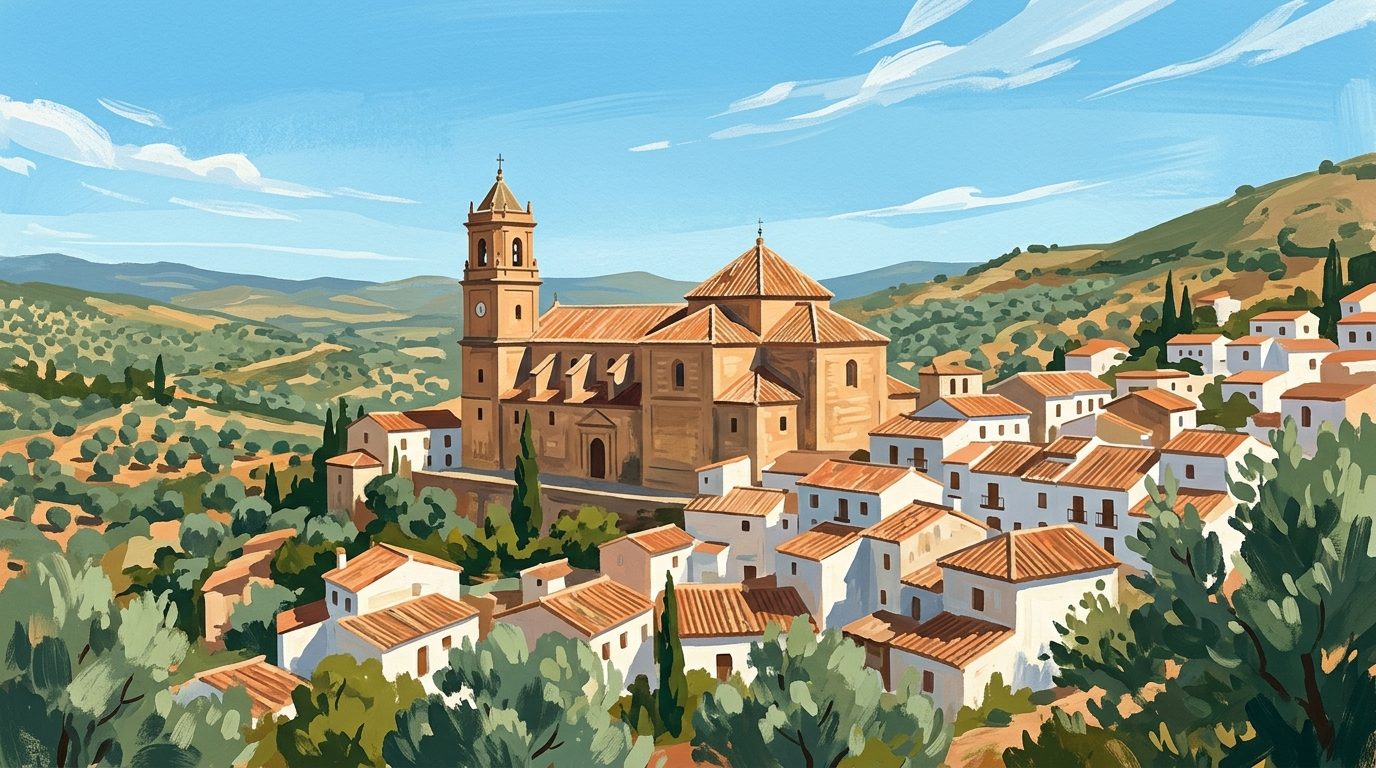
Iglesia de San Bartolomé
Andalucía 365 · Updated 18 July 2026
Our Verdict
“An understated but historically layered parish church that rewards those willing to climb the steep lanes of Jaén's historic centre. Far from the crowds of the cathedral, it offers an intimate look at exceptional Mudéjar woodwork, Spanish Renaissance carving, and deeply rooted Holy Week traditions.”
Last verified: July 2026
Stepping into the Iglesia de San Bartolomé, the eye is immediately drawn upward to the sixteenth-century Mudéjar coffered ceiling, a masterwork of carved timber hinting at the building's layered past. Situated on a steep, narrow lane in the historic centre of Jaén City, this small parish church was constituted in the fourteenth century and is believed to rest upon the foundations of a medieval mosque or synagogue. It provides a quiet, intimate counterpoint to the monumental scale of the city's Renaissance cathedral. The building remains deeply significant to the local community, housing revered sculptures that anchor the city's Holy Week traditions. For independent travellers, it offers an uncrowded space to understand the layered religious and architectural history of Andalucía.
A Layered History in the Historic Centre
The Iglesia de San Bartolomé reveals the complex cultural transitions of Jaén City. Established as a parish in the fourteenth century, the church is believed to have been constructed over the remains of an earlier mosque or synagogue. Much of the current structure was rebuilt and expanded between the sixteenth and eighteenth centuries. Walking through the three naves, separated by pointed Gothic arches resting on thick stone columns, you can trace an irregular layout whispering of its medieval incarnations. The stark white walls place all visual emphasis on the historic woodwork, the altarpieces, and the religious imagery. It is a space defined by quiet devotion rather than overwhelming grandeur, serving as a spiritual anchor for the surrounding neighbourhood.
Mudéjar Craftsmanship and the Solís Altarpiece
The interior is defined by its synthesis of architectural styles, most notably the endurance of Islamic decorative arts long after the city fell to Christian forces. The central nave is crowned by a magnificent sixteenth-century Mudéjar ceiling, meticulously preserved to showcase geometric patterns. This traditional par y nudillo (pair and knuckle) timber framework features heraldic shields carved into the dark wood, attributed to Bishop Alonso Suárez de la Fuente del Sauce. At the far end, within the circular apse, the main altarpiece commands attention. Designed in the late sixteenth century by the Toledo-born sculptor Sebastián de Solís, this Romanist work is an excellent example of Spanish Renaissance carving. Another significant artefact is the baptismal font, a rare fifteenth-century Gothic green glazed ceramic piece that survived a nineteenth-century decree ordering all clay fonts in the diocese replaced with stone.
The Cristo de la Expiración
For residents of Jaén City, the primary reason to visit this parish is to stand before the Cristo de la Expiración. Sculpted in the eighteenth century and attributed to the Alhaurín el Grande master José de Medina, this revered sculpture is a focal point of the city's Maundy Thursday processions. The image originally resided in the now-lost Convent of San Francisco before being moved here in the nineteenth century. It is renowned for its intense realism, particularly the treatment of the hair and the intricately carved loincloth mimicking wet linen. Even non-religious visitors will appreciate the technical brilliance of the carving and the baroque ornamentation of the chapel. The church also houses the processional image of María Santísima de las Siete Palabras, carved by Luis Álvarez Duarte.
The Plaza de San Bartolomé
The experience of the church extends to the cobbled square outside. The Plaza de San Bartolomé is a tranquil urban pocket characterised by its irregular shape and a steep incline, which is cleverly softened by traditional stone steps known locally as cantones. This square serves as an excellent vantage point to admire the church's main facade, completed in the late seventeenth century. The remarkably simple exterior features a semicircular arch and a deep niche for the patron saint. It is attributed to the architect Eufrasio López de Rojas, the visionary who designed the principal frontage of Jaén Cathedral. Flanked by stately historic buildings, including the imposing Casa del Conde de Águila, the square operates as a gateway into the winding lanes of the old district.
Practicalities and Nearby Pairings
The church is located in the upper part of the historic centre. It is best reached on foot, requiring roughly a ten-minute walk from the cathedral through steep, narrow streets. Driving into this immediate district is strongly discouraged due to restrictive road widths and an absence of parking; visitors with a vehicle should use the underground car park at Plaza de la Constitución and proceed on foot. The terrain is uneven, with steep inclines and cobblestones that require sensible footwear and may present challenges for wheelchair users or those with limited mobility.
As this is an active parish church rather than a dedicated museum, entry is generally free, though small donations toward the building's upkeep are welcome. Opening hours are tightly restricted to liturgical worship times, which shift depending on the season and the religious calendar. To avoid disappointment, visitors should confirm the current mass schedule directly via the official diocesan website before planning a visit.
A visit requires only 30 to 45 minutes, making it an easy addition to a broader exploration. After taking in the quiet atmosphere of San Bartolomé, you can easily walk up to Santa Catalina Castle for panoramic views, or delve into the local culinary scene by exploring the olive oil culture of Jaén City at one of the nearby tasting rooms.
Nearby worth your time
A few well-placed stops for extending the day without turning it into a checklist.
Continue through Jaén City
Step back into the wider landscape with local guides, nearby places and the province overview.
Things to do · 12 min
Golf in Jaén Province: A Practical Guide to Courses, Clubs, and Holidays
Discover the reality of playing golf in Jaén. From the 9-hole course at La Garza to local societies and combining rounds with olive oil tourism.
Nature & wildlife · 7 min
Sierra de Cazorla: Spain's Largest Protected Area
Covering over 200,000 hectares of rugged limestone peaks and deep river canyons, the Sierra de Cazorla forms the green heart of the Iberian Peninsula.
Itinerary · 11 min
5 Days in Jaén: Renaissance Cities and Cazorla
A realistic five-day driving itinerary through Jaén province, balancing the monumental Renaissance architecture of Úbeda and Baeza with the rugged mountain wilderness of the Sierra de Cazorla.