
attraction · Málaga
Iglesia del Carmen
Andalucía 365 · Updated 18 July 2026
Our Verdict
“A masterclass in contrast, this church hides one of Andalucía's finest Baroque interiors behind a modest Mannerist stone exterior. The un-gilded red pine altarpiece by Antonio Primo de la Rosa is spectacular, offering a rare opportunity to appreciate Churrigueresque carving unburdened by heavy gold leaf.”
Last verified: July 2026
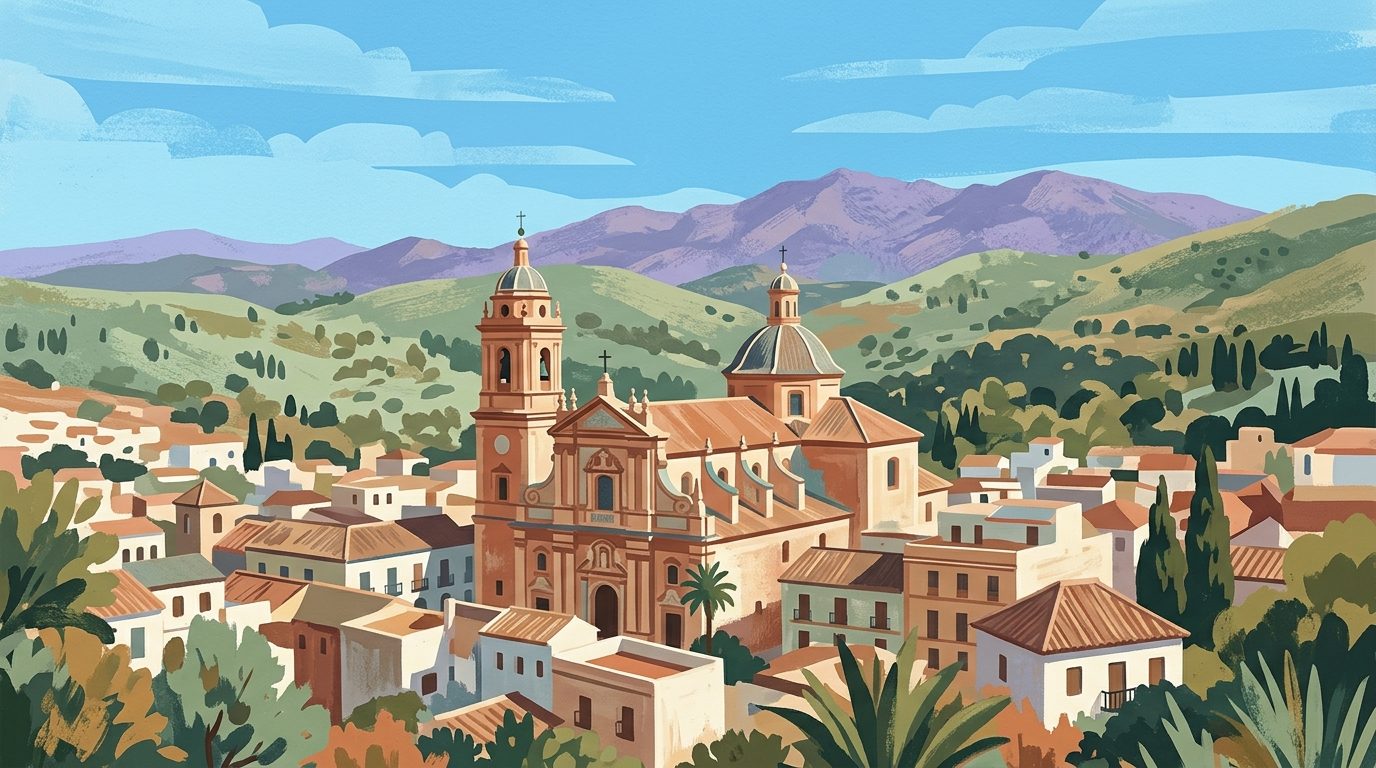
Standing on an escarpment overlooking the fertile valley of the river Guadalhorce, the Iglesia del Carmen in Antequera presents a restrained Mannerist stone facade to the street. Originally the church for a 16th-century Calced Carmelite convent, the building gives little indication of the overwhelming scale and detail concealed within its walls. Following significant 18th-century additions, the interior became a pinnacle of Andalucían Baroque architecture. For visitors, the church offers a spectacular contrast between its sober exterior, which lost its prominent tower known as the Torre del Gallo in 1883, and a theatrical interior of staggering decorative richness. The surviving structure, isolated after the demolition of the associated convent, remains one of the most culturally significant ecclesiastical spaces in the province of Málaga.
The Retablo Mayor: A Masterpiece in Red Pine
The visual anchor of the church is the main altarpiece, known as the Retablo Mayor. Built in the years immediately preceding 1747, it is widely cited as one of the most important works of 18th-century retablo art in southern Spain. Created by the architect and carver Antonio Primo de la Rosa, with sculptures by the renowned Andalucían artist José de Medina, the altarpiece rises like a vertical forest of columns, cornices, and saints.
Unlike many Baroque altarpieces that rely on heavy gold leaf for impact, the Retablo Mayor is celebrated for its natural, un-gilded red pine wood. This exposed finish highlights the extraordinary precision of the Churrigueresque carving. More than fifty carved figures, including a choir of adolescent angels playing musical instruments, animate the structure. The complex woodwork serves as a monumental frame for the central niche, the Camarín, where the figure of the Virgin of Carmen resides. The decision to leave the central structure un-gilded provides a striking visual departure from standard Spanish Baroque practices.
The Mudéjar Artesonado Ceiling
While the Baroque altarpieces dominate the lower sightlines, the church retains an exceptional 17th-century roof. Completed in 1614, the Mudéjar artesonado ceiling spans the entire rectangular nave without the need for obstructive crossbeams. This pine structure is completely covered in complex geometric lacework, interrupted only by three hanging mocárabe pinecones.
The juxtaposition between the sober, mathematical precision of the Moorish-influenced carpentry above and the fluid, organic Baroque carvings of the altars below provides a striking lesson in Spanish architectural evolution. Taking a moment to sit in the pews allows visitors to appreciate how these two distinct design philosophies coexist in a single space without overwhelming each other.
The Camarín and Side Chapels
Behind the central altar lies the Camarín de la Virgen, a highly decorated and enclosed room designed to give the principal statue an aura of mystery and divine presence. The deliberate use of light and shadows through the building windows enhances the theatricality of the space, illuminating the complex stucco work and sculptural details.
Throughout the rest of the church, six independent side chapels contain further significant works of art. In the 18th century, a major expansion occurred when the nave of the Cofradía de la Soledad was added to the foot of the church, functioning effectively as an enormous additional chapel. The Antequera school of sculpture was highly influential during this period, and the church operates almost as a gallery for these historic pieces. Particular highlights include the primitive 15th-century figure of the Virgin of Socorro, donated by the Catholic Monarchs, and the 18th-century Virgin of Soledad.
The Verdict
The Iglesia del Carmen is an essential stop for anyone interested in ecclesiastical art. Visitors need no art history background to appreciate the sheer craftsmanship of the un-gilded pine altarpiece or the geometric perfection of the wooden ceiling. Its monumental scale makes it one of the most compelling landmarks in Antequera.
Practical Advice for Visitors
The church is situated in the upper part of the town on the Plaza del Carmen. The stone entrance is relatively simple, framed by Tuscan columns beneath a modest bell gable that survived the 19th-century demolitions. The small plaza immediately outside the church provides one of the most rewarding viewpoints in the upper town, offering sweeping sightlines over the rooftops toward the flat plains of the Vega antequerana and the distinct profile of the Peña de los Enamorados rock formation. Walking from the central Plaza de San Sebastián requires a steep uphill climb, but the route is relatively short. Alternatively, drivers can look for parking in the designated areas near the Alcazaba and approach on foot through the narrow streets of the historic quarter.
Because the building functions as a protected monument and museum space, access is managed to support ongoing conservation efforts. Always confirm the current schedule and entry requirements on the official Antequera tourism website before finalising your itinerary.
Expect to spend around 45 minutes inside the building. This provides ample time to study the details of the retablo and the ceiling without feeling rushed. Photographers and architecture enthusiasts might want to allocate a full hour. Since the upper town can become exceptionally hot during summer afternoons, morning visits are highly recommended. After a morning of historic exploration, visitors can head back down to the town centre to cool off with a bowl of traditional Porra Antequerana, a thick, chilled tomato cream native to the inland Málaga region.
Nearby worth your time
A few well-placed stops for extending the day without turning it into a checklist.
Continue through Inland Málaga
Step back into the wider landscape with local guides, nearby places and the province overview.
Place guide · 7 min
Playa de Burriana: A Guide to Nerja's Premier Beach
Discover Playa de Burriana, the most iconic beach in Nerja, known for its wide sands, excellent chiringuitos, and clear waters on the Costa del Sol.
Place guide · 7 min
Playa de Cabopino: Dunes, Pines and Clear Waters near Marbella
A protected enclave of natural dunes and fine sand situated between Marbella and Fuengirola. This coastal stretch offers a rare glimpse of the original Mediterranean landscape.
Itinerary · 13 min
One Week in Ronda: A Seven-Day Itinerary for the Serranía
A seven-day stay in Ronda allows you to experience the deep gorge and ancient streets long after the day-trippers have left. Using the city as a base, you can easily explore the surrounding white villages, hike the Sierra de las Nieves, and settle into the true rhythm of mountain life.