
attraction · Málaga
Malaga Museum
Andalucía 365 · Updated 18 July 2026
Our Verdict
“The Museo de Málaga is an essential, substantial institution that grounds the city's modern art boom with deep historical context. Housed in a magnificent neoclassical building, it demands at least two hours to appreciate properly. It is perfect for those who prefer quiet, academic curation over crowded contemporary galleries.”
Last verified: July 2026
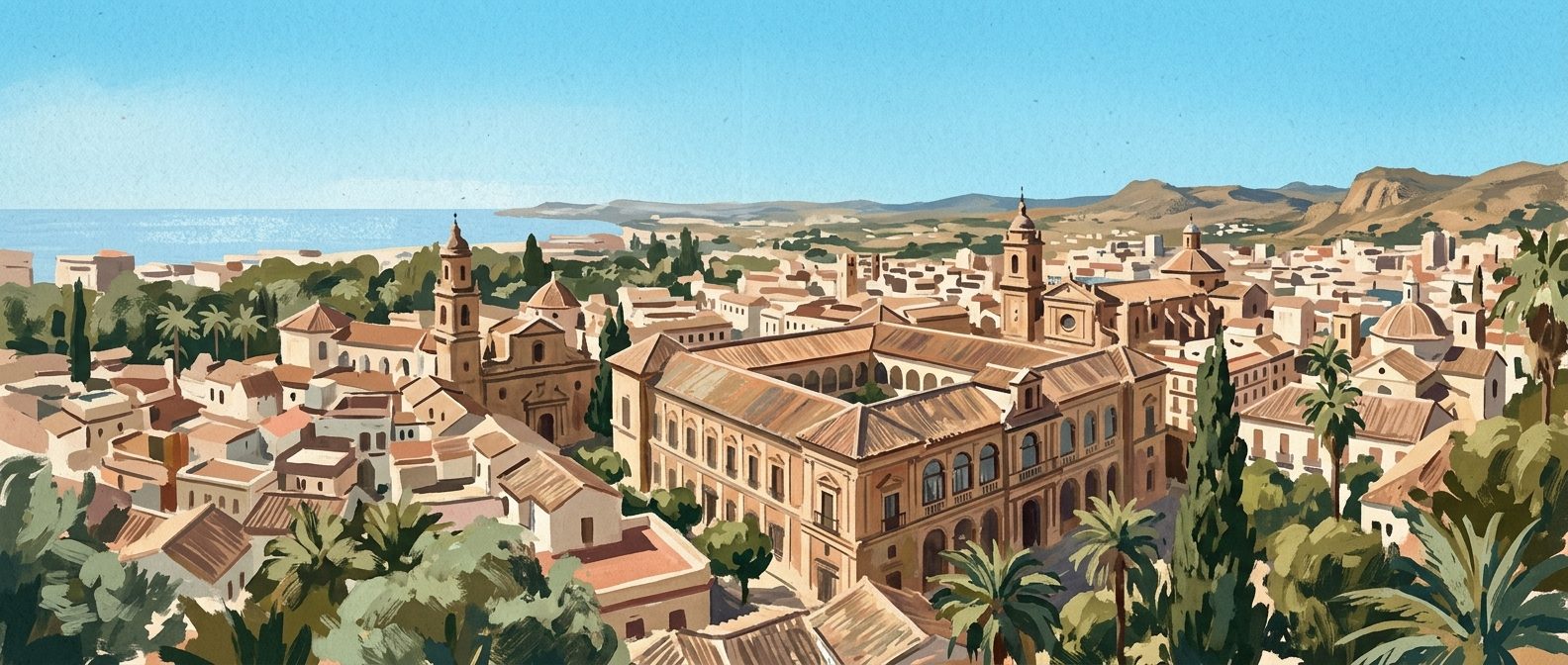
Stepping into the inner courtyard of the Palacio de la Aduana, visitors encounter a towering Roman sculpture known as the Dama de la Aduana. This ancient second-century marble figure, missing her head, was unearthed in the late eighteenth century during the construction of the building, setting a historical precedent for the Museo de Málaga. The grand neoclassical edifice, originally built as a maritime customs house and designed to evoke Italian Renaissance palaces, features a rusticated stone exterior that gives way to a serene courtyard lined with palm trees.
This institution represents a significant cultural merger in the recent history of the city. For decades, the provincial collections of fine arts and archaeology were kept in storage. Following a passionate citizen campaign to reclaim the historic building for public use, the collections were unified, and the museum opened in 2016. Today, it stands as one of the largest state-owned museums in Andalucía, offering a comprehensive journey through the heritage of the region. The scale of the collection is substantial, containing over 15,000 archaeological references and 2,000 works of art, yet the modern renovation ensures the space feels airy and accessible.
The Archaeological Journey
Occupying the second floor, the archaeology section spans from the Palaeolithic era to the Middle Ages. The galleries are arranged chronologically, providing a clear narrative of how different civilisations exploited the natural resources of the Guadalhorce valley and the Mediterranean coastline.
The journey begins with prehistoric finds from local cave systems, including significant Neanderthal remains from the Boquete de Zafarraya. As visitors progress, the maritime importance of the region becomes apparent through rare Phoenician grave goods and the Tomb of the Warrior, a sixth-century BC burial discovered in the city centre containing a Greek helmet. The Roman section is expansive, highlighted by massive floor mosaics salvaged from regional villas, such as the Birth of Venus from Cártama. A major highlight is the Loringian Collection, a foundational assembly of Roman bronzes, statues, and inscribed tablets originally gathered by the Marqueses de Casa Loring in the nineteenth century. For a broader look at the Roman and Moorish layers of the city, this section pairs perfectly with A Guide to the Alcazaba and Roman Theatre in Málaga.
Fine Arts and the Málaga School
The first floor shifts focus to the fine arts, specifically highlighting the Málaga School of painting from the 1800s. During this period, the city flourished as an industrial power, and the accumulated wealth funded a thriving local art scene. The curation reflects the social realism and romanticism of the era, offering a window into nineteenth-century social hierarchies.
Visitors will find sweeping historical scenes, intimate portraits, and atmospheric Andalucían landscapes that capture the dramatic geography of the region. The galleries include significant canvases by masters such as Enrique Simonet, Bernardo Ferrándiz, and Joaquín Sorolla. The collection also features early academic sketches and paintings by a young Pablo Picasso, providing crucial context for his later radical departures. To explore his later life and works, visitors should read Málaga’s Creative Core: A Guide to the Picasso Museum and Soho Arts District.
Practical Information for Visitors
The museum is centrally located at Plaza de la Aduana, easily reached on foot from Calle Larios and the nearby religious centre. To explore the immediate architectural surroundings, see Málaga’s Grand Cathedral and the Transformed Waterfront. Most city buses stop at the Paseo del Parque, just a few minutes away. If arriving by car, the most convenient public car parks are situated at Plaza de la Marina or Muelle Uno.
Because the permanent collection is extensive, taking regular breaks during the visit is highly recommended. The layout encourages a slow, methodical pace, allowing visitors to appreciate both the individual objects and the restored neoclassical architecture housing them. Some detailed archaeological descriptions remain in Spanish only, so carrying a smartphone translation app is highly recommended for specialists. Always verify practical details directly on the official Museo de Málaga website before planning a trip.
Accessibility and Climate
The comprehensive renovation of the Palacio de la Aduana successfully merged an eighteenth-century heritage building with modern accessibility standards. The museum is fully accessible to wheelchair users and visitors with limited mobility. Step-free access is provided throughout the public areas, and spacious, glass-walled lifts connect the central courtyard to all gallery floors.
The building is excellently climate-controlled, making it a highly sensible destination to escape the intense peak heat of the Andalucían summer. The thick ashlar walls and traditional courtyard design inherently help to regulate the internal temperature, creating a cool, shaded environment that enhances the calm atmosphere of the galleries.
The Top-Floor Terrace and Dining
Before leaving, take the lift to the fourth floor to visit the open-air terrace. This elevated viewpoint offers close-up perspectives of the Alcazaba fortress walls climbing the hillside, as well as the towers of the nearby cathedral. This top floor also houses Blossom, a Michelin-starred restaurant offering high-end contemporary tasting menus created by chef Emi Schobert, served with panoramic views over the historic centre.
For more casual refreshments, a modern cafe operates on the ground floor near the main courtyard. This space seamlessly integrates elements of the city's past, featuring a glass floor section that reveals the medieval defensive walls lying directly beneath the building, allowing visitors to observe local history while they enjoy a coffee.
How Long to Spend
To properly explore both the archaeology and fine arts sections, you should allow at least two to three hours. The sheer volume of material requires time to absorb. Art historians or archaeology specialists may easily find themselves staying for a full afternoon to study the Loringian bronzes or the nineteenth-century portraiture.
Mid-week mornings are generally the quietest times to visit, providing a peaceful environment for reading the detailed exhibition panels without the weekend crowds. The open storage area on the ground floor also offers a fascinating glimpse into the curation process. For a deeper understanding of the city that houses this collection, consult Beyond the Airport: Why Málaga is Andalucía’s Most Compelling Coastal City.
Nearby worth your time
A few well-placed stops for extending the day without turning it into a checklist.
Continue through Málaga City
Step back into the wider landscape with local guides, nearby places and the province overview.
Place guide · 7 min
Playa de Burriana: A Guide to Nerja's Premier Beach
Discover Playa de Burriana, the most iconic beach in Nerja, known for its wide sands, excellent chiringuitos, and clear waters on the Costa del Sol.
Place guide · 7 min
Playa de Cabopino: Dunes, Pines and Clear Waters near Marbella
A protected enclave of natural dunes and fine sand situated between Marbella and Fuengirola. This coastal stretch offers a rare glimpse of the original Mediterranean landscape.
Itinerary · 13 min
One Week in Ronda: A Seven-Day Itinerary for the Serranía
A seven-day stay in Ronda allows you to experience the deep gorge and ancient streets long after the day-trippers have left. Using the city as a base, you can easily explore the surrounding white villages, hike the Sierra de las Nieves, and settle into the true rhythm of mountain life.