
attraction · Málaga
Málaga Park
Andalucía 365 · Updated 18 July 2026
Our Verdict
“Málaga Park is an exceptional feat of urban landscaping that provides a heavily shaded, botanical corridor through the heart of the city. While traffic noise from the adjacent road is noticeable, its rare subtropical plants and fully accessible, flat pathways make it a visually rewarding and highly practical pedestrian route.”
Last verified: July 2026
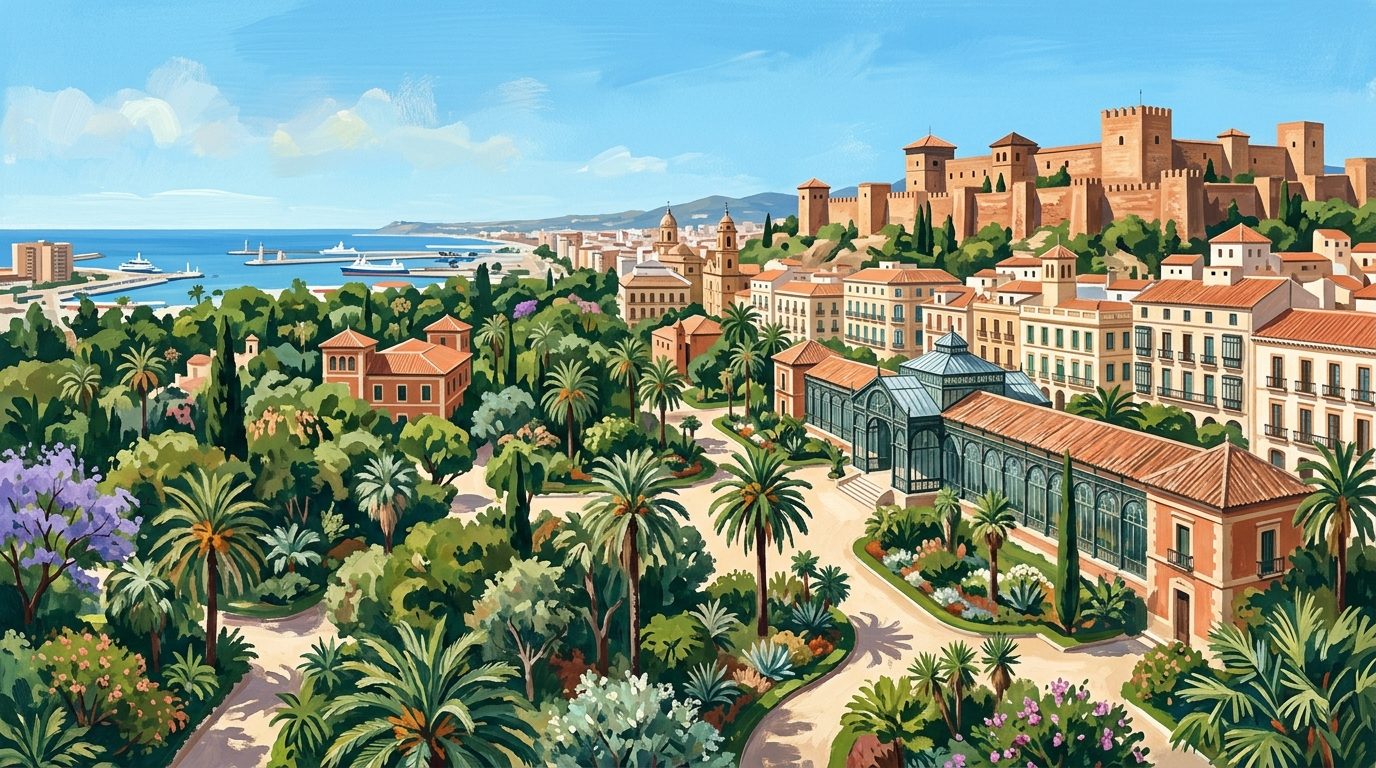
As you step off the busy asphalt of the city centre, the dense canopy of plane trees and soaring Washingtonia palms provides an immediate shift in atmosphere. The humid scent of damp earth and exotic foliage offers a sudden contrast to the sun baked streets of Andalucía's capital. Málaga Park, known locally as the Paseo del Parque, is a 3.3 hectare subtropical garden stretching for over 800 metres along the waterfront.
Before the turn of the twentieth century, the waters of the Mediterranean lapped much closer to the historic city walls. The creation of this park was a monumental civic engineering project initiated in 1896 under the direction of Málaga born Prime Minister Antonio Cánovas del Castillo. Designed to expand the port facilities while gifting the city a dedicated recreational space, the reclaimed land was quickly transformed into a grand promenade. Today, this dense green corridor physically separates the historic city centre from the modern maritime port. It serves as a vital green lung and a highly engineered microclimate, dropping the ambient temperature significantly during the intense heat of the southern Spanish summer.
An Open Air Botanical Museum
The park is widely regarded as one of the most important public collections of subtropical flora in Europe. As you walk the central avenues and shaded side paths, you will pass more than 360 distinct botanical species sourced from five continents. The collection reflects the global reach of Málaga's nineteenth century merchant families, who imported exotic seeds and cuttings from their maritime trading routes.
The sheer density of the planting creates a distinct ecosystem within the city grid. You might spot Mexican fan palms reaching towards the sunlight, delicate Vietnamese palms from the Mekong Delta, or towering North American cypress trees alongside the central walkways. Visitors will also find groves of Asian bamboo, ancient Canary Island dragon trees, and the striking swollen trunks of the South American Ceiba trees, known locally as palos borrachos. The resident monk parakeets have established large colonies in the upper branches, adding a continuous soundtrack of chatter to the environment. Down at eye level, manicured topiary borders a series of Renaissance and baroque style features. These include the delicate bronze Fountain of the Nymph with the Pitcher and a beloved statue of Platero, the literary donkey created by Nobel laureate Juan Ramón Jiménez.
Architectural Grandeur
While the southern edge of the park borders the modern port, the northern flank is lined with some of the city's most imposing monumental architecture. A stroll from west to east allows visitors to take in the elaborate neobaroque facade of the Málaga City Hall, the classical lines of the Bank of Spain, and the historic central post office building that now houses the Rectorate of the University of Málaga.
This architectural boundary provides a dramatic backdrop to the botanical displays. The park functions as a transitional zone between the maritime atmosphere of the coast and the institutional gravity of these historic civic structures. Along the pathways, visitors can rest on traditional ceramic benches decorated with cool Sevillian tiles, known as azulejos. These ornate seats offer an excellent vantage point for observing the daily rhythms of the city.
A Candid Assessment
Málaga Park is an exceptional feat of urban landscape design, but it remains an entirely urban environment. Because the gardens run parallel to a major municipal traffic artery, you will hear the low hum of passing buses and cars. This is not a silent rural retreat, but rather a working pedestrian thoroughfare used by locals commuting between the eastern neighbourhoods and the historic centre. For visitors, it offers immediate relief from the midday sun and a much more visually rewarding route than the adjacent concrete pavements. Botany enthusiasts will appreciate the mature, rare specimens, while families will find welcome shaded areas for children to stretch their legs.
Practicalities for Visiting
The park extends from the Plaza de la Marina in the west to the Plaza del General Torrijos in the east. It is impossible to miss if you are exploring the coastal edge of the central district. The terrain is entirely flat with wide, paved pathways, making it highly accessible for wheelchair users, visitors with limited mobility, and families with pushchairs. Water fountains and occasional kiosks are dotted along the perimeter, providing necessary hydration during the warmer months.
As a public thoroughfare, the gardens remain accessible throughout the year. The space is best experienced in the early afternoon when the broad leaves provide maximum shade, or in the hour before sunset when the warm coastal light filters horizontally through the palm fronds. An open air auditorium, the Eduardo Ocón Theatre, sits within the grounds and regularly hosts municipal concerts. You must check the official Málaga tourism portal to confirm current access arrangements, exact public transport routes, and live event schedules before you plan your visit.
Sensible Nearby Pairings
Málaga Park acts as a central hinge connecting several major districts. A short walk across the road leads directly to the sleek waterfront development, making Málaga’s Grand Cathedral and the Transformed Waterfront a logical continuation of your route.
Alternatively, heading directly north from the park takes you towards the imposing Moorish fortifications detailed in our guide to the Alcazaba and Roman Theatre in Málaga. If you continue walking east past the Plaza del General Torrijos, you will reach the dark sands and traditional seafood restaurants of Playa de La Malagueta, an ideal spot for a late lunch. Art lovers might instead walk west to explore the contemporary galleries covered in our guide to the Picasso Museum and Soho Arts District.
Nearby worth your time
A few well-placed stops for extending the day without turning it into a checklist.
Continue through Málaga City
Step back into the wider landscape with local guides, nearby places and the province overview.
Place guide · 7 min
Playa de Burriana: A Guide to Nerja's Premier Beach
Discover Playa de Burriana, the most iconic beach in Nerja, known for its wide sands, excellent chiringuitos, and clear waters on the Costa del Sol.
Place guide · 7 min
Playa de Cabopino: Dunes, Pines and Clear Waters near Marbella
A protected enclave of natural dunes and fine sand situated between Marbella and Fuengirola. This coastal stretch offers a rare glimpse of the original Mediterranean landscape.
Itinerary · 13 min
One Week in Ronda: A Seven-Day Itinerary for the Serranía
A seven-day stay in Ronda allows you to experience the deep gorge and ancient streets long after the day-trippers have left. Using the city as a base, you can easily explore the surrounding white villages, hike the Sierra de las Nieves, and settle into the true rhythm of mountain life.