
attraction · Jaén
Museo de Jaén
Andalucía 365 · Updated 18 July 2026
Our Verdict
“The Museo de Jaén rewards unhurried visitors with deep archaeological discoveries and impressive fine art collections. While the traditional curation lacks extensive English translations, the galleries offer a quiet, contemplative retreat. From Bronze Age artefacts to twentieth-century avant-garde canvases, this institution remains an essential, intellectually satisfying detour.”
Last verified: July 2026
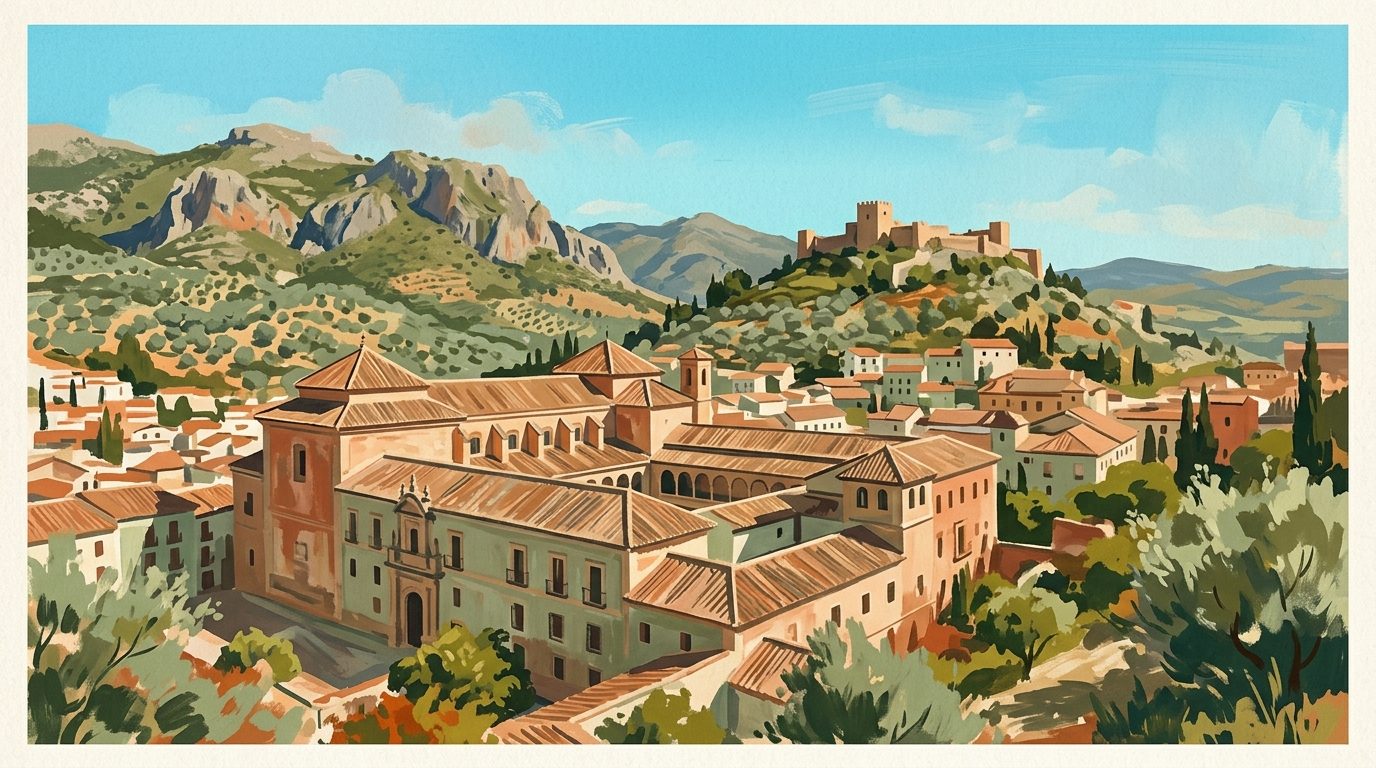
Occupying a classical 1919 palace with quadrangular corner towers, the Museo de Jaén anchors the leafy Paseo de la Estación. Designed by Antonio Flórez Urdapilleta, the prominent architect behind Madrid's famous Residencia de Estudiantes, the building was constructed thanks to the political efforts of José del Prado y Palacio, who secured the expansive plot for the city. Originally opened as a provincial fine arts gallery, the institution later absorbed the local archaeological collections in 1969. Today, it unites the province's most significant historical discoveries and artistic heritage under one roof. The museum offers an intellectual retreat from the busy city streets, providing a rigorous chronological journey from prehistoric settlements to twentieth-century avant-garde movements. For curious travellers exploring Jaén City, this institution provides essential context for the region's deep historical layers.
Why It Matters
Jaén holds a critical place in the history of the Iberian Peninsula, serving as a frontier, a breadbasket, and a cultural crossroads over millennia. Long before Roman engineers arrived to reshape the landscape into vast agricultural estates, sophisticated indigenous societies controlled the Guadalquivir valley. The museum acts as a definitive repository for the region's evolving heritage, capturing everything from Copper Age settlements to Roman provincial life. Beyond antiquity, the upper floors chart the evolution of Andalucían art. The collection rescues crucial Gothic and Baroque religious iconography from the nineteenth-century desamortización, a period of state-sponsored confiscation of church property that scattered much of Spain's ecclesiastical wealth. By preserving both the ancient soil and the painted canvas, the museum tells the complete story of human habitation in this rugged, olive-draped province.
The Archaeology Section: Prehistory to Rome
Following the transfer of the celebrated Iberian sculptural groups to the dedicated Museo Íbero, the archaeological ground floor of the Museo de Jaén now focuses its narrative on the region's broader ancient timeline. The galleries showcase an extraordinary array of Copper Age and Bronze Age discoveries. Visitors can examine extensive materials recovered from the Marroquíes Bajos settlement, alongside intricate metallurgical artefacts, including crucibles and moulds, retrieved from the Peñalosa mining site in Baños de la Encina.
The archaeological journey extends seamlessly into the Roman era, featuring excellent pieces from various provincial sites that illustrate the wealth of the territory under imperial rule. Notable Roman artefacts include the Togados of La Magdalena, a series of Terra Sigillata Hispánica ceramics from Los Villares de Andújar, and an exceptional fourth-century Hispano-Roman Christian sarcophagus from Martos. Together, these objects sketch a vivid picture of early commerce, daily life, and changing spiritual beliefs in the province.
Fine Arts and the Vanguard
The upper levels transition smoothly into the Fine Arts section, which covers a broad chronological span from the fourteenth century to the modern era. Visitors can trace the evolution of religious art through works salvaged from local convents, moving from austere Gothic panels to highly emotive Baroque canvases. The collection also includes significant works by nineteenth-century costumbrismo painters, such as José Elbo and Pedro Rodríguez de la Torre, who dedicated their careers to capturing the daily life, traditional dress, and rural landscapes of the province.
A dedicated contemporary space highlights the work of Manuel Ángeles Ortiz, a Jaén-born painter and a key figure of the Generation of 1927. Ortiz eventually moved to Paris, where he connected deeply with the international avant-garde and befriended Pablo Picasso. The gallery displays his dramatic Fugitivos series alongside his academic early works. Additionally, the museum houses a remarkable collection of graphic art, featuring over a thousand prints. This includes original engravings from Francisco de Goya's famous Caprichos series and striking landscapes by Carlos de Haes, offering a rare opportunity to study Spanish printmaking techniques up close.
A Candid Assessment
The Museo de Jaén rewards unhurried visitors with deep archaeological and artistic collections that span millennia. While the classical architecture of the building is imposing, the galleries remain delightfully quiet, offering a cool, contemplative space that feels far removed from the mass tourism circuits of the coast. The curation leans traditional, and some displays lack extensive English translations, but the artistic gravity of the Roman sarcophagi and avant-garde canvases transcends any language barrier.
Practical Information and Accessibility
The museum is centrally located at Paseo de la Estación, 29. It is a straightforward, flat walk from the commercial heart of the city, situated about fifteen minutes on foot from Jaén Cathedral. Several local bus lines stop directly outside the monumental gates. For visitors arriving by car, street parking in this central district is highly restricted. Drivers are advised to use the large subterranean public car park located at Plaza de la Constitución, just a short walk away.
For visitors with mobility requirements, the museum is partially accessible according to regional public sector guidelines. The building is equipped with ramps and lifts that provide access to the main exhibition spaces, though the historical nature of the architecture means some minor transitions may require assistance.
Regional entry policies generally grant complimentary access to European Union citizens, with a nominal fee for other international visitors. The thick stone walls and shaded courtyard provide excellent shelter from the intense midday heat, making it an ideal stop for those travelling through Jaén in August. Visitors should consult the official Museo de Jaén website to verify current schedules and temporary exhibitions before finalising their itinerary.
Sensible Nearby Pairings
After spending two or three hours exploring the ancient and modern history of the province, visitors can shift their focus to the region's defining agricultural and economic tradition. Consider exploring the olive oil culture of Jaén City to understand the modern industry that has shaped this landscape since the Roman era. For those eager to continue their historical deep dive, an expedition beyond the olive groves into Jaén province offers access to wild mountain parks and the perfectly preserved Renaissance architecture of nearby Úbeda and Baeza.
Nearby worth your time
A few well-placed stops for extending the day without turning it into a checklist.
Continue through Jaén City
Step back into the wider landscape with local guides, nearby places and the province overview.
Things to do · 12 min
Golf in Jaén Province: A Practical Guide to Courses, Clubs, and Holidays
Discover the reality of playing golf in Jaén. From the 9-hole course at La Garza to local societies and combining rounds with olive oil tourism.
Nature & wildlife · 7 min
Sierra de Cazorla: Spain's Largest Protected Area
Covering over 200,000 hectares of rugged limestone peaks and deep river canyons, the Sierra de Cazorla forms the green heart of the Iberian Peninsula.
Itinerary · 11 min
5 Days in Jaén: Renaissance Cities and Cazorla
A realistic five-day driving itinerary through Jaén province, balancing the monumental Renaissance architecture of Úbeda and Baeza with the rugged mountain wilderness of the Sierra de Cazorla.