
attraction · Granada
Nasrid Palaces
Andalucía 365 · Updated 18 July 2026
Our Verdict
“The Nasrid Palaces deliver Europe's most intricate Islamic architecture, showcasing remarkable muqarnas ceilings, reflective pools, and profound mathematical precision. The strict timed entry system and dense crowds require patience, but the sheer aesthetic brilliance makes this a mandatory experience for anyone visiting Granada.”
Last verified: July 2026
A Masterclass in Islamic Design
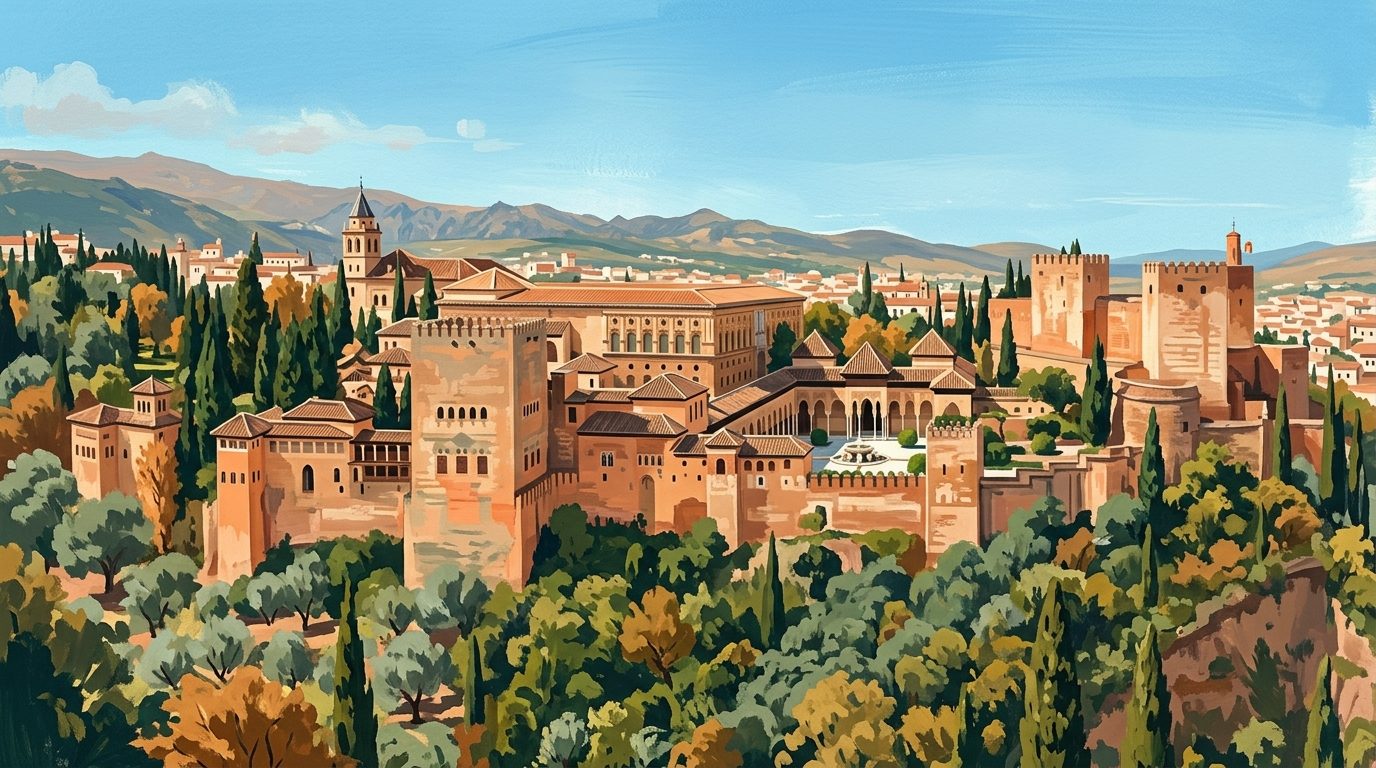
Stepping into the Nasrid Palaces involves entering a world of strict mathematical precision and poetic reflection. Carved verses loop around arched doorways, while geometric ceramic tiles draw the eye upwards to domes of intricate muqarnas, a form of honeycomb vaulting designed to mimic the starlit heavens. Built for the final Muslim rulers of the Iberian Peninsula between the thirteenth and fifteenth centuries, this complex remains the emotional and artistic heart of the Alhambra.
The site is not a single building, but a sequence of interconnected palaces that served distinct administrative and private functions. Water is used as a core architectural element, acting as a mirror to amplify the intricate plasterwork, cool the surrounding air, and create a sense of profound stillness. While the sheer beauty of the space attracts almost every traveller to Granada, visitors should expect large crowds and a strictly managed, linear route. The artistic execution is exquisite, but the reality of visiting requires patience and precise planning.
The Mexuar and the Transition of Power
The Mexuar is the oldest surviving section of the complex. This hall originally functioned as a council chamber where the sultan would hear petitions and administer justice. The room provides an immediate introduction to the layered history of Andalucía, as it clearly shows the transition from Islamic to Christian ownership. After the conquest of Granada in 1492, the space was modified for Catholic monarchs. Look closely at the carved wooden ceilings and the ceramic wall plinths, where Christian coats of arms have been inserted alongside the original Arabic calligraphy and Islamic geometric patterns. Beyond the Mexuar lies the Cuarto Dorado, or Golden Room, featuring a small courtyard that once served as a waiting area for those seeking an audience with the sovereign.
The Comares Palace and the Court of the Myrtles
Moving beyond the Mexuar leads into the Comares Palace, which served as the official residence of the sultan. The centrepiece of this area is the Court of the Myrtles, known in Spanish as the Patio de los Arrayanes. Here, a massive rectangular pool is flanked by bright green myrtle bushes. The still water acts as a mirror, reflecting the formidable, square Comares Tower and creating an illusion of vast, infinite space.
Inside the base of the tower lies the Hall of the Ambassadors, the grandest and most imposing room in the entire complex. This was the throne room, designed to intimidate visiting emissaries. The wooden ceiling above is a masterpiece of medieval carpentry. It contains exactly 8,017 interlocking cedarwood pieces, arranged to represent the seven heavens of Islamic cosmology, with a central cube symbolising the throne of God. While the stucco walls appear largely monochromatic today, they were originally painted in brilliant polychrome shades of red, blue and gold.
The Palace of the Lions
This distinct area served as the private living quarters of the royal family. The Court of the Lions is the most photographed space in the Alhambra, famous for its central alabaster fountain supported by twelve marble lions. This fountain is a triumph of fourteenth century hydraulic engineering, feeding four channels of water that divide the courtyard into quadrants representing the four rivers of paradise.
The surrounding gallery features 124 slender columns carved from white Macael marble. These pillars create a forest effect, playing with light and shadow as the sun moves overhead. Off this courtyard are the Hall of the Abencerrajes and the Hall of the Two Sisters. Both rooms feature extraordinary muqarnas domes where thousands of tiny plaster cells catch the light to resemble starlight. The precision of the geometric patterns and the Arabic calligraphy carved into the walls is unparalleled, with inscriptions frequently repeating the Nasrid motto stating that there is no victor but God.
Practicalities and Accessibility
Access to this part of the Alhambra is strictly controlled to preserve the delicate architecture. Your ticket will stipulate a specific entry time. You must queue outside the palace entrance before this slot, as staff will refuse entry if you arrive late, and there are no exceptions. You must also carry your original, physical passport or national ID card, as staff scan these to match the name on your nominative ticket. Backpacks are prohibited inside the palaces; small daypacks are only permitted if worn on the front of your body to prevent accidental rubbing against the fragile walls.
Queueing takes place outdoors, where there is minimal shade during the height of summer, making water and sun protection essential. Visitors should check the official Alhambra website for current admission policies, seasonal opening schedules and official ticket availability, as slots routinely sell out months in advance.
The palaces feature narrow passageways, uneven floors and several steps, making the standard route challenging for those with mobility issues. However, the site is accessible for wheelchair users. The official trust provides an alternative route map that uses ramps and lifts to bypass stairs. Wheelchairs can also be requested in advance directly from the visitor pavilion.
Strategic Pairings in Granada
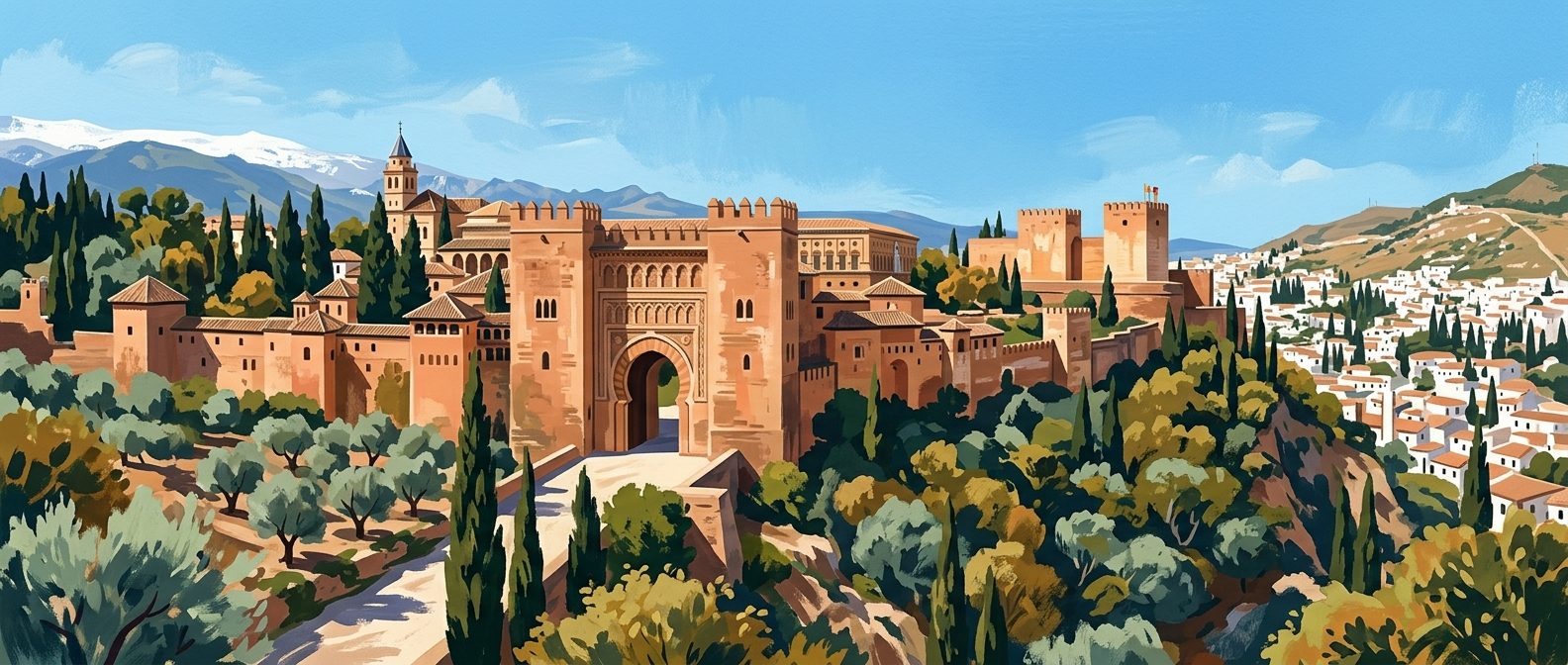
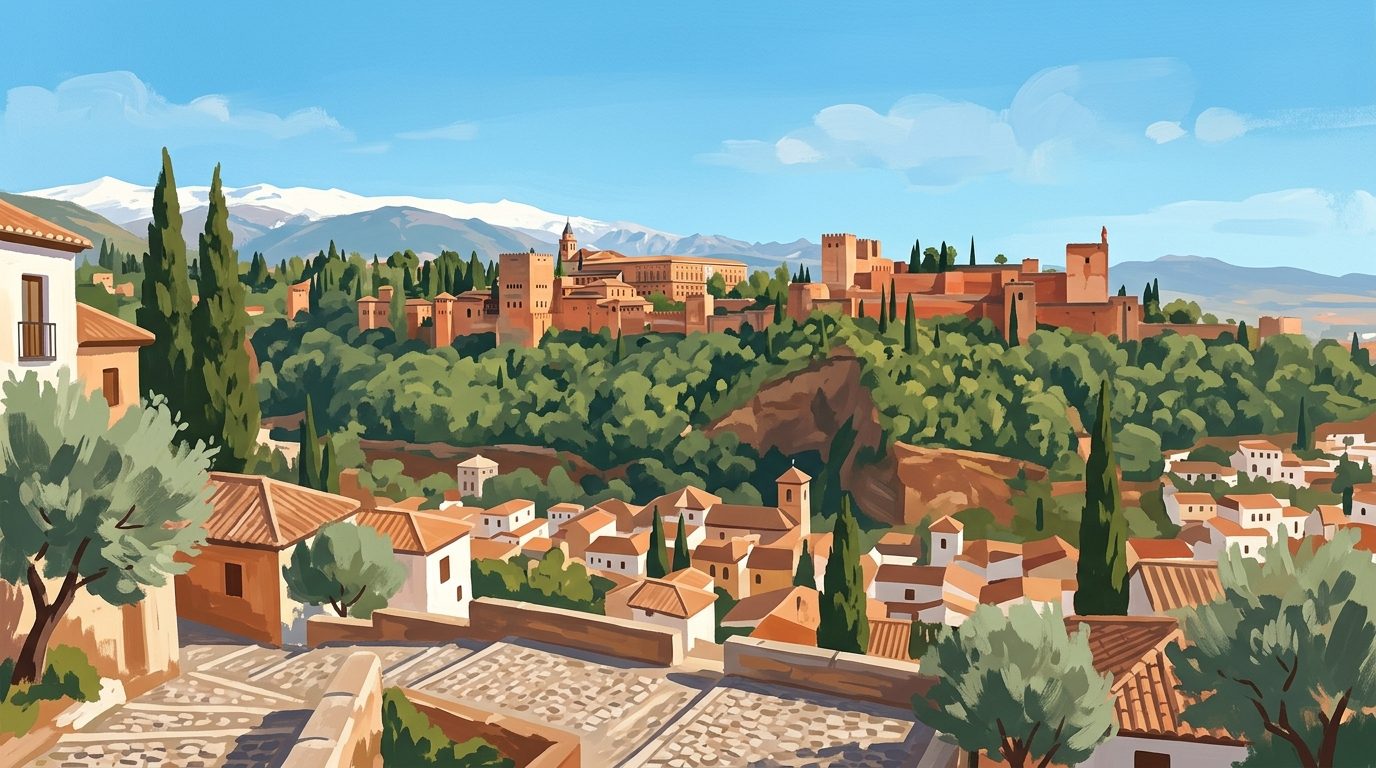
Exiting the palaces naturally deposits visitors into the Partal gardens, a quiet space to reflect on the dense architecture just experienced. To fully understand the broader context of the site, spend the rest of the day exploring the wider fortress grounds using a guide to the Alhambra and Generalife. Alternatively, view the fortress from afar by exploring the Albaicín, Granada’s medieval Moorish quarter on the opposite hill. For an overview of how these diverse neighbourhoods connect, read about navigating the highs and lows of Granada city.
Nearby worth your time
A few well-placed stops for extending the day without turning it into a checklist.

Continue through Granada City
Step back into the wider landscape with local guides, nearby places and the province overview.
Place guide · 7 min
Playa de Calahonda (Granada) Beach Guide
Playa de Calahonda in Granada offers deep, crystal-clear waters and a dramatic limestone cliff backdrop. This Blue Flag beach is a favourite for snorkelling and authentic Andalucían seafood.
Place guide · 7 min
A Guide to Playa de Salobreña on the Costa Tropical
Playa de Salobreña is a vast stretch of dark sand and clear water on the Costa Tropical, overlooked by a historic Moorish castle and dramatic cliffs.
Itinerary · 10 min
Two Days in Granada: A Step-by-Step Itinerary
Two days in Granada gives you just enough time to explore the Alhambra and lose yourself in the steep alleys of the Albaicín. This itinerary balances major monuments with the city's legendary free tapas culture.