
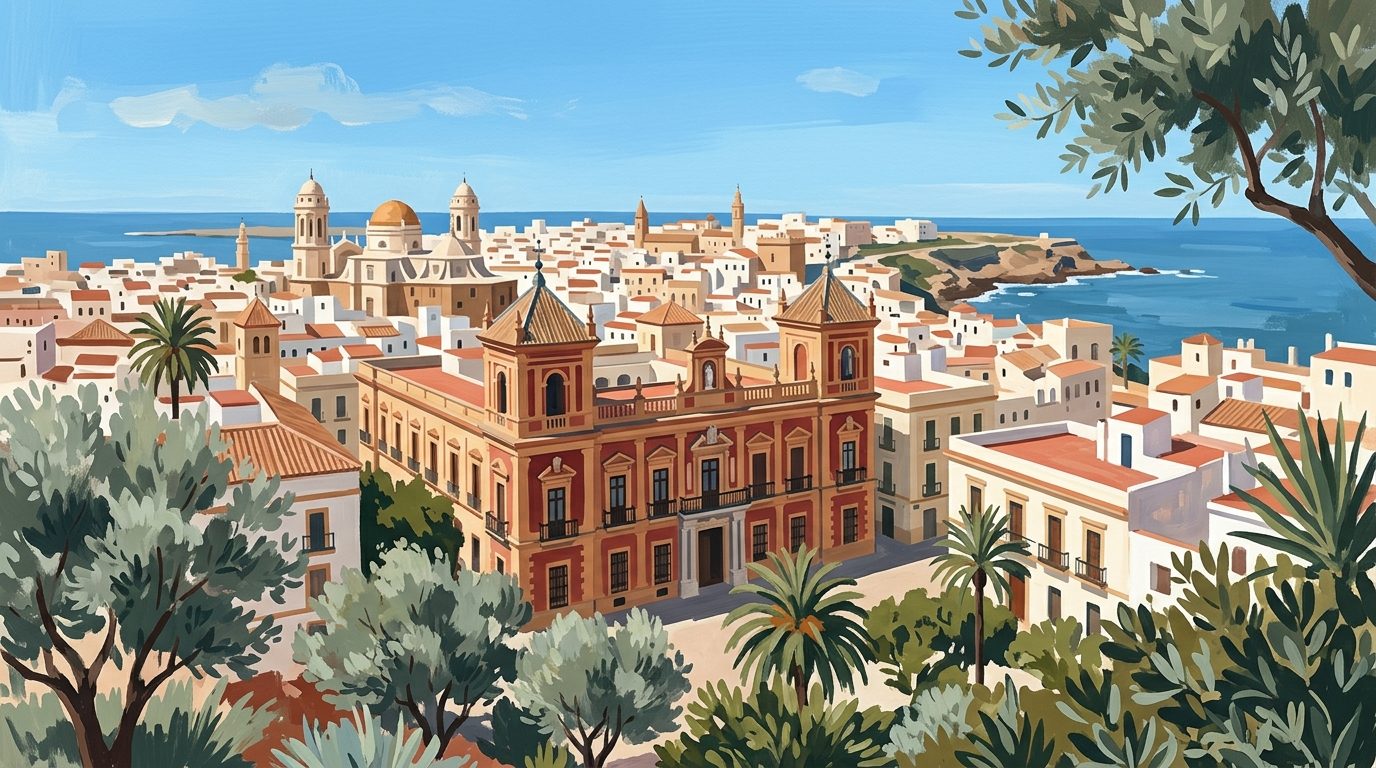
attraction · Cádiz
Palacio del Virrey Laserna
Andalucía 365 · Updated 18 July 2026
Our Verdict
“The Palacio del Virrey Laserna offers a rare, authentic glimpse into the private world of the Andalucían aristocracy. Far from a sterile museum, this continuously inhabited family home pairs exceptional art by Rubens and Murillo with fascinating colonial history. It is an essential stop for anyone wanting true historical context in Jerez.”
Last verified: July 2026
Beyond a Neoclassical façade on Calle Pozuelo in the centre of Jerez de la Frontera, visitors step into an aristocratic residence belonging to a single family since the thirteenth century. The Palacio del Virrey Laserna offers an authentic look into the lives of the Andalucían nobility. Unlike historic buildings converted into exhibition spaces, this house remains a living family home, filled with centuries of accumulated art, antique furnishings, and military heirlooms. The scent of old paper, polished wood, and courtyard jasmine grounds the experience. For independent travellers interested in architecture and the complex legacy of the Spanish Empire, this property provides an intimacy that municipal museums rarely match.
A Lineage of Noble History
The palace traces its origins to the Christian reconquest of Jerez in 1264. Following the capture of the city from Moorish forces, King Alfonso X distributed properties to loyal knights. This central plot was handed to Basco Martínez Trujillo, an ancestor of the current owners. Today, the building serves as a continuous bridge between medieval Andalucía and the colonial era of the Spanish Empire. Walking through the halls provides a tangible connection to the past, as the guides are often family descendants who share personal anecdotes and explain how the household survived centuries of political upheaval. The survival of such an estate, passing from parents to children without interruption, remains a remarkable feat.
Art and Interiors
The guided route through the property leads visitors into a series of opulent state rooms, where grand Neoclassical proportions meet heavy Spanish oak and delicate Isabelline decoration. Over the generations, the family has amassed a formidable private collection of European art. The walls display exceptional religious and classical works, including pieces attributed to masters such as Bartolomé Esteban Murillo, Peter Paul Rubens, and Francisco de Zurbarán.
Guests observe a formal dining room set with fine porcelain, arranged as if awaiting a gala dinner. The private library holds centuries of family archives and bound leather volumes. A grand marble staircase anchors the house, while French tapestries, Flemish paintings, and curious antiquities add layers of texture to the reception rooms. Visitors should pay close attention to the ornate ironwork and detailed timber ceilings, which highlight the exceptional local craftsmanship funded by agricultural wealth.
The Count of the Andes
Much of the historical narrative within the palace centres on General José de la Serna y Martínez de Hinojosa, the first Count of the Andes. Born in this very house in 1770, he rose through the military ranks during the Peninsular War, eventually travelling to the Americas to become the final Spanish Viceroy of Peru.
The rooms house a fascinating collection of his personal artefacts, including military uniforms, campaign maps, and colonial memorabilia brought back across the Atlantic. Rather than a detached museum display, the objects are presented as family heirlooms, illustrating exactly how the wealth and influence of the South American colonies filtered back into the architecture and lifestyle of southern Spain. It is a nuanced look at a complicated period, offering perspectives on governance and military strategy from the viewpoint of the aristocracy.
Courtyards and Architecture
The current Neoclassical exterior, created during a comprehensive eighteenth-century remodelling, conceals much older foundations. Investigations have revealed Moorish structural remnants beneath the current floor plan, confirming that an important Islamic building once stood on this prominent site near the Alcázar.
The central courtyard remains a classic example of traditional Andalucían design. Shaded by ancient walls, cooled by potted plants, and anchored by a central water feature, this outdoor space offers a quiet retreat from the fierce midday heat. The courtyard layout reflects the practical need to manage the severe summer climate while providing a private, secure heart for the family compound. Elaborate wooden doors and decorative ceramics further emphasise the historic wealth of the estate.
Practical Information
Access to the interior is by guided tour, as the property continues to function as a private residence. The route involves navigating staircases and historic thresholds, so visitors with mobility requirements should contact the venue in advance to discuss access to the upper floors.
The tours provide deep context that you would miss wandering alone. You can find up-to-date information regarding tours, accessibility, and admission on the official Palacio del Virrey Laserna website.
What to Do Nearby
The palace is located in the pedestrianised centre of Jerez, just a short walk from the monumental Alcázar and the striking cathedral. It makes an excellent starting point for exploring the wider city. To understand the local wine culture and aristocratic heritage, read our guide to Jerez de la Frontera, which details the historic sherry bodegas and elite equestrian schools.
After touring the palace, you can seek out traditional tapas in the surrounding streets. Our local dining guide for Jerez highlights the best tabancos for sampling sherry straight from the cask. If you are planning a broader trip along the Atlantic coast, the city serves as a perfect inland base. You can easily incorporate Jerez into a wider Costa de la Luz road trip, contrasting the refined palaces of the interior with the wild beaches of the Cádiz shoreline.
Nearby worth your time
A few well-placed stops for extending the day without turning it into a checklist.

Continue through Costa de la Luz
Step back into the wider landscape with local guides, nearby places and the province overview.
Place guide · 7 min
Playa de La Caleta: A Guide to the Historic Heart of Cádiz
Playa de La Caleta is a historic urban bay in Cádiz, famous for its calm waters, ancient fortresses, and the stunning white Balneario spa building.
Place guide · 7 min
Playa de los Caños de Meca: A Guide to the Cádiz Coastline
Discover the wild Atlantic beauty of Playa de los Caños de Meca, from its freshwater springs to the historic Cape Trafalgar lighthouse.
Itinerary · 7 min
Three Days in Cadiz: The Ultimate Itinerary for Independent Travellers
Three days allows you to completely sink into the maritime rhythm of Europe's oldest city. You can cover the historic centre, explore the twin seaside fortresses, and still have time for a sherry tasting afternoon across the bay.