

attraction · Cádiz
Parque Genovés
Andalucía 365 · Updated 18 July 2026
Our Verdict
“This historic romantic garden is a shaded counterpoint to the sunlit stone streets of Cádiz. Its sculpted cypress topiary, unusual global planting and playful waterfall grotto make it much more than a convenient rest stop. Allow time to wander rather than treating it as a shortcut to La Caleta.”
Last verified: July 2026
The sharp scent of Atlantic sea spray mingles with the damp earth of shaded parterres at the northwestern edge of the Cádiz peninsula. Bounded by the ocean on one side and a dense urban grid on the other, this expansive public garden offers a welcome shift in temperature. For travellers navigating the sun-bleached streets of Cádiz, the thick canopy of exotic flora provides immediate relief, serving as a barrier against coastal winds and a living museum of global botany.
A Botanical Legacy of Maritime Trade
In the late eighteenth century, this exposed coastal strip was a bleak military buffer zone known as the Paseo del Perejil, a nod to its sparse vegetation. Its transformation began during the nineteenth century, culminating in an 1892 redesign initiated by the city's mayor, Eduardo Genovés i Puig, whose name the site now bears. Rather than acting as a gardener, the mayor championed the overhaul as a civic project, utilizing landscape architect Ramón Oliva to design the romantic layout.
The city's status as a gateway to the Americas directly influenced the ambitious planting scheme, with returning ships bringing back seeds, cuttings, and saplings. Today, this microclimate supports more than 150 species of trees and shrubs. Visitors will find towering Washingtonia palms, ancient Canary Island dragon trees, and impressive New Zealand pohutukawas. These global specimens thrive in an environment sheltered by high perimeter walls yet shaped by the relentless coastal winds of Andalucía.
The Cypress Topiary and Formal Promenades
The layout balances rigid horticultural geometry with the stylised elements of Victorian-era wilderness. The central promenade is immediately recognisable by its striking double row of cypress trees, meticulously sculpted into sharp spirals, stacked discs, and intricate geometric forms. This grand botanical corridor draws visitors deeper into the grounds, where the impact of the salt-laden air is softened, replaced by the scent of fresh pine and damp soil.
La Gruta and the Romantic Landscape
Away from the main avenue, asymmetrical pathways encourage aimless wandering. The most prominent feature of this looser design is La Gruta, an artificial lake complex constructed from highly porous local fossilised limestone (piedra ostionera). A cascading waterfall feeds a permanent pond inhabited by ducks, while a few eccentric dinosaur models standing in the water add a playful touch to the rockery.
Visitors can climb stone stairs through the artificial cave system to an elevated viewing platform, offering excellent views over the parterres toward the Atlantic. Scattered throughout the foliage are classical monuments, including a tribute to botanist José Celestino Mutis. You will also encounter the beloved Niños del Paraguas fountain, depicting the characters Paul and Virginia from an 1788 French novel. The sculpture on display is a replica installed in 2020; the fragile 1878 original by Andrea Boni is safely preserved indoors.
Preserving the Garden Against the Atlantic
Maintaining a manicured garden mere metres from Atlantic waves is an ongoing struggle, as salt-laden winds and winter storms continually test the vegetation. The city has responded with phased restoration of gates, irrigation, paths and weathered oyster-stone borders, alongside work on the neighbouring theatre and Santa Bárbara pergola. These projects can temporarily affect individual entrances or corners of the park, so treat any hoarding as part of the long-term conservation effort rather than a sign that the whole garden is closed.
Practical Advice for Visitors
The central avenues are flat and fully accessible for wheelchairs and pushchairs, though the rough stone steps climbing La Gruta are not. Broad, hard-packed earth paths ensure comfortable walking elsewhere, but sensible shoes are recommended near the damp waterfall area.
Because the gates are occasionally locked during high winds for public safety, visitors should verify opening hours via the official botanical heritage website before setting out. Entry is completely free. An hour is sufficient to admire the key botanical specimens, explore the topiary, and climb the grotto, though many visitors linger at the shaded on-site café.
What to Do Nearby
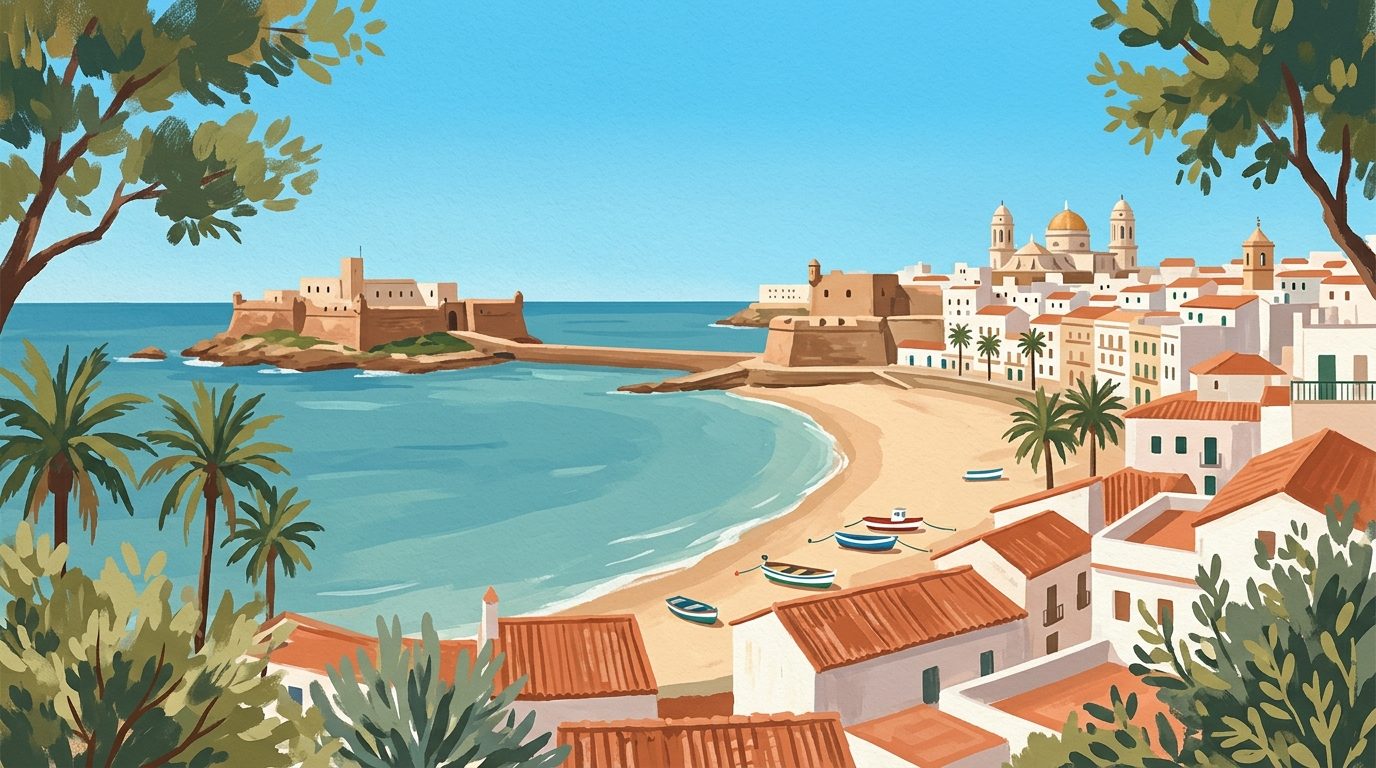
The garden’s location makes it a natural starting point for exploring the historic coastal perimeter. Exiting via the southern gates puts you on a direct path toward the old military fortresses guarding Playa de La Caleta, the city's beloved urban beach.
From the sands of La Caleta, you can walk into the narrow streets to explore the historic heart and Atlantic shores of Cádiz. Pair this peaceful green space with an afternoon at Cádiz Cathedral and Torre Tavira to complete a day spanning both natural tranquility and monumental heritage.
Nearby worth your time
A few well-placed stops for extending the day without turning it into a checklist.


Continue through Cádiz City
Step back into the wider landscape with local guides, nearby places and the province overview.
Place guide · 7 min
Playa de La Caleta: A Guide to the Historic Heart of Cádiz
Playa de La Caleta is a historic urban bay in Cádiz, famous for its calm waters, ancient fortresses, and the stunning white Balneario spa building.
Place guide · 7 min
Playa de los Caños de Meca: A Guide to the Cádiz Coastline
Discover the wild Atlantic beauty of Playa de los Caños de Meca, from its freshwater springs to the historic Cape Trafalgar lighthouse.
Itinerary · 7 min
Three Days in Cadiz: The Ultimate Itinerary for Independent Travellers
Three days allows you to completely sink into the maritime rhythm of Europe's oldest city. You can cover the historic centre, explore the twin seaside fortresses, and still have time for a sherry tasting afternoon across the bay.