
attraction · Cádiz
Parque González Hontoria
Andalucía 365 · Updated 18 July 2026
Our Verdict
“Parque González Hontoria is an essential stop to understand the social and equestrian traditions of Jerez. While undeniably at its peak during the May horse fair, its wide, shaded avenues and historic ironwork provide a peaceful, accessible retreat year-round.”
Last verified: July 2026
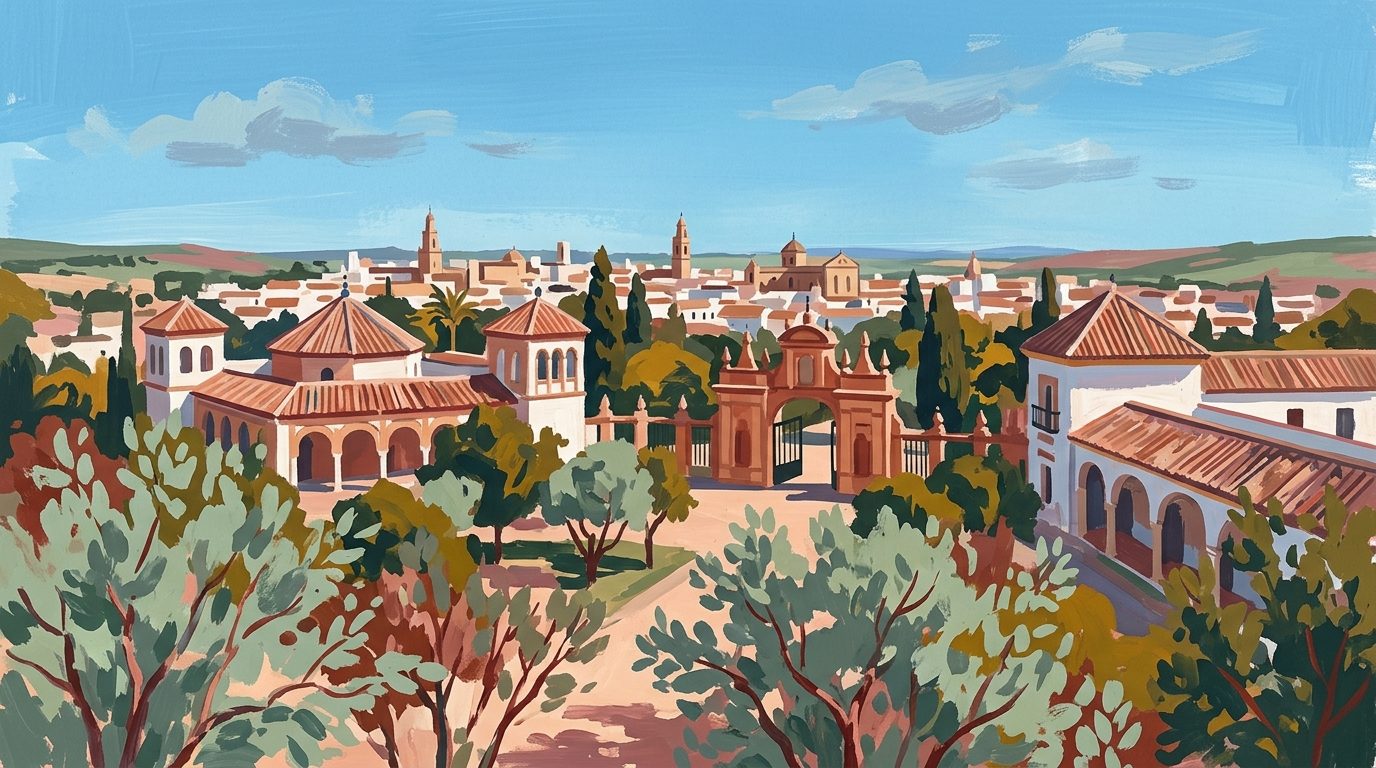
Parque González Hontoria is defined by its wide, dusty avenues lined with towering palm trees and the faint scent of jacaranda blossoms in late spring. It is not a traditional landscaped English garden. Instead, it is a dual-purpose urban space in Jerez de la Frontera, shifting between a shaded daily retreat and the grand stage for one of Andalucía's most significant equestrian festivals. Inaugurated in 1902 under Mayor Julio González Hontoria, the grounds were laid out specifically to accommodate annual horse and cattle markets. Today, it remains the permanent home of the celebrated Feria del Caballo. For independent travellers, the park offers a fascinating window into early twentieth-century urban planning and a vast expanse of green space away from the dense historic centre.
A Landscape Built for Assembly
Unlike parks designed purely for quiet contemplation, the layout of Parque González Hontoria prioritises movement, visibility and mass congregation. Two main perpendicular axes, the Avenida de las Palmeras and the Calle Real, form the architectural spine of the park. The sheer scale of these wide, paved walkways reflects their primary historical purpose, which was to accommodate elegant horse-drawn carriages and thousands of pedestrians simultaneously. As you walk through the grounds, the strict symmetry of the formal 1900s landscaping reveals itself. The width of the avenues provides a sense of openness that contrasts sharply with the narrow, winding alleys of medieval Jerez.
Botanical Variety and Essential Shade
While the park serves as a massive event space, it is also one of the most critical green lungs in the northern district of the city. The botanical history here dates back to 1898, when an initial planting of five hundred oriental plane trees marked the city's first Arbor Day. Today, the park features a diverse canopy that provides essential shade during the intense summer heat of the province of Cádiz. You will walk beneath towering palms, robust ficus trees and colourful jacarandas that drop lilac blossoms onto the paths. This extensive tree cover makes the park a highly reliable retreat for residents seeking cooler air in the late afternoon.
Surviving Iron Architecture
The permanent structures scattered throughout the park hint at its festive role and surprising architectural pedigree. In 1903, the prominent local architect Francisco Hernández-Rubio designed a series of permanent iron pavilions and kiosks for the fairground. Hernández-Rubio was a leading figure in the modernist architecture of Andalucía, and his ironwork introduces subtle elements of organic decoration and industrial design into the park. While many original structures have evolved or disappeared, the surviving metallic frameworks provide a glimpse into the bourgeois sociability of the early twentieth century. These structural details reward visitors who take the time to look beyond the foliage.
The Impact of the Feria del Caballo
For fifty-one weeks of the year, Parque González Hontoria operates as a quiet local amenity. However, during the Feria del Caballo in May, it undergoes a total physical transformation. The park becomes a temporary city of canvas and timber, illuminated by over a million individual lights. Hundreds of temporary marquees, known locally as casetas, line the avenues. Notably, unlike the exclusive private tents of the Seville fair, the vast majority of casetas in Jerez are entirely public and open to all visitors. This inclusive approach makes the event highly accessible for international travellers. During the day, the avenues are filled with riders in traditional dress and intricate carriage displays, turning the park into a living museum of equestrian heritage.
Practical Information and Accessibility
The park sits in the northern district of the city, anchoring the end of the Avenida Alcalde Álvaro Domecq. The terrain is remarkably flat, featuring wide paved avenues that provide excellent accessibility for wheelchair users, pushchairs and visitors with limited mobility. The ground is firm and even, making for a straightforward and unchallenging walk. Street parking exists in the surrounding residential grid, though spaces fill rapidly during municipal celebrations. Entry to the park is free, but access parameters shift during the May festival. For general visitor information, check the official Jerez Tourism website.
Nearby Combinations and Further Exploration
A visit to Parque González Hontoria pairs logically with the equestrian institutions located immediately next door. The Depósito de Sementales, a historic equine facility featuring a 1905 pavilion also designed by Hernández-Rubio, borders the park and regularly hosts carriage exhibitions and equestrian events. Just a short walk away is the elite Royal Andalusian School of Equestrian Art, making this northern neighbourhood the true epicentre of horse culture in Jerez de la Frontera. After exploring the green spaces, you can wander back towards the historic centre to experience the traditional sherry tabancos outlined in our guide to eating and drinking in Jerez. If you are exploring the wider region, the city serves as a convenient starting point for a broader Costa de la Luz road trip, eventually leading to coastal seafood capitals like El Puerto de Santa María.
Nearby worth your time
A few well-placed stops for extending the day without turning it into a checklist.
Continue through Costa de la Luz
Step back into the wider landscape with local guides, nearby places and the province overview.
Place guide · 7 min
Playa de La Caleta: A Guide to the Historic Heart of Cádiz
Playa de La Caleta is a historic urban bay in Cádiz, famous for its calm waters, ancient fortresses, and the stunning white Balneario spa building.
Place guide · 7 min
Playa de los Caños de Meca: A Guide to the Cádiz Coastline
Discover the wild Atlantic beauty of Playa de los Caños de Meca, from its freshwater springs to the historic Cape Trafalgar lighthouse.
Itinerary · 7 min
Three Days in Cadiz: The Ultimate Itinerary for Independent Travellers
Three days allows you to completely sink into the maritime rhythm of Europe's oldest city. You can cover the historic centre, explore the twin seaside fortresses, and still have time for a sherry tasting afternoon across the bay.