
attraction · Jaén
Paseo de la Constitución
Andalucía 365 · Updated 18 July 2026
Our Verdict
“The Paseo de la Constitución trades the silent grandeur of the cathedral quarter for working municipal life. While modern shopfronts dilute its historical origins, the 2026 renovation successfully revitalised the space with modern infrastructure. It remains an essential, accessible baseline for understanding how this Renaissance city actually functions today.”
Last verified: July 2026
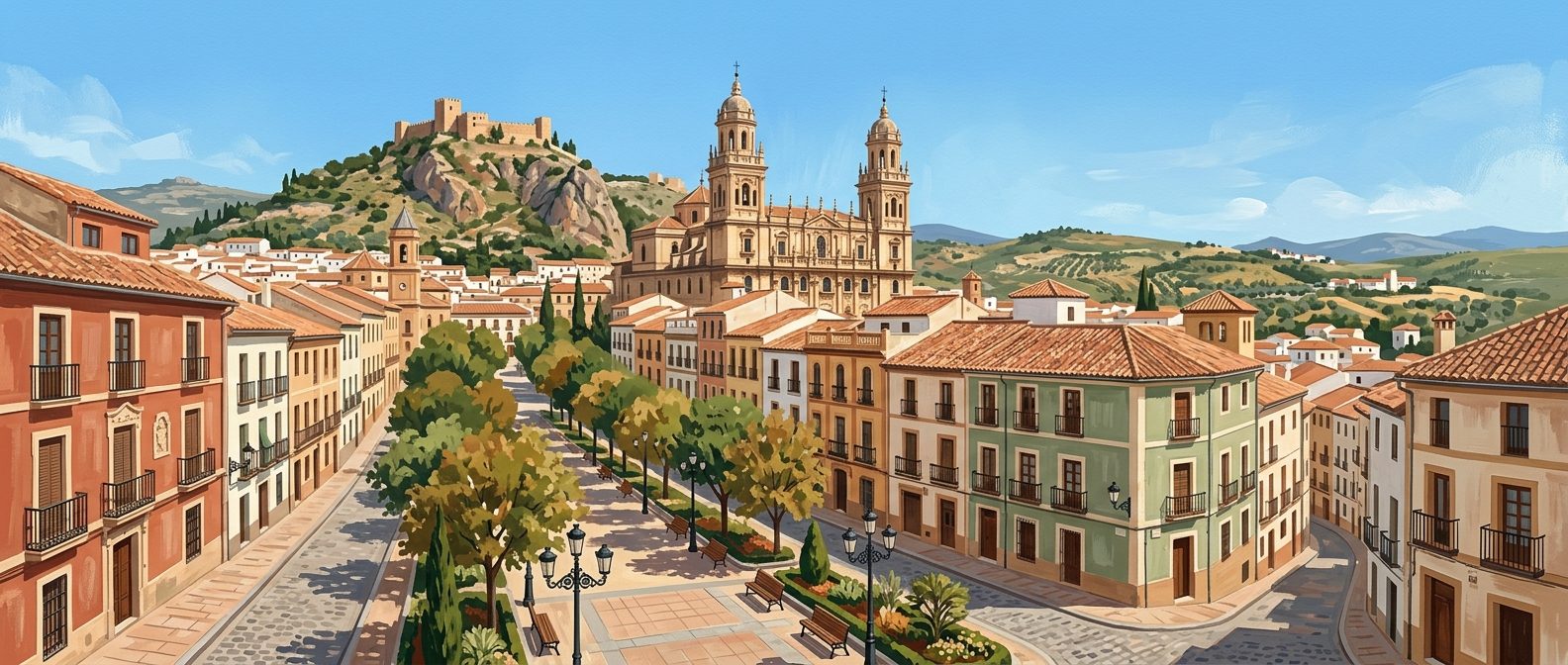
The golden sandstone arches of the Paseo de la Constitución glow under the strong Andalucían sun, throwing deep, sharp shadows across the broad pavement. This long, rectangular promenade acts as the commercial and social spine of Baeza, cleanly separating the dense medieval core from the later civil expansions of the city. Originally known as the Plaza del Mercado, this expansive flat ground was where local guilds once gathered to trade grain, livestock, and artisan goods. Today, the rhythmic clinking of coffee cups and the low hum of local conversation have replaced the shouts of merchants, but the space retains its formidable historical weight.
For anyone exploring Baeza, the Paseo provides crucial context. It illustrates exactly how the city evolved from a rugged defensive hilltop stronghold into a wealthy, sophisticated provincial hub during the Spanish Renaissance. While the monumental cathedral quarter higher up the hill can feel like a silent open-air museum, the Paseo remains a working, breathing urban space that connects the ancient past to the daily routines of the present.
The Portales and Civil Architecture
The edges of the promenade are defined by a long, continuous sequence of covered walkways known as the Portales. These arcades were deliberately constructed to shield merchants and shoppers from the intense summer heat and the heavy winter rains of the Jaén province. As you walk beneath the heavy timber beams and precise stone arches, you pass traditional balconies and wrought-iron grilles that define regional domestic architecture.
Several significant civil buildings anchor the space, reflecting centuries of urban administration. The most prominent is La Alhóndiga, a grand 16th-century structure originally built as a municipal granary and grain exchange. Its sturdy, unadorned facade is a superb example of early Spanish Renaissance utilitarian design, built to project authority and reliability. Further along stands the Balcón del Concejo, a municipal building completed at the beginning of the 18th century specifically to provide local dignitaries with an elevated vantage point for viewing bullfights, processions, and public festivals held in the square below.
Monuments of the Promenade
The central pedestrian reservation is punctuated by several striking monuments that break up the long linear perspective. Towards the middle of the Paseo stands the Fuente de la Estrella, an obelisk-style fountain inaugurated in 1868 to commemorate the Glorious Revolution. Its unusual twenty-one-pointed star design reflects 19th-century liberal symbolism, serving as a reminder of the complex political shifts in southern Spain.
Nearby, surrounded by tall palm trees that provide a splash of dark green against the golden stone, rises the Monument to the Triumph of the Immaculate Conception. This 17th-century baroque column was relocated to the Paseo in 1986, adding necessary vertical drama to the flat expanse of the square. A much later addition is the Kiosco de la Música, a circular bandstand constructed in 1951 by municipal architect Ambrosio del Valle. It continues to host occasional performances and serves as a highly visible meeting point for local families taking their evening stroll.
A Major Urban Renovation
The Paseo has always adapted to the changing administrative needs of its citizens. The city has completed a comprehensive renovation of the entire area. Financed by European Next Generation funds through the Group of World Heritage Cities, this massive civil project unified the pedestrian surfaces, upgraded the public paving with characteristic local calcareous sandstone, and modernised the utilities and LED lighting. By retaining two lanes for local traffic, the redesign maintained the functional balance of the area. The result is a much cleaner, highly accessible public space that better respects the architectural heritage of the surrounding buildings. This bold project demonstrates how carefully Baeza manages its inheritance.
An Honest Assessment
Previous travel materials have frequently confused the geography of this area, incorrectly placing the famous Fountain of the Lions within the Paseo itself. In reality, that fountain sits in the adjoining Plaza del Pópulo, which historically served as an extension of the market but now functions as a completely distinct space.
The Paseo is undeniably commercial and busy. It lacks the absolute architectural purity of the Plaza de Santa María, and its ground floors are occupied by banks, pharmacies, and modern retail units. However, this functional reality is precisely its value. It provides a comfortable, highly accessible environment to observe real Andalucían life within a UNESCO World Heritage site. Visitors who prefer untouched historical ruins might find the modern cafe umbrellas distracting, but those who appreciate layered urban history will find the blend of centuries deeply interesting.
Practical Information
As a central public thoroughfare, the Paseo de la Constitución is fully accessible, flat, and paved with smooth stone, making it an excellent starting point for visitors using wheelchairs or dealing with mobility concerns. The promenade is a public thoroughfare, but visitors should check directly with individual businesses before relying on their trading times.
Many of the ground-floor shops specialise in the region's famous Picual extra virgin olive oil. For travellers navigating The Ultimate Andalucían Olive Oil Route, this is an excellent place to sample and purchase local harvests directly from producer cooperatives. Before finalising your itinerary or planning a guided visit, always consult the official Baeza tourism portal for current opening times, temporary local closures, and seasonal event schedules.
Combining Your Route
The Paseo serves as the perfect logistical hub for exploring the wider Jaén province. It makes an excellent, level base camp before tackling the steeper, cobbled streets of the monumental zone. Start your morning here with a strong coffee, then walk to the immediate west to enter the Plaza del Pópulo. From there, you can pass beneath the Puerta de Jaén and ascend towards the Cathedral, the Old University, and the magnificent Gothic facade of the Palacio de Jabalquinto. Alternatively, you can easily pair your visit with a short drive to experience the sister city of Úbeda, comparing the layout of the two monumental centres as part of a wider exploration of the golden stone cities of the region.
Nearby worth your time
A few well-placed stops for extending the day without turning it into a checklist.
Continue through Renaissance Cities
Step back into the wider landscape with local guides, nearby places and the province overview.
Things to do · 12 min
Golf in Jaén Province: A Practical Guide to Courses, Clubs, and Holidays
Discover the reality of playing golf in Jaén. From the 9-hole course at La Garza to local societies and combining rounds with olive oil tourism.
Nature & wildlife · 7 min
Sierra de Cazorla: Spain's Largest Protected Area
Covering over 200,000 hectares of rugged limestone peaks and deep river canyons, the Sierra de Cazorla forms the green heart of the Iberian Peninsula.
Itinerary · 11 min
5 Days in Jaén: Renaissance Cities and Cazorla
A realistic five-day driving itinerary through Jaén province, balancing the monumental Renaissance architecture of Úbeda and Baeza with the rugged mountain wilderness of the Sierra de Cazorla.