
attraction · Cádiz
Playa de La Caleta
Andalucía 365 · Updated 18 July 2026
Budget
Our Verdict
“Playa de La Caleta trades pristine isolation for deep historic resonance. Enclosed by monumental fortresses and backed by a traditional fishing quarter, this urban beach offers a densely social window into local life. Come for the military architecture, the maritime heritage, and sheer cultural immersion.”
Last verified: July 2026
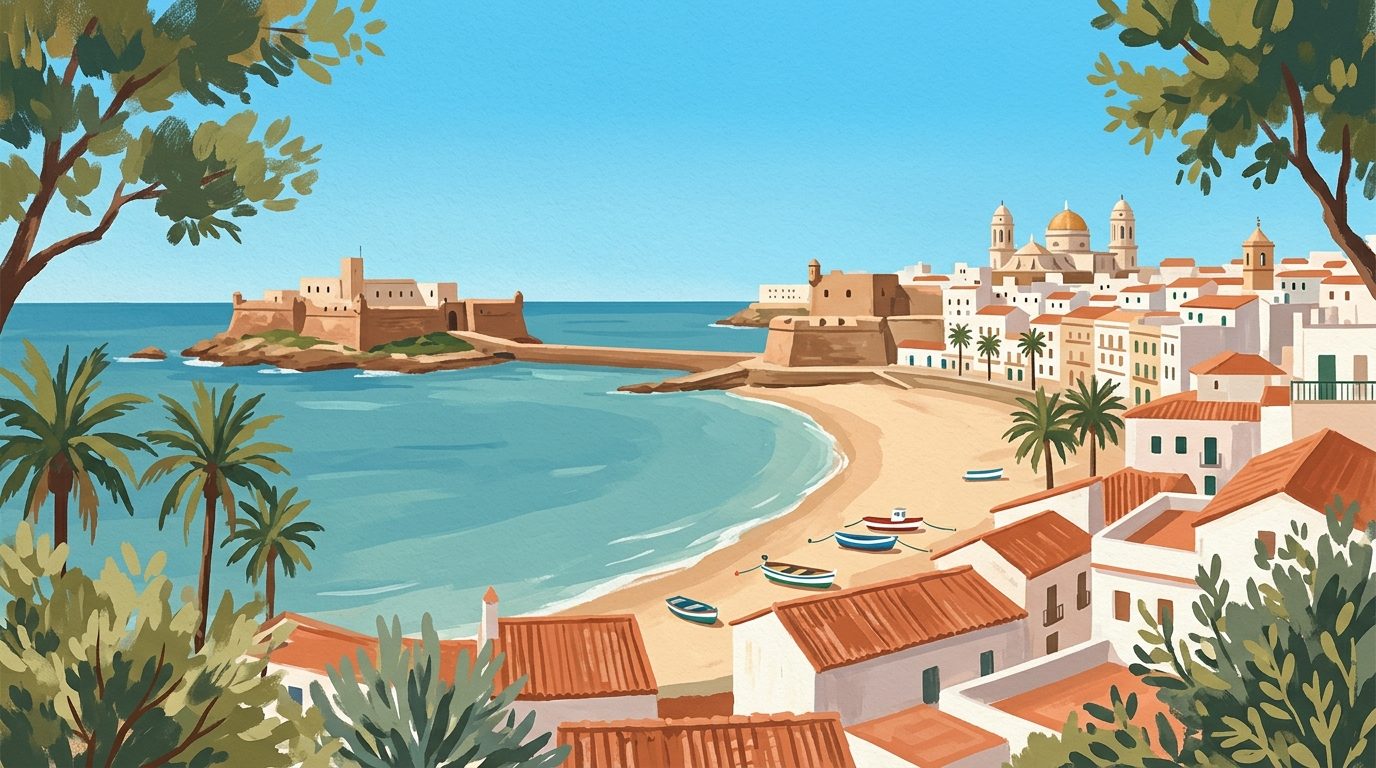
The crescent of Playa de La Caleta sits firmly anchored between two heavy stone fortresses, acting as a deep Atlantic inlet where fishing boats nod in the swell. The scent of salt and fried fish hangs heavy in the air. Today, this stretch of sand remains the most socially significant corner of the city, serving as an open-air living room for the residents of the historic Barrio de la Viña. Unlike the sprawling resort beaches of the newer municipal districts, La Caleta is an urban beach steeped in maritime heritage. For travellers seeking a genuine cultural experience and the clearest expression of daily life in Cádiz, a visit to this shoreline is indispensable.
A Natural Harbour for Millennia
Long before it became a place of leisure, this coastal inlet served as the primary natural entrance from the open sea into the Bay of Cádiz. Archaeological evidence indicates that Phoenician traders founding Gadir and later Roman galleys supplying Gades used this sheltered cove as a critical anchorage point. The seabed between the two flanking fortresses holds the highest concentration of underwater archaeological sites on the local coast. Many ancient artifacts recovered from these waters are now heavily studied and preserved. This deep historical resonance distinguishes La Caleta from typical Mediterranean beaches; it is a working seascape that has actively participated in European maritime trade for over three thousand years.
The Historic Fortifications
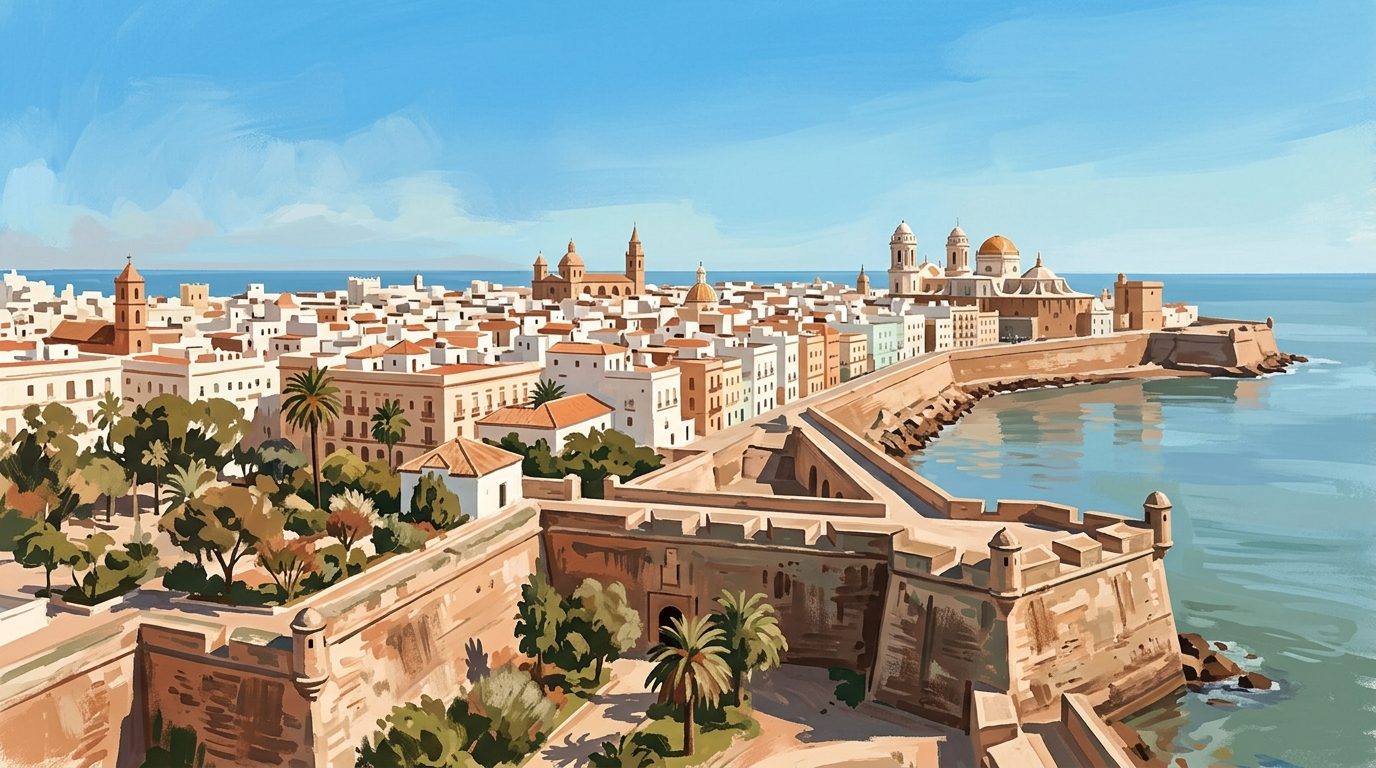
The military architecture framing the beach provides both structure and historical context. To the north, the Castillo de Santa Catalina guards the shoreline. Following the devastating Anglo-Dutch sack of the city in 1596, King Philip II commissioned military engineer Cristóbal de Rojas to construct this defensive star fort. Today, it stands as a highly preserved example of late 16th-century military engineering, its austere stone walls frequently hosting art exhibitions and cultural events. To the south, the Castillo de San Sebastián occupies a small island where ancient tradition places a temple dedicated to Kronos. The fortress complex and its prominent lighthouse undergo periodic administrative handovers. As such, visitors should consult the official municipal tourism website for admission policies before making the journey out to the island.
The Centennial Balneario
The focal point of the shoreline is the white-washed Balneario de Nuestra Señora de la Palma y del Real. Inaugurated in 1926 to replace older wooden bathhouses, the building reflects the early 20th-century Spanish fascination with coastal health spas. Designed by architect Enrique García Cañas, the pavilion features a distinctive crescent shape with graceful arched galleries that seem to embrace the sea. Completed in 1926, the building enjoys protected cultural status and houses the Andalucían Centre for Underwater Archaeology. While public entry to the interior remains largely restricted, the exterior commands the sand and provides welcome shade beneath its sweeping wings.
The Local Fleet and Tidal Pools
Scattered directly in front of the pavilion, a small fleet of traditional wooden fishing boats remains moored. These small vessels, anchored by heavy stones in the customary manner, reinforce the working nature of the bay and supply the nearby taverns with local catches. The physical geography of the beach changes dramatically with the tides. During low tide, the receding water reveals an extensive network of rock pools. Generations of local families have mapped this rocky expanse, assigning traditional names to specific stones and pools. This intimate relationship with the intertidal zone highlights how thoroughly integrated the beach is into the daily rhythms of the adjacent neighbourhoods.
Carnival and Local Traditions
The atmosphere at La Caleta shifts profoundly depending on the season. During the height of the summer, the sand is densely packed with local families setting up camp with parasols, folding tables, and coolers. The natural shelter provides calm water for swimming, making it highly practical for a quick dip after exploring the heavy stone streets of the old town. However, the beach takes on a completely different character during the cooler months. In February or March, the adjacent streets of the Barrio de la Viña become the absolute epicentre of the Cádiz Carnival. Satirical singing groups spill out of the neighbourhood taverns, frequently using the beachfront promenade as an impromptu stage.
How to Visit and Accessibility
Playa de La Caleta is thoroughly integrated into the historic centre and is best reached on foot. It lies just a short walk from the central market and the primary plazas. The promenade running above the beach is wide, flat, and paved, offering excellent accessibility for wheelchairs and pushchairs. Ramps provide step-free access down to the sand. To reach the Castillo de San Sebastián, visitors must walk the Paseo Fernando Quiñones, a long stone causeway. This path routinely takes heavy spray from the Atlantic waves and can become extremely slippery when wet, requiring sturdy footwear and a windbreaker to handle the coastal breezes.
Sensible Nearby Pairing
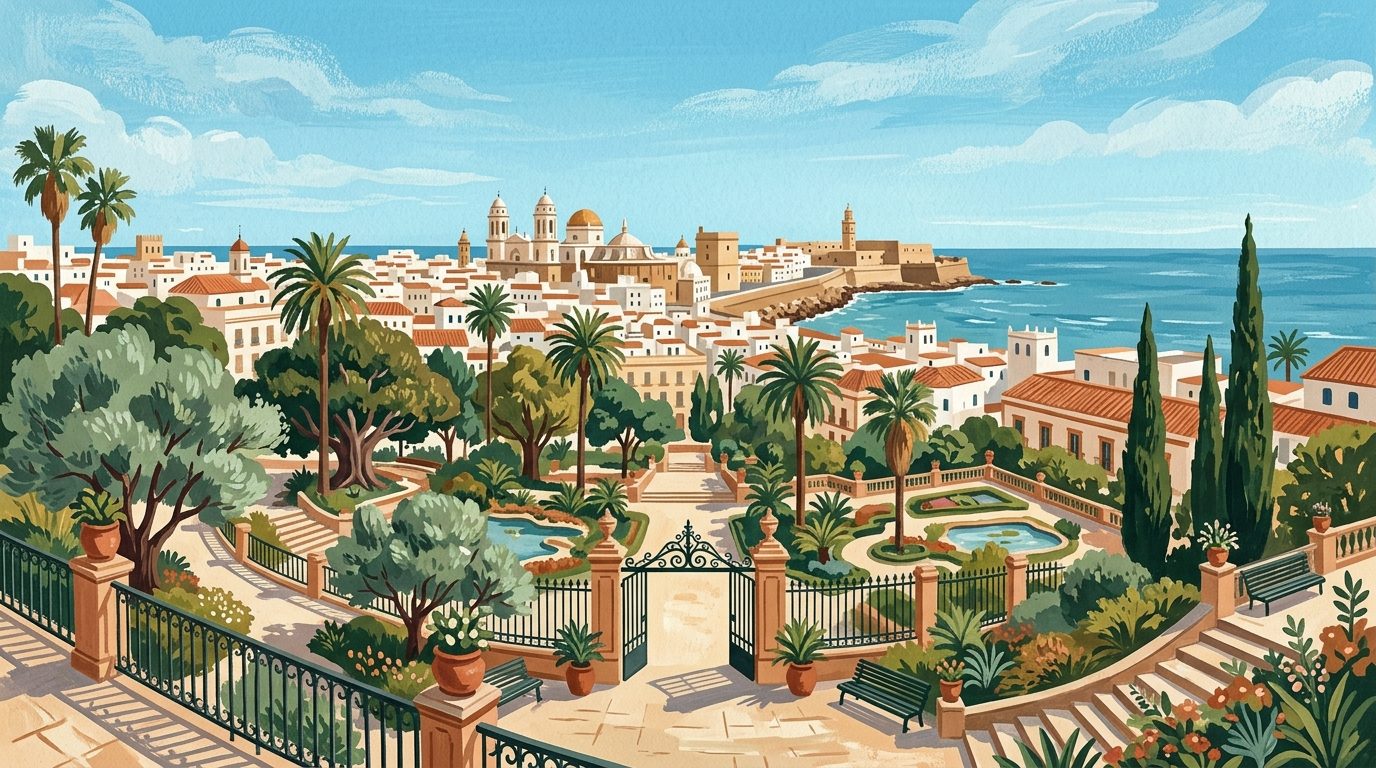
To build a complete itinerary around your visit, pair a late afternoon swim at La Caleta with a comprehensive exploration of the wider historic core. The historic heart of Cádiz features a complex network of narrow alleys that funnel the sea breeze. After drying off, walk back through the Barrio de la Viña for a dinner of traditional fried fish. Alternatively, head deeper into the old town to climb the Torre Tavira. As detailed in our guide to Cádiz Cathedral and Torre Tavira, the camera obscura offers a comprehensive view of the peninsula, allowing you to see exactly how La Caleta forms the natural waist of the city.
Nearby worth your time
A few well-placed stops for extending the day without turning it into a checklist.
Continue through Cádiz City
Step back into the wider landscape with local guides, nearby places and the province overview.
Place guide · 7 min
Playa de La Caleta: A Guide to the Historic Heart of Cádiz
Playa de La Caleta is a historic urban bay in Cádiz, famous for its calm waters, ancient fortresses, and the stunning white Balneario spa building.
Place guide · 7 min
Playa de los Caños de Meca: A Guide to the Cádiz Coastline
Discover the wild Atlantic beauty of Playa de los Caños de Meca, from its freshwater springs to the historic Cape Trafalgar lighthouse.
Itinerary · 7 min
Three Days in Cadiz: The Ultimate Itinerary for Independent Travellers
Three days allows you to completely sink into the maritime rhythm of Europe's oldest city. You can cover the historic centre, explore the twin seaside fortresses, and still have time for a sherry tasting afternoon across the bay.