
attraction · Málaga
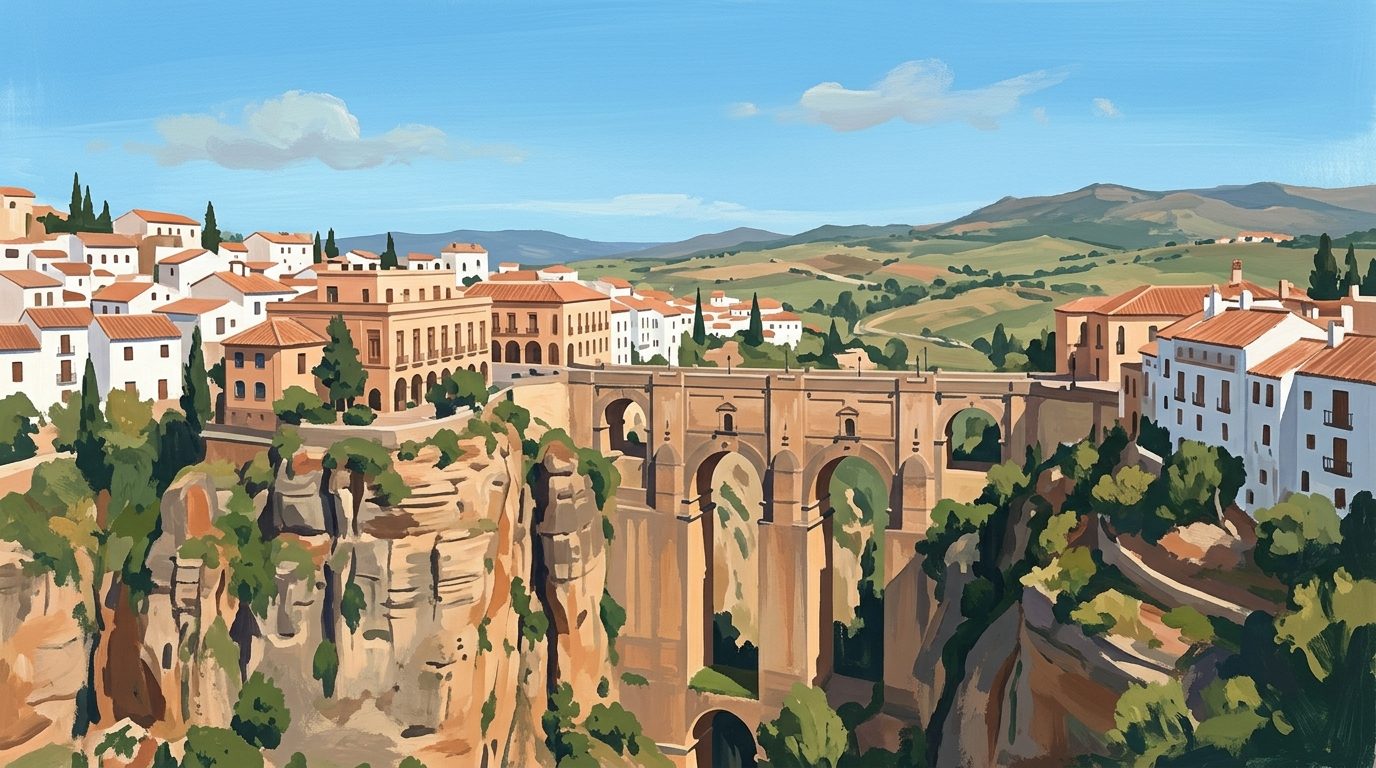
Puente Viejo
Andalucía 365 · Updated 18 July 2026
Our Verdict
“The Puente Viejo offers a more grounded, intimate perspective of Ronda's formidable geography than its famous 18th-century neighbour. While the steep, polished cobblestones demand physical effort, the descent rewards independent travellers with quieter viewpoints, remarkable architectural history, and a stark understanding of the city's medieval isolation.”
Last verified: July 2026
An Enduring Arch Over the Guadalevín
Spanning a 10-metre gap exactly 31 metres above the rushing waters of the Guadalevín river, the Puente Viejo is a resilient piece of Ronda's urban history. While documentary evidence of its exact origins remains scarce, architectural historians widely believe the foundation dates back to the Islamic era, when it served as a vital link across the Tajo gorge. The river, however, is prone to violent winter swells, and the original Moorish structure was severely damaged multiple times. The bridge visitors walk across today is the result of a comprehensive reconstruction completed in 1616, following a devastating flood that swept through the lower valley. For centuries, its unadorned, utilitarian masonry served as the primary gateway connecting the medieval Moorish settlement of La Ciudad with the expanding Mercadillo district to the north. Today, it stands as a quiet testament to the city's geographical constraints and the constant engineering required to overcome the forces of the Guadalevín.
The Legacy of a Fallen Successor
The history of the Puente Viejo is inextricably linked to the famous bridge further up the gorge. In fact, this 17th-century structure was known locally as the 'New Bridge' right up until the early 18th century, a title it lost only when an ambitious project began higher up the cliffs. When the first iteration of that massive upper bridge tragically collapsed in 1741, plunging masonry and people into the ravine, all cross-city traffic was suddenly forced back down into the lower gorge. This unexpected surge in daily use prompted the immediate construction of the Arco de Felipe V in 1742 to better manage the flow of goods and citizens. This monumental double-ashlar stone arch, topped with three distinctive pinnacles, still stands at the southern approach. Look closely at its outer face to spot the carved shell of the Anjou dynasty and the royal shield of the Bourbons, marking the exact moment when the old route temporarily regained its absolute vital status.
What Visitors Actually See
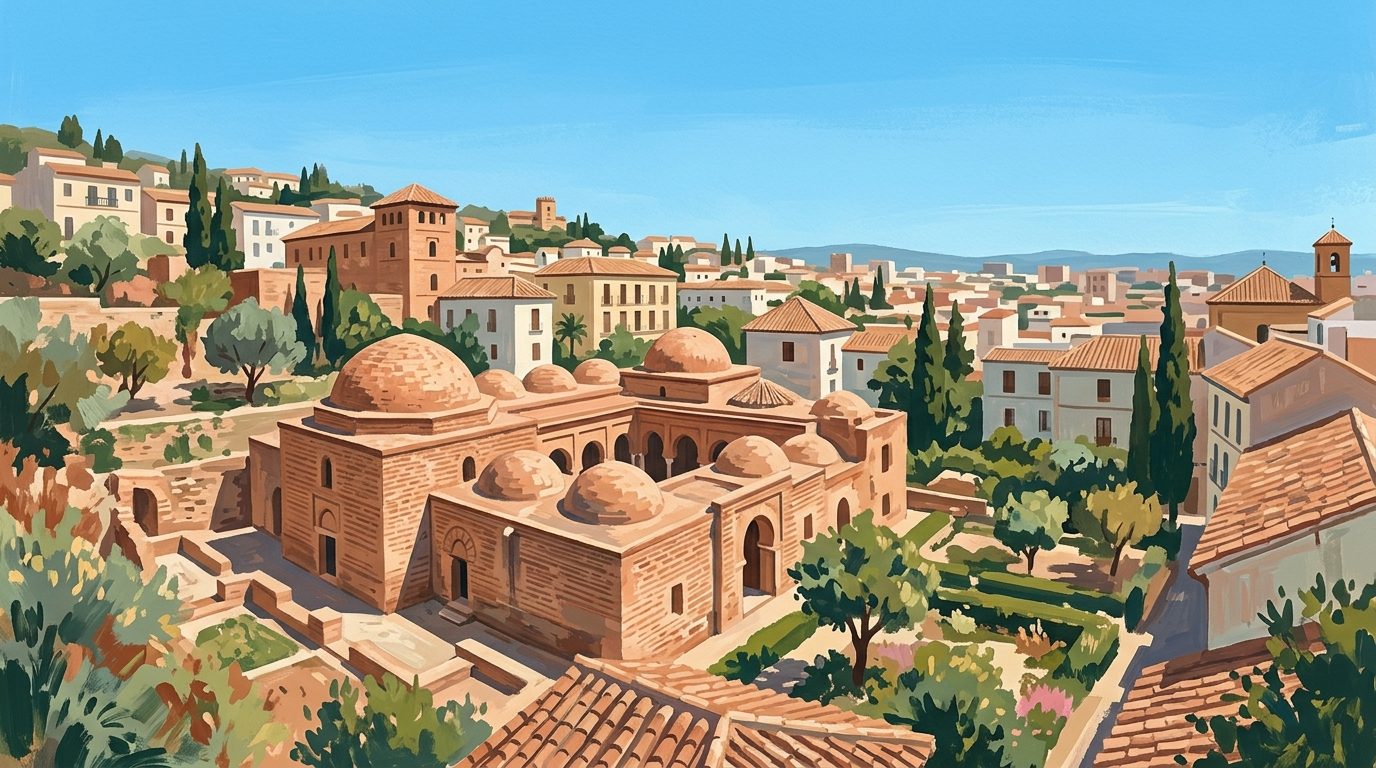
Approaching on foot, travellers first pass through the imposing Arch of Felipe V before stepping onto the historic stone paving. The bridge offers an entirely different perspective of Ronda compared to the dizzying upper viewpoints. From this lower elevation, the sheer verticality of the cliffside architecture is much more apparent, allowing visitors to appreciate the stratigraphy of the rock faces. Looking upwards, the terraced Jardines de Cuenca cling tightly to the eastern precipice. These gardens are planted with cypress and notable specimens of the rare Spanish fir, providing a welcome splash of dark greenery against the pale limestone. Looking downwards toward the riverbank, the remarkably intact Baños Árabes sit just above the water line. This positioning makes absolute logical sense from this vantage point, as it marks the exact spot where medieval travellers would have paused to wash and refresh themselves before climbing the steep paths into the fortified medina. Looking further upstream along the valley floor, you can spot the much smaller Puente Romano, completing the trio of historical crossings that span the gorge.
A Candid Assessment
Because it sits considerably lower in the valley and requires genuine physical effort to reach, the Puente Viejo entirely escapes the dense tour groups that crowd the upper balconies of the city. It offers a more intimate, human-scale perspective of the Tajo gorge. The views of the towering cliffs are narrower here, but they provide a far better understanding of how incredibly difficult it was to breach this stronghold in Andalucía in the pre-industrial era. The stonework is heavily weathered, and there is little in the way of interpretation or signage on the bridge itself, leaving the surrounding landscape to provide the historical context. It rewards independent travellers who prefer to read the history of a city through its surviving infrastructure rather than museum display boards.
How to Visit and Accessibility
The crossing is a public pedestrian thoroughfare, accessible entirely on foot from either side of the gorge. Travellers can reach it by descending the steep Cuesta de Santo Domingo from the modern town centre, or by following the lower streets from the Padre Jesús neighbourhood, starting near the historic Fuente de los Ocho Caños. The terrain consists of severe gradients and highly polished cobblestones, which become remarkably slippery after rain or morning dew. Supportive walking shoes with good grip are absolutely essential. Those with mobility issues, joint problems, or reduced stamina may find the steep return climb to the Plaza de España prohibitively difficult. There are no facilities or shaded seating directly on the bridge. Before attempting the descent, visitors should confirm live access details, especially during periods of heavy winter rain when lower paths can flood, via the official Turismo de Ronda website.
Who It Suits and Nearby Pairings
This route strongly appeals to active walkers, photographers seeking alternative angles of the gorge, and history enthusiasts interested in the city's layered urban evolution. It is not suitable for visitors looking for a quick, effortless viewpoint. A walk across the Puente Viejo naturally pairs with a tour of the adjacent Arab Baths and a slow climb up through the Jardines de Cuenca to enjoy the changing perspectives. This bridge is a profound highlight for anyone exploring the dramatic clifftop city of Ronda. For those journeying further, the city serves as a perfect launchpad into the rugged hinterland of Málaga, or north to Antequera with its remarkable limestone karst formations. Visitors arriving from the coastal resorts can consult our broader area guide to the Costa del Sol Occidental to trace the fascinating transition from the Mediterranean shoreline up to these demanding mountain elevations.
Nearby worth your time
A few well-placed stops for extending the day without turning it into a checklist.
Continue through Inland Málaga
Step back into the wider landscape with local guides, nearby places and the province overview.
Place guide · 7 min
Playa de Burriana: A Guide to Nerja's Premier Beach
Discover Playa de Burriana, the most iconic beach in Nerja, known for its wide sands, excellent chiringuitos, and clear waters on the Costa del Sol.
Place guide · 7 min
Playa de Cabopino: Dunes, Pines and Clear Waters near Marbella
A protected enclave of natural dunes and fine sand situated between Marbella and Fuengirola. This coastal stretch offers a rare glimpse of the original Mediterranean landscape.
Itinerary · 13 min
One Week in Ronda: A Seven-Day Itinerary for the Serranía
A seven-day stay in Ronda allows you to experience the deep gorge and ancient streets long after the day-trippers have left. Using the city as a base, you can easily explore the surrounding white villages, hike the Sierra de las Nieves, and settle into the true rhythm of mountain life.