
attraction · Jaén
Sacra Capilla del Salvador
Andalucía 365 · Updated 18 July 2026
Budget
Our Verdict
“The Sacra Capilla del Salvador is a masterpiece of Spanish Renaissance architecture that demands attention. While the walkable footprint is small, the sheer density of world-class stonework by Vandelvira and Siloé makes it an essential stop for anyone exploring the golden heritage of Jaén.”
Last verified: July 2026
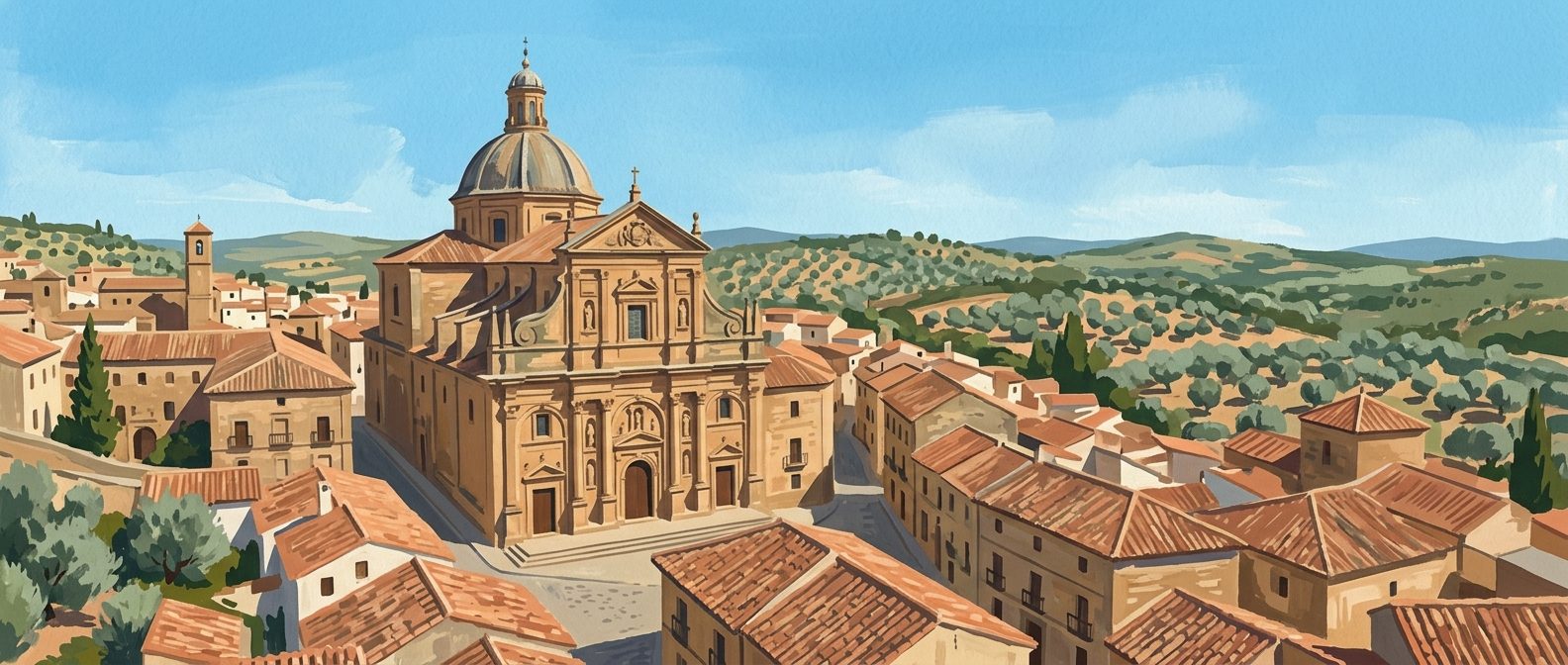
Stepping onto the stone expanse of Plaza Vázquez de Molina, your eye is immediately drawn to a towering triumphal arch rendered in honey-coloured sandstone. This is the main façade of the Sacra Capilla del Salvador, arguably the finest private religious building of the Spanish Renaissance. Commissioned in 1536, it was the personal project of Francisco de los Cobos, the notoriously ambitious and powerful secretary to Emperor Charles V. Eager to secure his legacy and demonstrate his immense wealth, Cobos employed the greatest architects and artists of his era to create a funerary chapel that would rival the monuments of the Italian nobility. The resulting structure remains an essential stop for anyone exploring the architectural heritage of Úbeda and the wider province of Jaén.
The Weight of Imperial Ambition
The chapel serves as a physical manifestation of sixteenth-century power. Francisco de los Cobos spent years travelling through Italy on imperial business, absorbing the humanist ideals and classical aesthetics of the Renaissance. He wanted his final resting place to reflect this newfound classical vocabulary rather than the Gothic traditions still prevalent in Spain at the time. To realise his vision, he hired Diego de Siloé to design the master plan and the brilliant local architect Andrés de Vandelvira to execute the construction from 1540 onwards. The building matters today because it perfectly illustrates the transition of Spanish architecture into the Renaissance era. It showcases an intricate balance between religious devotion and blatant humanistic self-promotion, asserting the status of the Cobos and Mendoza families for eternity.
What You Will See
Approaching the building, the Plateresque main façade demands close inspection. Carved with exceptional precision by the French sculptor Esteban Jamete, the stonework functions as a massive triumphal arch. You will see elaborate sculptures depicting scenes from the Transfiguration alongside mythological figures, blending Christian iconography with classical themes in a highly unusual programmatic display. The coats of arms belonging to the Cobos and Mendoza families are prominently displayed, a stark reminder of the patrons who funded the work.
Inside, the transition from the relatively sober rectangular nave to the spectacular circular main chapel is striking. This layout directs your gaze immediately to the high altar, which is dominated by a monumental wooden altarpiece by Alonso Berruguete depicting the Transfiguration. Although the piece suffered damage during the Spanish Civil War and required later restoration by Juan Luis Vasallo, its power and scale remain deeply impressive. Separating the nave from this main altar is a magnificent wrought-iron screen, known as a reja. Crafted by Francisco de Villalpando in 1555, it stands as an undisputed masterpiece of Spanish metalwork.
The true architectural triumph, however, lies in the sacristy. Designed entirely by Vandelvira, this space is widely considered one of the most beautiful rooms in Andalucía. Vandelvira solved the complex technical challenge of a corner entrance with great elegance using advanced stereotomy techniques. The room features a series of intricate stone medallions and delicate carvings extending across the ceiling. Pale Jaén stone is used throughout, catching the light in a way that gives the space a warm, golden glow. It feels far more like a classical Roman temple than a functional church preparation room.
A Candid Assessment
This chapel is fundamentally a triumph of form and stone. Visitors expecting a vast museum experience might find it brief, as the walkable footprint is relatively compact. However, for those with even a passing interest in art history or architecture, it is an absolute priority. The density of masterful craftsmanship from Siloé, Vandelvira, Jamete and Berruguete in a single space is staggering. It is best approached not just as a church, but as a monumental piece of Renaissance sculpture that you can walk inside. The visit perfectly suits independent travellers interested in humanism, architectural photography, and the complex history of the Spanish Golden Age.
Accessibility and Terrain
The chapel is situated in the historic centre of Úbeda, which is largely pedestrianised and paved with uneven cobblestones and large stone slabs. Visitors with mobility issues should be aware that while the plaza itself is relatively flat, navigating the surrounding historic streets requires comfortable footwear and careful attention. The interior of the chapel is mostly on a single level, allowing straightforward access to the main nave and the sacristy. The lighting inside can occasionally be low to protect the artworks, and careful footing is advised when examining the architectural details up close.
Practical Planning
As a private foundation managed by the Casa Ducal de Medinaceli, the chapel occasionally adjusts its schedule for private events, concerts by its resident choir, or religious services. You must confirm current entry conditions, live schedules and admission protocols directly on the Fundación Casa Ducal de Medinaceli website before travelling.
Driving directly to the plaza is restricted to residents and authorised vehicles. The most practical approach is to leave your vehicle in the large public car park near the Santiago Hospital or along Calle Redonda de Miradores. From there, it is an enjoyable ten-minute walk through the historic streets to the chapel. When planning your day, allow 45 to 60 minutes for a thorough visit. Mid-morning is particularly rewarding, as the sunlight illuminates the deep carvings of the main façade.
Sensible Nearby Pairings
You cannot fully understand the architectural impact of Úbeda without visiting its sister city. The two municipalities share a joint UNESCO World Heritage designation and represent a combined peak of architectural achievement. A sensible pairing is exploring Baeza, located just a fifteen-minute drive away. While Úbeda reflects the private wealth of imperial administrators, Baeza offers a quieter, more ecclesiastical and educational atmosphere. Together, they define the broader Renaissance landscape of Jaén. After inspecting the golden stones of both towns, you might consider contrasting these urban masterpieces with the wild landscapes of the province, perhaps by exploring the best day trips from Jaén to see the vast olive groves, high mountain ridges and dramatic limestone gorges.
Nearby worth your time
A few well-placed stops for extending the day without turning it into a checklist.
Continue through Renaissance Cities
Step back into the wider landscape with local guides, nearby places and the province overview.
Things to do · 12 min
Golf in Jaén Province: A Practical Guide to Courses, Clubs, and Holidays
Discover the reality of playing golf in Jaén. From the 9-hole course at La Garza to local societies and combining rounds with olive oil tourism.
Nature & wildlife · 7 min
Sierra de Cazorla: Spain's Largest Protected Area
Covering over 200,000 hectares of rugged limestone peaks and deep river canyons, the Sierra de Cazorla forms the green heart of the Iberian Peninsula.
Itinerary · 11 min
5 Days in Jaén: Renaissance Cities and Cazorla
A realistic five-day driving itinerary through Jaén province, balancing the monumental Renaissance architecture of Úbeda and Baeza with the rugged mountain wilderness of the Sierra de Cazorla.