
attraction · Jaén
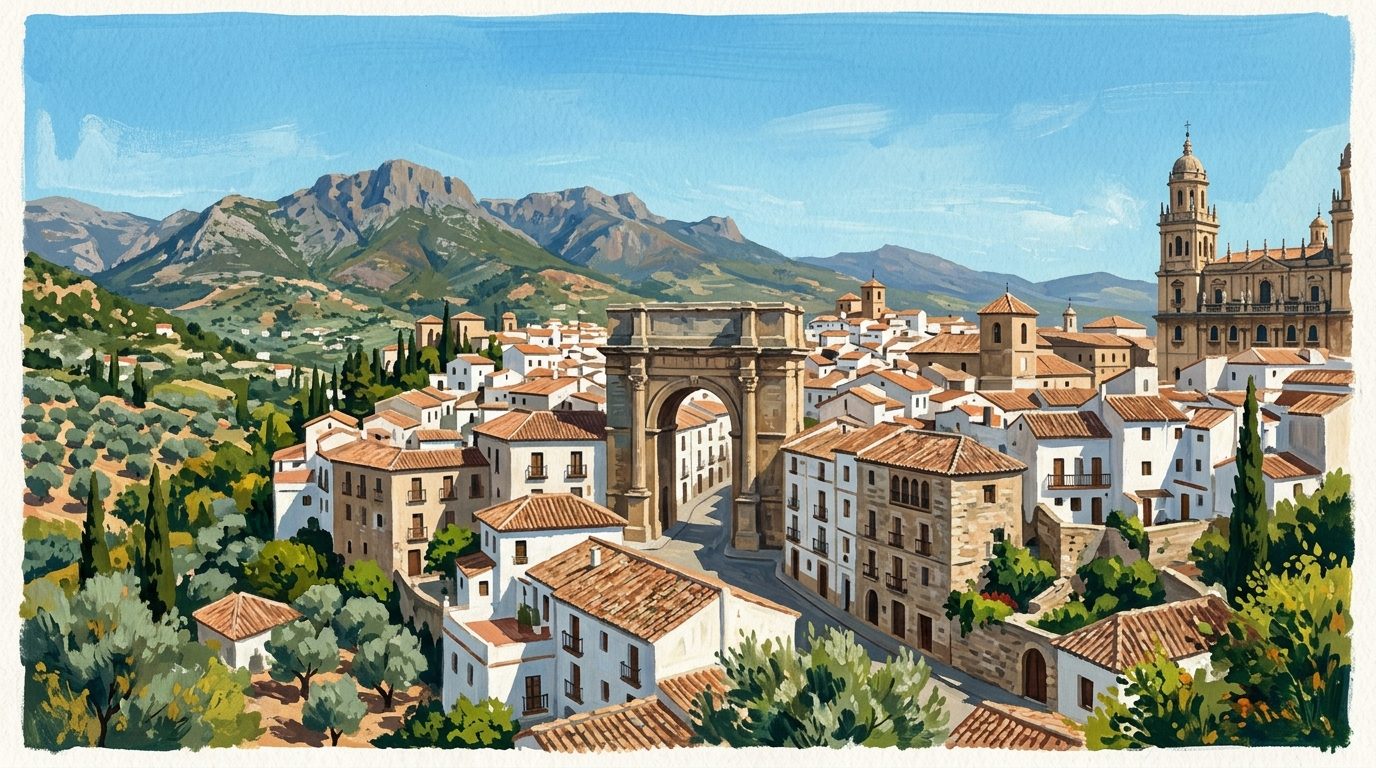
San Lorenzo's Arch
Andalucía 365 · Updated 18 July 2026
Our Verdict
“San Lorenzo's Arch is a tiny, powerful fragment of medieval Jaén. While its unpredictable opening times and limited size require patience, the intricate Mudéjar tilework and striking vaulted brick ceiling inside the chapel reward dedicated architecture enthusiasts with a quiet, concentrated glimpse into the city's layered past.”
Last verified: July 2026
The Final Remnant of a Medieval Parish
San Lorenzo's Arch spans a narrow street in the historic quarter of Jaén City, anchored by sturdy stone buttresses. This gateway is the sole architectural survivor of a parish church that collapsed in 1825. Built during the thirteenth and fourteenth centuries, the church once served as a focal point for the surrounding medieval neighbourhood. Today, the arch provides a tangible link to the lost urban fabric of old Jaén.
The site holds significant historical weight. Local tradition dictates that King Fernando IV of Castile, who died in Jaén, was waked or even temporarily buried within these walls. Recognising its architectural value, the state declared the arch a National Monument in 1877. Its survival is largely due to the dedication of local preservationists, particularly the Association of Friends of San Antón, who manage and maintain the site.
The Exterior Architecture and Streetscape
Approaching from street level, visitors can observe the pointed Gothic and Mudéjar styling that characterises the transitional period of architecture in Andalucía following the Christian Reconquest. The construction utilises a former defensive bastion that the church originally adapted into a sacristy. Its robust stone buttresses bridge the gap across the steep residential street, allowing pedestrians to pass beneath the heavy masonry.
The brickwork patterns visible on the facade demonstrate the enduring Moorish influence on Christian building techniques. The way the arch integrates into the tightly packed surrounding buildings highlights the dense, organic growth of Jaén over the centuries. Standing beneath the vaulted passageway offers a perspective on how religious structures often doubled as physical anchors in medieval urban planning.
Inside the Mudéjar Chapel and Sacristy
While the exterior is a robust example of medieval engineering, the interior reveals a highly concentrated display of decorative arts. The lower floor houses the former parish chapel, which remains remarkably well preserved. Stepping inside, the air cools and the sounds of the modern city fade away. The space holds only a handful of people at once, which heightens the atmosphere of quiet contemplation.
The chapel is a striking example of local Mudéjar craftsmanship. The focal point of the ceiling is a sturdy brick vault, finished with a central plasterwork pendant that draws the eye upward. The lower walls are clad in original Mudéjar tilework, adding bright geometric patterns to the dark interior. Above the tiles, intricate plasterwork reflects the cultural blend of the region after the Reconquest. A narrow staircase leads up to the second floor, offering a closer look at the pointed brick dome that covers the upper sacristy room.
A Candid Assessment of the Monument
San Lorenzo's Arch is not a sprawling heritage site that will occupy half of your day. It is a highly specific, very small historical fragment. Visitors looking for grand, sweeping palaces might find it underwhelming, as the accessible interior space is limited to just two small rooms. Furthermore, the reliance on volunteer management means that access to the interior can be unpredictable.
However, for those with a genuine interest in architecture or historic preservation, the arch is a deeply rewarding stop. The quality of the vaulted brick ceiling and the Mudéjar tiles inside the chapel easily rivals the details found in much larger monuments across Andalucía. The tight proportions of the interior create a sense of discovery, offering a stark contrast to the vast, open naves of the nearby Cathedral.
How to Visit and Accessibility
The arch sits on Calle Almendros Aguilar in the old quarter. Reaching the site requires navigating the historic centre of Jaén, which presents certain physical challenges. The streets here are steep, narrow, and paved with uneven cobblestones. Visitors should wear sturdy walking shoes. The walk from the Cathedral takes approximately five to ten minutes, but involves a continuous uphill gradient. Driving directly to the arch is impractical due to the pedestrianised zones. The most sensible option for motorists is to park at Plaza de la Constitución and walk the rest of the way.
Access to the interior chapel requires navigating a tight, historic staircase, meaning the interior is unfortunately not accessible for wheelchair users or those with significant mobility impairments. The exterior can be viewed from the public street at any time. Because volunteer groups manage the interior access, availability is heavily restricted. Visitors must always confirm live details, such as opening schedules and admission policies, on the official Jaén Tourism page before making the climb up the hill.
Who It Suits and Sensible Pairings
This monument strongly appeals to history enthusiasts eager to trace the architectural evolution of Andalucía. The prominent display of Mudéjar craftsmanship makes it an essential stop for architecture students and heritage professionals.
Given that a full visit to the arch takes only twenty to thirty minutes, it makes sense to combine it with other nearby heritage sites to create a comprehensive walking tour. For a deeper dive into the architectural contrasts of the city, walk back down the hill to explore Jaén Cathedral, a masterpiece of Renaissance proportion that replaced many of the city's smaller medieval parishes. Alternatively, continue uphill towards Santa Catalina Castle, which overlooks the city and offers a strategic perspective on the same medieval layout. To understand the wider transition of the region, reading about the Renaissance soul of Jaén City helps frame the timeline between the Moorish era, the Mudéjar transition, and the explosion of Renaissance wealth. To further explore the broader historical landscape, reading an insider's guide to Jaén Province provides excellent context.
Nearby worth your time
A few well-placed stops for extending the day without turning it into a checklist.
Continue through Jaén City
Step back into the wider landscape with local guides, nearby places and the province overview.
Things to do · 12 min
Golf in Jaén Province: A Practical Guide to Courses, Clubs, and Holidays
Discover the reality of playing golf in Jaén. From the 9-hole course at La Garza to local societies and combining rounds with olive oil tourism.
Nature & wildlife · 7 min
Sierra de Cazorla: Spain's Largest Protected Area
Covering over 200,000 hectares of rugged limestone peaks and deep river canyons, the Sierra de Cazorla forms the green heart of the Iberian Peninsula.
Itinerary · 11 min
5 Days in Jaén: Renaissance Cities and Cazorla
A realistic five-day driving itinerary through Jaén province, balancing the monumental Renaissance architecture of Úbeda and Baeza with the rugged mountain wilderness of the Sierra de Cazorla.