
attraction · Jaén
Sinagoga del Agua
Andalucía 365 · Updated 18 July 2026
Our Verdict
“The Sinagoga del Agua provides a profound, intimate contrast to Úbeda's grand Renaissance facades. While lacking definitive medieval documentation, its excavated mikveh and original columns offer a highly atmospheric, credible glimpse into Sephardic history. It is an essential, contemplative detour for anyone exploring Jaén's complex religious past.”
Last verified: July 2026
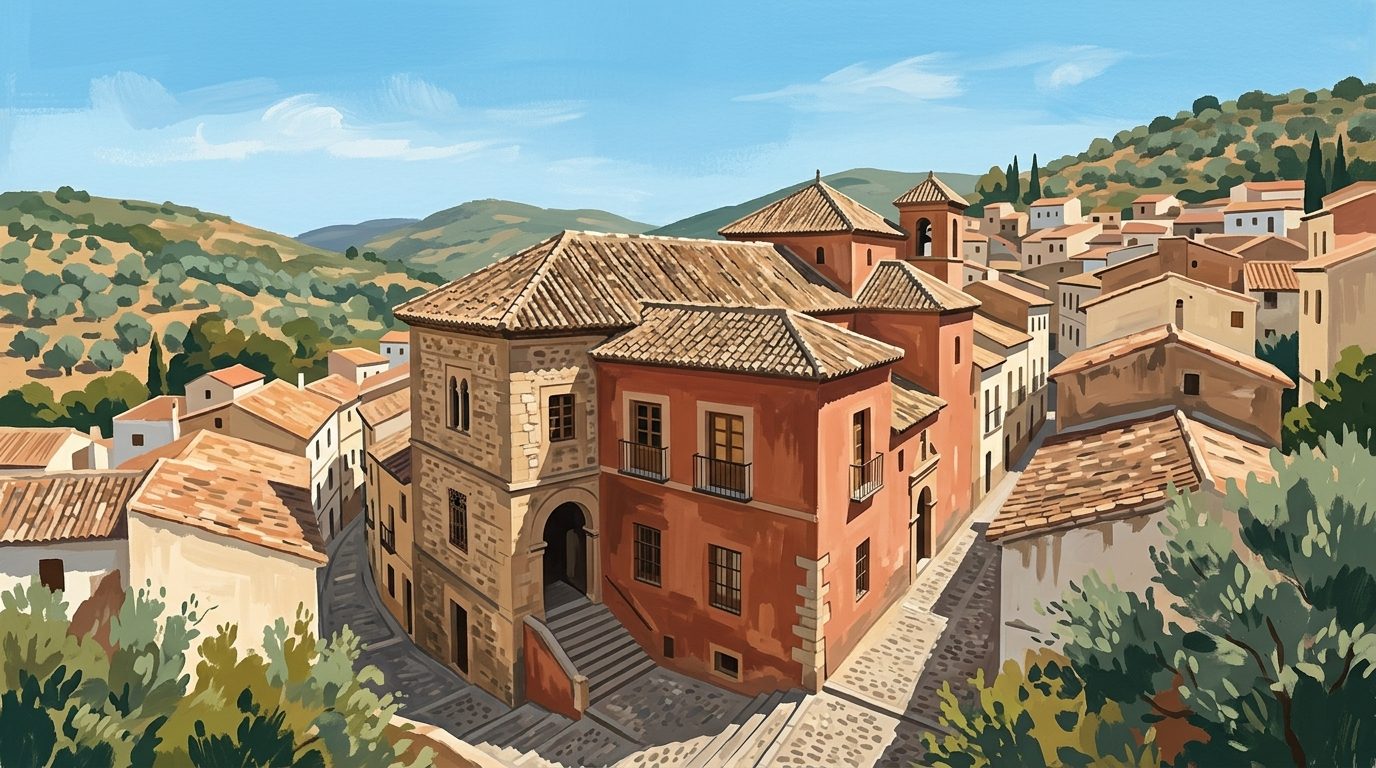
In 2007, a local entrepreneur named Fernando Crespo began clearing rubble from a cluster of old properties in the centre of Úbeda, intending to build apartments and a car park. As workers chipped away the debris, they exposed a bricked-up arcade. Demolition halted immediately. What emerged over three years of meticulous excavation was the Sinagoga del Agua, a medieval Sephardic site that had been absorbed into the residential fabric of the city and completely forgotten by history. Today, this subterranean space offers a profound, atmospheric counterweight to the grand squares that define a visit to Úbeda.
A Subterranean Journey
The descent into the Sinagoga del Agua is a physical journey through layers of Spanish urban evolution. Visitors first enter through the Inquisitor's Room. This space is named for its proximity to a neighbouring facade bearing the crest of the Holy Office. Historians suggest this crest was a deliberate stratagem by converted Jews to deflect suspicion, as Úbeda lacked an official seat of the Inquisition. Alongside the courtyard, ovens, and cellar, this area likely formed the rabbi's house.
Moving deeper, you reach an arcaded courtyard that divides the main sections of the building. Access to the main prayer hall is through the symbolically named Puerta del Alma (Door of the Soul). The most striking elements here are two original columns. Their capitals are carved with palm leaves, representing the Tree of Life, with seven branches evoking the Jewish menorah. These details, preserved behind false walls for centuries, point to a construction date before the fourteenth century.
Beyond the courtyard lies the main Prayer Room and the elevated Women's Gallery. Standing in these dimly lit chambers, visitors can appreciate the scale of the original building. The space is divided into three naves by pointed arches resting on pillars, maintaining an austere aesthetic. The Women's Gallery sits at a higher level, historically allowing women to observe liturgical ceremonies behind wooden lattices.
The Bodega and the Ritual Bath
Descending further into the complex, visitors encounter the cellar, which houses earthen jars once used to store essential provisions like olive oil. However, the architectural and spiritual core of the complex sits two levels below the street. Carved directly into the limestone bedrock, the mikveh, or ritual bath, remains intact. In accordance with Jewish law, a mikveh must be filled with 'living water', flowing naturally from a source. This chamber is fed by seven groundwater wells. The water remains crystalline, filling the stone basin exactly as it did centuries ago.
The Summer Solstice Alignment
The design reveals a highly sophisticated understanding of astronomy. For a few days around the summer solstice, a shaft of morning sunlight penetrates a high, narrow aperture. As the sun rises, the beam moves down the stone walls until it strikes the surface of the water in the darkness. Those travelling during this period, detailed in our guide to Jaén in June: Navigating the Golden Heat and High Sierras, can witness how the light momentarily illuminates the chamber, a deliberate alignment highlighting the medieval builders' mastery of natural elements.
A Candid Assessment
Most visitors travel to the region specifically for The Renaissance Splendour of Úbeda. The vast palaces and wide plazas designed by Andrés de Vandelvira represent the immense wealth and power of sixteenth-century Spain. The Sinagoga del Agua matters because it tells the earlier, quieter story of the people who were erased to make that monolithic culture possible.
It is a moving, deeply atmospheric site. However, no medieval documentation survives to explicitly confirm the building's original function, largely because the historical archive of Úbeda was destroyed in 1368 during the civil war between Pedro I and Enrique II. Consequently, historians base their identification on the undeniable architectural evidence of the mikveh, the women's gallery, and the specific column carvings. The physical presence of the water and the stone provides a compelling enough argument for most who walk through its doors.
Practical Advice and Accessibility
Because the complex is integrated into private property, access is strictly limited to guided tours. These are run by local heritage interpreters who provide the essential context needed to understand the ruins. Tours are primarily conducted in Spanish, with English printed materials provided, though bilingual guides are sometimes available on request.
The subterranean nature of the site means accessibility is limited. Visitors must navigate uneven stone floors, low archways, and a flight of original stone steps to reach the mikveh. It is not suitable for wheelchair users or those who struggle with mobility, and visitors should wear sensible footwear with good grip. The temperature drops significantly in the lower levels, so bringing a light layer is advisable even in high summer. For exact visiting arrangements, consult the official website.
Expanding Your Itinerary
The synagogue sits right in the historic core of Úbeda, making it an easy addition to a broader exploration of the city. Once you emerge back into the Jaén sunlight, take time to visit the nearby Casa Mudéjar, a fourteenth-century Moorish-style house that now contains the local Archaeological Museum. Its internal courtyard and collection of Roman and Iberian artefacts offer another layer of the region's rich antiquity.
To fully understand the dual nature of this region, pair your visit to Úbeda with a short drive across the olive groves to its sister city. You can find comprehensive details in our guide, A Tale of Two Cities: The Golden Stone of Úbeda and Baeza. The contrast between the obscured history of the synagogue and the declarative Catholicism of the neighbouring cathedrals provides a complete picture of Andalucía's complex past.
Nearby worth your time
A few well-placed stops for extending the day without turning it into a checklist.
Continue through Renaissance Cities
Step back into the wider landscape with local guides, nearby places and the province overview.
Things to do · 12 min
Golf in Jaén Province: A Practical Guide to Courses, Clubs, and Holidays
Discover the reality of playing golf in Jaén. From the 9-hole course at La Garza to local societies and combining rounds with olive oil tourism.
Nature & wildlife · 7 min
Sierra de Cazorla: Spain's Largest Protected Area
Covering over 200,000 hectares of rugged limestone peaks and deep river canyons, the Sierra de Cazorla forms the green heart of the Iberian Peninsula.
Itinerary · 11 min
5 Days in Jaén: Renaissance Cities and Cazorla
A realistic five-day driving itinerary through Jaén province, balancing the monumental Renaissance architecture of Úbeda and Baeza with the rugged mountain wilderness of the Sierra de Cazorla.