
attraction · Cádiz
The 1812 Constitution Monument
Andalucía 365 · Updated 18 July 2026
Our Verdict
“This massive 1912 hemicycle is visually impressive, but its real value lies in the political history carved into its stone. While casual visitors might just snap a quick photo, those who examine the bronze reliefs will uncover a powerful narrative of a besieged city that forged Spain's first liberal democracy.”
Last verified: July 2026
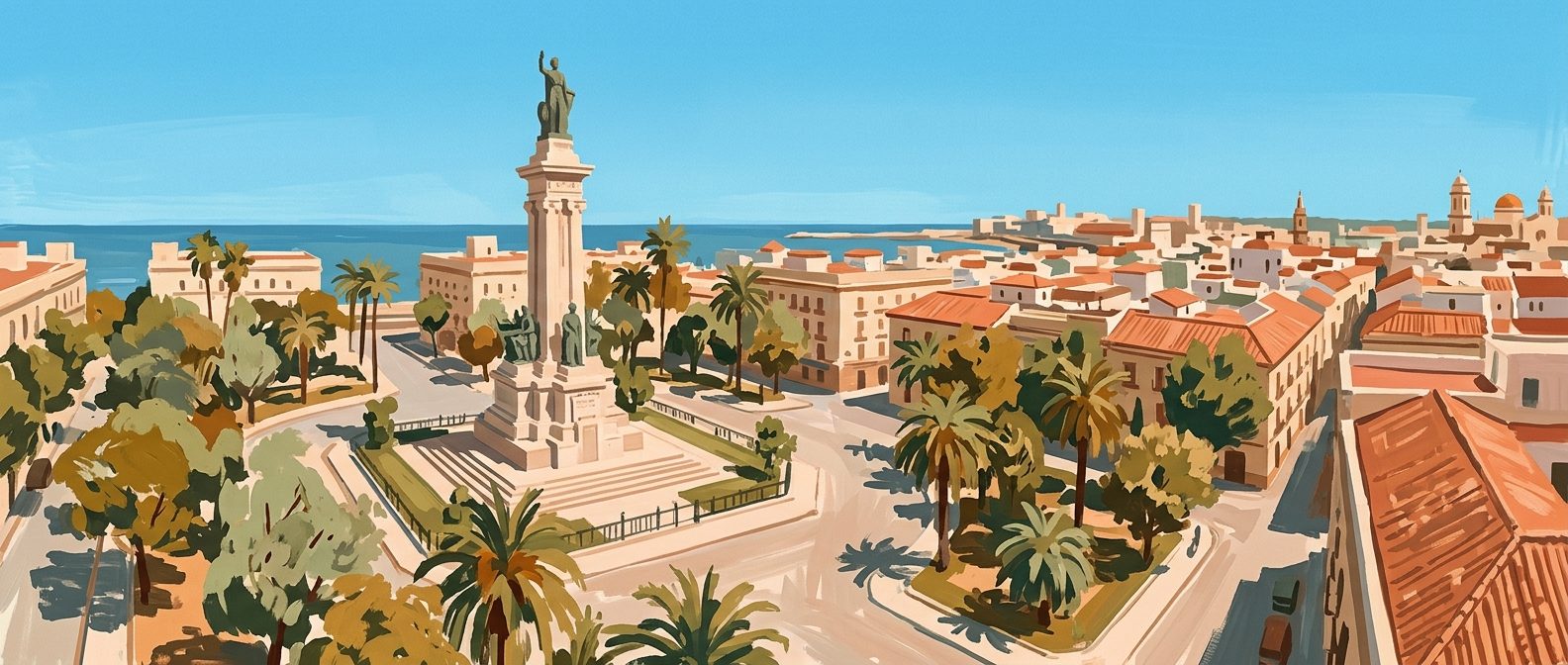
Visitors approaching the Port of Cádiz are met with a towering monument in Plaza de España. The Monument to the 1812 Constitution, also known locally as the Monumento a las Cortes, stands as a grand testament to Spain's first liberal democracy. This structure of stone and bronze commemorates the promulgation of the 1812 Constitution, affectionately known as La Pepa, which was drafted by the Cortes of Cádiz during the Peninsular War. Today, the monument remains one of the most significant pieces of political history in Andalucía, dominating a square that has seen major urban transformations over the last century.
A Century in the Making
The idea to memorialise the achievements of the Cortes of Cádiz was born during the same era the constitution was drafted. In March 1812, the municipal government petitioned the national congress to erect a monument celebrating the new political framework. The deputies agreed the next day, stipulating that the monument should be visible to ships entering the bay. However, political instability and a century of domestic turmoil delayed the project indefinitely.
It was not until the approach of the first centenary of the constitution in 1912 that the Commission of Monuments and the Royal Hispano American Academy of Cádiz successfully revived the initiative. The government held a competition in Madrid, which was won by the architect Modesto López Otero and the sculptor Aniceto Marinas. Although the foundation stone was laid in 1912, the monumental project took years to complete, only reaching its final form in 1929.
The Grand Hemicycle and Central Pillar
The design by Modesto López Otero and Aniceto Marinas takes the form of a vast hemicycle, facing the sea to act as a monumental gateway to the city. This semicircular shape acts as a visual metaphor for a legislative chamber. The architecture creates an open, welcoming embrace, grounding the grand sculptural elements against the sky.
At the very centre of the structure rises a soaring, obelisk style pillar. This central column is the focal point of the composition, drawing the eye upward. It is supported by caryatids, which are sculpted female figures acting as architectural pillars. These caryatids symbolically bear the weight of the constitutional code itself, framing the top of the monument with an air of solemn, palatial dignity.
Symbolism of War and Peace
The narrative of the 1812 Constitution is inseparable from the Peninsular War, when Cádiz was one of the few free strongholds on the Iberian Peninsula. The sculptors translated this historical reality into bronze. Flanking the ends of the hemicycle are two bronze equestrian statues representing War and Peace.
Beside the central pillar, sweeping sculptural groups further elaborate on these themes. On one side, citizens are depicted marching off to defend their city and their nascent freedoms, reflecting the civilian resistance against Napoleonic forces. On the opposing side, agricultural and industrial figures represent the fruits of peace and citizenship. These dual concepts remind onlookers that the liberties codified by the Cortes were born in a time of extreme conflict but aimed at securing a prosperous, peaceful society.
The Throne and the Figure of La Pepa
A throne displaying the insignia of the Bourbon family stands in the central lower area. This element signifies the legitimacy of Ferdinand VII, whom the deputies recognised as the rightful monarch despite his imprisonment by Napoleon. The presence of the empty throne highlights the complex political reality of the Cortes, which governed in the name of the absent king while systematically stripping away absolute monarchical powers.
In front of the throne is a prominent tribune serving as the base of the central obelisk. Here stands the matronly figure representing the Constitution, commonly identified with Justice and colloquially referred to as La Pepa. She holds a copy of the constitutional text in one hand and a sword in the other, symbolising the rule of law and the readiness to defend it. The sword, which was damaged and replaced with a replica in recent years, serves as a sharp visual reminder of the turbulent origins of the document.
Hercules and the American Dimension
While the front looks outward towards the sea, the rear face of the structure holds equally important historical messaging. Here, visitors find the robust figure of Hercules, the mythological founder and eternal symbol of Cádiz. His presence cements the local pride of the city that provided a safe haven for the drafting of the constitution.
Furthermore, this section of the monument pays explicit tribute to the transatlantic nature of the 1812 Cortes. Inscriptions and iconographic details honour the deputies from the American territories. The 1812 Constitution was remarkable for granting citizenship to subjects across the Spanish Empire, and representatives from the Americas played a crucial role in the debates. This acknowledgement reflects the deep historical ties between Cádiz and the Americas, forged through centuries of maritime trade.
A Pedestrianised Plaza de España
For many decades, the monument was surrounded by heavy traffic, acting as a grand roundabout rather than an accessible public space. Recent urban regeneration has completely transformed the environment. The Plaza de España has been pedestrianised, stripping away the asphalt and car parking that previously isolated the hemicycle.
Today, the monument is seamlessly integrated into an expansive, green, and accessible square. The removal of motor vehicles has allowed for new tree planting, improved walking routes, and the creation of a peaceful environment where visitors can safely approach and study the detailed reliefs. Surrounded by historic architecture, including the Casa de las Cuatro Torres and the Palacio de la Diputación Provincial, the modern Plaza de España now provides a fittingly dignified setting for one of Spain's most important political memorials. For more information on the city's historical routes, you can consult the official Cádiz tourism website.
Nearby worth your time
A few well-placed stops for extending the day without turning it into a checklist.
Continue through Cádiz City
Step back into the wider landscape with local guides, nearby places and the province overview.
Place guide · 7 min
Playa de La Caleta: A Guide to the Historic Heart of Cádiz
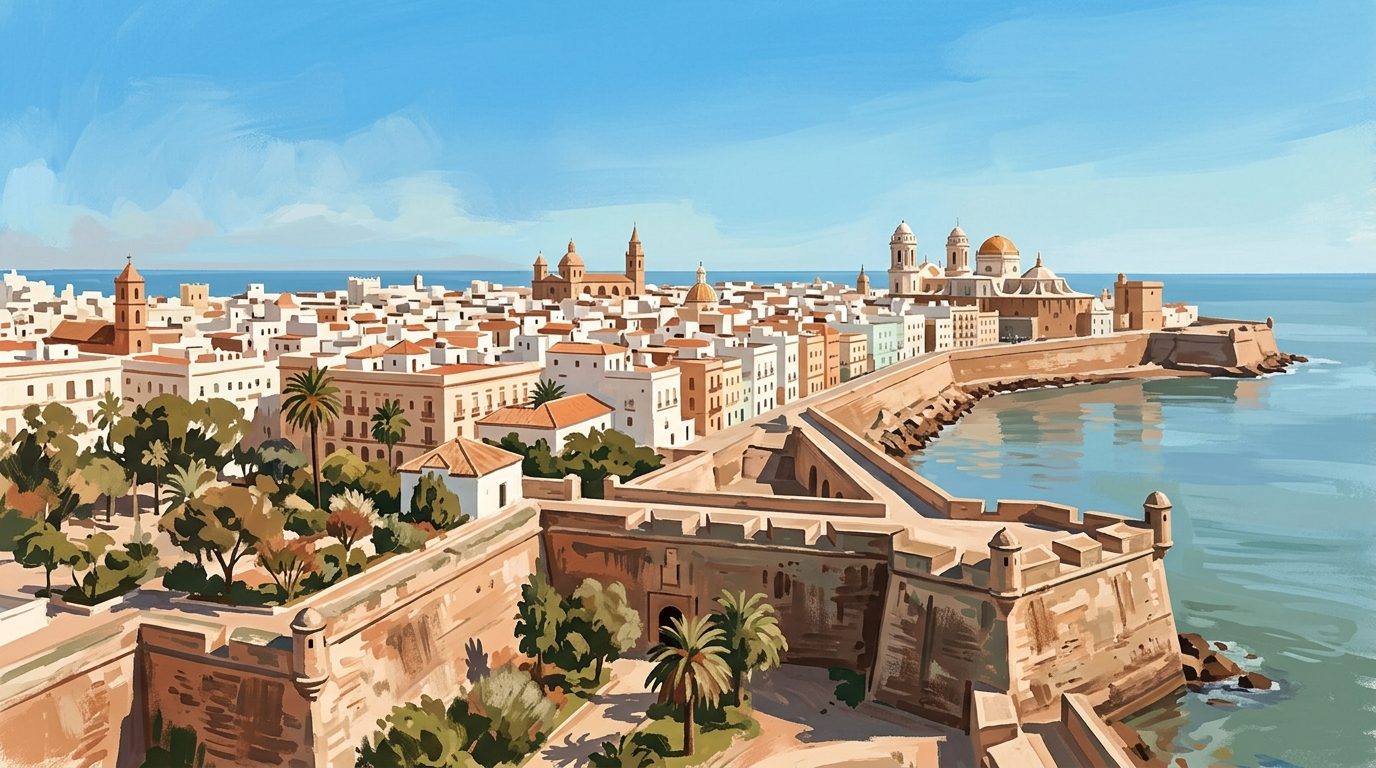
Playa de La Caleta is a historic urban bay in Cádiz, famous for its calm waters, ancient fortresses, and the stunning white Balneario spa building.
Place guide · 7 min
Playa de los Caños de Meca: A Guide to the Cádiz Coastline
Discover the wild Atlantic beauty of Playa de los Caños de Meca, from its freshwater springs to the historic Cape Trafalgar lighthouse.
Itinerary · 7 min
Three Days in Cadiz: The Ultimate Itinerary for Independent Travellers
Three days allows you to completely sink into the maritime rhythm of Europe's oldest city. You can cover the historic centre, explore the twin seaside fortresses, and still have time for a sherry tasting afternoon across the bay.