
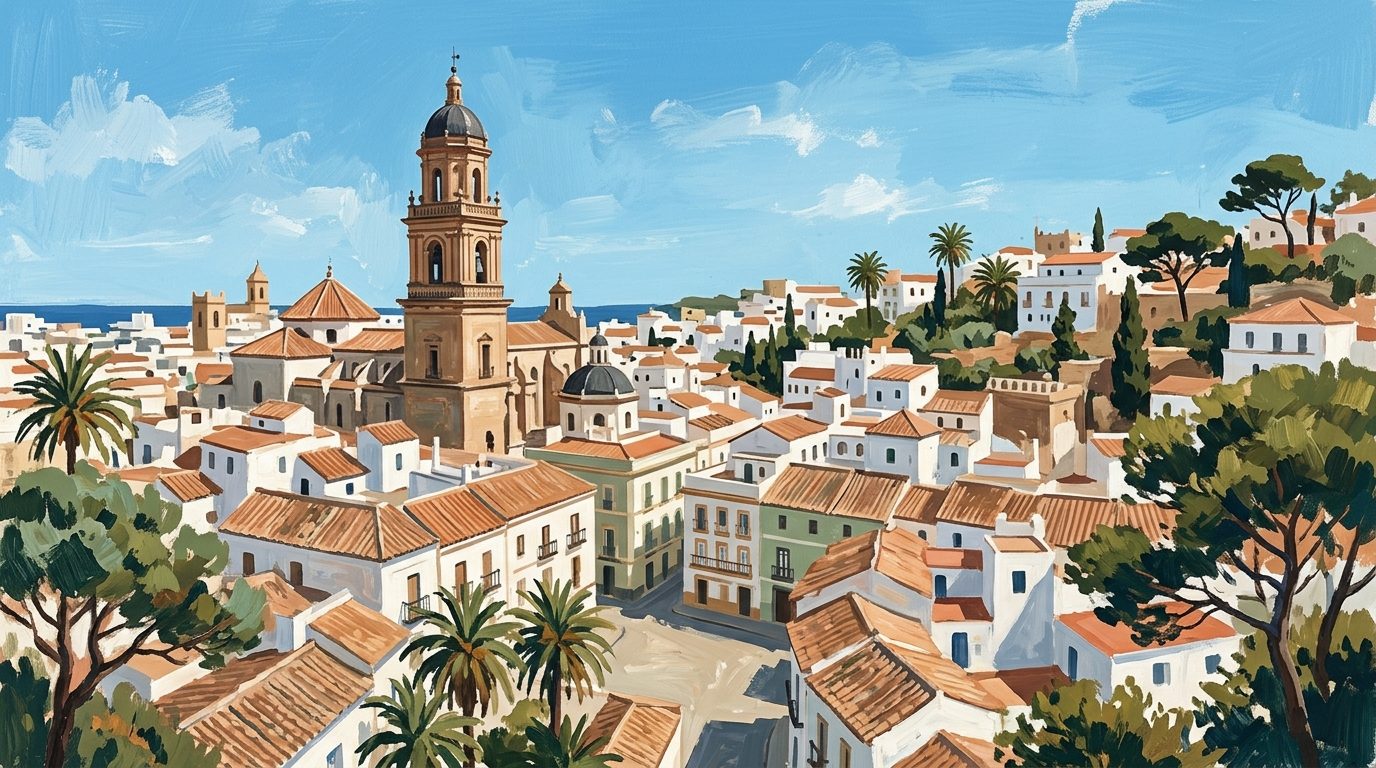
attraction · Cádiz
Torre Tavira
Andalucía 365 · Updated 18 July 2026
Budget
Our Verdict
“This is an essential introduction to the unique geography and commercial history of the city. While the physical climb is demanding, the analogue optical illusion of the camera obscura remains genuinely fascinating. It perfectly suits first-time visitors seeking orientation and anyone intrigued by maritime history. The rooftop terrace offers a complete peninsula panorama, balancing education with a highly memorable visual experience.”
Last verified: July 2026
At 45 metres above sea level, the highest point in the historic centre of Cádiz is marked by a square watchtower topped with characteristic red-ochre geometric decorations. Built in 1730 as part of the grand Palace of the Marqueses de Recaño, this structure is the most significant of the 134 merchant watchtowers that still punctuate the city skyline. During the 18th century, when the city held a strict monopoly on Spanish trade with the Americas, these tall towers were vital tools of the trade. Wealthy merchants would stand at their peaks equipped with spyglasses, tracking the arrival of their cargo fleets returning from the Atlantic Ocean heavily laden with silver, tobacco, and spices.
A Window into Maritime Wealth
The architecture of these watchtowers is unique to the city, developed as a highly practical response to the booming maritime economy of the 1700s. Bernardo Recaño Muzio, who gained his title of Marqués de Casa Recaño through his role in the Indies fleets, commissioned this substantial merchant palace. Because of its central location on Calle Marqués del Real Tesoro and its supreme elevated height, the municipal government designated it the official watchtower of the port in 1778, under the watch of frigate lieutenant Antonio Tavira. Today, the lower exhibition rooms detail this 18th-century commercial peak, exploring the city’s layout, its economic reliance on the sea, and the daily life of its wealthy merchant class. The palace complex has served many diverse functions, ranging from a school of noble arts to the initial headquarters of the Spanish Supreme Court. Since May 2023, the building has housed the Casa del Carnaval de Cádiz, a permanent interpretation centre dedicated to the famous local festival.
The Camera Obscura Experience
The focal point of the modern visit is the camera obscura, a pioneering optical instrument installed in 1994, which was the first of its kind in Spain. Located in a darkened room directly below the roof, the mechanism uses a rotating mirror and a convex lens to project a live, moving image of the city below onto a large, concave white screen. During the guided presentation, visitors stand in a circle around the screen and watch the streets functioning in real time. You will see laundry blowing on distant roof terraces, ships manoeuvring into the deep-water port, and pedestrians navigating the tight, labyrinthine streets of the historic centre. The guide adjusts the focus and rotates the mirror to highlight specific monuments and neighbourhoods, providing an immediate geographical understanding of the peninsula that a static map simply cannot match. The effect is striking, giving the viewer a sense of surveying a living miniature model of the city.
The Rooftop Observation Deck
Directly above the camera obscura, an open-air terrace offers an uninterrupted 360-degree panorama of the Atlantic Ocean and the sheltered Bay of Cádiz. This high vantage point clarifies the dense, whitewashed urban fabric of the city, framed tightly by the sea on almost all sides. Prominent landmarks clearly visible include the long stone causeway leading to Castillo de San Sebastián, the cargo ships of the modern commercial port, and remaining merchant towers displaying various architectural styles, from simple sentry boxes to ornate pillared structures. The most striking element on the skyline is the massive, golden tiled cupola of the main cathedral, which dominates the southern view and catches the harsh coastal sunlight.
Staircases and Accessibility
Reaching the upper levels of the monument requires a fair amount of physical exertion. The tower does not currently have a lift. The Junta de Andalucía Heritage Commission rejected an earlier external installation proposal because of its visual impact, while a later design placing the lift inside the tower has not resulted in an operational installation. Visitors must climb exactly 173 steps to reach the final observation deck. The stairwell is well-maintained and adequately lit, but it becomes steep and narrow in the uppermost sections. Consequently, the experience is only suitable for those with comfortable, unassisted mobility. There is nowhere to sit during the ascent, so visitors should pace themselves.
The Verdict
This is an essential introduction to the unique geography and commercial history of the city. While the physical climb is demanding, the analogue optical illusion of the camera obscura remains genuinely fascinating. It perfectly suits first-time visitors seeking orientation and anyone intrigued by maritime history. The rooftop terrace offers a complete peninsula panorama, balancing education with a highly memorable visual experience.
How to Visit
Because the optical room has a strictly limited capacity for each guided session, advance booking is strongly recommended, particularly during summer, school holidays and weekends. Sessions run throughout the day and are offered in multiple languages. When purchasing tickets, you must ensure you select the correct language slot for your group. The entire visit, including time in the two exhibition rooms and the rooftop, takes approximately 45 minutes to one hour. The image in the viewing room relies on natural daylight, so a clear, sunny morning or early afternoon yields the sharpest projection. For current ticket prices, live opening hours, and mandatory advance booking, consult the official Torre Tavira website.
A Sensible Nearby Pairing
After descending the tower, take a ten-minute walk south to explore the vast limestone landmark that dominates the rooftop views. Combining Cádiz Cathedral and Torre Tavira naturally shifts the focus from the city’s secular merchant wealth to its grand, prolonged religious construction. The subterranean crypt of the cathedral and its sweeping neoclassical façade provide a monumental contrast to the strictly functional design of the merchant watchtower, offering a complete picture of the city during its golden era.
Nearby worth your time
A few well-placed stops for extending the day without turning it into a checklist.
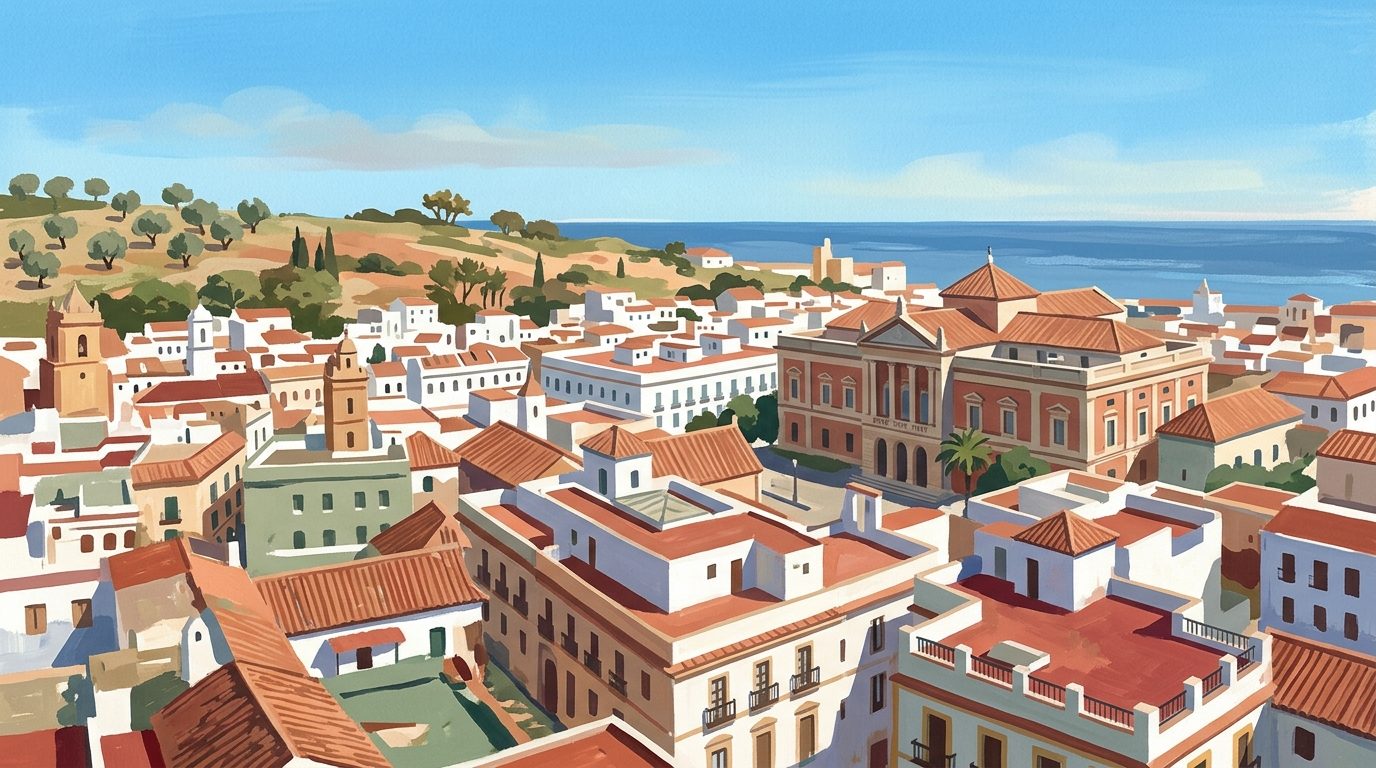

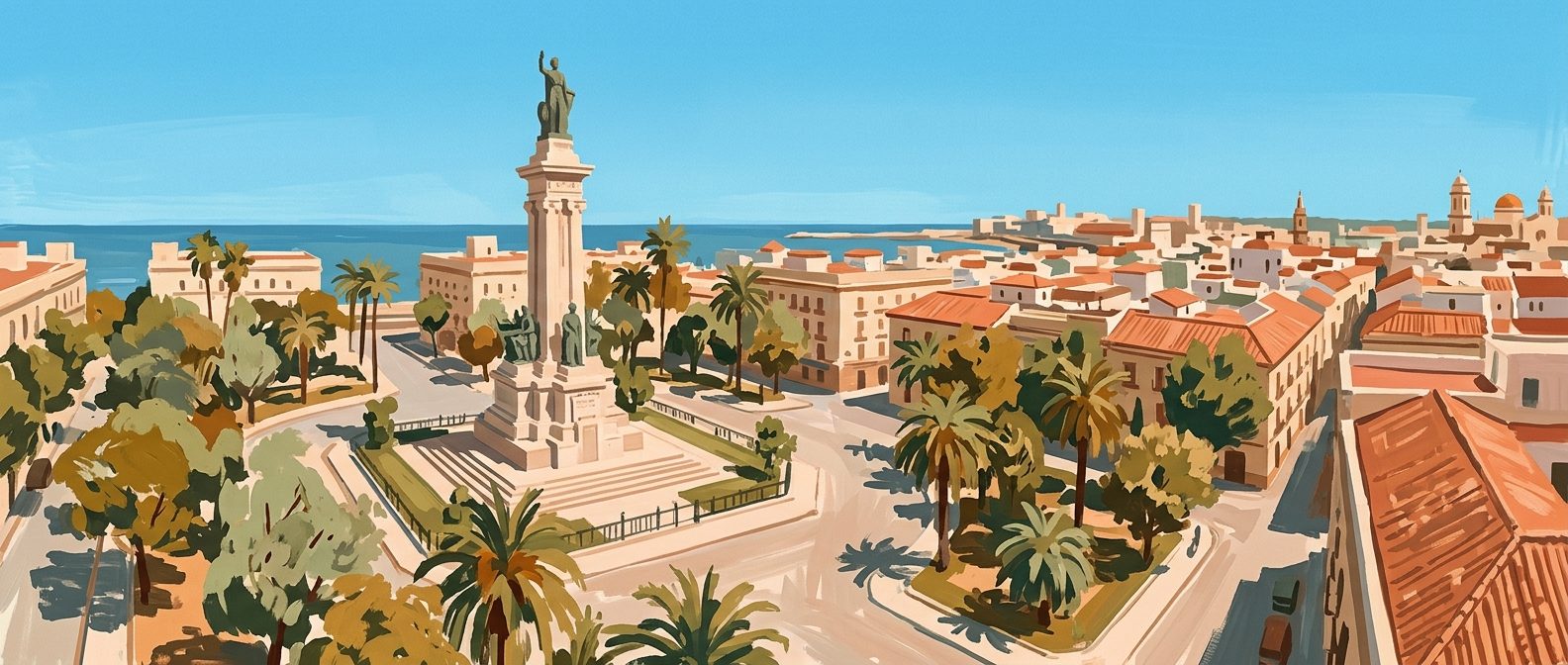
Continue through Cádiz City
Step back into the wider landscape with local guides, nearby places and the province overview.
Place guide · 7 min
Playa de La Caleta: A Guide to the Historic Heart of Cádiz
Playa de La Caleta is a historic urban bay in Cádiz, famous for its calm waters, ancient fortresses, and the stunning white Balneario spa building.
Place guide · 7 min
Playa de los Caños de Meca: A Guide to the Cádiz Coastline
Discover the wild Atlantic beauty of Playa de los Caños de Meca, from its freshwater springs to the historic Cape Trafalgar lighthouse.
Itinerary · 7 min
Three Days in Cadiz: The Ultimate Itinerary for Independent Travellers
Three days allows you to completely sink into the maritime rhythm of Europe's oldest city. You can cover the historic centre, explore the twin seaside fortresses, and still have time for a sherry tasting afternoon across the bay.