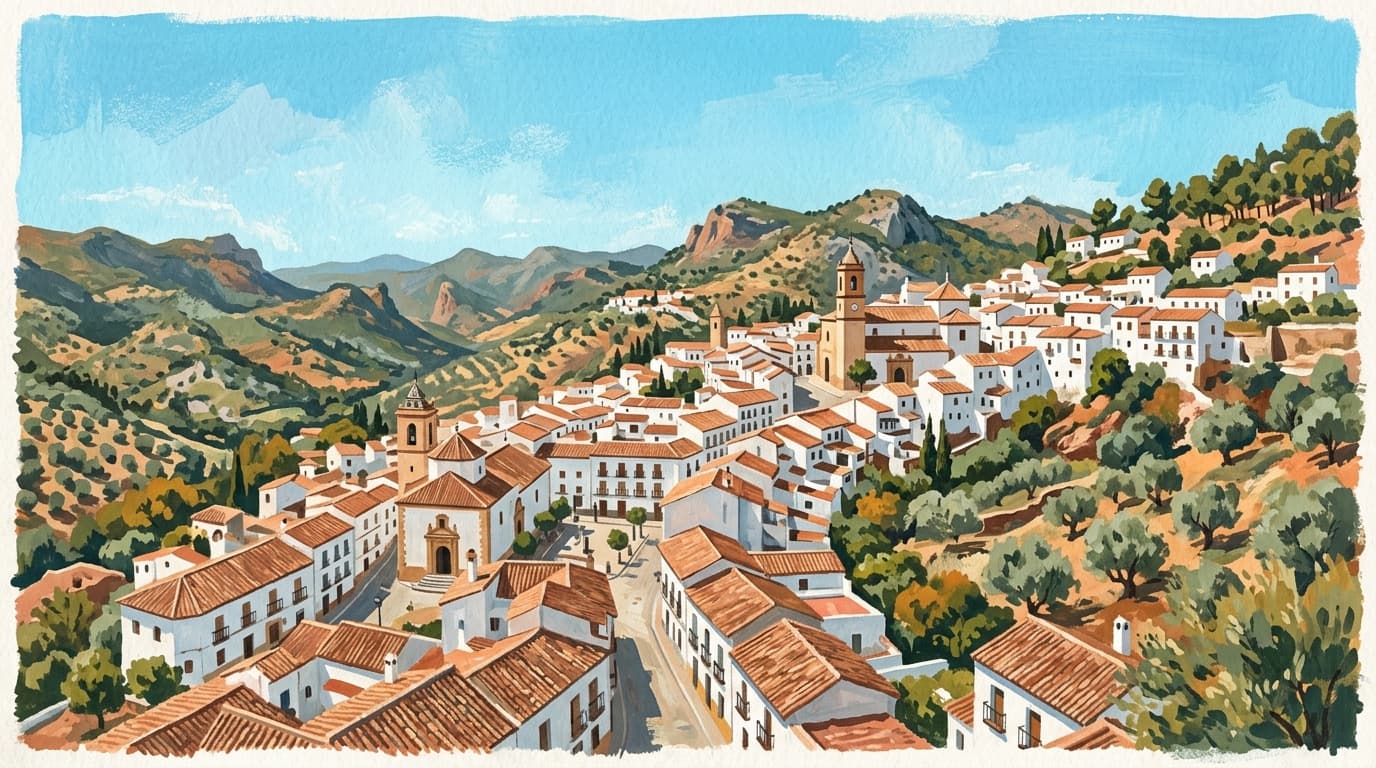
High in the Sierra Morena, Cazalla de la Sierra offers a cooler alternative to the heat of the Sevillian plains, famous for its aniseed-scented history and rugged landscape. This mountain town serves as the gateway to the Sierra Norte Natural Park, where traditional distilleries and ancient monasteries sit amidst rolling hills.
A Guide to Cazalla de la Sierra: Anisette, Wilderness, and Renaissance Grandeur
Cazalla de la Sierra sits roughly 80 kilometres north of Seville, perched at an altitude of nearly 600 metres. While the provincial capital swelters in the summer months, Sevillanos head here for the crisp mountain air and the shade of the holm oaks. It is a town defined by its resilience and its industry; once a major producer of wine, it pivoted to become the world capital of anisette production after the phylloxera plague devastated its vineyards in the 19th century. Today, it is a sophisticated rural retreat that manages to feel both deeply traditional and quietly refined.
The town’s architecture tells a story of unexpected wealth. Because it was a stop on the silver route and a strategic point between Extremadura and Andalusia, Cazalla contains manor houses and religious buildings that seem far too grand for a remote mountain outpost. Exploring the town requires a bit of stamina for the sloping streets, but the reward is a collection of Renaissance facades and courtyards that reveal the town's golden age. Whether you are here for the hiking trails or the high-proof spirits, Cazalla offers a pace of life that is fundamentally tied to the seasons and the soil.
What to See and Do
The Church of Nuestra Señora de la Consolación
Dominating the town’s skyline, this church is an architectural hybrid that reflects the shifting fortunes of Cazalla. Started in the 14th century in the Mudéjar style, it underwent a massive Renaissance expansion in the 16th century. However, the project was never fully completed, leaving a striking visual contrast between the finished sections and the raw stone. The interior is vast, featuring a magnificent altarpiece and a sense of scale more common to a city cathedral than a mountain village. The building is actually built into the old Almohad walls, and you can still see traces of the original fortifications in its massive foundations.
The Cartuja de Cazalla
Located five kilometres outside the town centre, the Cartuja (Carthusian Monastery) is perhaps the most evocative site in the region. Founded in the late 15th century, it has lived many lives: a silent monastery, a ruin after the ecclesiastical confiscations of the 1830s, and even a tile factory. In recent decades, it has been painstakingly restored by private owners. Visiting the Cartuja is a meditative experience; the cloister and the gardens are surrounded by the dense forest of the Sierra Norte. It now functions as a cultural centre and a unique hotel, but it remains open to visitors who wish to see the pilgrims' chapel and the various art installations that often occupy the old cells.
The Tradition of Anisette
You cannot visit Cazalla without acknowledging its most famous export: aguardiente. At one point, the town had dozens of distilleries producing anise-flavoured spirits. Today, only two remains: El Clavel and Miura. You can visit the El Clavel distillery to see the old copper stills and learn about the maceration process that uses wild cherries or aniseed. Even if you aren't a fan of strong spirits, the smell of the distilleries is part of the town’s identity. The local "Crema de Guindas" (cherry liqueur) is a smoother, sweeter alternative to the fiery dry anisette and makes for an excellent souvenir.
Wine Production and Colonias de Galeón
While anisette took over in the 1800s, Cazalla has recently seen a resurgence in its wine industry. The Colonias de Galeón winery is at the forefront of this movement. The high altitude and specific microclimate of the Sierra Norte allow for the cultivation of varieties like Syrah, Tempranillo, and even Pinot Noir, which usually struggle in the Andalusian heat. A tour of the vineyards provides insight into how the slate-heavy soil of the mountains creates a completely different flavour profile compared to the sherry-producing regions of the south.
Nature Trails: Sendero de las Laderas
For those who prefer to be active, the Sendero de las Laderas is a classic walking route that starts from the lower part of the town. This seven-kilometre circular trail takes you down to the Rivera del Huéznar, a small river lined with lush vegetation. The path offers spectacular views back up towards the town’s white houses and the tower of the Consolación church. It is particularly beautiful in autumn when the leaves of the poplar and chestnut trees turn deep shades of amber and gold.
Practical Information
Getting There: The drive from Seville takes approximately one hour and twenty minutes via the A-432. Be prepared for winding mountain roads as you climb into the Sierra. If you prefer the train, there is a regional service from Seville’s Santa Justa station, but the station (Cazalla-Constantina) is located about 9 kilometres from the town. You will need to coordinate a taxi or check the local bus schedule that occasionally syncs with train arrivals.
Parking: Parking in the historic centre is difficult due to the narrow streets. It is better to use the large car park at the entrance of the town near the Paseo del Moro or the designated areas near the Plaza de Toros. Everything within the town is walkable once you have parked.
Opening Times:
- Parroquia de Nuestra Señora de la Consolación: Typically open for visits from 11:00 to 13:00 and 18:00 to 20:00 (hours can vary based on mass times). Entry is usually free, though a small donation is appreciated.
- Cartuja de Cazalla: Open Tuesday to Sunday from 10:00 to 14:00 and 16:00 to 18:00 (later in summer). Entry tickets are €5.
- Distilería El Clavel: Tours are available by appointment, generally on weekday mornings. It is best to call ahead or check at the local tourism office in the Plaza Mayor.
Where to Eat Nearby
Cazalla is a hub for slow food, particularly game meats like wild boar and venison, and anything involving the local Iberian pig. Agustina is the most renowned spot in town, offering a modern, creative twist on mountain ingredients. Their menu changes frequently based on what is available in the forest, such as wild mushrooms or chestnuts. For a more traditional experience, Restaurante Los Gordos serves hearty stews and grilled meats in a no-frills, welcoming environment. Another excellent choice is La Posada del Moro, where you can dine on a terrace surrounded by gardens, focusing on regional recipes like caldereta de cordero (lamb stew).
Where to Stay
For a stay that feels connected to the history of the town, Palacio de San Benito is a converted grand house filled with antiques and character. It feels more like staying in a private museum than a hotel. If you prefer total seclusion, La Cartuja de Cazalla offers rooms within the old monastery grounds, providing an atmosphere of absolute silence. There are also numerous rural cottages (casas rurales) on the outskirts of town that are perfect for larger groups or families looking to hike.