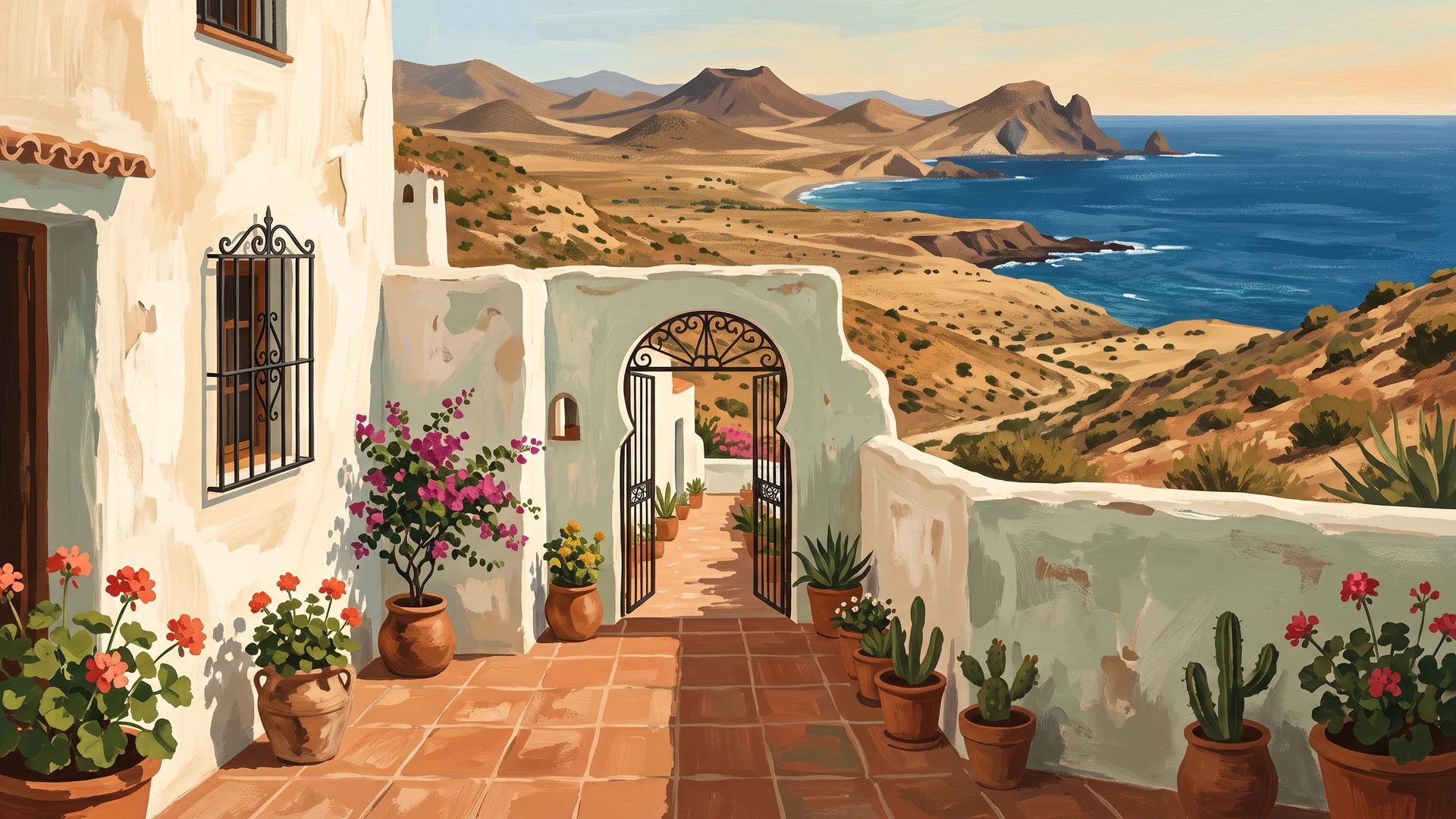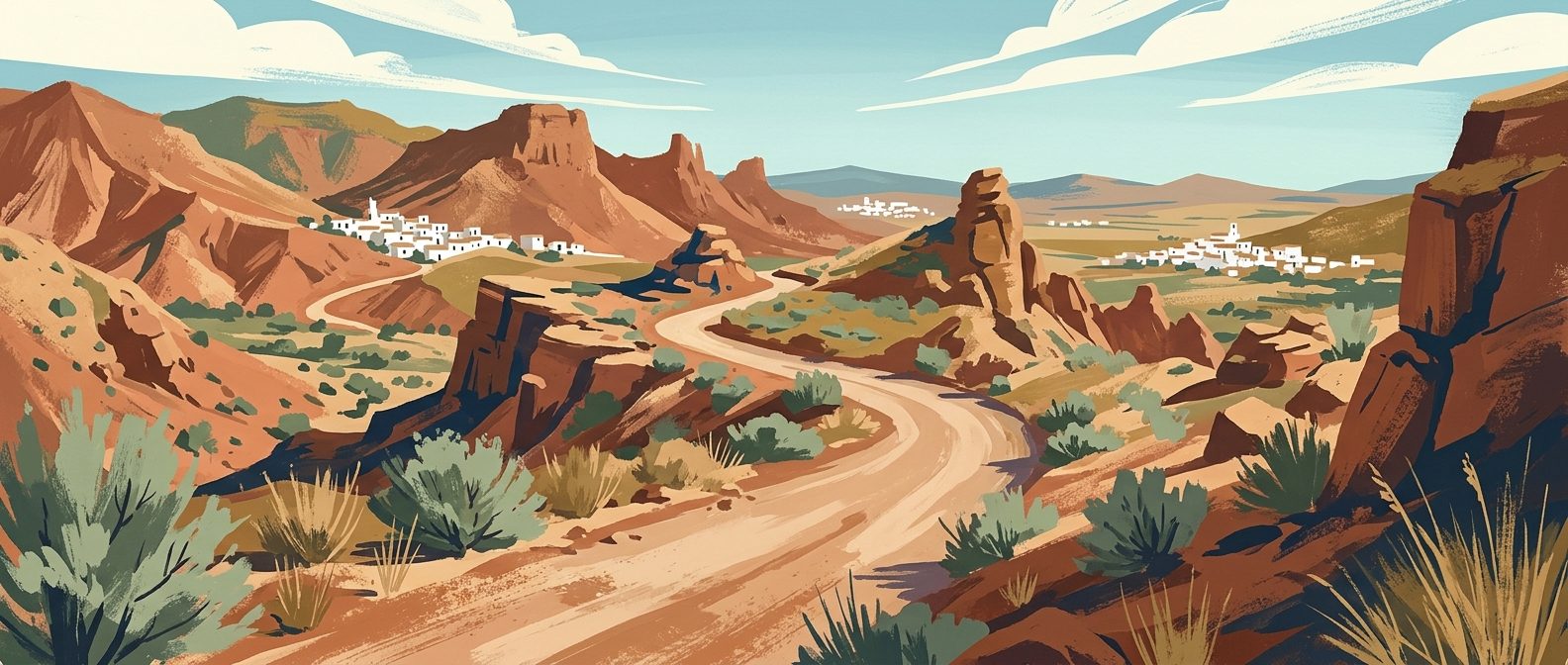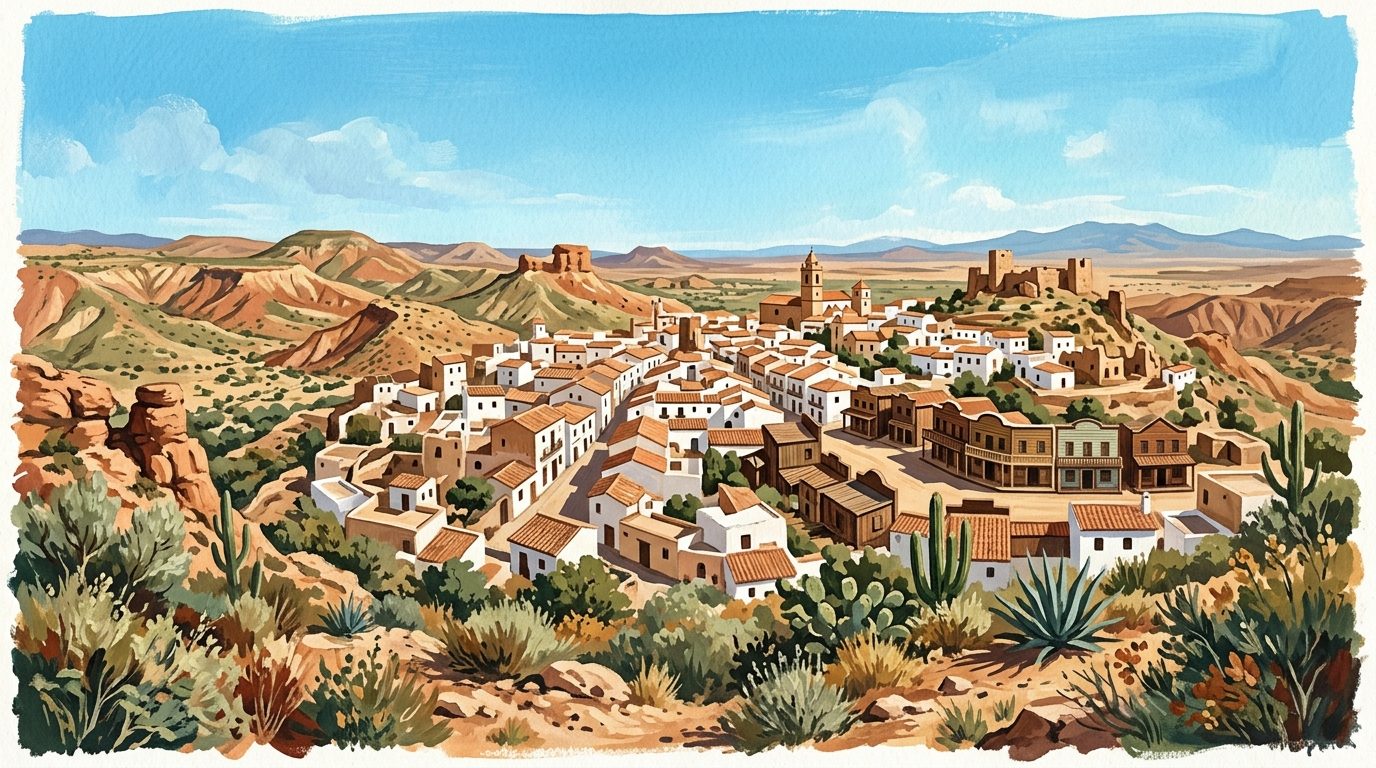
The Tabernas Desert is the only true desert on the European continent, a landscape of parched badlands that served as the backdrop for Hollywood’s most famous spaghetti westerns. Today, it remains a starkly beautiful region where visitors can wander through preserved film sets and explore some of the most unusual geology in Spain.
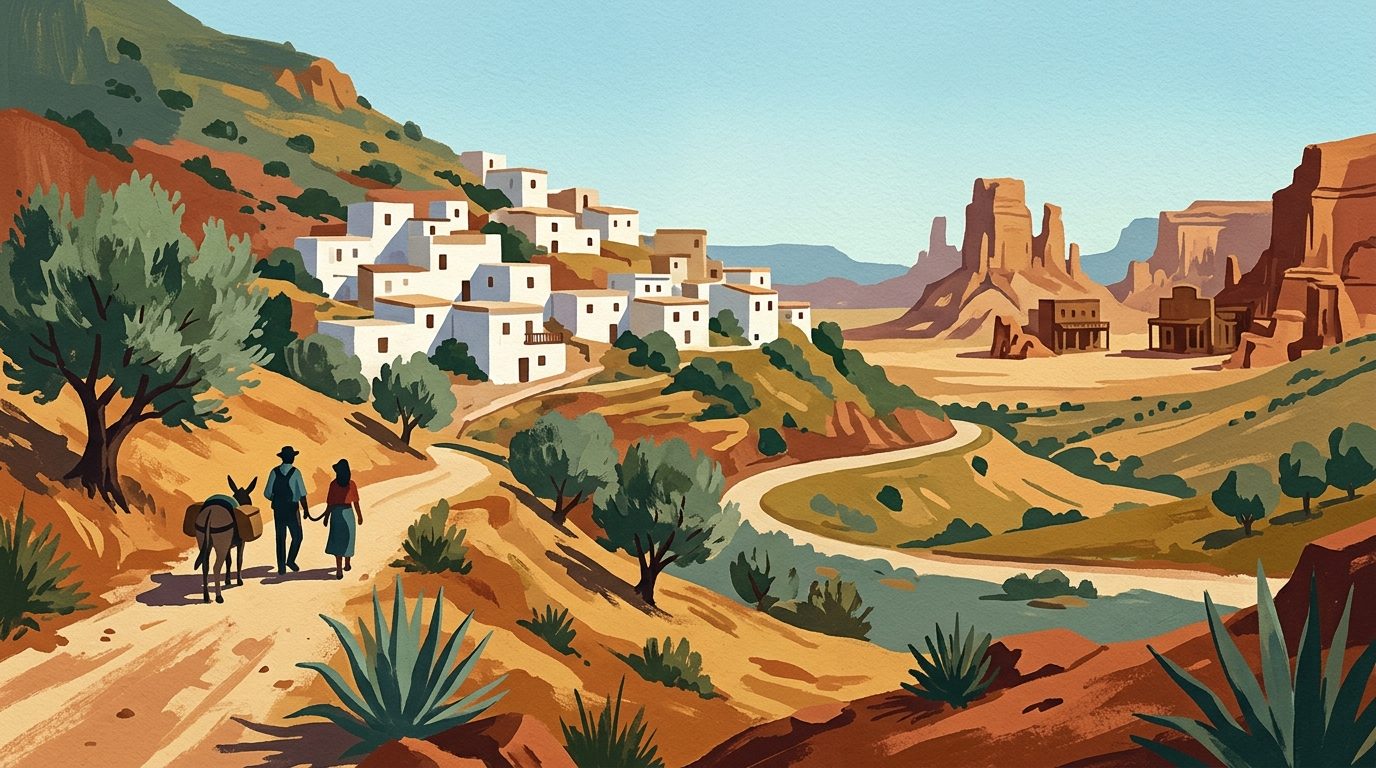
To arrive in Tabernas is to step directly onto a film set. Located north of Almería city, this arid basin is shielded by the Sierra de los Filabres to the north and the Sierra de Alhamilla to the south, creating a microclimate of low rainfall and extreme temperatures. The result is a landscape of eroded gullies, dry riverbeds known as ramblas, and jagged ridges that look remarkably like the American West. It was this resemblance that caught the eye of directors like Sergio Leone in the 1960s, transforming this corner of Andalucía into the Wild West for classics such as The Good, the Bad and the Ugly and A Fistful of Dollars.
Beyond the cinematic history, the town of Tabernas itself sits on a hillside, overlooked by the ruins of a Moorish castle. While many tourists head straight for the theme parks, the area offers a significant amount for those interested in geology, hiking, and the quiet pace of Almerían life. If you come to see a gunslinger duel or to hike through the lunar-like ravines, Tabernas provides an experience unlike anywhere else in the Iberian Peninsula.
What to See & Do
Oasys Mini Hollywood
This is the most developed of the film sets in the area. Originally built for For a Few Dollars More, it was later purchased by the extras who worked on the films to prevent it from being demolished. It has since evolved into a full-scale theme park. The "Western Town" area remains the primary draw, featuring a saloon, a sheriff’s office, and a bank. Every afternoon, stuntmen perform live shows involving shootouts and falls from balconies.
Aside from the film sets, Oasys includes a large zoological reserve with over 800 animals. While the zoo might feel out of place in a western set, it was established to house animals that had been used in filming or rescued from illegal trade. In the height of summer, temperatures often exceed 40°C. The large swimming pool complex on-site is a welcome relief. There is also a museum of cinema and a collection of historic carriages.
Fort Bravo / Texas Hollywood
If Oasys feels a bit too polished, Fort Bravo offers a more authentic, dusty atmosphere. It is still used as an active filming location for commercials, music videos, and independent films. The site is divided into several areas: a classic American western town, a Mexican village with a white-washed plaza, and a wooden cavalry fort. The dusty streets here feel more rugged, and the price of entry includes a horse-drawn carriage ride through the desert landscape surrounding the set. Like Oasys, they host daily western shows, though they tend to be slightly more gritty and less choreographed than their neighbours.
Western Leone
The smallest of the three main sets, Western Leone was built specifically for Sergio Leone's masterpiece, Once Upon a Time in the West. The main attraction here is the large ranch house (McBain’s house), which still stands and serves as a restaurant. It is less of a theme park and more of a pilgrimage site for cinema enthusiasts. Because it is smaller, it often feels much quieter, allowing you to walk the wooden boardwalks without the crowds found at the larger sites.
The Tabernas Desert Natural Space
Safety Warning: In the height of summer, temperatures often exceed 40°C. Hikers should ensure they carry significant water supplies and avoid midday excursions.
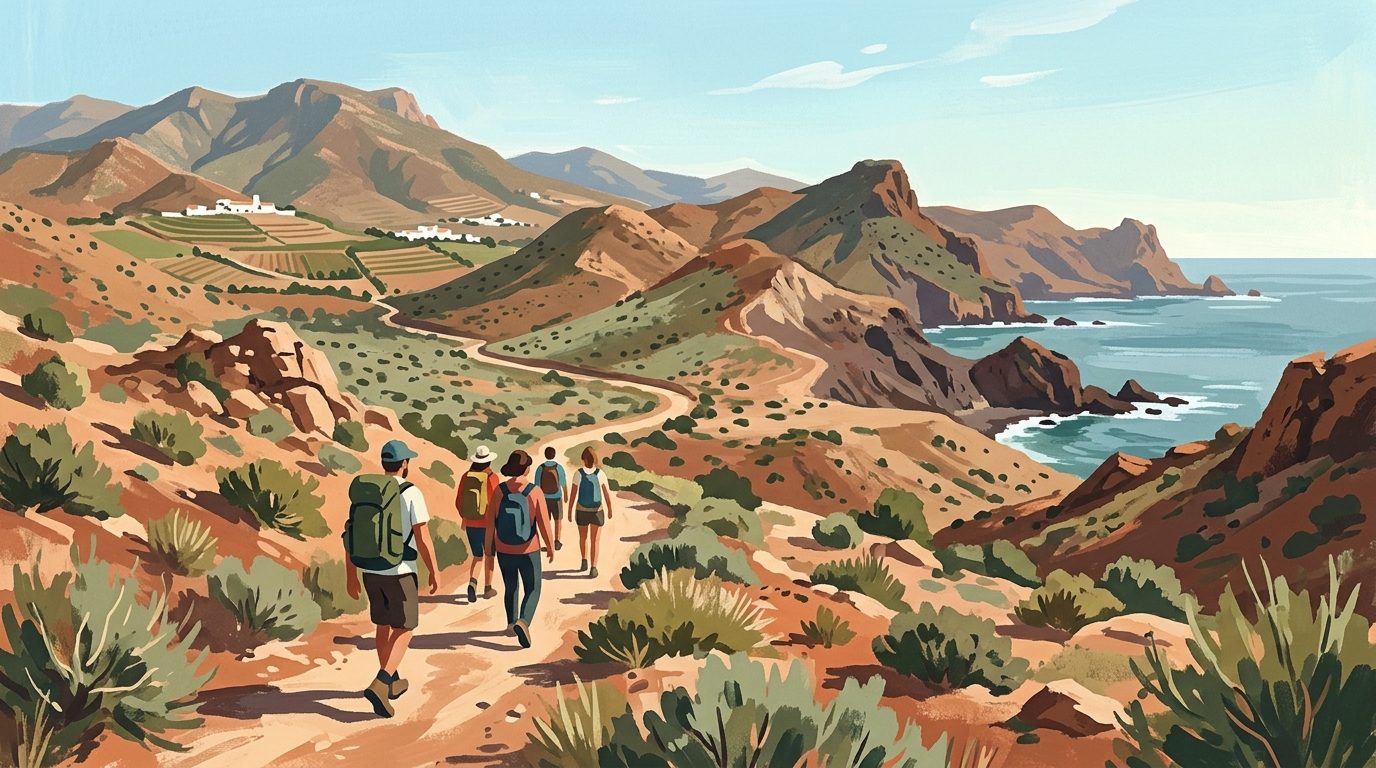
The desert itself is a protected natural area covering 280 square kilometres. It is a paradise for hikers and photographers. One of the best ways to see it is via the Sendero del Desierto (PR-A 269), a circular hiking route that begins near the entrance to Mini Hollywood. The trail takes you through the ramblas (dry riverbeds) where you can see the unique desert flora, such as the sea lavender and the crucifer Euzomodendron bourgaeanum, which is endemic to this specific desert.
For those who prefer not to walk in the heat, several local companies offer 4x4 tours. These guided excursions are excellent for understanding the geology of the area, explaining how these badlands were formed over millions of years from an ancient seabed, and visiting specific filming locations that are inaccessible by standard road cars, such as the sites used in Lawrence of Arabia and Indiana Jones and the Last Crusade.
Castillo de Tabernas
Perched on a ridge above the town, the ruins of this 11th-century Moorish fortress are free to visit. While much of the castle was destroyed during the Peninsular War and by various earthquakes, the remaining walls and towers provide the best viewpoint in the region. From the ramparts, you can see the white town of Tabernas sprawling below and the vast expanse of the desert stretching toward the horizon.
Practical Information
Opening Times: Check the official websites for specific seasonal closing times, as hours vary significantly between high and low season (check on the operator's website before travelling).
Ticket Prices:
- Oasys Mini Hollywood: Prices are subject to change. Check the official Oasys website for current rates and online discounts.
- Fort Bravo: Check the Fort Bravo website for current pricing.
- Western Leone: Check the Western Leone website for current pricing.
How to Get There: Tabernas is located 30km north of Almería city. The easiest way to reach it is by car via the A-92 motorway (exit 376). If you are relying on public transport, the ALSA bus service runs several times a day from Almería’s main bus station to the town of Tabernas, taking roughly 45 minutes. However, the film sets are several kilometres outside the town, so a taxi or a rental car is highly recommended for convenience.
Parking: All three film sets have large, free car parks on-site. In the town of Tabernas, there is a public car park near the entrance of the village on Calle de los Malvaviscos.
Where to Eat Nearby
Restaurante Las Eras: Located on the edge of Tabernas town, this restaurant is highly regarded for its creative takes on traditional Almerían cuisine. It uses local ingredients to produce dishes like ajo colorao (a potato and pepper purée) and slow-cooked lamb. The setting is modern and provides a comfortable escape from the desert sun.
Hostal El Parque: A more traditional, no-nonsense option in the centre of the village. This is the place to try migas, a dish of fried flour or breadcrumbs served with fried peppers, sardines, and pomegranate. It is a local staple, particularly on the rare days when it rains, but it is available here throughout the year and is excellent value for money.
Where to Stay
For a unique experience, Camping Fort Bravo offers wooden cabins directly on the edge of the film set, allowing you to wake up in the Wild West. For something more refined, Oro y Luz is a small boutique hotel located a few minutes from the town. It features a saltwater pool and minimalist rooms that overlook the desert landscape. Alternatively, many visitors choose to stay in Almería city or the coastal town of Agua Amarga and visit Tabernas as a day trip.