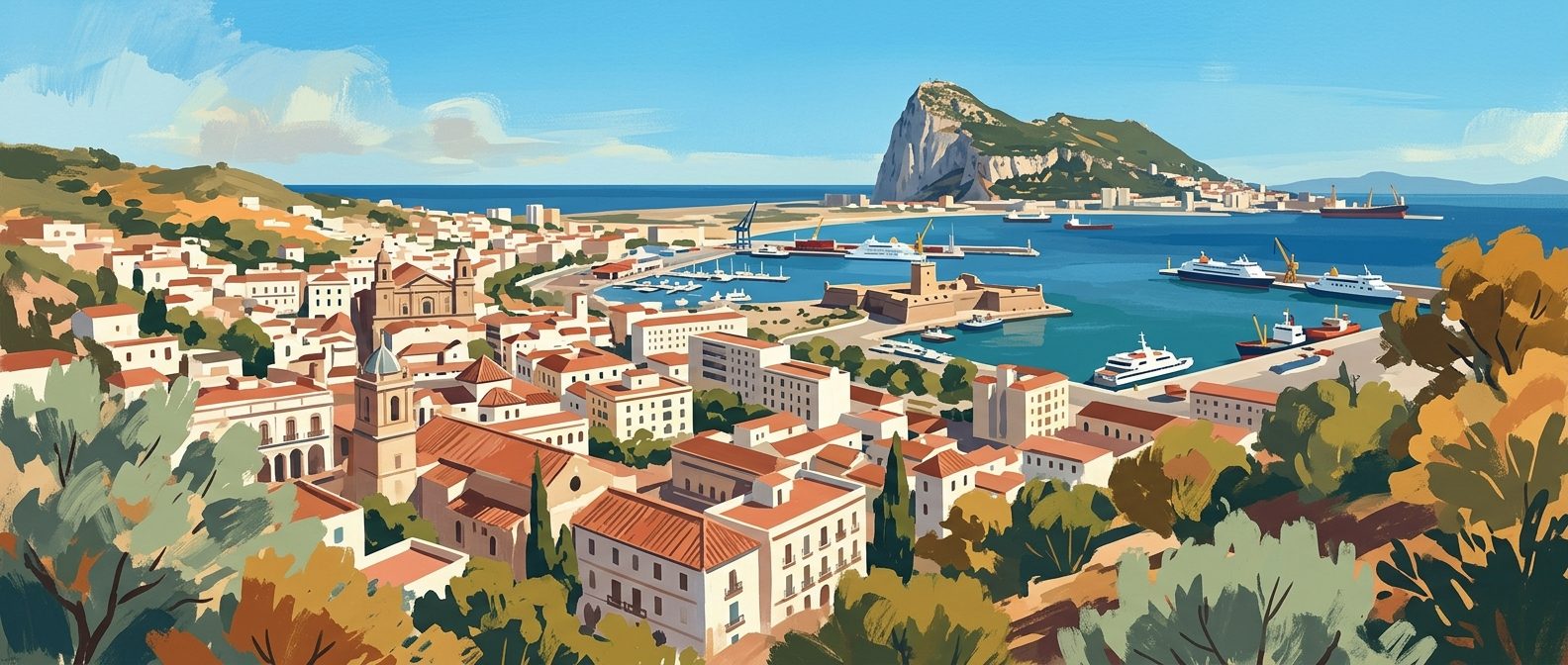
Often overlooked in favour of its famous neighbour across the bay, Algeciras serves as the primary maritime bridge between Europe and Africa. It is a city defined by the constant movement of ships, the scent of the Mediterranean, and a functional grit that rewards those who look beyond the industrial skyline.
Algeciras occupies a strategic position at the narrowest point of the Strait of Gibraltar. While many travellers only see the port from the window of a car or coach on their way to Tangier, this city in the Campo de Gibraltar has its own distinct character. It is a place of transit, certainly, but it is also a city of heavy industry, legendary flamenco heritage, and surprisingly rugged natural surroundings. As you look across the water, the Rock of Gibraltar stands prominently to the east, while the Rif Mountains of Morocco loom large to the south, creating a unique geographical theatre.
The city developed significantly in the 18th century as a naval base to counter the British presence in Gibraltar, and its identity remains tied to the sea. Today, it is the busiest passenger port in Spain and one of the largest container ports in Europe. This maritime dominance brings a multicultural energy to the streets, particularly around the port area and the central market, where Spanish traditions meet North African influences. Beyond the cranes and containers, you will find a historic centre with quiet squares and a coastline that transitions from heavy docks to pristine sandy beaches.
What to See & Do
The Port and Waterfront
The Port of Algeciras is the heart of the city's economy. While large parts are restricted industrial zones, the passenger terminal is an active hub. Walking along the Paseo de la Conferencia offers a perspective on the sheer scale of the maritime operations here. You can watch the massive ferries from Balearia and FRS depart for Ceuta and Tangier Med every hour. For a more scenic coastal experience, head south to the Parque del Centenario. Located on the Punta de San García, this park provides the best views of the Bay of Gibraltar and the Strait. It contains the ruins of the 18th-century Fuerte de San García, which was destroyed during the Peninsular War, and offers walking paths through native coastal scrubland.
Mercado de Abastos (Engineer Torroja Market)
Architecture enthusiasts should visit the central market, located in Plaza de Nuestra Señora de la Palma. Completed in 1935, this brutalist masterpiece was designed by the engineer Eduardo Torroja. It features a massive reinforced concrete dome that spans 47 metres without internal pillars: a revolutionary feat of engineering for its time. Inside, the atmosphere is electric. This is the best place to witness the city's tuna fishing heritage. You will see fresh Almadraba tuna from the local coast alongside sea bream, sardines, and an array of North African spices and produce.
Plaza Alta and the Historic Centre
Plaza Alta is the social centre of the city and its most attractive square. It is decorated with intricate colourful ceramic tiles (azulejos) on its benches and central fountain, depicting scenes from Don Quixote. The square is flanked by the 18th-century Iglesia de Nuestra Señora de la Palma and the smaller Chapel of Europe. The surrounding streets, particularly Calle Convento and Calle Ancha, are where locals gather for coffee or late-afternoon shopping. These pedestrianised areas feel worlds away from the industrial harbour.
The Paco de Lucía Route
Algeciras is the birthplace of the legendary flamenco guitarist Paco de Lucía. Fans can follow a self-guided route that visits significant locations in his life, including his childhood home on Calle San Francisco, the statue of him near the port, and his final resting place in the old cemetery. His music often referenced local landmarks, such as the Punta del Faro or the beach of Getares, immortalising the sounds and sights of his hometown in his world-renowned compositions.
Playa de Getares and Ensenada de El Tolmo
A few kilometres south of the city centre lies Playa de Getares. This beach is popular with locals for its fine sand and views of the Rock. If you are looking for something more remote, the hike to Ensenada de El Tolmo takes you into the Parque Natural del Estrecho. This rugged stretch of coastline features rock formations known as 'flysch' and offers a sense of isolation with the African coast seemingly within touching distance.
Practical Information
Getting There
Algeciras is well-connected by road via the A-7 coastal motorway and the N-340 from Tarifa. The train station is located on Avenida de Agustín Bálsamo and is the terminus for the scenic 'Mr Henderson’s Railway' from Ronda and Granada. Direct trains from Madrid take approximately five hours. The main bus station (San Bernardo) is directly opposite the train station, with regular services to La Línea (for Gibraltar), Cádiz, and Málaga.
Ferry Services
Ferries to Ceuta (Spanish enclave) take about 1 hour and depart frequently throughout the day. Services to Tangier Med (Morocco) take between 90 minutes and 2 hours. A return ticket for a foot passenger to Ceuta typically costs between €50 and €70. Check the latest fares on the official Balearia or FRS websites, as prices fluctuate with demand. It is advisable to book in advance during the summer months and the OPE (Passage of the Strait) period in July and August when traffic is exceptionally heavy.
Opening Times & Prices
- Mercado de Abastos: Monday to Saturday, 08:00 to 14:30. Entry is free.
- Municipal Museum: Located in the old hospital of La Caridad, it covers the city's history from Roman times to the present. Open Monday to Friday 09:00 to 14:00 and 18:00 to 21:00 in winter (check for seasonal summer hours before travelling), Saturday 10:00 to 14:00. Entry is usually free.
- Archaeological Park of the Merinid Walls: Visible 24/7 from the street level, though the interpretation centre has specific morning hours (09:00 to 14:00).
Parking
Parking near the port and market can be difficult. The best options are the large underground car parks at Plaza de Andalucía or the Port terminal car park. If you are staying south of the centre near Getares, street parking is more readily available outside of the peak summer beach season.
Where to Eat Nearby
For an authentic taste of Algeciras, Casa Bernardo at Getares Beach is essential. This family-run establishment is famous for its fresh seafood, particularly the locally caught tuna and fried fish platters. It is a no-frills environment where the quality of the ingredients takes precedence. In the city centre, Mesón Las Huertas offers a traditional Andalucían experience with excellent grilled meats and local cheeses. If you are near the market, look for the small stalls serving 'churros de lazo' in the mornings, or head to Bar Especial for a quick tapa of 'pincho moruno' (spiced pork skewers), which reflects the city's Moorish proximity.
Where to Stay
The Hotel Globales Reina Cristina is the most historic choice in the city. Built in the late 19th century in an English colonial style, it has hosted famous guests including Winston Churchill and Arthur Conan Doyle. It sits in its own gardens, providing a quiet retreat from the port activity. For those needing convenience for an early ferry, several modern hotels like the AC Hotel Algeciras offer reliable comfort with easy access to the main road networks and the harbour.