
Living guide
Finding and Navigating Expat Communities in Andalucía
How to build a healthy social network in Andalucía: navigating local expat groups, avoiding the pitfalls of social media advice, volunteering, and integrating into Spanish life safely.
By Dan · Updated 14 July 2026 · 7 min read
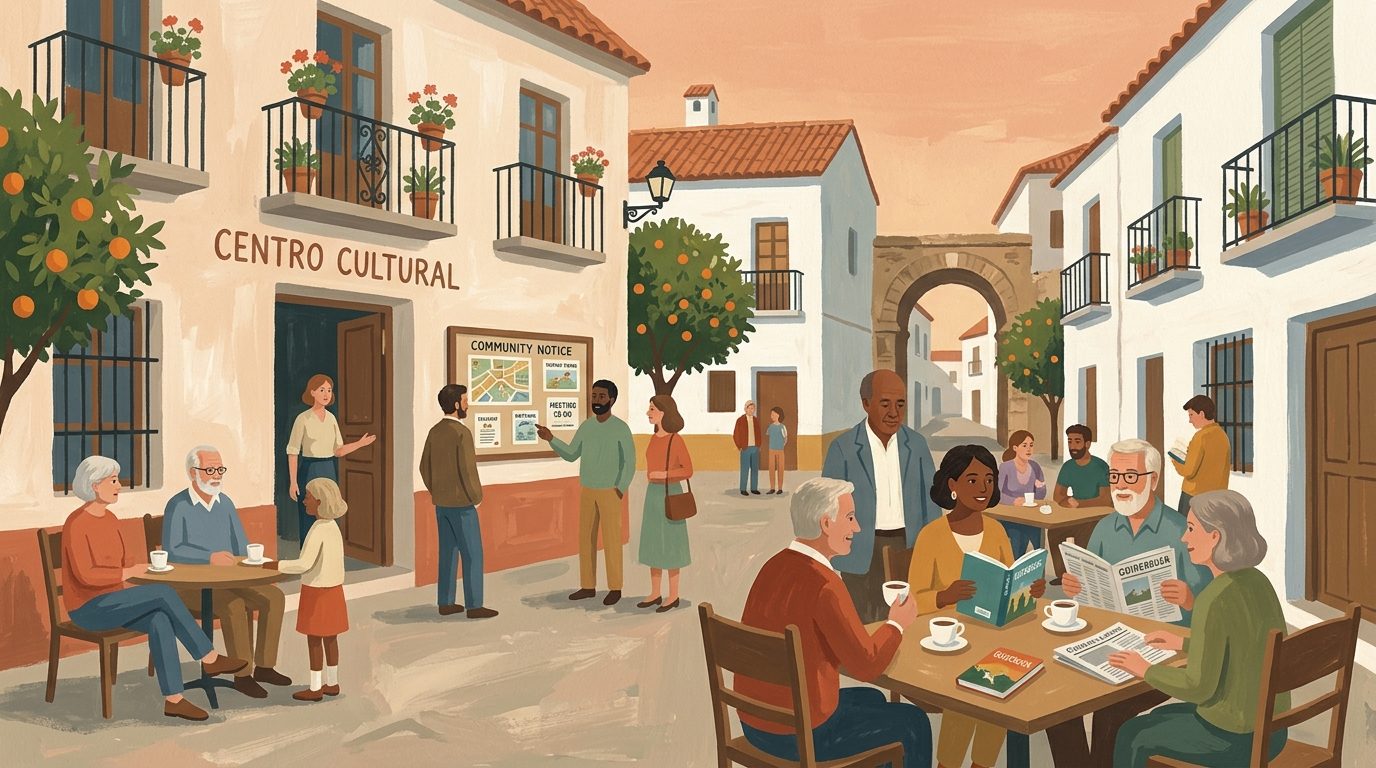
Expat communities can make the first months in Andalucía easier, but they work best as a bridge into local life, not a replacement for Spanish language, official sources or local neighbours.
Moving to a new country is exhilarating but frequently disorientating. Learning entirely new civic systems while attempting to build a social life from scratch is a heavy burden. English-speaking groups can offer a crucial lifeline. They provide practical tips, personal introductions and emotional support, especially during those early months when you are navigating local bureaucracy, securing housing and adjusting to the language.
However, you must use these communities carefully. While they are an excellent source of local recommendations and shared lived experience, they are never a substitute for official advice regarding residency, tax, healthcare or property law. Relying too heavily on unofficial channels can lead to expensive mistakes.
Where to look for your community
Finding your feet requires looking in multiple places. Different groups serve entirely different purposes, and diversifying your social portfolio is the quickest way to feel settled.
- Local town groups: Town-specific Facebook or WhatsApp groups are fantastic for immediate local knowledge, such as finding a reliable plumber or knowing when the weekly market is held. Always check the moderation quality and ignore anonymous legal advice.
- Language exchanges (Intercambios): These informal meetings, often held in local cafes or bars, are designed to help English speakers learn Spanish and vice versa. They are one of the most effective ways to meet Andalucían locals in a low-pressure environment.
- Volunteering: Charities, animal shelters, cultural associations and environmental groups create structured, meaningful contact beyond casual coffee mornings. Helping out at a local food bank or rescue centre roots you in the wider community.
- Sports and hobbies: Joining a walking group, cycling club, padel team, community choir or photography class often yields much healthier interactions than spending hours scrolling through complaint-focused online forums.
- Consular channels: Always use official consulate pages for nationality-specific alerts, travel warnings and passport services.
A step-by-step approach to building your network
Integrating into Andalucía does not happen overnight. Following a structured approach can prevent you from feeling overwhelmed while moving to Andalucía.
- Assess your immediate practical needs: In your first weeks, use online groups purely for logistics. Find out where the nearest medical centre is, which supermarkets stock familiar comforts and how the local rubbish collection works.
- Join local digital hubs carefully: Search for your specific town or village on Facebook. Before posting a question, always use the search bar to look at old posts. The answers to common questions are usually already there.
- Transition to offline events: Once you are settled, attend an informal meetup. Choose public, low-pressure settings like a morning walking group or an open coffee morning where you can easily leave if the dynamic does not suit you.
- Commit to a structured local activity: Within your first three months, join one regular class or club. Whether this is an art class or a local sports league, consistency is the foundation of genuine friendship.
- Phase into Spanish-dominant spaces: As your confidence grows, actively seek out environments where English is not the primary language. Attending local fiestas or enrolling in municipal courses ensures you do not remain trapped in a foreign bubble.
Common mistakes and real-world friction
It is incredibly easy to fall into a few common traps when leaning on expat communities. The most frequent issue is the assumption that rules are applied identically across the whole region. Town hall (ayuntamiento) procedures vary drastically between provinces. A process that takes two days in a small inland village in Jaén might take three months in a busy coastal municipality in Málaga.
Another point of friction is the notorious "cita previa" (prior appointment) system for government offices. Appointments for residency or driving matters are frequently scarce. You will often see individuals in online groups offering to secure these appointments for a fee. This is a highly unregulated grey area and paying strangers on social media for free government appointments is strongly discouraged. It can expose you to scams or data theft.
Finally, avoid the negativity vortex. If your entire social life, shopping habits, paperwork advice and news consumption come from a single English-speaking circle, your view of Andalucía can become narrow and cynical. Use expat contacts for initial support, then deliberately expand your horizons to build a sustainable life and overcome homesickness.
When professional help is mandatory
Do not crowdsource high-stakes life decisions. When dealing with residency applications, long-term visa renewals, complex tax obligations, property purchases, driving licence exchanges or setting up a new business, you must step away from social media.
The rules governing expats change frequently, and another resident's successful application from three years ago holds no legal weight today. Many older expats possess grandfathered rights that simply do not apply to new arrivals. For these critical tasks, use official government portals and hire a qualified, registered "gestor" (administrative agent), lawyer or tax adviser.
How to judge a local recommendation
If you are looking for an English-speaking professional, online groups can be a helpful starting point. However, a good recommendation must be specific to be useful. It should include a recent date, the relevant town or province, the exact service provided, and a confirmation that the recommender's situation matches yours.
A glowing review for a rental lawyer in Cádiz is completely irrelevant if you are dealing with a rural-property planning dispute in Almería. Similarly, a tax solution that worked perfectly for a retired pensioner may be disastrous for a remote worker or self-employed freelancer (autónomo).
Even when several people recommend the same professional, you must still conduct your own checks. Verify their official credentials, ask for their written terms of business, confirm their fee structure and ensure you understand the exact scope of their work. For informal help from community members, keep your boundaries clear. A neighbour might be incredibly generous with their advice, but they are not legally or financially responsible if you miss a crucial deadline based on their outdated information.
Moving from online to local daily life
After the initial flurry of introductions, your goal should be to replace digital scrolling with physical, repeat habits. Familiarity breeds trust in southern Spain. Go to the same market stall every week, order your morning coffee at the same local bar, volunteer on a monthly basis, or attend town hall cultural events. If you want to understand these local rhythms deeply, familiarise yourself with a practical guide to daily life and social customs.
Friendships in Andalucía generally grow from being seen regularly in the neighbourhood, not from making one dramatic, exhausting effort to integrate. Learning Spanish in Andalucía is the ultimate key to unlocking these relationships. Even a basic, heavily accented effort to speak the language will transform the way locals interact with you.
Frequently asked questions
Are expat communities only found on the coast?
No. While the Costa del Sol and coastal Almería have massive, highly visible international populations, inland Andalucía also has thriving expat communities. However, inland groups tend to be smaller, quieter, and often coordinate via private WhatsApp groups or local bulletin boards rather than large public Facebook pages.
How can I verify a professional recommended on Facebook?
Always ask for their official registration number. For administrative agents, you can verify their status through the Consejo General de Gestores Administrativos. For lawyers (abogados), you can check the regional Colegio de Abogados. Never hand over money or original documents without a formal, written contract.
What is an intercambio and are they free?
An intercambio is a language exchange where native Spanish speakers and native English speakers meet to practice each other's language. They are usually entirely free, aside from buying your own drink at the venue. They are excellent, informal ways to build a local network.
What should I do if I cannot get a government appointment online?
Patience and persistence are required. Appointment slots are often released by the police or town halls at specific times of the day (often early morning). If you are struggling, a registered gestor has access to professional booking portals and can secure official appointments legally on your behalf.
Official and trusted checks
Always base your final decisions on verified sources. Use the British Consulate in Málaga and Brits in Spain for UK consular updates. U.S. citizens should consult the U.S. Consular Agency in Fuengirola. For community involvement, check the Plataforma Andaluza del Voluntariado, the Junta de Andalucía volunteering pages, and the Junta sport and leisure portal. Cudeca is a prime example of a major local charity where international residents contribute significantly. Finally, always use the Consejo General de Gestores Administrativos when checking professional status.
Summary
- Expat groups are highly useful for local introductions and sharing lived experience.
- You must verify all legal, tax, health and property advice through official government sources or registered professionals.
- Avoid paying unverified individuals on social media to secure free government appointments.
- Use local clubs, regular volunteering and language exchanges to meet Andalucíans and diversify your network.
- Official consular channels remain the only reliable source for nationality-specific alerts and travel advice.
- A balanced social circle that includes both international and local friends is far healthier than remaining in a single expat bubble.
Last reviewed: 14 July 2026 · Editorial policy
Related guides
How to Register on the Padrón in Andalucía: A Practical Guide
A complete guide to registering on the padrón in Andalucía: how to book appointments, exact documents needed, volante vs certificado, and how to avoid accidental de-registration.
8 min read

A Practical Guide to the TIE Residency Card in Andalucía
A comprehensive, practical guide to getting your TIE residency card in Andalucía, covering the cita previa system, Modelo 790-012 fees, document checks, and real-world friction points.
8 min read

NIE Number: The Essential Guide for Foreigners in Andalucía
A comprehensive practical guide to securing your NIE in Andalucía. We explain the difference between the NIE and TIE, exactly how to navigate the frustrating appointment and bank fee systems, and the common paperwork mistakes that catch out new arrivals.
7 min read

The Digital Nomad Visa for Spain: A Practical Guide for Remote Workers
A comprehensive guide to Spain’s digital nomad visa for those moving to Andalucía. Covering step-by-step applications, tax reality checks, social security hurdles, and avoiding common local pitfalls.
7 min read

Moving to Andalucía: A Practical Relocation Guide
A practical roadmap for moving to Andalucía, covering visas, the padrón, the cita previa system, digital certificates, and the exact order to tackle your post-arrival paperwork.
7 min read

Non-Lucrative Visa Guide: Moving to Andalucía Without a Work Permit
A complete non-lucrative visa guide for expats moving to Andalucía. Covers IPREM financial requirements, health insurance rules, tax cautions, and step-by-step TIE card instructions.
8 min read
More guides

Navigating Spanish Bureaucracy: A Practical Survival Guide
A practical survival guide to Spanish bureaucracy in Andalucía: official sources, appointments, documents, digital certificates, translations and when to use a gestor.
7 min read
Understanding the Spanish School System in Andalucía
A comprehensive guide for expats navigating the Spanish school system in Andalucía, covering state, concertado, and private schools, crucial admission timelines, catchment rules, and essential paperwork.
8 min read

A Practical Guide to Working Remotely from Andalucía
A comprehensive guide to legally and practically working remotely from Andalucía, covering digital nomad visas, tax residency, employment structures, internet setup, and navigating Spanish bureaucracy.
7 min read
Recycling and Waste Management in Andalucía: A Practical Guide
A complete guide to recycling and waste in Andalucía. Learn how to use the colour-coded bins, access clean points, dispose of bulky items legally, and navigate local rubbish collection taxes.
8 min read

Registering a Foreign Vehicle in Spain: A Practical Guide
A comprehensive guide to registering a foreign vehicle in Andalucía. Learn the step-by-step process for ITV inspections, DGT paperwork, tax exemptions, customs rules, and the real-world friction to avoid.
8 min read

Setting Up Utilities in Andalucía: A Practical Guide
A complete guide to setting up utilities in Andalucía: navigating electricity (potencia and boletines), local water monopolies, gas bottles, internet contracts, and how to avoid inheriting previous debts.
8 min read

Retiring to Andalucía: A Practical Guide to Residency, Healthcare, and Finance
Retiring to Andalucía requires careful planning across residency, healthcare, and tax. This practical guide covers non-lucrative visas, the TIE process, S1 healthcare registration, pensions, and common administrative hurdles.
8 min read

Having a Baby in Andalucía: A Practical Guide to Maternity and Paperwork
Navigating pregnancy and childbirth in southern Spain involves managing a high-quality medical system alongside a complex administrative process.
8 min read

Building a Sustainable Life and Overcoming Homesickness in Andalucía
Settling in Andalucía requires more than just sunshine and paperwork. Learn how to navigate culture shock, build sustainable local routines, overcome homesickness, and manage seasonal changes in southern Spain.
7 min read
Newsletter
More stories from Andalucía
Weekly notes, seasonal picks, and the next guides worth bookmarking.