
attraction · Córdoba
Baños del Alcázar Califal
Andalucía 365 · Updated 18 July 2026
Our Verdict
“This compact, highly evocative archaeological site rewards a slower pace. The thick stone walls and low lighting create a quiet, atmospheric experience. While a thorough visit takes only forty-five minutes, excellent introductory videos and scale models make it easy to visualise the ruins in their original splendour. An essential stop for architecture enthusiasts.”
Last verified: July 2026
A Royal Retreat in the Caliphate
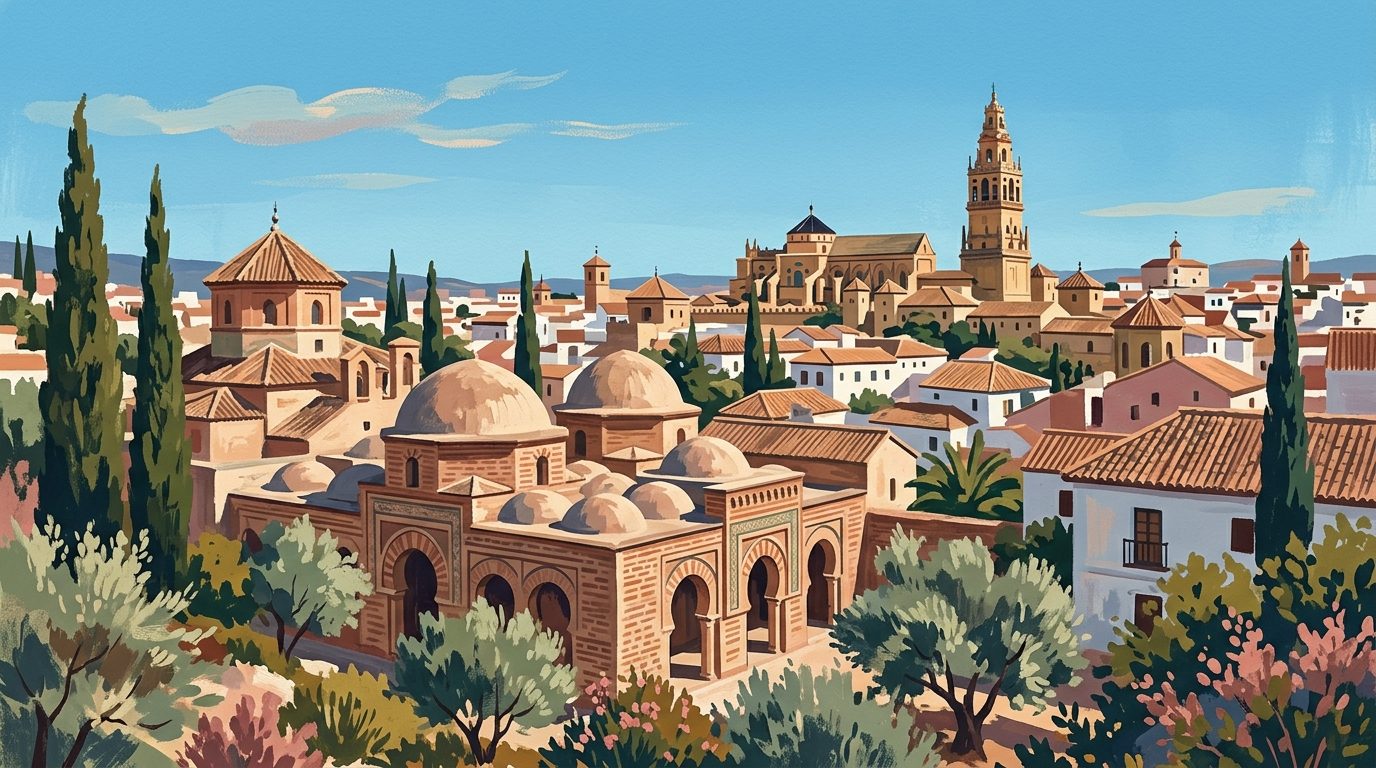
Shafts of natural light filter through eight-pointed star skylights, illuminating the vaulted ceilings and marble columns of the Baños del Alcázar Califal. Built in the tenth century under the orders of Caliph Al-Hakam II, these private royal baths were a vital component of the Umayyad palace complex in Córdoba. For the ruling elite, the hammam was far more than a facility for physical cleansing. It operated as an essential arena for social ritual, political plotting, and the daily maintenance of courtly hierarchy. Discovered completely by chance in 1903 and systematically excavated in the early 1960s, the site provides a fascinating counterpoint to the city's grand religious monuments. Today, visitors step below street level into a sequence of atmospheric stone chambers. The experience reveals the profound engineering mastery of the Caliphate and offers a stark reminder of the sophisticated urban culture that defined medieval Andalucía.
Inside the Andalusi Bathhouse
The architectural core of the complex follows the traditional layout of a Roman-influenced Moorish bathhouse. Visitors move progressively through three distinct thermal zones.
The Cold and Warm Rooms
Your journey begins in the frigidarium, or cold room. This elongated space introduces the distinctive star-shaped skylights, known as lucernas. These architectural features were highly functional, providing controlled ventilation while casting shifting geometric patterns of sunlight across the stone floors throughout the day. Moving forward, you enter the tepidarium, the warm room. This was the largest and most impressive space in the hammam, functioning as the primary social hub for the Caliph and his courtiers. Symmetrical horseshoe arches rest on sturdy marble columns, supporting an elegant network of vaulted ceilings. Here, attendants provided daily grooming services, including massages and shaving.
The Hot Room and Heating Systems
The final thermal zone is the calidarium, or hot room. This chamber demonstrates the advanced technological capabilities of the tenth-century builders. You can observe the massive boiler and oven areas, where attendants kept fires burning constantly to heat water in large bronze cauldrons. The resulting steam circulated through a sophisticated hypocaust system beneath the floors and within the walls. Original ceramic pipes and carefully sloped drainage channels carved directly into the stone demonstrate a highly efficient approach to water management. To understand how this mastery of engineering extended to public and religious architecture, you can read our comprehensive guide to the Mezquita-Cathedral of Córdoba, the absolute pinnacle of Umayyad design.
Taifa Expansions and Almohad Additions
The bathhouse did not remain a static monument after the collapse of the Umayyad Caliphate. Subsequent ruling dynasties recognised the prestige of the site and initiated significant expansions. During the Taifa period in the eleventh century, a grand reception hall was constructed adjacent to the original baths. This space was heavily decorated with carved plasterwork and rich red ochre murals, serving as a formal setting for receiving distinguished guests.
In the twelfth century, the Almohad rulers added an entirely new bathhouse to the complex, integrating it with the older infrastructure. Walking through these later additions, informative display panels help you imagine the intense sensory environment of the era. The air would have been thick with steam, scented heavily with musk, aromatic herbs, and essential oils burning in brass braziers. If you are curious about the broader residential structures of the era, consider exploring Medina Azahara, the sprawling ruined palatine city located just outside the modern urban centre.
The Verdict
This compact, highly evocative archaeological site rewards a slower pace. The thick stone walls and low lighting create a quiet, atmospheric experience. While a thorough visit takes only forty-five minutes, excellent introductory videos and scale models make it easy to visualise the ruins in their original splendour. An essential stop for architecture enthusiasts.
Practicalities and Terrain
The ruins are situated in the Campo Santo de los Mártires in the largely pedestrianised historic centre of Córdoba. Arriving on foot is the most sensible and straightforward approach. If you are driving into the city, the nearest public car park is the Parking Centro Histórico on Avenida de los Custodios, which requires a flat ten-minute walk to the entrance. Because the site is located mostly underground, the stone chambers remain remarkably cool. This makes the baths a highly effective refuge during the intense afternoon heat of a Cordoban summer.
When planning your visit, bear in mind that the original stone floors can be uneven and slippery in places. You will need comfortable, flat shoes with good grip. Furthermore, access between some of the interior chambers involves passing through very low, narrow archways, requiring visitors to stoop. The ambient lighting is intentionally kept low to protect the ruins and enhance the atmosphere, so ensure your camera is configured for low-light photography without relying on a flash. Before travelling, check the official Turismo de Córdoba website for the latest visitor guidelines and admission policies.
What to Do Next
The most logical and immediate pairing is located directly across the square. The Alcázar de los Reyes Cristianos offers extensive terraced gardens, impressive mosaics, and imposing defensive towers that chart the later Christian history of the city. Alternatively, if you want to understand more of the historic layout of the capital, you can continue exploring the Caliphate capital by walking through the narrow, whitewashed streets of the adjacent Jewish Quarter.
Nearby worth your time
A few well-placed stops for extending the day without turning it into a checklist.
Continue through Córdoba City
Step back into the wider landscape with local guides, nearby places and the province overview.
Things to do · 10 min
Golf in Córdoba Province: Courses, Holidays, and Shops
Discover practical tips, course details, and holiday planning advice for playing golf in Córdoba province, from the mountain fairways of Sierra Morena to the historic greens of Los Pedroches.
Feature · 8 min
The Caliphate of Córdoba
In 929, Abd al-Rahman III declared himself Caliph, breaking religious ties with the Middle East and launching an era of unparalleled architectural and intellectual achievement.
Itinerary · 9 min
A Weekend in Cordoba: Two Days in Andalucía's Caliphate City
Spend 48 hours in Cordoba exploring the mesmerising Mezquita, getting lost in the whitewashed streets of the Judería, and eating excellent salmorejo.