
attraction · Córdoba
Caballerizas Reales
Andalucía 365 · Updated 18 July 2026
Mid-range
Our Verdict
“The Caballerizas Reales offer a striking look at 16th-century military architecture, but the true highlight is the evening equestrian show. While daytime visits are brief, the dramatic display of Andalusian horsemanship in the historic courtyard is a memorable spectacle for families and equestrian enthusiasts.”
Last verified: July 2026
When the poet Federico García Lorca walked into the main nave of Córdoba's royal stables, he famously called the space a cathedral for horses. It is easy to see why. Three long aisles stretch beneath vaulted ceilings of warm sandstone, supported by brick arches and robust stone columns. Beneath your feet, the ground is carefully cobbled to provide grip for the animals, while the air carries the unmistakable scent of hay, saddle leather and the heavy musk of the Purebred Spanish Horse.
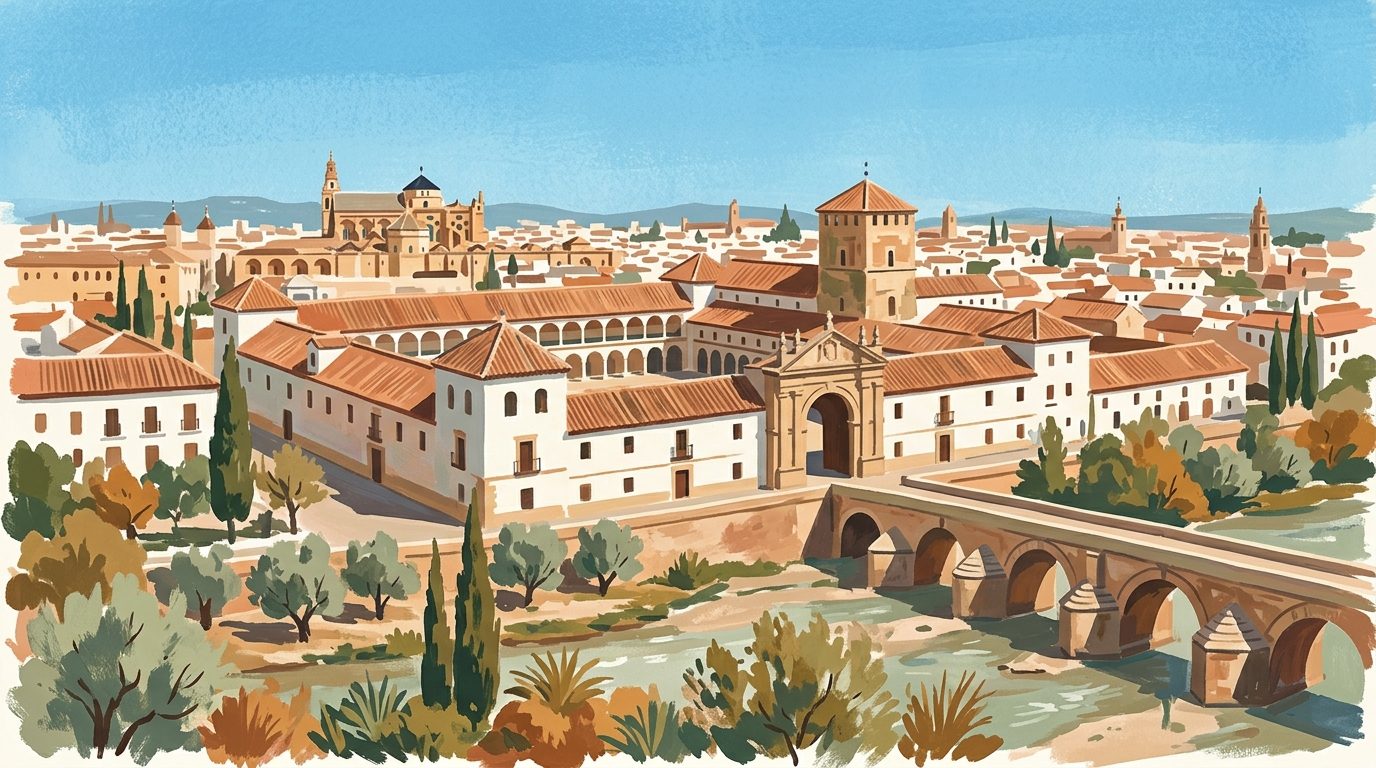
Ordered by King Felipe II in 1570, the Caballerizas Reales were built for a singular purpose: to breed a robust, elegant horse fit for the Spanish crown. The resulting bloodline, known as the Andalusian or Pura Raza Española, was developed by systematically selecting and refining the best regional stock. Today, this military-inspired complex, located immediately adjacent to the Alcázar de los Reyes Cristianos, remains a working equestrian centre. It serves as both a monument to 16th-century architectural ambition and a living stage for traditional horsemanship.
A Masterpiece of Military Architecture
While the exterior presents a restrained, almost severe military facade, the interior reveals an unexpected grandeur. King Felipe II entrusted the construction to Diego López de Haro, his Master of the Horse, who integrated the stables into the defensive perimeter of the neighbouring Alcázar. Although the complex suffered a devastating fire in 1734, the subsequent reconstruction ordered by King Fernando VI preserved the original layout and aesthetic.
The heart of the complex is the main stable block. Here, you will find active stalls housing the resident stallions, flanked by the impressive groined vaults that inspired Lorca's famous comparison. Look for the imposing coat of arms of King Carlos III above the main entrance, a later addition that crowns the otherwise austere Renaissance stonework. The thick walls ensure the interior remains remarkably cool, offering a welcome retreat during the height of summer in Andalucía.
The Historic Carriage Collection and Courtyards
Beyond the primary stabling area, visitors can explore wide limestone-paved courtyards that act as daily training arenas. On any given morning, riders can be seen putting their mounts through rigorous dressage exercises, with the ancient city walls providing an evocative backdrop.
The complex also features an impressive collection of historic carriages housed within the grounds. The display includes a variety of impeccably preserved ceremonial, sporting and agricultural vehicles, primarily dating from the 19th century. These carriages provide context for the logistical reality of aristocratic life before the advent of the motorcar. The transition in the surrounding architecture, moving from the refined Renaissance styling of the main stables to the purely functional military outbuildings, is clearly visible as you walk through these historic areas.
The Evening Equestrian Show
For most visitors, the primary draw of the Caballerizas Reales is the evening performance, titled "Pasión y Duende del Caballo Andaluz". This carefully choreographed exhibition is an unapologetic celebration of the Andalusian breed's agility, intelligence and deep connection to the cultural identity of Southern Spain.
The performance combines high-school dressage, known as Alta Escuela, with Doma Vaquera, the traditional Spanish country riding style originally developed for cattle herding. Riders in traditional dress execute complex, precise manoeuvres to a soundtrack of live flamenco music and dance. While some elements of the show lean heavily into theatricality, the sheer technical skill of both horse and rider is undeniable. The historic main courtyard provides an exceptionally atmospheric setting for the display, particularly as the evening light fades across the weathered stone walls.
A Candid Assessment
As a heritage site, the Caballerizas Reales offer an engaging, albeit specialised, experience. If your interest lies solely in Renaissance architecture, a brief daytime visit to the main nave and courtyards will likely suffice. However, if you have an affinity for equestrian traditions, or are travelling with children, the evening show provides genuine entertainment and spectacle.
It is worth noting that the daytime experience is relatively brief. Without a formal guide, you can walk through the stables, inspect the carriage collection and watch the morning exercises in under an hour. The evening performance demands a more significant commitment of time, lasting over an hour itself, with an expectation that guests arrive early to secure a good vantage point.
Practicalities and Planning
The Caballerizas Reales are situated in the historic centre, a short walk from the monumental Mezquita-Cathedral of Córdoba and the narrow, whitewashed streets of the Jewish Quarter. The Roman Bridge and Calahorra Tower are also just a few minutes away on foot. The streets immediately surrounding the attraction are heavily pedestrianised or restricted to resident traffic. If you are arriving by car, the most practical public parking options are located at Paseo de la Victoria or El Arenal, on the edges of the historic core.
When planning your itinerary, this attraction pairs sensibly with a morning visit to the adjacent Alcázar fortress, or as part of a broader exploration when spending Two Days in Cordoba. The terrain within the complex consists of uneven stone flags and traditional cobblestones. Visitors using mobility aids or wheelchairs should be aware that the uneven surface requires careful navigation, though the main viewing areas and ground-floor stable block are fully accessible.
The venue operates as both a heritage site and an active equestrian centre, offering general admission for daytime exploration and ticketed access for the evening performances. To coordinate a visit, particularly during major municipal events like the May fair or Easter weekend when demand is high, consult the official Córdoba Ecuestre website for comprehensive details on the current season.
Nearby worth your time
A few well-placed stops for extending the day without turning it into a checklist.
Continue through Córdoba City
Step back into the wider landscape with local guides, nearby places and the province overview.
Things to do · 10 min
Golf in Córdoba Province: Courses, Holidays, and Shops
Discover practical tips, course details, and holiday planning advice for playing golf in Córdoba province, from the mountain fairways of Sierra Morena to the historic greens of Los Pedroches.
Feature · 8 min
The Caliphate of Córdoba
In 929, Abd al-Rahman III declared himself Caliph, breaking religious ties with the Middle East and launching an era of unparalleled architectural and intellectual achievement.
Itinerary · 9 min
A Weekend in Cordoba: Two Days in Andalucía's Caliphate City
Spend 48 hours in Cordoba exploring the mesmerising Mezquita, getting lost in the whitewashed streets of the Judería, and eating excellent salmorejo.