
attraction · Almería
Museo de Almería
Andalucía 365 · Updated 18 July 2026
Our Verdict
“The Museo de Almería is an outstanding, highly focused archaeological museum. While those looking for extensive Roman or Moorish collections might feel short-changed, visitors interested in prehistory will find an exceptional, modern presentation of two of Europe's most important ancient cultures. The logical layout and striking architecture make it a highly rewarding stop.”
Last verified: July 2026
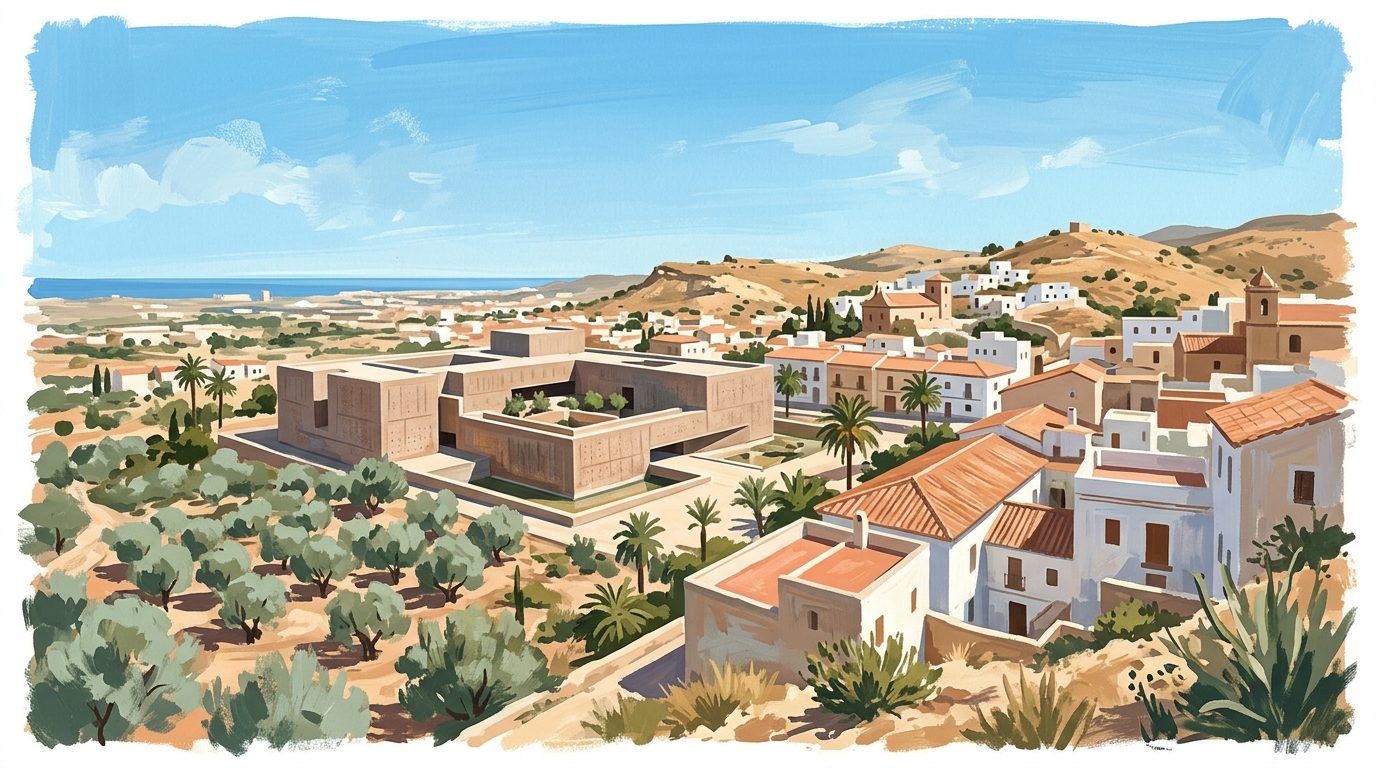
The Museo de Almería operates as a time machine constructed from concrete and wood. Reopened in 2006 in a critically acclaimed contemporary building designed by architects Ignacio García Pedrosa and Ángela García de Paredes, the museum firmly breaks away from dusty, static archaeological displays. Its striking modern facade gives way to a light-filled interior defined by natural timber ceilings and an impressive 13-metre-high Stratigraphic Column. This massive vertical timeline anchors the central stairwell, rising seamlessly through the floors to illustrate the layers of human history discovered across the province. The museum owes much of its existence to the Belgian mining engineer Luis Siret, who arrived in Andalucía in 1880 and subsequently pioneered modern archaeological methods in Spain. Siret uncovered the two prehistoric societies that now form the absolute core of the museum collection, establishing Almería as one of the most important archaeological regions in Europe.
Los Millares and the Copper Age
The first floor is entirely dedicated to the Copper Age society of Los Millares, which flourished during the third millennium BC. Visitors encounter a sophisticated array of artefacts recovered from the ancient settlement located near Santa Fe de Mondújar. The displays include intricately carved stone and bone oculados, which are small idols defined by large, exaggerated eyes used in religious or ancestral worship. Early copper tools and finely decorated bell beaker pottery demonstrate the rapid technological advancement of the era. The museum uses excellent graphics and models to explain how this society managed advanced defensive walls, complex metallurgy, and agricultural innovation. Burial goods retrieved from their communal tholos tombs reveal a highly stratified population with distinct social hierarchies, showcasing exactly how early wealth and power were distributed in ancient Andalucía.
El Argar and the Bronze Age
Moving up to the second floor, the narrative shifts to the second millennium BC and the Bronze Age Argaric culture. This era marks a significant, almost abrupt change in social organisation and burial customs across the Iberian Peninsula. Communal tombs were entirely replaced by individual burials in pithoi, which are massive ceramic jars placed directly beneath the floors of domestic homes. Visitors can examine these large burial jars alongside striking silver diadems, bronze daggers, and halberds. These specific artefacts point to a fierce warrior elite heavily focused on territorial control and strict social hierarchy. Detailed dioramas and audiovisual displays illustrate the fortified hilltop settlements of the Argaric people, providing a clear visual context for how they lived, fought, and died 4000 years ago.
The Upper Floors and Temporary Exhibits
While the museum heavily specialises in recent prehistory, the third floor expands the historical timeline to cover the Roman world and the Andalusí period. This section features a rotating selection of artefacts, often highlighting finely carved Roman statues, detailed mosaics, and beautiful Islamic ceramics. Almería was an incredibly prosperous port during the Andalusí period, and the exhibits reflect this through remnants of the once powerful maritime trade that defined the coastal capital. You might also spot some of the region's distinctive inscribed Islamic tombstones, offering a glimpse into the diverse populations that have called this coastline home. A large ground-floor exhibition space frequently hosts high-quality temporary displays ranging from contemporary art collections to deep dives into specific historical periods. This ensures that repeat visitors always have a compelling reason to return.
The Candid Verdict
The Museo de Almería is an outstanding, highly focused archaeological museum. While those looking for extensive Roman or Moorish collections might feel short-changed, visitors interested in prehistory will find an exceptional, modern presentation of two of Europe's most important ancient cultures. The logical layout and striking architecture make it a highly rewarding stop.
Practical Planning and Accessibility
The museum sits on Carretera de Ronda, about a 15-minute walk from the Almería Intermodal railway and bus station. The building is fully accessible for wheelchair users, featuring step-free entrances, spacious lifts between floors, visual signposting, and accessible toilets. Visitors driving to the museum can find designated parking spaces for people with reduced mobility on the surrounding streets. The permanent collections are rarely overcrowded, offering a calm and heavily air-conditioned environment during the intense heat of the Andalusian summer. Admission policies and schedules can change, so you should check the official Museo de Almería website for current opening days and precise entry fees.
Sensible Pairings
For a broader understanding of the historical layers of Almería, pair your visit with a walk through the historic centre. A straightforward walk south leads directly to the grand fortress architecture detailed in our Guide to Almería Cathedral and the Historic City Centre. Alternatively, you can explore the city's broader narrative, as covered in Almería City: Sunlight, Sea Fortresses and the Hollywood of Europe, before heading uphill to see the massive Moorish walls described in our Guide to the Alcazaba de Almería: Spain’s Coastal Citadel. If your archaeological interests extend into the mountains, consider a trip north to explore the prehistoric rock art and defensive structures detailed in our guide to Los Vélez: Almería’s High-Altitude Renaissance Borderlands. To see the actual landscapes where many of these ancient communities settled, explore the wild coastal stretches outlined in Beyond the Dunes: A Guide to the Volcanic Coast of Cabo de Gata-Níjar.
Nearby worth your time
A few well-placed stops for extending the day without turning it into a checklist.
Continue through Almería City
Step back into the wider landscape with local guides, nearby places and the province overview.
Place guide · 8 min
A Local Guide to Playa de Mojácar: Sands, Spirits and Almerían Soul
Experience the diverse 17-kilometre coastline of Mojácar Playa, where volcanic sands meet clear waters and lively chiringuitos offer the perfect Almerían escape.
Place guide · 7 min
Playa de los Genoveses: A Guide to the Wild Heart of Cabo de Gata
Experience the untouched beauty of Playa de los Genoveses, a vast volcanic bay in Almería where golden sands meet shallow turquoise waters in a protected natural park.
Itinerary · 13 min
5 Days in Almería: City, Desert and Cabo de Gata
A realistic five-day driving itinerary through Almería province, balancing the historic capital, the cinematic Tabernas badlands, and the protected volcanic shores of Cabo de Gata.