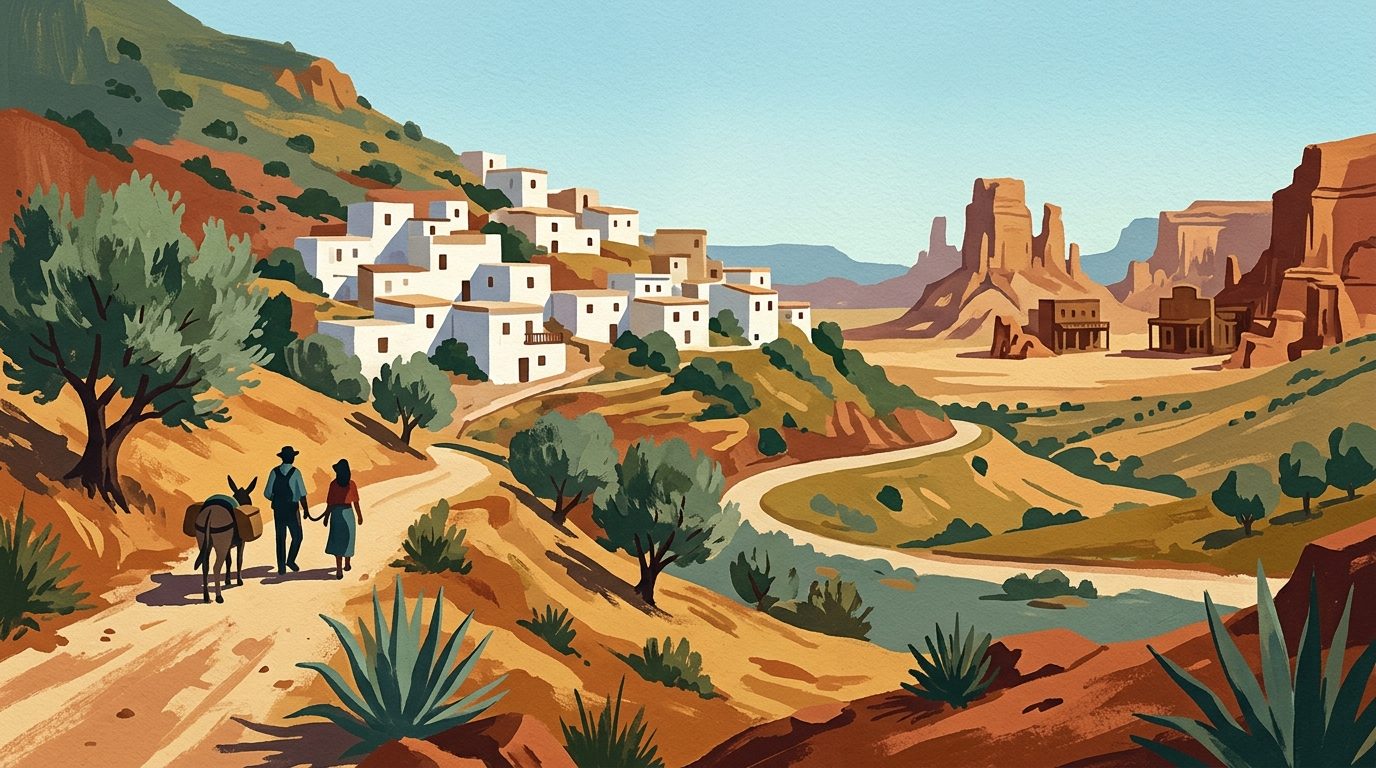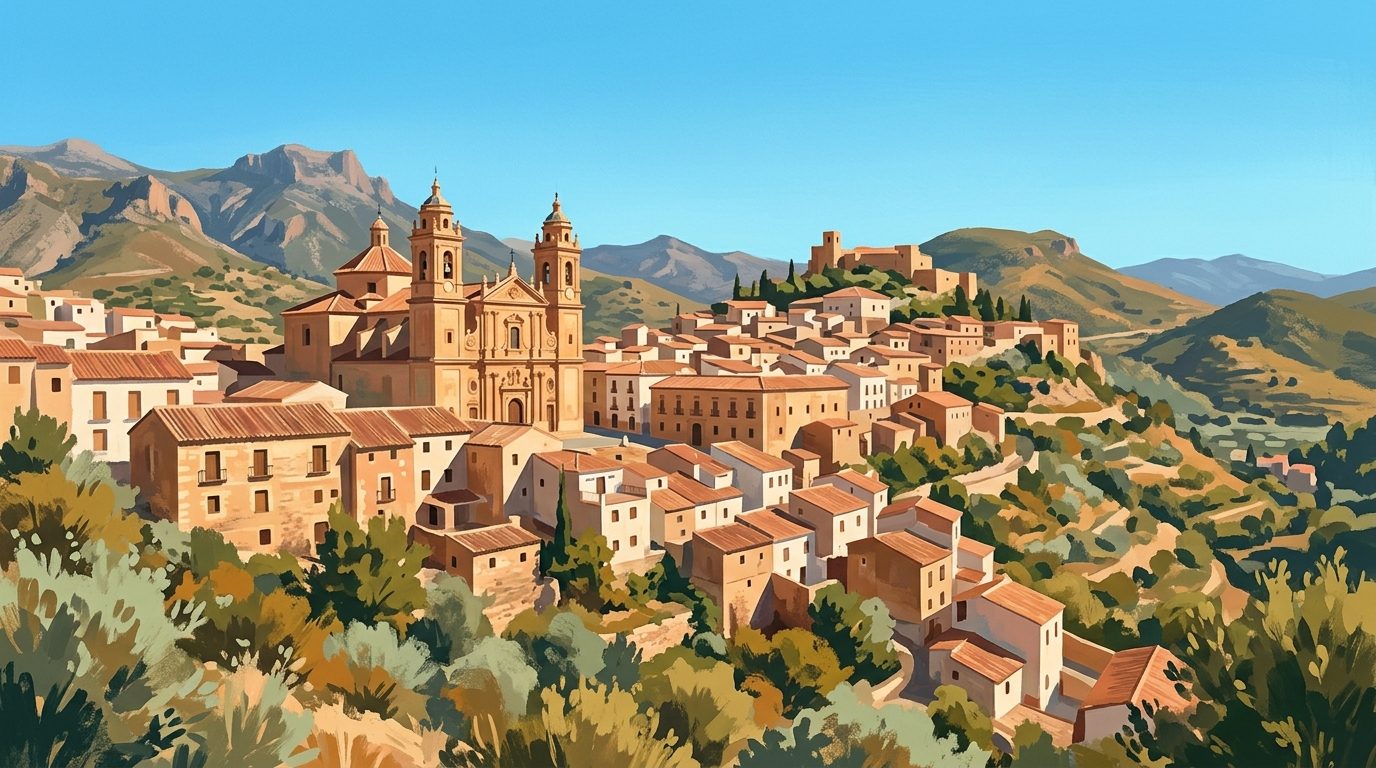
Vélez-Rubio stands as the elegant gateway to northern Almería, a town where grand 18th-century facades and wide boulevards replace the narrow labyrinthine streets typical of the region. As the administrative heart of the Los Vélez district, it offers a sophisticated glimpse into the historical wealth generated by the Marquises of Los Vélez.
While many visitors to the northern reaches of Almería are drawn immediately to the silhouette of the castle in neighbouring Vélez-Blanco, Vélez-Rubio offers a different, arguably more refined experience. Situated on the slopes of the Sierra de María-Los Vélez Natural Park, this town flourished during the Enlightenment. Its status as a vital stop on the royal road connecting Granada to Murcia transformed it from a modest settlement into a centre of Baroque and Neoclassical architecture. Today, it remains a thriving market town, retaining a sense of purpose that goes beyond tourism.
Walking through the town, you quickly notice the change in scale compared to the smaller white villages nearby. The streets are broader, the plazas are more expansive, and the houses often feature elaborate stone coats of arms and wrought-iron balconies. It is a place that invites a slower pace, where you can spend an afternoon tracing the evolution of Almerian civil architecture before heading into the mountains for a hike.
What to See & Do in Vélez-Rubio
The Church of the Encarnación
The undisputed centrepiece of the town is the Iglesia de la Encarnación. Constructed between 1753 and 1769, it is widely considered the finest example of religious Baroque architecture in the province of Almería. Its twin square towers, topped with octagonal sections and tiled roofs, dominate the skyline and can be seen from several miles away as you approach on the A-92N motorway.
The facade is particularly striking, carved from local reddish-brown stone that glows during the golden hour. It features intricate carvings and a grand entrance that reflects the power and wealth of the Church during the 18th century. Inside, the space is vast and airy, featuring a magnificent high altar and several side chapels that house important religious imagery. Even if you are not religious, the sheer scale and craftsmanship of the masonry make this an essential stop.
Museo Comarcal Velezano Miguel Guirao
Housed in the former Royal Hospital (Hospital Real), an 18th-century building with a beautiful courtyard, this museum provides a comprehensive look at the human occupation of the Los Vélez region. The collection was started by Miguel Guirao Gea, a local doctor and academic, and has grown into one of the most significant archaeological repositories in inland Almería.
The exhibits are arranged chronologically, starting with prehistoric finds from the nearby caves, including replicas of the cave paintings found in the Cueva de los Letreros. One of the highlights is the Roman section, which details the history of the 'Dama de Chirivel' (the original of which is housed in the Museo de Almería). The museum also covers the Moorish period and the later Christian resettlement, providing the necessary context to understand how this border territory functioned for centuries.
El Paretón Roman Villa
Just on the outskirts of the town lies the site of El Paretón. While many Roman remains in Andalucía are heavily restored, this site offers a raw look at a rustic Roman villa. Excavations have revealed a complex that was likely the centre of a large agricultural estate. You can see the remains of the thermal baths and parts of the residential quarters. It serves as a reminder that Vélez-Rubio has been a productive agricultural hub for two millennia, long before the Baroque mansions were built.
The Saturday Market
To see the town at its most authentic, visit on a Saturday morning. The weekly market is one of the largest in the northern part of the province, drawing farmers and residents from throughout the comarca. This is the place to buy local almonds, honey from the Sierra de María, and cured meats. The atmosphere is social and lively, with the local cafes spilling out onto the pavements as people take a break from their shopping to enjoy a coffee and a tostada.
Civil Architecture and Mansions
Beyond the main monuments, Vélez-Rubio is home to several impressive private residences built during the 18th and 19th centuries. The Casa de las Columnas on Calle San Francisco is a prime example, featuring a grand entrance and a strictly symmetrical facade. A walk along Calle Carrera and Calle San Francisco reveals a series of manor houses that belonged to the local bourgeoisie and nobility, illustrating the town's golden age of trade and agriculture.
Practical Information
Getting There: Vélez-Rubio is easily accessible via the A-92N motorway, which connects Granada and Murcia. It is approximately a 90-minute drive from Almería city and about 50 minutes from Lorca. There are regular bus services from Almería and Murcia operated by ALSA, though a car is recommended if you plan to explore the surrounding natural park.
Parking: There is a large public car park near the entrance of the town by the sports centre, but street parking is generally available on the wider avenues. Avoid driving into the very centre of the old quarter, as the streets become narrow and one-way systems can be confusing.
Opening Times:
- Church of the Encarnación: Generally open for morning mass and again in the evenings. Visitors are welcome outside of service times, though a small donation is appreciated. Please note that tourist visits are restricted during liturgical services (verify exact opening hours via the Almería Diocese or updated town hall portal before travelling).
- Miguel Guirao Museum: Open Tuesday to Saturday from 10:00 to 14:00 and 17:00 to 20:00. On Sundays, it typically only opens in the morning (10:00 to 14:00). Closed on Mondays. Check the official town hall website or the Los Vélez tourism portal for current seasonal hours and holiday closures before travelling.
Ticket Prices: Entry to the museum is approximately €3 per person (check directly with the museum for up-to-date pricing). The Roman villa site is generally open to the public, though some areas may be fenced off during active excavation periods.
Where to Eat Nearby
The gastronomy in Vélez-Rubio is defined by the mountain climate, featuring hearty stews and excellent grilled meats. Bar Restaurante El Despiste is a local favourite, known for its generous portions and traditional dishes like migas (fried breadcrumbs with garlic and meat) and olla de trigo (a wheat and pulse stew). For a more formal setting, Restaurante El Rico offers a great selection of local lamb and seasonal game. Be sure to try the local embutidos (cured sausages) and the almond-based desserts, which are a regional speciality due to the vast almond groves surrounding the town.
Where to Stay
For those wishing to stay in the heart of the town, Hotel Los Bartolos is a reliable option, offering comfortable rooms in the town centre. If you prefer a more rural experience, there are several casas rurales (country cottages) and cortijos on the outskirts of town that provide direct access to the hiking trails of the Sierra de María. Staying in Vélez-Rubio provides a convenient base for exploring both the town's Baroque heritage and the rugged landscapes of the natural park.