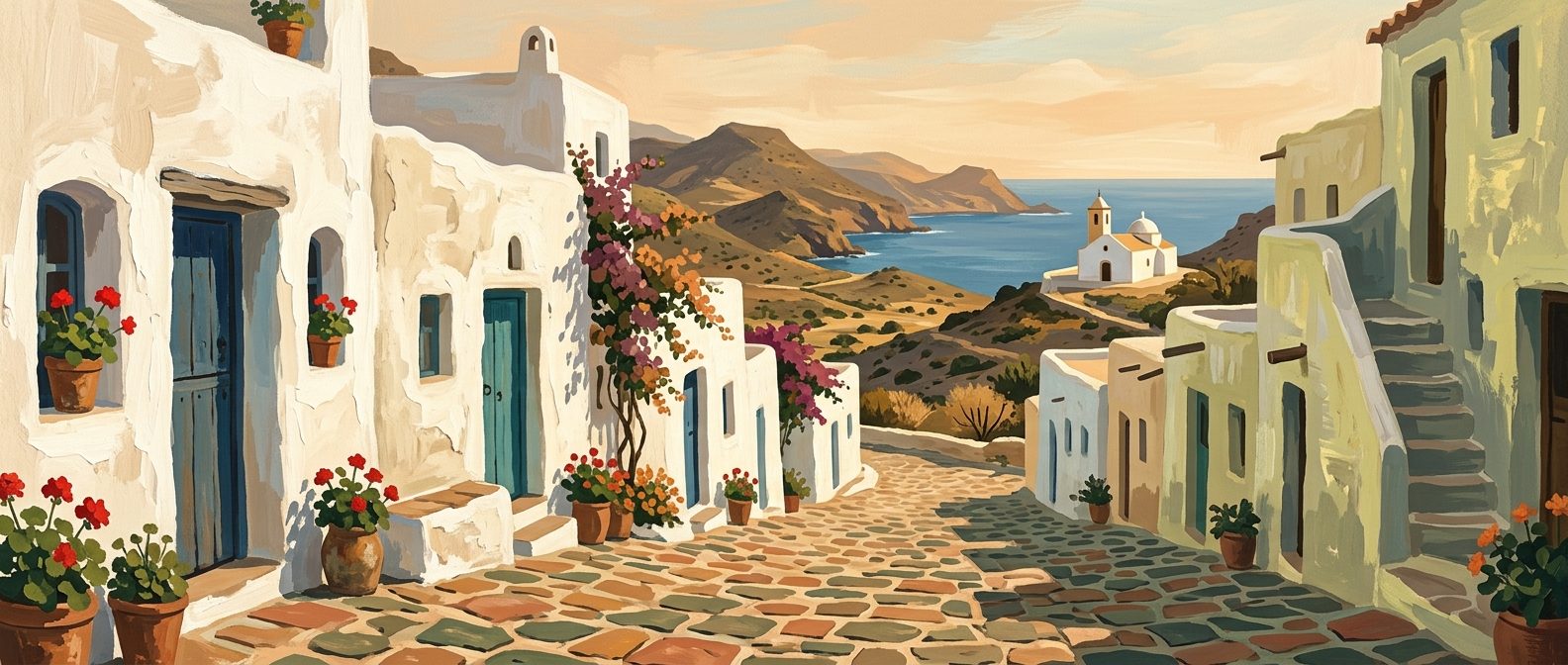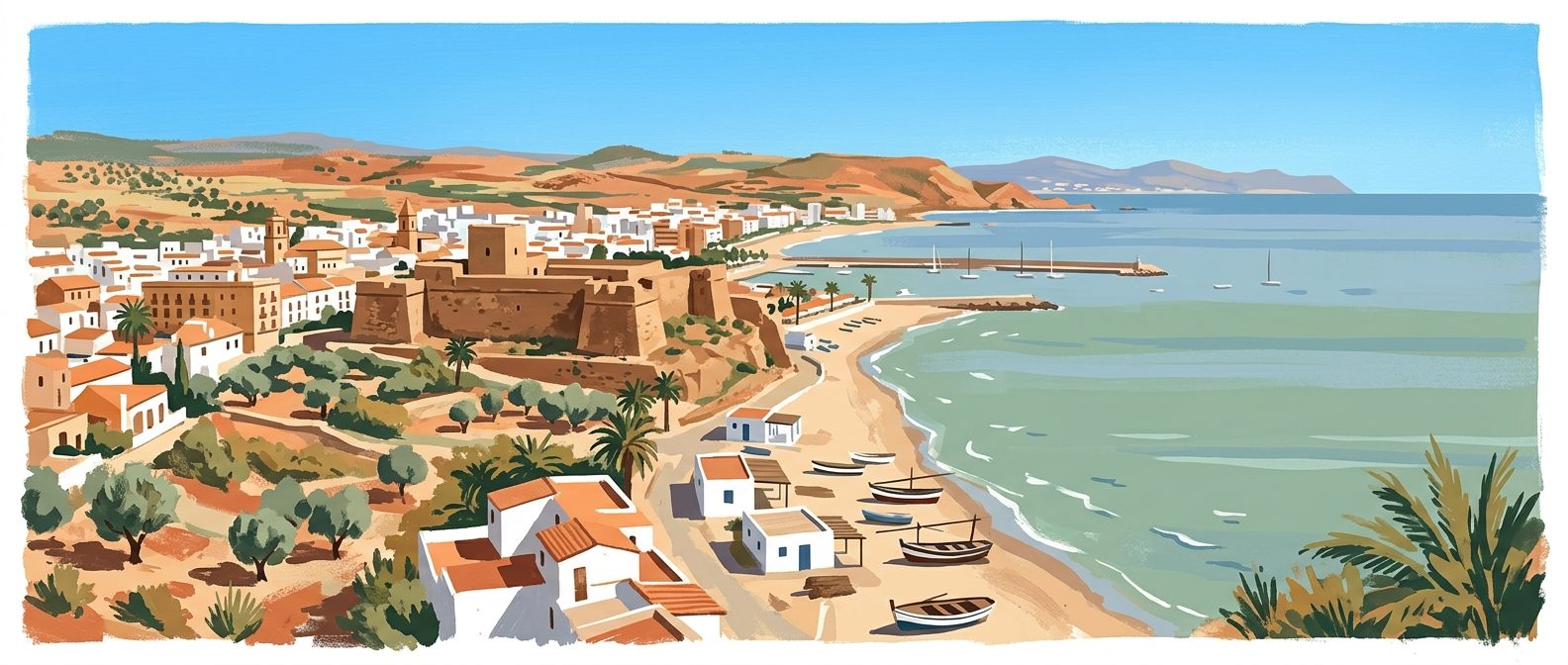
Once a modest fishing village, Roquetas de Mar has evolved into a significant coastal destination known for its expansive sandy shores and clear Mediterranean waters. This Almerian town balances a relaxed holiday atmosphere with historical depth and some of the finest seafood in the province.
Roquetas de Mar sits on the Almerian coastline, approximately 20 kilometres west of the provincial capital. While the surrounding landscape of Almería is often defined by its arid, desert-like terrain, Roquetas provides a starkly refreshing alternative with its long stretches of blue-flag beaches and cooling sea breezes. It is a place where the traditional character of a Spanish fishing port meets the modern amenities of a developed resort, attracting a diverse international community alongside Spanish families who have holidayed here for generations.
The town is geographically split into several distinct areas. There is the old town centre, which retains a local feel; the fishing port, which remains the heart of the town’s culinary identity; and the more modern tourist district of Urbanización Roquetas de Mar, which extends towards the nature reserve at Punta Entinas-Sabinar. For visiting for a weekend of seafood and sunshine or as a base to explore the wider Poniente Almeriense region, Roquetas provides a functional and comfortable base with plenty of character if you know where to look.
What to See & Do
Castillo de Santa Ana
The Castillo de Santa Ana is the architectural centrepiece of the town. This 16th-century fortification was originally built to protect the local salt industry and the inhabitants from the persistent threat of Barbary pirate raids. Although much of the current structure is the result of a sympathetic reconstruction completed in 2003, it follows the original plans and incorporates historical elements that survived the 1804 earthquake.
Inside, the castle functions as a cultural hub. The central courtyard and various rooms house rotating art exhibitions, photographic displays, and local historical artefacts. Climbing the ramparts provides excellent views across the port and out to the Alboran Sea. It is particularly striking at sunset when the stone takes on a deep ochre hue. Adjacent to the castle, you will find the lighthouse (El Faro), which has been converted into an exhibition space for maritime history.
Punta Entinas-Sabinar Natural Reserve
To see the coastline as it looked before the arrival of tourism, head south towards the Punta Entinas-Sabinar Natural Reserve. This protected area covers nearly 2,000 hectares of dunes, salt marshes, and scrubland. It is a vital habitat for migratory birds, and if you visit during the right season, you can see large flocks of flamingos, grey herons, and various species of gulls and terns.
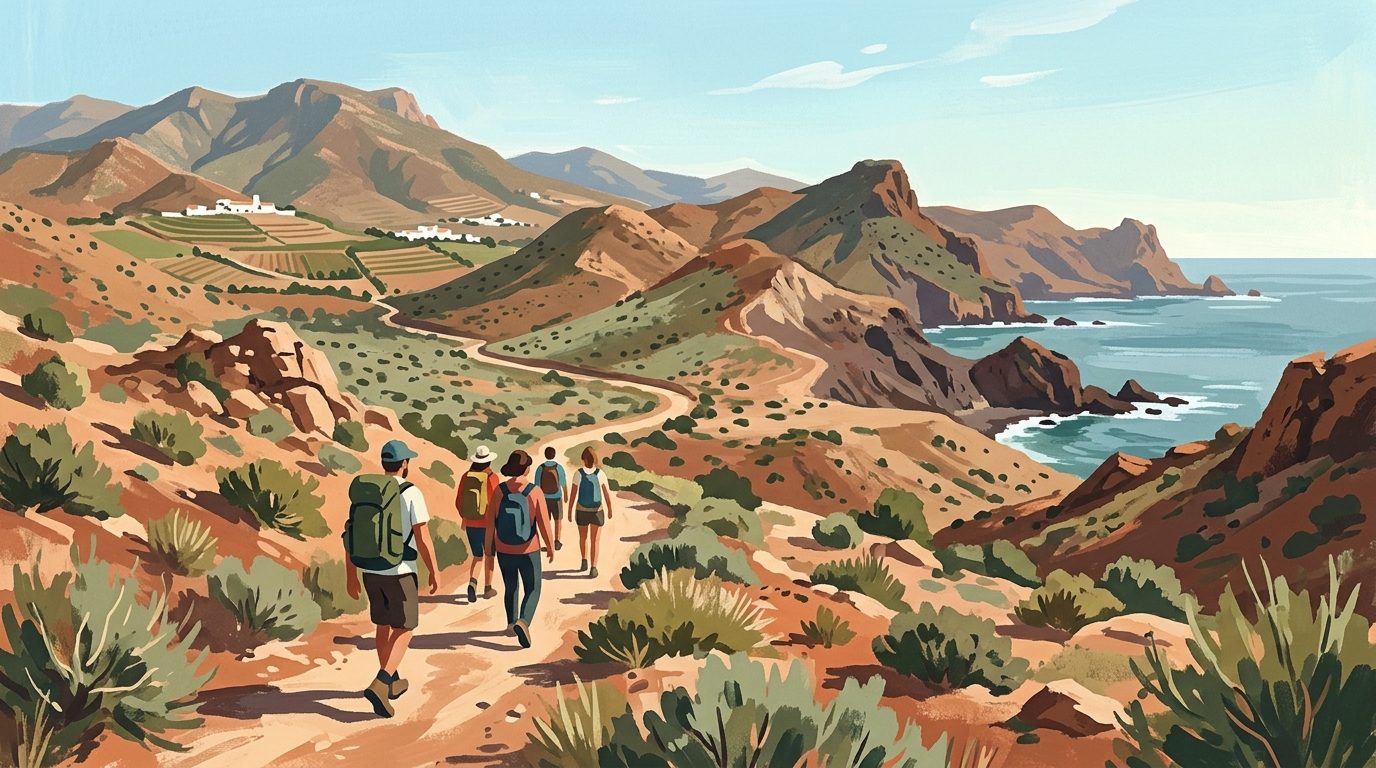
The reserve offers several walking and cycling trails that wind through the Phoenician juniper trees (sabinara) and lentisk bushes. It is a quiet, wind-swept landscape that feels worlds away from the nearby hotel strips. Access is free, and it provides some of the most tranquil beaches in the area, though they lack the facilities of the urban stretches.
Roquetas de Mar Aquarium
One of the largest in Andalucía, the Roquetas Aquarium is designed around the theme of the water cycle. It takes visitors from the birth of a river in the mountains through to the deep ocean. The highlight for many is the large shark tank, which features a walk-through tunnel where you can observe bull sharks and grey sharks swimming overhead.
The facility focuses heavily on education and conservation, with specific areas dedicated to the Posidonia oceanica (seagrass) meadows that are crucial to the Mediterranean ecosystem. There are also touch pools where children can learn about rays and starfish under supervision. It provides an excellent indoor alternative if the midday Almerian sun becomes too intense.
The Beaches and Promenade
The shoreline is the primary draw for most visitors. Playa Serena is perhaps the most famous, known for its wide expanse of sand and gravel and its proximity to the local golf course. It is rarely crowded even in peak season due to its sheer size. Closer to the centre, Playa de la Bajadilla and Playa de Romanilla offer calmer waters and a higher concentration of chiringuitos (beach bars).
Connecting these beaches is a wide, paved promenade that runs for several kilometres. It is a popular spot for an evening 'paseo', filled with walkers, runners, and cyclists. The promenade is well-maintained and provides easy access to the various districts of the town without needing to navigate the main roads.
Practical Information
Opening Times & Tickets
Castillo de Santa Ana: Open Tuesday to Saturday from 10:00 to 13:00 and 18:00 to 21:00 (Summer: mid-June to mid-September) or 17:00 to 20:00 (winter). Sundays usually 10:00 to 13:00. Entry is free.
Roquetas Aquarium: Open daily from 10:00 to 18:00 or 19:00 depending on the season. Adult tickets cost approximately €17, with discounts for children and seniors. It is advisable to book online via the official website during the summer months to avoid queues (check on the operator's website before travelling).
How to Get There
Roquetas de Mar is easily accessible via the A-7 motorway (Autovía del Mediterráneo). If you are driving from Almería city, take the N-340a coastal road for a more scenic route, or the A-7 for speed. The journey takes about 25 minutes.
For those using public transport, the ALSA bus company runs regular services between Almería’s main bus station and Roquetas de Mar. The M-330 and M-333 lines, managed by the Consorcio de Transporte Metropolitano del Área de Almería, are the most frequent, with buses departing roughly every 30 minutes throughout the day (check the official timetable before travelling). The journey by bus takes approximately 45 minutes to an hour depending on the number of stops.
Parking
In the Urbanización area and near Playa Serena, parking is generally plentiful and free in the large designated lots and side streets. However, near the Castillo de Santa Ana and the Port, finding a space can be challenging during weekend lunchtimes and summer evenings. There is a large underground car park near the Plaza de Toros (Bullring) which is central and reasonably priced.
Where to Eat Nearby
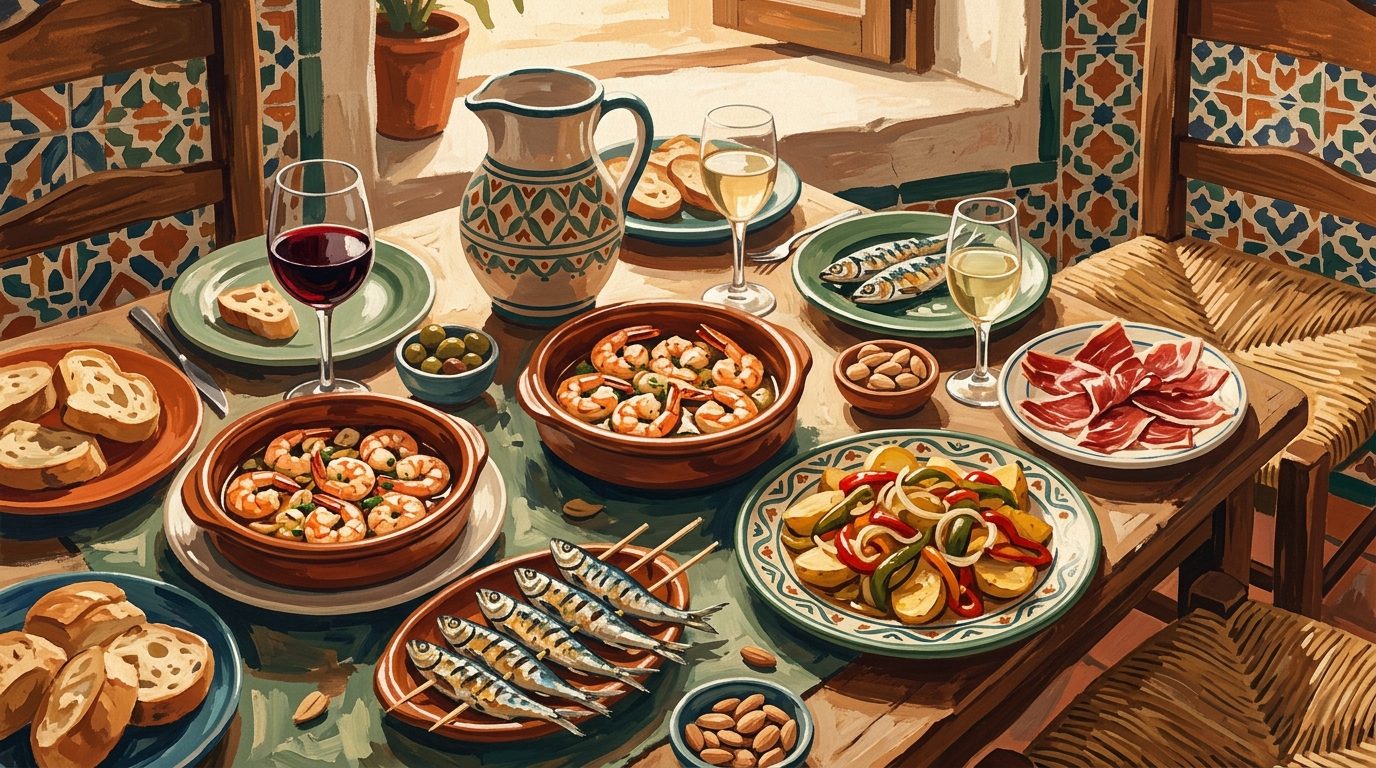
The culinary scene in Roquetas revolves around the 'Lonja' (fish market). For an authentic experience, visit Casa Carlos near the port. They specialise in 'pescaíto frito' (fried fish) and grilled red prawns sourced directly from the local boats. The atmosphere is unpretentious and local.
For something more traditional to the Almería province, Restaurante La Alpujarra offers hearty mountain dishes like 'plato alpujarreño' alongside coastal favourites. If you are looking for tapas, the bars in the old town centre often serve a free tapa with every drink, a tradition that remains strong in this part of Andalucía. Look for 'cherigan', a local style of toasted bread with various toppings.
Where to Stay
Most visitors opt for the Playa Serena area, which contains a high concentration of four and five-star hotels such as the Evenia Zoraida Resort or the Protur Roquetas Hotel & Spa. These offer direct beach access and large pool complexes. For a quieter stay, look for small apartments near the Port or the Castillo de Santa Ana, which allow for a more residential feel and easier access to the traditional tapas bars and the daily fish market.