
attraction · Córdoba
Puerta del Puente
Andalucía 365 · Updated 18 July 2026
Our Verdict
“The Puerta del Puente is an imposing Renaissance gateway that anchors Córdoba’s historic riverfront. While the exterior serves as an impressive architectural marker on any walking route, the monument’s true value lies in its rooftop mirador. The steep climb rewards visitors with unobstructed, symmetrical views over the Guadalquivir river.”
Last verified: July 2026
A Renaissance Gateway to the Ancient City
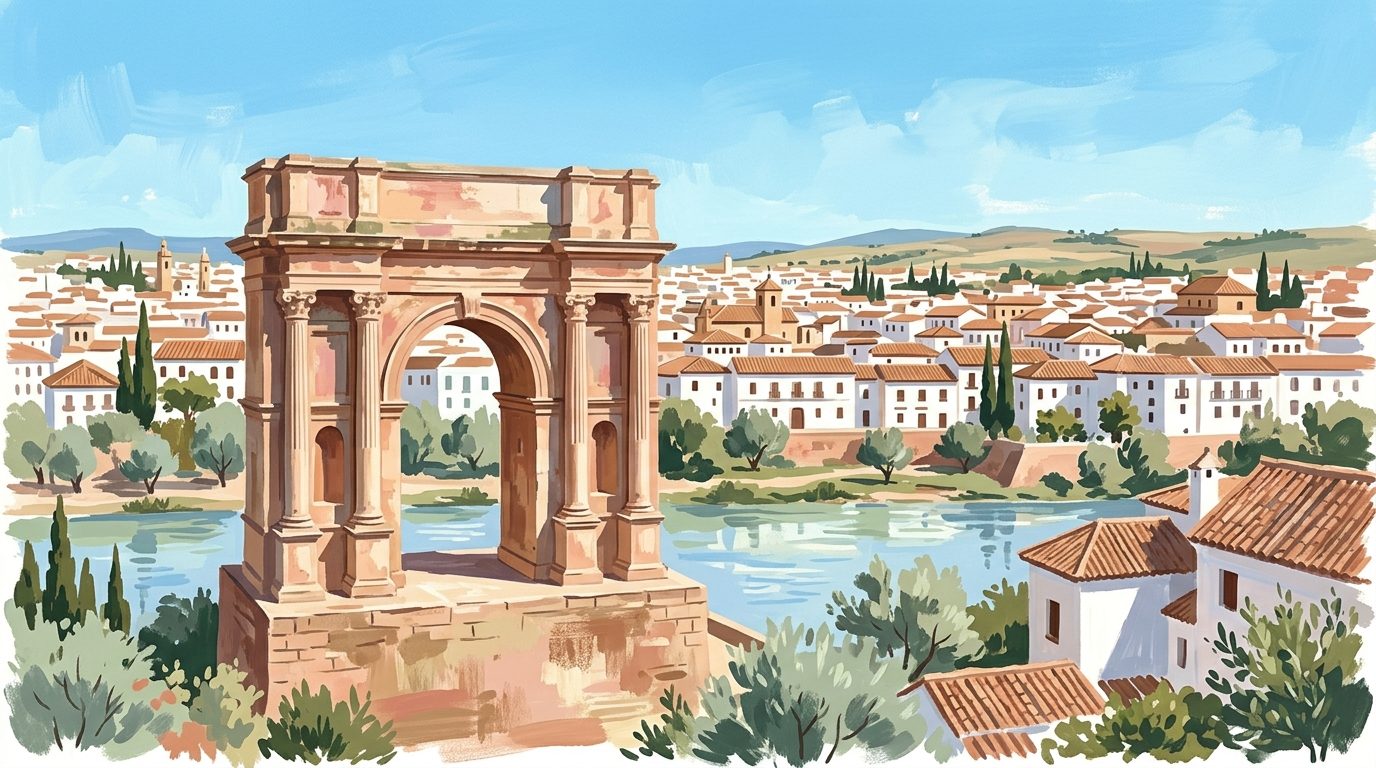
Golden sandstone catches the late afternoon sun, illuminating four pairs of fluted Doric columns that rise above the cobblestones of Plaza del Triunfo. The Puerta del Puente, or Gate of the Bridge, marks the precise threshold where Córdoba’s ancient river crossing meets its historic core. While visitors often mistake the structure for a Roman triumphal arch, this grand monument is actually a 16th-century Renaissance portal built directly upon the footprint of much older defensive gates. Commissioned in 1572 to commemorate King Philip II's earlier royal visit to the city, the celebrated architect Hernán Ruiz III deliberately stripped away the heavy, practical Moorish fortifications. In their place, he created a celebratory ceremonial entrance designed to project the city's status, wealth, and classical heritage. Today, the gate acts as a monumental prelude to the Mezquita-Cathedral of Córdoba, anchoring the southern edge of the historic quarter and framing the pedestrian passage over the broad Guadalquivir river.
Architectural Details and Masonry
As you approach from the river side, the sheer scale and classical symmetry of the Puerta del Puente command attention. The gate consists of three distinct vertical sections built entirely from locally quarried sandstone ashlar. The central lintelled passageway, rather than a true arch, features prominent voussoirs in a classical arrangement. This central space is flanked by fluted Doric columns resting on rusticated bases, creating a strong sense of verticality that draws the eye upward.
Above these columns, a detailed entablature runs the entire width of the structure, eventually topped by a curved pediment bearing the coat of arms of the Spanish crown. Look closely at the upper frieze, which features a continuous sequence of triglyphs and metopes reflecting Renaissance classicism. At the very base of the structure, a stark physical contrast exists between the polished, precise Renaissance masonry and the rugged, uneven ancient stone foundations. This visible seam in the stonework acts as a timeline of the city's evolution, marking the transition from a heavily fortified walled settlement to an open, confident Renaissance municipality.
The Interior Exhibition and Rooftop Mirador
Beyond its imposing exterior facade, the Puerta del Puente was designed to house functional internal spaces. A narrow staircase leads up into the monument, which holds a permanent exhibition detailing the complex history of the site. Displays track the structure's origins as a fortified Roman gateway, its time as an Almohad entrance known as the Gate of Algeciras, and its eventual 20th-century isolation from surrounding buildings when the ground level was excavated to restore its original Renaissance proportions.
The clear highlight of accessing the interior is the open-air rooftop terrace. From this elevated mirador, visitors gain an unobstructed, perfectly symmetrical view straight down the spine of the Roman Bridge towards the fortified Calahorra Tower on the opposite bank. Turning back towards the city, the terrace provides a clear line of sight over the towering Triunfo de San Rafael monument and the formidable, buttressed exterior walls of the Mosque-Cathedral. It is a highly productive vantage point for photography, allowing visitors to capture the sheer scale of the historic riverfront without the distraction of the pedestrian crowds below.
A Candid Assessment
The Puerta del Puente is an unmissable monument, largely because it sits squarely on the main pedestrian artery leading into historic Córdoba, one of Andalucía's most celebrated destinations. While the exterior commands attention and provides an excellent, dramatic backdrop for photographs, it only takes a few minutes to appreciate from the ground. The genuine value for architecture and history enthusiasts lies in accessing the rooftop terrace for its commanding views over the Guadalquivir river. The short, steep climb is well worth the effort for the elevated photographic opportunities alone. Otherwise, it serves as a highly impressive, entirely free architectural marker to anchor your walking route.
Sensible Pairings and Walking Routes
A visit to the gate is naturally paired with a walk across the water to explore the defensive towers on the opposite bank, offering a complete geographical overview of the city's historical river defences. Heading inland, the gate acts as the logical starting point for exploring the wider Córdoba City historic centre. From the wide expanse of Plaza del Triunfo, it is only a short walk into the narrow, whitewashed alleyways of the Jewish Quarter. Here, the monumental, imposing scale of the riverfront rapidly gives way to intimate residential courtyards, historic synagogues, and small, shaded plazas.
Practical Information and Accessibility
The Puerta del Puente sits prominently at Plaza del Triunfo on the southern edge of the historic centre. The immediate area is entirely pedestrianised and paved with traditional, uneven river cobblestones. Visitors using wheelchairs or pushing prams will find the exterior plaza fully navigable, though the rough cobblestone surfaces can be jarring. Access to the upper mirador requires climbing a narrow internal staircase, meaning the interior and rooftop spaces are not accessible to wheelchair users.
The exterior of the gate is a public thoroughfare and can be viewed at any time of day or night. The monument is particularly striking when illuminated after dark. For those arriving by car, the immediate area offers no vehicle access. The most convenient public parking is available across the river near the Miraflores Bridge, or slightly further away along the Paseo de la Victoria. For authoritative details on the monument’s historical background and architectural features, visitors can consult the official Turismo de Córdoba website.
Nearby worth your time
A few well-placed stops for extending the day without turning it into a checklist.
Continue through Córdoba City
Step back into the wider landscape with local guides, nearby places and the province overview.
Things to do · 10 min
Golf in Córdoba Province: Courses, Holidays, and Shops
Discover practical tips, course details, and holiday planning advice for playing golf in Córdoba province, from the mountain fairways of Sierra Morena to the historic greens of Los Pedroches.
Feature · 8 min
The Caliphate of Córdoba
In 929, Abd al-Rahman III declared himself Caliph, breaking religious ties with the Middle East and launching an era of unparalleled architectural and intellectual achievement.
Itinerary · 9 min
A Weekend in Cordoba: Two Days in Andalucía's Caliphate City
Spend 48 hours in Cordoba exploring the mesmerising Mezquita, getting lost in the whitewashed streets of the Judería, and eating excellent salmorejo.